


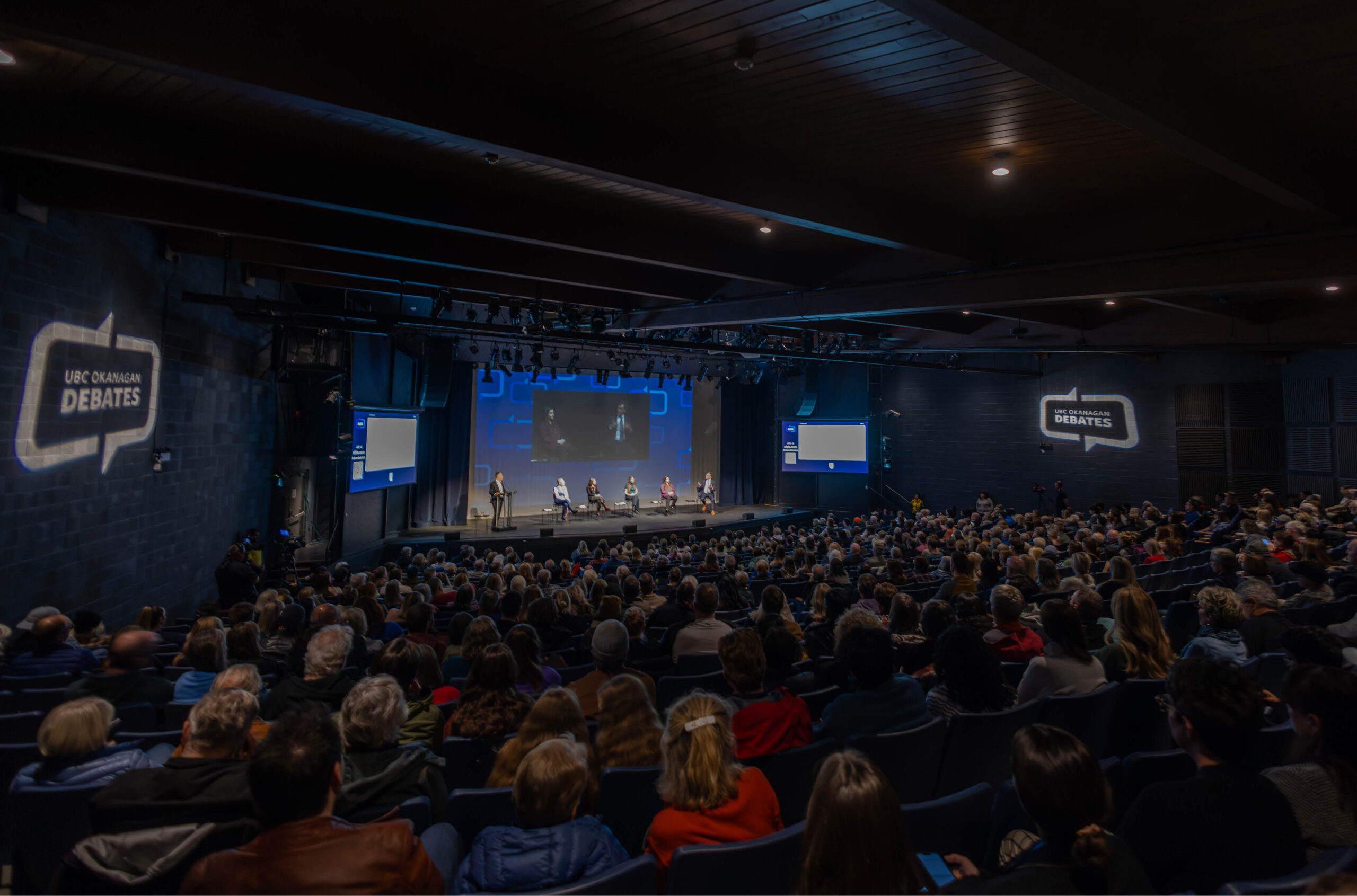
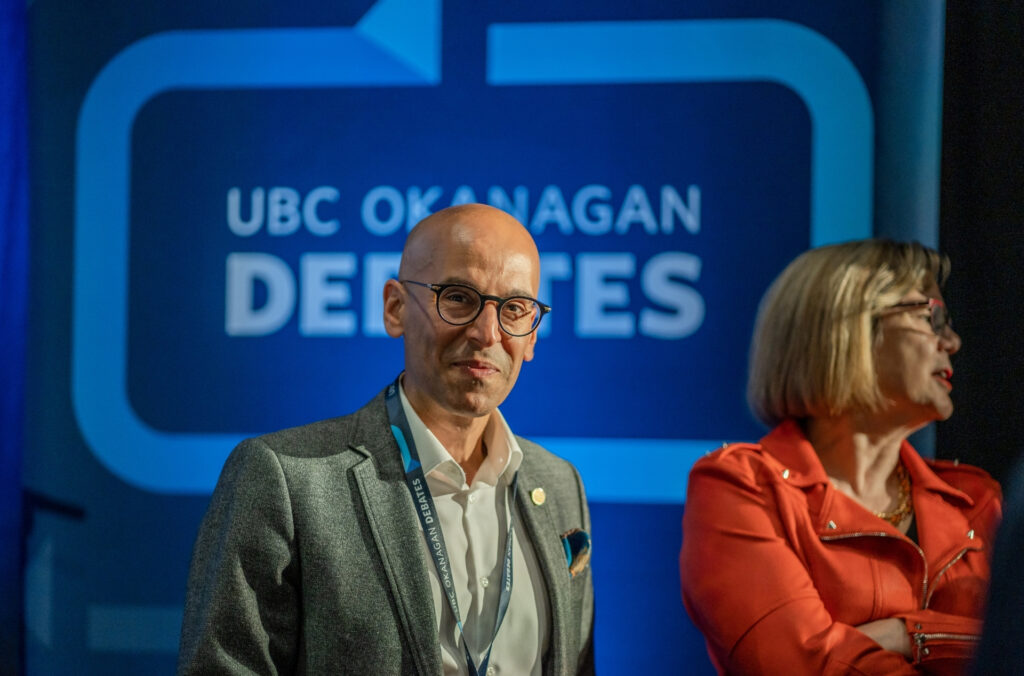
The University of British Columbia (UBC) recently hosted a significant pilot debate in downtown Vancouver, drawing a capacity crowd to the Robson Square theatre for an in-depth discussion on a contentious issue: Canada’s temporary foreign worker program. The event, which was exclusively in-person, attracted a diverse audience comprising workers, politicians, alumni, students, Canadian citizens, and newcomers, all eager to engage with a two-on-two debate exploring the complexities of temporary foreign labour in the Canadian economy and immigration system.
The debate centered on the critical question of whether Canada should overhaul its immigration system to prevent the creation of a permanent "service class" of foreign workers. This initiative, a cornerstone of UBC’s broader commitment to fostering respectful dialogue in an increasingly polarized public sphere, marked a notable effort by an academic institution to model constructive disagreement.
Addressing the "Service Class" Debate
The core of the debate pitted two distinct perspectives against each other. Arguing that Canada is indeed fostering a permanent "service class" through its current policies were Dr. Catherine Dauvergne, a distinguished scholar in refugee, immigration, and citizenship law and former dean of UBC’s Peter A. Allard School of Law, and Don Wright, a former deputy minister and head of the public service for British Columbia.
Dr. Dauvergne articulated a compelling argument, highlighting the inherent flaws in designing programs for "workers" rather than "people." She stated, "The biggest failure of temporary foreign work is that, in fact, it’s impossible to hire workers. You are only able to hire human beings – and human beings grow old, they fall in love, they get sick, they change their plans. This is the real problem: when you design a program for workers but instead to get people, that’s the policy failure." This sentiment underscores the unpredictable nature of human lives and the potential disconnect between programmatic intent and lived reality for temporary foreign workers.
Economic Imperatives and Integration Strategies
On the opposing side, advocating for the essential role of temporary foreign workers in the Canadian economy, were Stan Vander Waal, a second-generation farmer with direct experience in agricultural labour needs, and Robert Russo, a human rights and labour lawyer and instructor at the UBC School of Law.
Mr. Vander Waal presented a pragmatic view, emphasizing the need to align immigration policies with Canada’s economic demands. "We should be scoring individuals for what skills they can offer, and we should look at the needs we have inside the country and trying to enhance our productivity," he argued. He further elaborated on the employer’s role in assessing contributions: "The employer has been given the ability to test whether they actually will be contributing people – and on top of that, they can then come and be part of contributing to Canadian society versus taking that money back home. That would be the most beautiful thing in terms of a successful integration strategy." This perspective frames temporary foreign workers not merely as labour but as potential contributors to Canadian society, provided there are robust mechanisms for skill assessment and integration.
Background and Evolution of the Debate Series
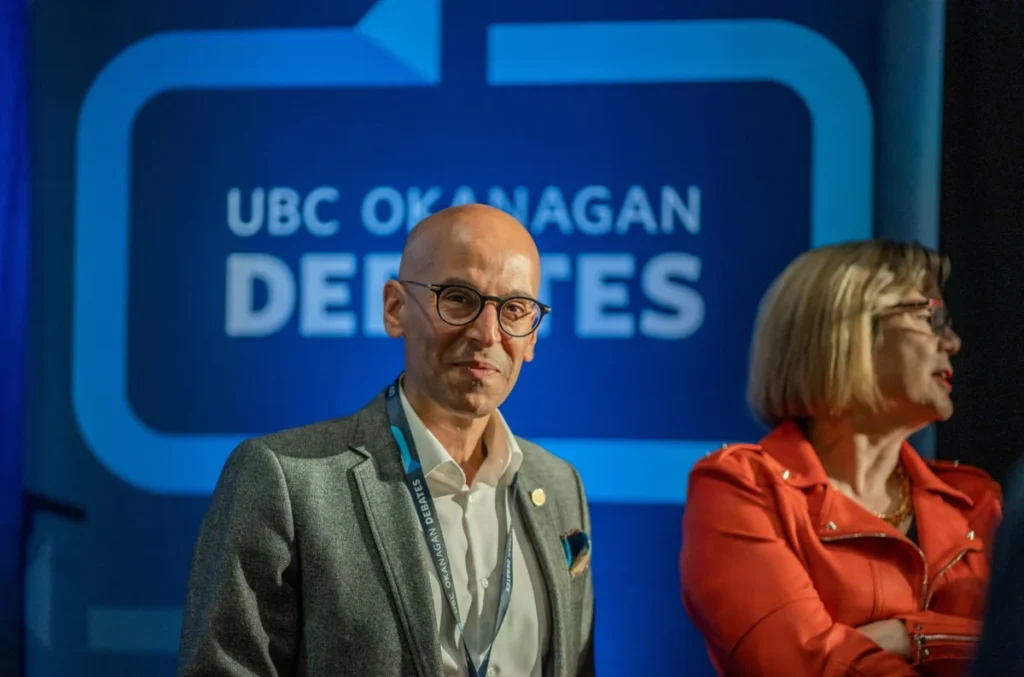
This pilot debate in downtown Vancouver is not an isolated event but an extension of a debate series launched over four years ago by Marten Youssef, Associate Vice-President (University Relations) at UBC’s Okanagan campus. Youssef, a former journalist from Egypt, was inspired by the growing polarization within Canadian society and a perceived decline in public trust towards academic institutions.
"There was so much polarization that benefits businesses, politics, certainly algorithms – and now no one seems to gain from actually ending it," Youssef observed. He also expressed concern over the trend of "cancelling" controversial speakers on some campuses and the media’s tendency to frame civil discourse as a competition of winners and losers, rather than an opportunity for audience enlightenment. "We thought maybe the model was broken," Youssef stated. "And we thought universities are the best places to convene the contrast."
The series, which has tackled topics such as the crisis in masculinity, Canada’s relationship with the United States, and the impact of artificial intelligence on human experience, aims to provide a platform for reasoned discussion. Previous debates have witnessed moments of intense disagreement alongside surprising instances of common ground. Notably, Johnathan Kay, editor of the conservative online outlet The Quinlette, acknowledged during a previous debate that the series had shifted his perspective on Canadian academia. "You’re breaking all kinds of stereotypes," he remarked, admitting, "I talk trash about Canadian academia a lot on social media – I’m going to have to rethink that. This is real good stuff."
UBC’s Strategic Pivot Towards Neutrality
The debate series aligns with UBC’s broader strategic objective to reposition itself as a neutral space for public discourse. Melanie Stewart, Associate Vice-President (University Relations) at UBC, explained that this initiative is part of an effort to move away from the institution taking explicit stances on contentious political issues. "There were a lot of really political statements that were put out there, and the question would have to come to mind: is this the role of a university? To be weighing in at the top of the institution on contentious political topics?"
This approach is exemplified by UBC President Benoit Antoine-Bacon’s leadership. In April 2024, amidst pro-Palestine encampments on university campuses, including UBC, President Bacon issued a statement affirming that "Any university position, even if supported by a majority, by definition undermines the right of holders of different views to express themselves and participate in the debate." In a separate memo, he emphasized, "it is absolutely essential that the university remains a place of reasoned debate where conflicting views can peacefully co-exist. Our academic and social mission depend on it." This signifies a deliberate effort to steer the university towards its fundamental purpose: facilitating critical thinking and the exploration of diverse viewpoints based on facts, history, and deep thought.
The Broader Imperative for Civil Discourse
The challenges in fostering civil discourse are not unique to UBC or Canada. Universities across the globe are grappling with this issue. At the University of Toronto, a Working Group on Civil Discourse, chaired by Professor Randy Boyagoda, released a set of recommendations in 2024 to address "growing challenges in sustaining productive and respectful dialogue within the university community."
The University of Toronto’s report advocates for a clear, evolving definition of civil discourse, reinforced through classroom practice, training for students, faculty, and staff, and support for "civil discourse champions." Professor Boyagoda noted, "People are struggling to think out loud with each other these days – in their personal lives, their professional lives, and our shared public life." He stressed that universities have a crucial responsibility "to prepare young people to enter their professions, to enter community life, to enter a shared public life, willing and able to think out loud together."
Data and Context: The Temporary Foreign Worker Program
Canada’s Temporary Foreign Worker Program (TFWP) has been a significant component of the nation’s labour market for decades, designed to fill labour shortages in various sectors. The program allows Canadian employers to hire foreign nationals to fill temporary jobs when Canadians are not available. However, its scope and impact have been subject to considerable debate, particularly concerning its role in sectors like agriculture, food processing, and low-wage service industries.
Recent data from Employment and Social Development Canada (ESDC) indicates a fluctuating reliance on the TFWP. For instance, in 2022, the program supported the employment of over 485,000 temporary foreign workers across various streams, with a substantial portion concentrated in the agriculture and caregiving sectors. Concerns have been raised about the program’s potential to suppress domestic wages, create precarious employment conditions for foreign nationals, and contribute to a two-tiered labour market. Critics argue that the program’s structure can trap workers in low-paying jobs with limited pathways to permanent residency, thereby creating the "service class" phenomenon discussed at the UBC debate. Conversely, proponents emphasize the program’s necessity for businesses struggling to find domestic workers, particularly in seasonal or physically demanding industries. They argue that without the TFWP, many businesses would face significant operational challenges, potentially impacting food security and economic growth.
The debate at UBC delved into these critical nuances, exploring the economic rationale behind the program alongside its social and ethical implications. The presence of individuals from diverse backgrounds—workers, politicians, students, and newcomers—underscored the broad societal interest in this issue and the need for informed, respectful dialogue.
Implications and Future Directions
The UBC debate, by bringing a complex policy issue into a public forum, serves as a vital model for how academic institutions can contribute to informed public understanding. The event’s success in filling the theatre and generating thoughtful discussion suggests a public appetite for such initiatives.
The implications of this debate series extend beyond the specific topics discussed. In an era characterized by rapid information dissemination, the rise of social media echo chambers, and increasing political polarization, universities have a unique responsibility to cultivate environments where critical thinking and respectful disagreement can flourish. President Bacon’s encouragement for young people to rigorously examine their own beliefs and to engage with opposing viewpoints is a call to action for a generation navigating a complex world. "I would like to say to young people: if you hold an idea strongly, really ask yourself if it’s your idea or if someone else put it there. Was it put there by your upbringing? Was it put there by the algorithms or the social media you listen to? Have you considered alternative positions? Can you defend the opposite position?" he urged. "If you can’t, that means you’re not thinking."
The success of this pilot debate at Robson Square suggests a potential for UBC to expand its reach and impact, offering more opportunities for the public to engage with critical issues in a structured, civil, and informative manner. As universities continue to define their roles in contemporary society, initiatives that bridge academic inquiry with public dialogue are becoming increasingly indispensable. The model pioneered by UBC Okanagan and now tested in Vancouver could serve as a blueprint for other institutions seeking to foster a more engaged and informed citizenry, capable of tackling complex societal challenges with reason and respect. The hope is that by providing such platforms, universities can help reverse the trend of polarization and empower individuals to engage in meaningful dialogue, fostering a more cohesive and understanding society.