


The transformation of a 1988 Ford Festiva into what is arguably the world’s thinnest street-legal vehicle represents a unique intersection of hobbyist engineering, digital fabrication, and unconventional automotive design. Tyler Fever, the creator behind the popular YouTube channel Prop Department, recently documented the exhaustive process of bifurcating a classic subcompact car and reassembling it into a functional, electric-powered micro-vehicle. By utilizing high-powered laser cutters, CNC technology, and components from electric dirt bikes, Fever has challenged traditional notions of automotive proportions and urban mobility. While the project was born from a desire to create a "ridiculous" aesthetic, the engineering hurdles overcome during the build provide significant insight into the complexities of custom vehicle fabrication and the evolving landscape of DIY electric vehicle (EV) conversions.
Historical Context of the Ford Festiva
To understand the scale of Fever’s modification, one must first consider the original dimensions of the donor vehicle. The 1988 Ford Festiva was a product of a global partnership between Ford, Mazda, and Kia. Designed by Mazda as the Mazda 121 and manufactured by Kia in South Korea, the Festiva was introduced to the North American market in 1987 as an entry-level economy car.
In its stock configuration, the 1988 Festiva measured approximately 140.5 inches in length and 63.2 inches in width. It was powered by a 1.3-liter four-cylinder engine producing roughly 58 horsepower. Even by 1980s standards, the Festiva was considered a "minicar," designed for high fuel efficiency and ease of parking in congested urban environments. Its lightweight chassis—tipping the scales at just under 1,800 pounds—made it an ideal candidate for Fever’s project, as the structural load on a halved frame would be significantly lower than that of a standard sedan or SUV.
The Engineering Process: From Subcompact to Micro-Slice
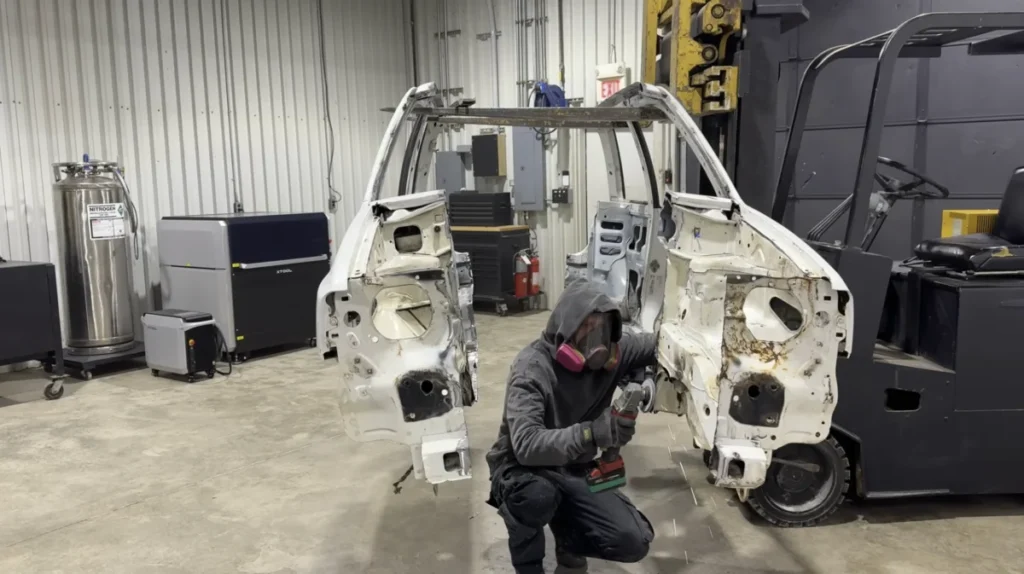
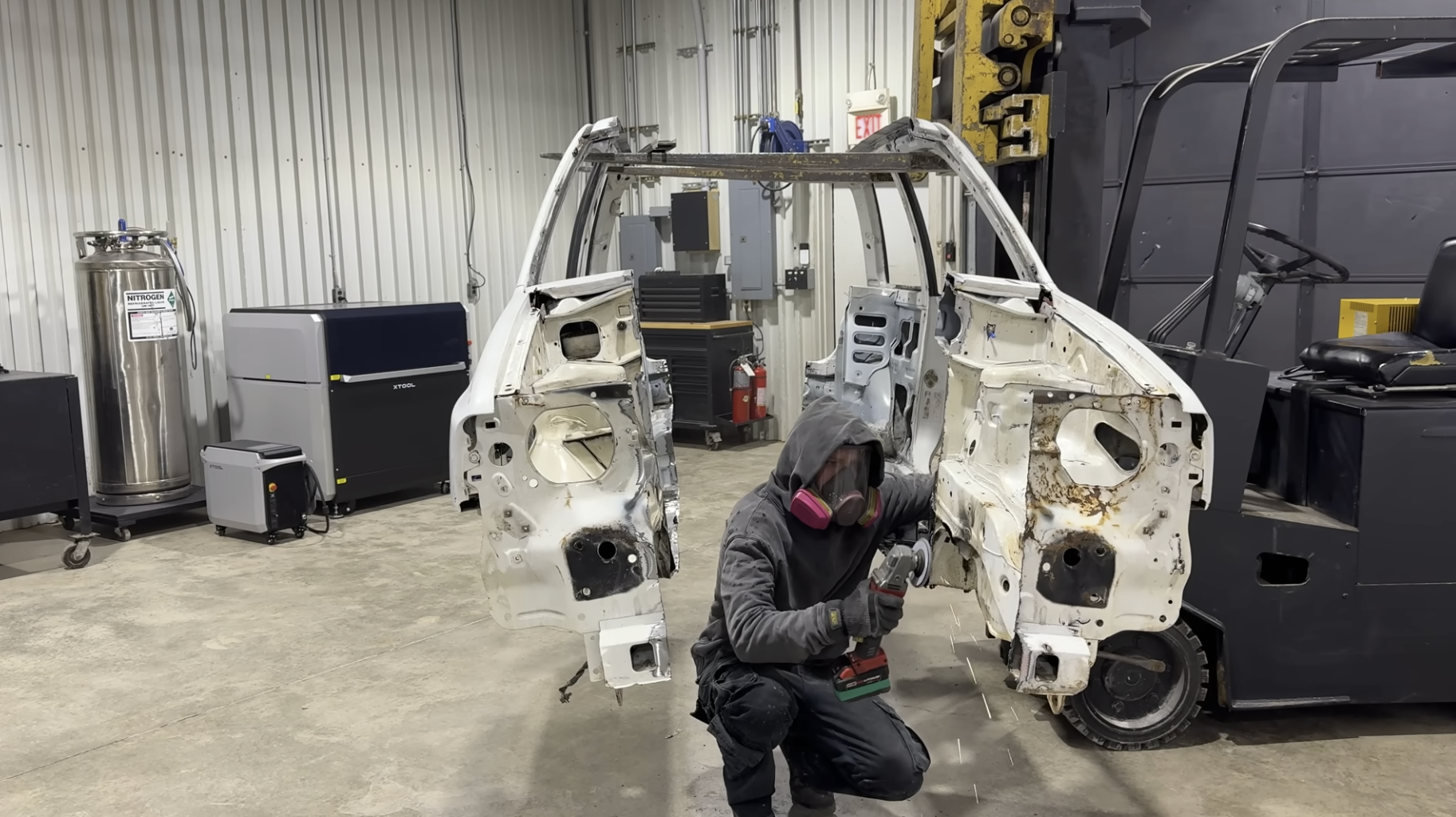
The deconstruction of the Festiva began with a total "gutting" of the interior. Fever utilized unconventional methods to streamline the stripping process, including the application of liquid nitrogen. By freezing stubborn adhesive-backed insulation and sound-deadening materials, the team was able to shatter and remove components that would otherwise require hours of scraping. This ensured a clean metal shell, which was essential for the precision cutting that followed.
The most critical phase of the project involved the use of a high-powered industrial laser and a CNC (Computer Numerical Control) cutter. Unlike traditional circular saws or plasma cutters, which can produce jagged edges and significant heat-affected zones, the laser allowed for a surgical vertical cut down the center of the chassis. Fever noted that the laser was powerful enough to penetrate the automotive-grade steel and continue into the concrete floor of the workshop, necessitating extreme safety precautions.
Following the cut, the two halves were brought together, effectively removing a massive longitudinal section of the car. This reduction in width meant that the original internal combustion engine, transmission, and cooling system were no longer viable. The engine bay, now only a fraction of its original size, could no longer accommodate the 1.3-liter Mazda-sourced block.
Transition to Electric Propulsion
To solve the packaging constraints of the narrowed chassis, Fever opted for an electric conversion. He sourced a motor and battery system from a high-performance electric dirt bike. This modular powertrain offered several advantages:
- Compact Form Factor: The electric motor required significantly less volume than a traditional engine, allowing it to fit within the newly constricted front compartment.
- Simplified Drivetrain: By using an electric motor, the team bypassed the need for a complex multi-speed gearbox and fuel delivery system.
- Weight Distribution: The battery packs could be distributed to help balance the vehicle’s center of gravity, a critical factor given the car’s increased risk of lateral instability.
The auxiliary systems were powered by a separate 12-volt battery. This secondary power source was dedicated to the vehicle’s safety and utility features, including the headlamps, turn signals, horn, and integrated mobile phone chargers.
Overcoming Ergonomic and Safety Challenges
Shrinking a vehicle by half creates immediate conflicts between human proportions and mechanical controls. The most prominent issue encountered was the placement of the steering column. In the narrowed Festiva, the steering wheel was positioned directly in the path of the driver’s legs, making it impossible to operate the brake and accelerator pedals safely.

Fever’s solution was a radical modification of the steering interface. Drawing inspiration from the "yoke" style steering wheels found in modern Tesla models and aircraft, he used a saw to remove the top and bottom sections of the wheel. This "half-wheel" provided the necessary clearance for leg movement while maintaining enough leverage for low-speed maneuvering. However, the modification requires the driver to use a "ducking" motion during sharp turns to avoid hitting their knees with the wheel’s edges.
To meet street-legal requirements, Fever utilized 3D printing technology to create custom mounting brackets for mirrors and lights. In the United States, and specifically in Tennessee, a vehicle must possess certain functional components to be registered for public road use. These typically include:
- Functional headlamps (high and low beam)
- Tail lamps and brake lights
- Turn signals (front and rear)
- A rearview mirror and at least one side-view mirror
- A windshield wiper system
- A functional horn
Fever claims that despite the radical modifications, he was able to secure insurance for the vehicle, a feat that often requires a "specially constructed vehicle" or "kit car" title, depending on local Department of Motor Vehicles (DMV) regulations.
Performance and Urban Maneuverability
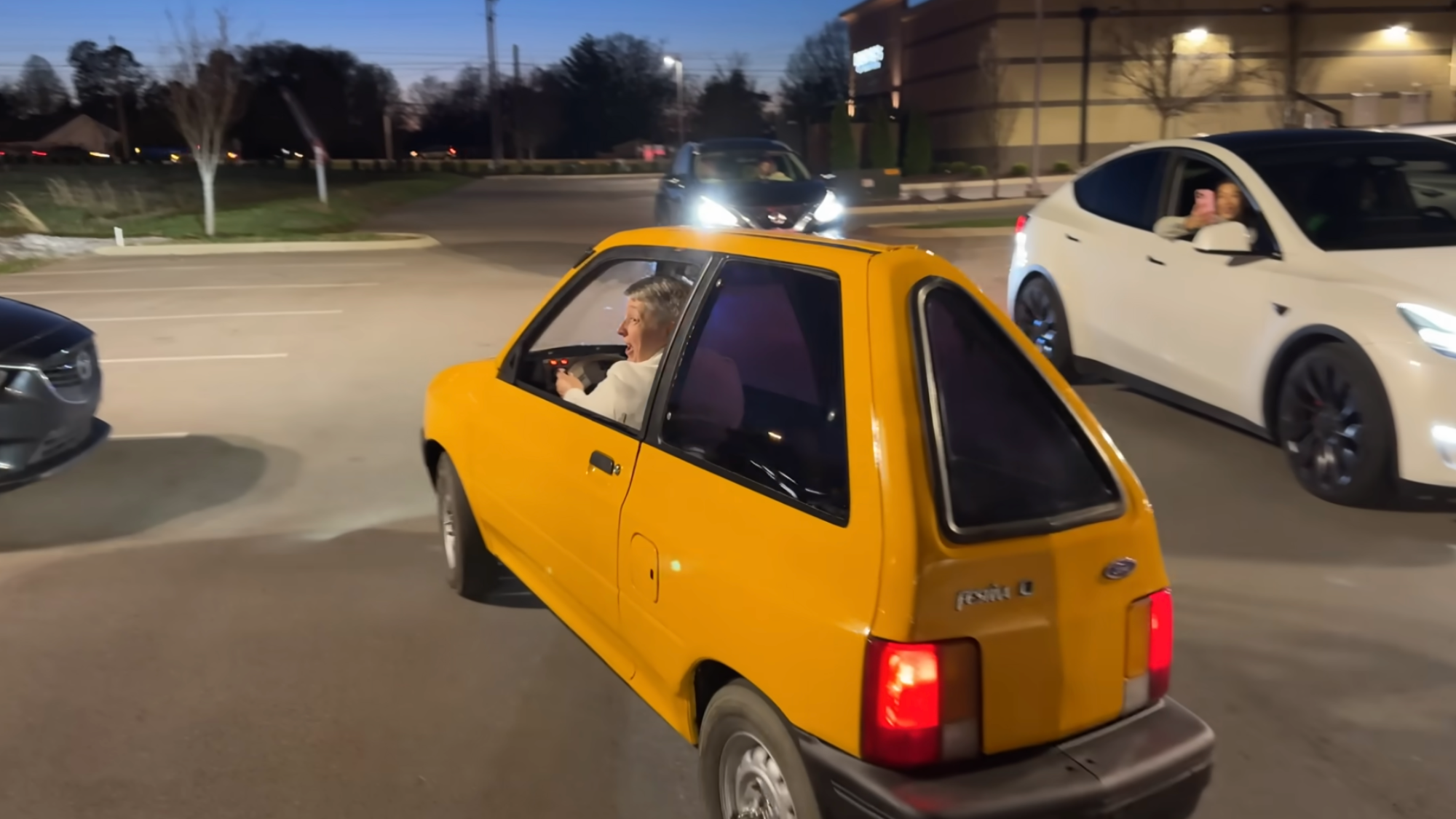
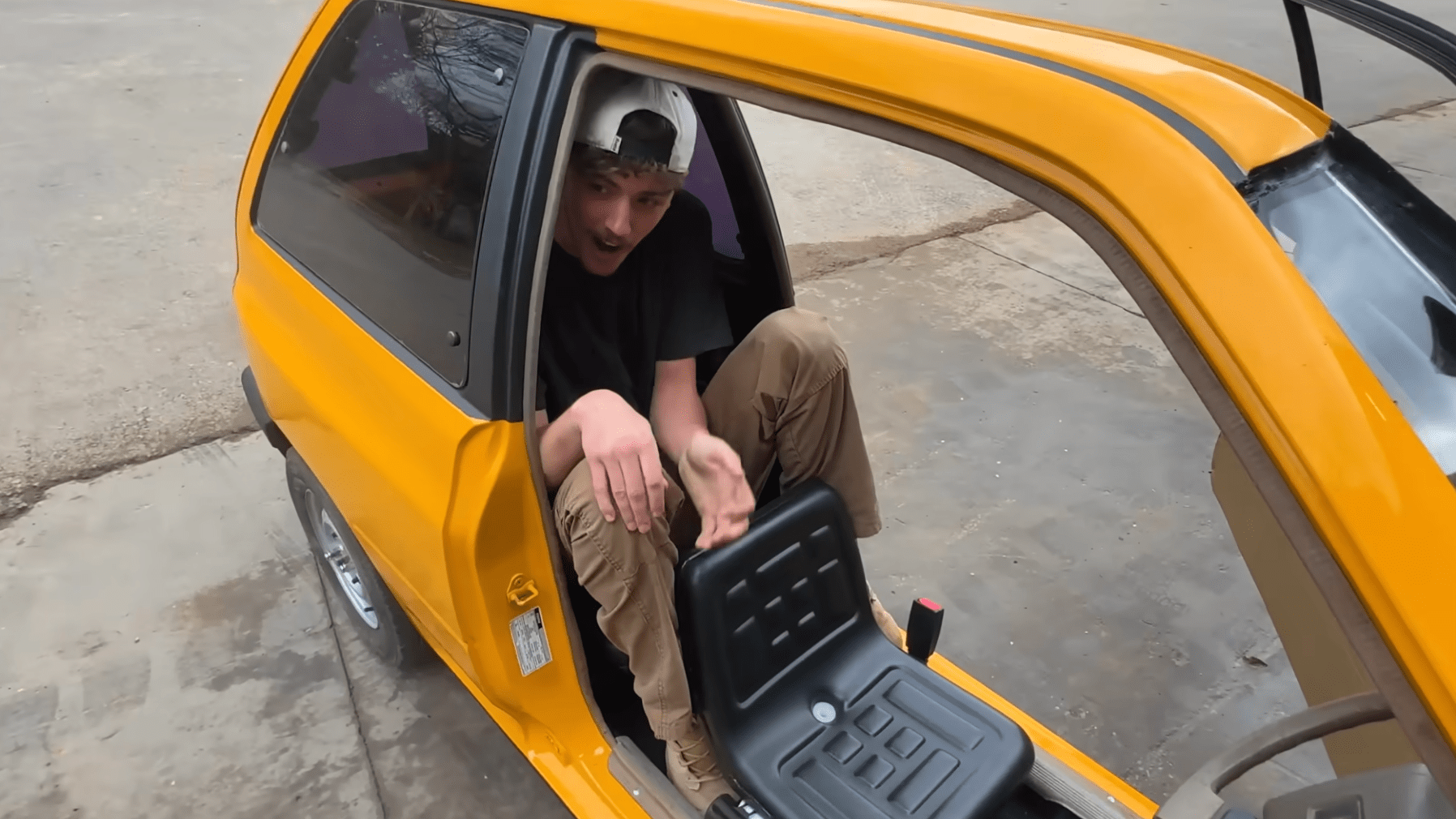
The finished product, painted in a high-visibility yellow, was put to the test on the streets of Nashville, Tennessee. The vehicle’s performance was reportedly stable, though its narrow track width necessitates cautious cornering to avoid rollovers.
One of the most striking results of the build was the vehicle’s efficiency in urban environments. During the Nashville trial, Fever demonstrated the car’s ability to navigate through heavy traffic and park in spaces that would be inaccessible to even the smallest modern hatchbacks. In one instance, the car was parked in a narrow gap between a Jeep and a sports car in a crowded parking garage, illustrating the potential benefits of micro-mobility in densifying cities.
The car technically functions as a two-seater, though the configuration is tandem rather than side-by-side. The passenger must crouch in a small compartment directly behind the driver’s seat. While this layout is common in motorcycles and some specialized micro-cars like the Renault Twizy, the hacked-together nature of the Festiva makes the passenger experience notably cramped.
Broader Implications and Analysis
The "thinnest car in the world" project serves as a high-profile example of the "Maker" movement’s impact on automotive engineering. As industrial tools like CNC lasers and 3D printers become more accessible to independent creators, the barrier to entry for radical automotive experimentation continues to drop.
Impact on Urban Design
While Fever’s car is a one-off novelty, it highlights a growing conversation regarding "micro-mobility." As metropolitan areas face increasing congestion, the demand for vehicles with smaller footprints is rising. While the narrowed Festiva lacks the safety features of a mass-produced vehicle (such as crumple zones or airbags), its ability to utilize "dead space" in parking lots and lanes suggests a future where urban vehicles are sized more appropriately for single-occupant trips.
Technical Feasibility of DIY EV Conversions
The project also underscores the viability of using small-scale electric powertrains to repurpose old internal combustion chassis. By stripping away the complexity of 1980s emissions systems and transmissions, Fever demonstrated that a functional electric vehicle can be assembled in a matter of weeks using off-the-shelf components.
Regulatory and Safety Concerns
From a journalistic and safety perspective, it is important to note the risks inherent in such modifications. Slicing a unibody vehicle in half compromises its original structural integrity. Modern cars are designed as integrated cages to protect occupants during impacts; removing a central section of the floor pan and roof significantly alters how the vehicle would behave in a collision. Furthermore, the reduced track width (the distance between the centerlines of the tires) dramatically increases the "Static Stability Factor," making the vehicle more prone to tripping and rolling during emergency maneuvers.
Conclusion
Tyler Fever’s thinnest street-legal car is a testament to creative persistence and modern fabrication techniques. By taking a "pathetic" 1988 Ford Festiva and subjecting it to a radical "slimming" process, the Prop Department team has created a viral sensation that also functions as a working prototype of extreme automotive minimalism. While it remains more of a mechanical curiosity than a practical transportation solution, the project successfully pushes the boundaries of what is possible in a home workshop, proving that with enough liquid nitrogen, laser power, and ingenuity, even the most mundane economy car can be transformed into a record-breaking marvel.