


In an era increasingly characterized by deeply entrenched opinions and fractured public discourse, navigating disagreements without succumbing to emotional outbursts or severed relationships has become a formidable challenge. The societal landscape often transforms everyday conversations on complex issues into potential minefields, highlighting a pressing need for effective strategies to foster constructive dialogue. Amidst this backdrop, the School for Ethics and Global Leadership (SEGL), a distinguished semester-long residential program for high school juniors, has pioneered an innovative approach: growth discourse. This framework, developed and championed by SEGL founder and Head of School, Noah Bopp, offers a compelling solution to cultivate productive conversations on sensitive topics, equipping students with essential skills for meaningful engagement and positive societal impact.
The Crisis of Contemporary Discourse
The past decade has witnessed a significant decline in the quality of public and interpersonal discourse. Studies from various research institutions, including Pew Research Center, consistently indicate a rise in political polarization and a growing reluctance among individuals to engage with those holding differing viewpoints. Social media algorithms often exacerbate this issue, creating echo chambers that reinforce existing beliefs and limit exposure to diverse perspectives. This environment breeds a culture where disagreements are frequently perceived as personal attacks, leading to hostility rather than mutual understanding. The original article highlights this predicament, noting that "having a difference of opinion about anything other than pizza toppings is a potential minefield of hurt feelings, emotional outbursts, and severed relationships." This sentiment underscores a widespread societal challenge that transcends political divides, impacting community cohesion and the ability to collectively address complex global issues. The traditional call for "civil discourse" often falls short, as some question its relevance in times of perceived injustice or profound moral disagreement. It is within this context that SEGL’s growth discourse emerges as a timely and vital pedagogical innovation.
The School for Ethics and Global Leadership (SEGL): A Beacon of Ethical Education
Founded in 2009 by Noah Bopp, SEGL was established with a clear and ambitious mission: to empower the next generation of ethical leaders. Located in Washington D.C., the program draws high school juniors from across the United States, immersing them in a rigorous curriculum centered on ethical thinking skills, leadership development, and international affairs. Students at SEGL are challenged to engage with real-world ethical dilemmas, preparing them to "create positive change in our world." The school’s unique residential model fosters a close-knit community where students live and learn together, providing an ideal environment for the practical application of growth discourse principles. The program’s emphasis on diversity of thought, experience, and identity among its student body and faculty is foundational to its success, ensuring that discussions are rich with varied perspectives and challenging viewpoints.
Introducing Growth Discourse: Beyond Mere Civility
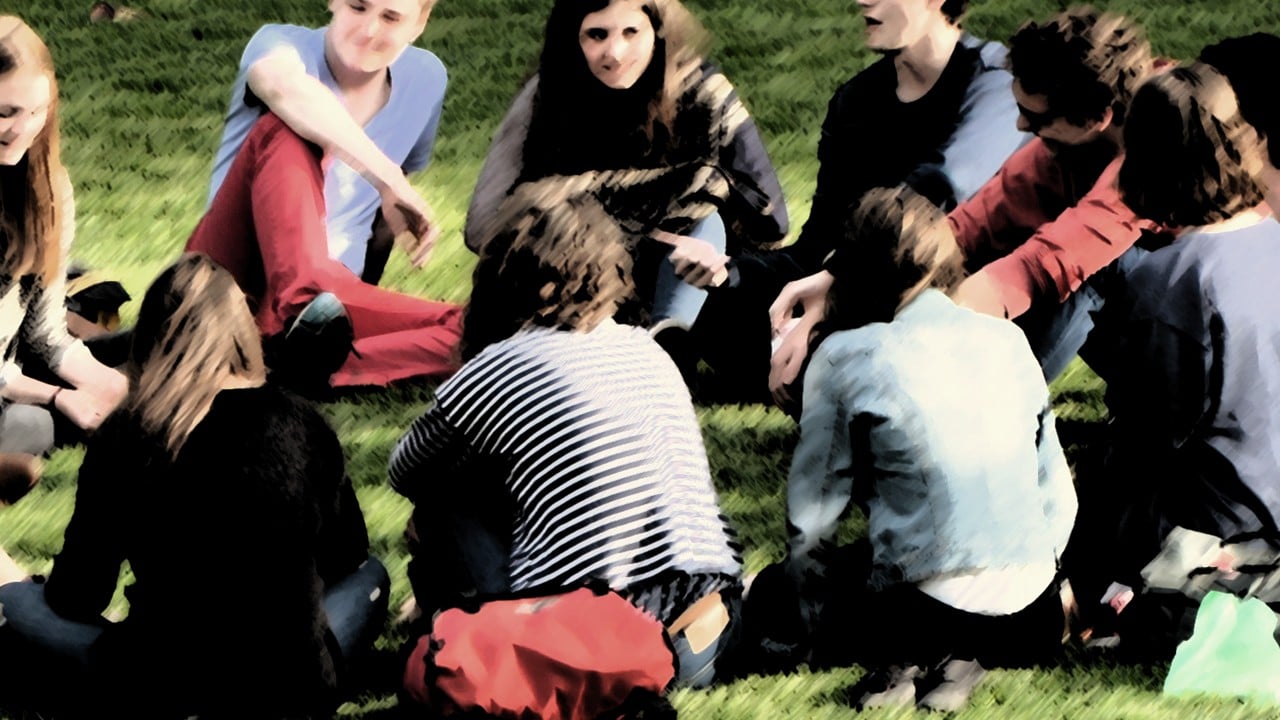
At the heart of SEGL’s programming lies growth discourse, an approach to discussion meticulously designed to push students beyond superficial civility towards genuine intellectual and personal development. Noah Bopp explains the deliberate choice of terminology: "The motivation for doing it is in the title… For students, I am about to engage in discourse that may or may not be civil; the point is it’s discourse that’s going to help me grow. For teachers, the goal is not just keeping everybody being nice to each other; the goal is what can I do to make sure that this conversation helps students grow?" This reframing shifts the focus from simply maintaining politeness to actively seeking transformative learning experiences through challenging conversations. It acknowledges the inherent discomfort and vulnerability involved in tackling contentious subjects, while simultaneously prioritizing the courage and honesty required to move these dialogues forward. The framework is designed to be straightforward and replicable, making it a valuable tool for any educator seeking to enhance classroom discussions.
Navigating Nuance: Growth Discourse and the Challenge of Bothsidesism
A critical aspect of SEGL’s growth discourse model is its careful navigation of "bothsidesism," the practice of presenting opposing viewpoints as equally valid, even when one side lacks substantial evidence or ethical grounding. SEGL’s mission explicitly states its commitment to "convene and mentor students who have different values, viewpoints, experiences, and identities," yet it firmly rejects false equivalence. Bopp clarifies SEGL’s stance: "SEGL is nonpartisan. SEGL is not neutral. We don’t say, ‘The Holocaust, good or bad, you decide,’ right? We don’t say in our science classrooms, ‘Climate change, is that real or not real?’"
Instead, when a topic presents a genuine disagreement among "reasonable, educated people," students are equipped with critical thinking skills to evaluate arguments independently. They are encouraged to engage with the strongest possible arguments from different sides, ultimately forming their own informed positions. This approach is rooted in the belief that teaching students how to think is paramount, rather than dictating what to think. Bopp warns against the dangers of the latter: "If we err on the side of teaching students what to think — which is so easy to do — we shortcut the critical thinking process and we make that kid susceptible to the next demagogue who comes along. And there are a lot of demagogues in this world right now." This analytical perspective highlights the profound implications of educational philosophy on civic resilience and the ability of future generations to discern truth and resist manipulative rhetoric.
Core Principles of Growth Discourse: Building a Foundation for Dialogue
The effectiveness of growth discourse is underpinned by a set of foundational principles that guide participants through challenging conversations:
-
Begin with Belonging: Before any substantive and potentially difficult discussion can occur, a prerequisite is that all participants feel a profound sense of belonging within the group. SEGL achieves this through explicit statements, integration into discourse guidelines, and structured activities that encourage students to share their identities and personal histories. This creates a psychologically safe environment where individuals feel valued and respected, reducing the defensiveness that often derails contentious discussions. Furthermore, SEGL intentionally cultivates a diverse community, ensuring that both the student body and faculty represent a wide array of backgrounds and viewpoints. Bopp emphasizes that a homogenous group struggles with difficult topics, as similar views can lead to exclusion or a lack of genuine challenge. A diverse environment, where students feel they all belong, mitigates anxiety and fosters more authentic engagement.

-
Value Intent and Impact: Conversations on sensitive issues inevitably carry the risk of unintentional harm. The growth discourse model meticulously addresses the interplay between a speaker’s intent and the impact of their words. Bopp asserts that "Both of those things matter." He cautions against using "Oh, I’m so sorry, that wasn’t my intent," as a "get out of jail free card," underscoring the necessity of self-reflection on the actual impact of one’s communication. Conversely, he advises against assigning malicious motives to others based solely on one’s emotional response, labeling such an action as "unreflective and incurious." This principle encourages empathy, accountability, and a commitment to understanding both the speaker’s perspective and the listener’s experience, fostering a more nuanced and responsible communicative practice.
-
Avoid Echo Chambers: Human beings naturally gravitate towards those who share similar beliefs and identities. While this can provide comfort and validation, exclusive reliance on such "echo chambers" can severely limit personal and intellectual growth. Growth discourse challenges this tendency, recognizing that true development often occurs at the edges of one’s comfort zone, through exposure to divergent ideas. Bopp explains that at SEGL, students are encouraged to engage with like-minded individuals not to retreat from challenging conversations, but "to figure out how do we re-engage" with broader, more diverse perspectives. This principle actively promotes intellectual curiosity and the courage to step outside familiar ideological boundaries, preparing students for a complex, pluralistic world.
The STAR Model: A Framework for Critical Engagement
An integral component of growth discourse is the STAR model, a critical thinking framework adapted from Harvard’s Project Zero Thinking Routines. This model systematically guides students through a process of deep understanding before reaching judgment, enhancing their ability to analyze complex situations ethically and thoughtfully. A sample lesson plan demonstrates its practical application, illustrating how students move from observation to action.
-
SEE: This initial phase emphasizes comprehensive observation and understanding before any judgment is made. Bopp describes it as ensuring one is "seeing something as fully as you can before you decide what to think about it." Key questions in this stage include: "What can I see? What can I understand before I judge? What do the experts say? What voices are missing from this conversation? How can we find those voices before we decide what we think?" This encourages thorough research, diverse perspective-seeking, and a recognition of informational gaps.
-
THINK: After a thorough "SEE" phase, students are prompted to form their own reasoned opinions. As future leaders, they must ultimately decide: "what do I think about this situation? Is it good? Is it bad? Is it right? Is it wrong?" This stage requires students to synthesize information, apply ethical frameworks, and articulate a coherent position based on their analysis.
-
ACT: A significant addition by SEGL to the Project Zero curriculum, the "ACT" phase compels students to translate their thoughts into tangible action. "Once you decide what you think… as leaders, we have to decide what to do, how to act," Bopp states. This could involve voting, making difficult personal choices (e.g., whether to cheat on a test), or navigating social dilemmas (e.g., lying to protect a friend versus telling the truth). This emphasizes the real-world consequences of ethical deliberation and the responsibility inherent in leadership.

-
REFLECT: The final stage involves a critical review of the actions taken. Students are encouraged to "reflect on what we just did. Did we like it? Did we not like it? What was the response that we got? What might we do next time?" This reflective practice is crucial for continuous learning and improvement. The beauty of the STAR model is its cyclical nature: the "R" (Reflect) informs the "S" (See) for future situations, creating an iterative process of learning and growth.
Implementation for Educators: Advice from Noah Bopp
For teachers eager to integrate growth discourse into their own classrooms, Noah Bopp offers practical, actionable advice. His recommendations emphasize a gradual, intentional approach:
- Start Small and Build Trust: Begin with less emotionally charged topics or lighter discussions to introduce the framework. This allows students to become comfortable with the process and build trust within the group before tackling highly sensitive issues. Modeling vulnerability and active listening as an educator is also crucial in this initial phase.
- Explicitly Teach the Principles: Do not assume students instinctively understand the nuances of growth discourse. Dedicate time to explicitly teach each principle—Belonging, Intent and Impact, Avoiding Echo Chambers, and the STAR model—using clear examples and practice exercises. SEGL provides detailed guidelines and lesson plans that can be adapted for various educational settings.
- Model the Behavior: Educators must embody the principles they wish to instill. This means demonstrating active listening, expressing empathy, being open to differing viewpoints, and acknowledging one’s own biases. A teacher’s consistent modeling reinforces the value and effectiveness of the framework.
- Create a Consistent Environment: Growth discourse should not be a one-off activity but an integrated part of the classroom culture. Regular practice, feedback, and reinforcement of the principles help solidify student understanding and habit formation. Establishing clear norms and expectations from the outset is vital.
- Focus on Growth, Not Just Agreement: Remind students and yourself that the goal is not necessarily to reach a consensus, but to deepen understanding, challenge assumptions, and foster personal and intellectual growth. Celebrate the process of thoughtful engagement, even when disagreements persist.
Broader Implications and a Vision for the Future
The growth discourse framework holds significant implications beyond the confines of SEGL’s classrooms. In a world grappling with polarization, misinformation, and a decline in civic engagement, the ability to engage in productive, growth-oriented dialogue is a cornerstone of a healthy democracy and a flourishing society. This model offers a powerful pedagogical tool for educators nationwide seeking to cultivate critical thinking, ethical reasoning, and empathetic communication skills in their students. By learning how to engage with complex issues and how to think independently, students become more resilient against manipulative influences and better equipped to contribute meaningfully to their communities.
Noah Bopp expresses profound optimism about humanity’s capacity to overcome intense division, echoing Plato’s philosophy: "Education is not about putting sight into blind eyes." He continues, "The effective educator assumes that the power to learn is already present in the soul of the learner… And that means the goal of the educator is to give the learner places to look and questions to ask." Bopp’s fundamental belief in the inherent "goodness of every human being," though he acknowledges it might seem naive, serves as a guiding principle for his work. By providing students with the tools to critically examine the world’s challenges and ask fundamental ethical questions, he trusts that "the goodness that is already present in the learner will be uncovered." This vision underscores the transformative potential of education not just to impart knowledge, but to awaken and nurture the ethical leadership essential for a more harmonious and progressive future.
For educators and institutions seeking to implement or explore this transformative framework, the SEGL faculty actively offers support. Further information and contact details are available through their official website, or by directly reaching out to Noah Bopp, underscoring the collaborative spirit of this initiative to foster a more thoughtful and engaged global citizenry.