




A pervasive challenge echoing through classrooms globally is the disconnect between a teacher’s dedicated instruction and students genuinely "owning" their learning. While modern pedagogical approaches such as project-based learning (PBL), Universal Design for Learning (UDL), and makerspace initiatives have demonstrated significant potential in fostering engaging environments, a critical component often remains unaddressed: the explicit teaching of how to learn. Educational strategist Zaretta Hammond, author of the forthcoming book Rebuilding Students’ Learning Power (Corwin, 2025), argues that true student autonomy and equitable academic outcomes hinge on equipping learners with a specific set of "learn-to-learn" skills, transforming them into adept information processors.
The observation from a recent instructional round highlights this common frustration: a teacher, stepping out of a classroom where students were diligently working in groups, expressed exasperation. "I am trying to get them to own their learning," she confided, "They are sweet. They do what I ask, but they just won’t own it." This sentiment reflects a widespread dilemma among educators who invest countless hours in crafting engaging lessons and providing extensive scaffolding, yet often find students passively complying rather than actively internalizing and mastering content. The core issue, Hammond contends, is that learning is not a passive reception but an active, internal process solely controlled by the learner’s brain. Without the cognitive tools and an intellectually safe environment, even the most meticulously planned lessons may fail to ignite curiosity, facilitate information processing, or result in lasting understanding.
The Evolution of Pedagogical Thought: Beyond Engagement to Empowerment
For decades, educational discourse has emphasized student engagement as a primary driver of learning. From constructivist theories advocating for active participation to modern calls for personalized learning pathways, the focus has often been on creating environments that pique student interest and foster participation. While these efforts are indispensable, Hammond’s work posits that they are insufficient without an explicit focus on metacognition—the awareness and understanding of one’s own thought processes—and self-regulated learning strategies.
The distinction is crucial. Pedagogical approaches like PBL are powerful frameworks for delivering content and structuring learning experiences. UDL aims to remove barriers to learning for all students by offering flexible ways of engaging, representing information, and demonstrating knowledge. Makerspace learning promotes creativity and problem-solving through hands-on exploration. However, these methods, while evidence-backed and transformative, assume that students inherently possess or will organically develop the internal cognitive strategies necessary to capitalize on such rich environments. This assumption often overlooks the "hidden curriculum" of learning strategies that are frequently acquired implicitly by some students, often from privileged backgrounds, but remain elusive to others, exacerbating achievement gaps.
Zaretta Hammond’s Framework: Demystifying the "Game of Learning"
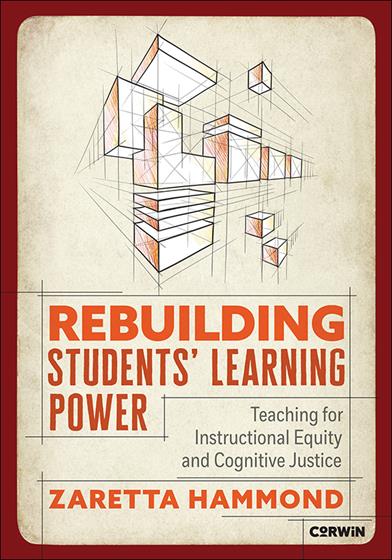
Hammond’s Rebuilding Students’ Learning Power introduces a structured approach to making these implicit strategies explicit. She aligns her philosophy with educational luminaries such as David Perkins of Harvard’s Project Zero, who refers to these as the "game of learning," and Ron Berger of EL Education, who speaks of the "craftsmanship of learning." Hammond prefers to call them the "trade secrets" of learning, emphasizing that they are not esoteric concepts but practical, actionable "moves" that, when mastered, empower students to become skilled information processors.
These "learn-to-learn" skills are distinct from executive function skills. While executive functions — such as planning, organization, time management, and impulse control — are vital for academic success, they primarily address the management of learning. They help students stay organized and on track. "Learn-to-learn" skills, conversely, directly address the cognitive load and the processing of new information. They equip students to move content through the brain’s attention, elaboration, and consolidation phases, ensuring that learning is not just absorbed but truly "sticky."
Hammond conceptualizes these "learn-to-learn" skills as a set of five flexible "moves" that students can deploy adaptively based on the cognitive demands of a task. The distinction between a "move" and a "skill" is important: a move is a specific, discrete action (like a chess move), while a skill is the broader competency that encompasses the judgment of when, how, and why to use various moves effectively. By teaching individual moves, educators help students build the overarching skill set of effective learning.
The Five Learn-to-Learn Moves: A Deep Dive into Cognitive Strategy
-
Move 1: Size It Up and Break It Down
This foundational move initiates the learning process by engaging students in task analysis. Before diving into content, students are prompted to critically assess the task at hand. This involves a structured cognitive routine to understand what is being asked, identify potential challenges, and determine the required intellectual and emotional stance. The "Break It Down" phase then focuses on strategizing: students disaggregate the task into its constituent cognitive activities, anticipating the tools and strategies needed for successful completion. This move primes the brain for effective information processing by fostering intentionality and proactive planning, addressing questions like: "What is this task really asking me to do?" "What emotions might this task evoke, and how will I manage them?" and "What is my plan of attack?" -
Move 2: Scan the Hard Drive
Central to effective learning is connecting new information with existing knowledge. The "Scan the Hard Drive" move explicitly fires neural pathways that hold a student’s background knowledge, or "funds of knowledge" (schema), in preparation for integrating new content. Cognitive science consistently shows that new learning is most robust when firmly anchored to prior understanding. When encountering novel information, the brain instinctively searches for related experiences, definitions, or concepts, no matter how tangential. This move, prompted by the learner, encourages a deliberate "scavenger hunt" through their mental archives, helping to bridge the gap between the known and the unknown. This is particularly vital for students from diverse backgrounds, whose rich but potentially untapped funds of knowledge can be explicitly activated to make new content relevant. -
Move 3: Chew and Remix
This move is the heart of the elaboration phase of information processing. Once prior knowledge is activated (via "Scan the Hard Drive"), students must actively integrate the new content with their identified schema. "Chewing" refers to the active, often effortful, process of grappling with new information, questioning, comparing, and contrasting. "Remixing" is the outcome: a new, integrated understanding formed by blending the "new with the known." This process demands "productive struggle" within the learner’s zone of proximal development (ZPD), moving beyond superficial recall to deeper meaning-making. It aligns with higher-order thinking skills on Bloom’s Taxonomy and Webb’s Depth of Knowledge wheel, where students analyze, synthesize, and evaluate information, transforming raw data into coherent understanding.
-
Move 4: Engage in Skillful Practice
While "Chew and Remix" focuses on general meaning-making, "Skillful Practice" targets the refinement of understanding, the development of automaticity, and proficiency in core concepts, skills, and procedures. This move emphasizes deliberate practice, a cornerstone of expertise development. It involves focused repetition coupled with continuous refinement, aiming to myelinate new neural pathways—a biological process that strengthens connections in the brain, leading to faster, more efficient processing. Students using this move are encouraged to identify specific weaknesses in their execution of a skill or application of a concept and to concentrate their practice on those precise areas. This metacognitive awareness of one’s own learning process and the ability to self-correct are hallmarks of an independent learner. -
Move 5: Make it Sticky
The final move, "Make it Sticky," is dedicated to strengthening the consolidation phase of information processing and counteracting the brain’s natural "pruning" mechanism, which eliminates fragile neural connections if new learning isn’t reinforced. This move focuses on transforming ephemeral new learning into robust, long-term memory through application and retrieval practice in varied contexts. Crucially, this move often extends beyond the classroom, requiring students to revisit and apply newly acquired knowledge within 12-48 hours. Strategies include teaching the concept to someone else, applying it in a novel real-world scenario, or engaging in spaced self-quizzing. This deliberate reinforcement ensures that dendrites, the branches of neurons that form new connections, are strengthened, making the learning durable and readily accessible for future use.
Cultivating Autonomous Learners: Strategic Implementation
Teaching these "learn-to-learn" moves requires more than just presenting them; it demands a systemic shift in classroom culture and pedagogical approach. Hammond outlines three key strategies for educators to foster student ownership:
-
Initiate into a Cognitive Apprenticeship: Drawing parallels to traditional apprenticeships in crafts or trades, Hammond advocates for establishing the classroom as a "cognitive apprenticeship." This involves an explicit onboarding process, followed by phases of skill-building and habit formation, leading students toward mastery of learning itself. During an initial 4-6 week period, teachers explicitly lay out the path to becoming a proficient information processor, guiding students to develop six key capacities: self-awareness, self-management, responsible decision-making, social awareness, relationship skills, and a growth mindset. This structured initiation helps demystify the learning process and empowers students to see themselves as active agents in their cognitive development.
-
Invite Them to Revise Their Learner Identity: A student’s self-perception as a learner significantly impacts their academic trajectory. Many struggling students develop negative learner identities, exemplified by phrases like, "I’m not a math person." The cognitive apprenticeship serves as an invitation for students to re-evaluate these self-limiting beliefs. By explicitly teaching them effective learning strategies and providing opportunities for success, educators can help students shift from a fixed mindset (where abilities are seen as innate and unchangeable) to a growth mindset (where intelligence and skills can be developed through effort). This revision of learner identity is critical for fostering a sense of belonging and capability in the academic sphere, helping students overcome perceived "choke points" (natural cognitive constraints like limited working memory) and "pitfalls" (self-sabotaging behaviors like cramming).
-
Integrate Regular Opportunities for Reflection: Developing metacognitive skills requires consistent practice in reflecting on one’s learning process. Teachers must embed structured instructional conversations that prompt students to analyze their learning journey, articulate their strategies, and reflect on successes, mistakes, and confusions. This includes discussing which "moves" they employed, how effectively they were used, and what adjustments could be made. Regular feedback loops, both from peers and the teacher, are essential for refining these skills. By making reflection a routine part of the learning cycle, students develop the self-monitoring and self-correction abilities characteristic of expert learners.
The Equity Imperative: Unlocking Potential for All
At its core, Hammond’s framework is an equity initiative. She argues that "learn-to-learn" skills constitute a "hidden equity curriculum." In many educational systems, students from culturally and socio-economically privileged backgrounds often acquire these metacognitive strategies implicitly through home environments that value intellectual curiosity, provide rich learning resources, and offer explicit coaching on study habits. For students from marginalized communities, these implicit advantages are often absent, leading to an "opportunity gap" that is frequently misattributed to a lack of innate ability or motivation.
By making these learning strategies explicit and systematically teaching them to all students, educators can level the playing field. This approach moves beyond simply accommodating diverse learners to actively building their cognitive capacity and empowering them with the tools to navigate any academic challenge. It is about teaching for instructional equity, ensuring that every student, regardless of background, has the opportunity to master the craftsmanship of learning and become a truly independent, self-directed learner.
The implications for educational practice are profound. Integrating "learn-to-learn" skills demands shifts in teacher professional development, moving beyond content delivery strategies to include training in cognitive science and metacognitive coaching. Curriculum design must intentionally embed opportunities for students to practice and reflect on these moves across disciplines. Assessment should not only measure content knowledge but also evaluate students’ mastery of learning processes. Organizations like foundry10 and SchoolAI, which sponsored the interview with Zaretta Hammond, represent a growing recognition within the educational technology and research sectors of the importance of these foundational skills. As education continues to evolve, empowering students to understand how they learn may well be the most critical skill we can impart, preparing them not just for academic success, but for lifelong adaptability in an ever-changing world.