



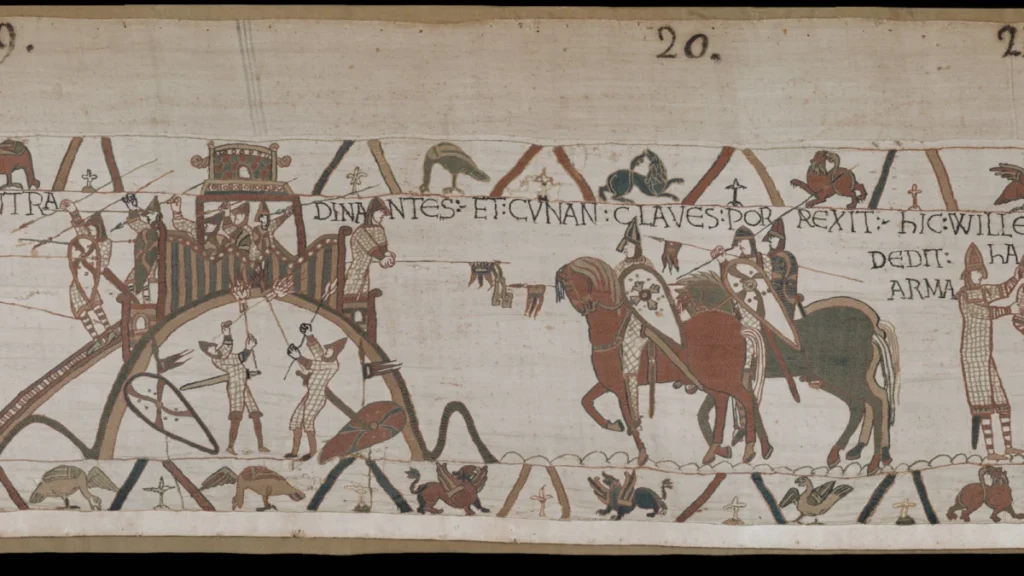
The year 1066 stands as the most pivotal date in English history, marking the end of the Anglo-Saxon era and the beginning of the Norman Conquest. For nearly a millennium, the narrative of this transformative year has been anchored by a singular, heroic feat of endurance: King Harold II’s desperate, 200-mile forced march from the north of England to the southern coast to face William the Conqueror. According to traditional historical accounts, Harold’s exhausted troops completed this grueling trek in just over a week, only to fall at the Battle of Hastings. However, groundbreaking research by Professor Tom Licence, a medievalist at the University of East Anglia, suggests that this legendary march may never have happened. By re-examining primary sources and the nuances of Old English linguistics, Licence argues that Harold utilized a sophisticated naval strategy rather than a suicidal land-based sprint, a discovery that fundamentally alters our understanding of the last Anglo-Saxon king’s military genius.
The Traditional Narrative: A Tale of Exhaustion and Desperation
For centuries, the story of 1066 has been taught as a drama of impossible timing. In September 1066, King Harold Godwinson was forced to defend his crown against two separate invasions. First, he hurried north to Yorkshire to confront the Norwegian King Harald Hardrada and his own rebellious brother, Tostig. On September 25, Harold won a decisive victory at the Battle of Stamford Bridge. However, just days later, on September 28, William, Duke of Normandy, landed his forces at Pevensey on the Sussex coast.
The prevailing historical consensus, largely solidified during the Victorian era, claimed that upon hearing of William’s arrival, Harold dismissed his naval fleet and ordered his battle-weary soldiers to march 190 to 200 miles south on foot. This "forced march" was said to have taken approximately 10 to 12 days, leaving the English army physically spent before the decisive clash at Senlac Hill on October 14. This narrative served to explain Harold’s eventual defeat, framing it as the result of bad luck and physical exhaustion rather than a failure of leadership or strategy.
The Linguistic Re-evaluation of the Anglo-Saxon Chronicle
Professor Licence’s investigation began with a skeptical look at the Anglo-Saxon Chronicle, the primary historical record of the period. He focused on a specific passage that has long been interpreted as evidence that Harold disbanded his fleet. The Victorian-era translation of the text suggested that Harold’s ships "came home," which scholars took to mean the sailors were dismissed and the ships decommissioned.
Upon reviewing nine surviving manuscripts of the Chronicle and other contemporary 11th-century documents, Licence found that this interpretation was a fundamental misunderstanding of the Old English terminology. The phrase "comon ham" (came home) did not imply a dismissal of the military force. Instead, in the context of 11th-century maritime operations, it indicated that the fleet had returned to its primary base of operations—likely London or the tactical hubs along the Thames—to resupply and await further orders.
"I went looking in the sources for evidence of a forced march and found there wasn’t any," Licence stated. He noted that there is no explicit mention in the contemporary records of the infantry making a continuous land journey of that magnitude. By correcting this linguistic error, the "missing" fleet of King Harold reappears as a central component of his defense strategy.
A Coordinated Land-Sea Operation
The revised theory posits that Harold’s campaign was not a series of reactive, desperate lunges, but a highly organized "land-sea operation." Instead of forcing his men to march through the mud and difficult terrain of the English interior, Harold likely used his naval assets to transport his core professional troops—the housecarls—and their supplies.
The English navy in 1066 was a formidable force. Harold had spent the summer of 1066 stationed on the Isle of Wight with a massive fleet, anticipating William’s arrival. While he eventually had to move north to deal with the Norwegian threat, Licence argues that the fleet remained active. After the victory at Stamford Bridge, it is far more logical that Harold’s army traveled by river and sea. Ships could move soldiers and heavy equipment much faster and with significantly less physical toll than a march along Roman roads like Ermine Street.
"Harold was not a reactive, exhausted commander; he was a strategist using England’s naval assets to wage a coordinated defense," Licence argued. This perspective paints Harold as a modern military thinker who understood the logistical advantages of sea power. By utilizing the fleet to move south, Harold could have reached London quickly, gathered reinforcements, and moved toward the Sussex coast with a much fresher force than previously believed.
Timeline of the 1066 Crisis
To understand the impact of this research, it is essential to look at the condensed timeline of the events that reshaped England:
- January 5, 1066: King Edward the Confessor dies; Harold Godwinson is crowned the following day.
- Summer 1066: Harold mobilizes the largest fleet and army England had ever seen, stationed along the southern coast to await William of Normandy.
- Early September 1066: Provisions run low; the fleet returns to London ("comes home") to resupply.
- September 20, 1066: Harald Hardrada of Norway defeats northern English earls at the Battle of Fulford.
- September 25, 1066: Harold wins the Battle of Stamford Bridge in Yorkshire, ending the Viking Age in England.
- September 28, 1066: William of Normandy lands at Pevensey.
- October 1–12, 1066: The "Legendary March" period. Under the new theory, this is when Harold uses the fleet and river transports to move his army south.
- October 14, 1066: The Battle of Hastings. Harold is killed, and the Anglo-Saxon era ends.
Supporting Data and Logistical Feasibility
Logistically, the traditional story of the 200-mile march has always troubled military historians. An army of several thousand men, including armored housecarls carrying heavy shields, mail shirts, and weaponry, would have had to maintain a pace of nearly 20 miles a day for nearly two weeks. While not impossible for elite units, doing so immediately after a bloody battle at Stamford Bridge and then engaging in another full-day battle at Hastings stretches the limits of human endurance.
Furthermore, 11th-century roads were not optimized for the rapid movement of large armies. The logistical tail of an army—food, spare weapons, and medical supplies—would have moved even slower. By contrast, a naval transport from the northern Ouse or the Humber down to the Thames could have bypassed the bottleneck of the English interior.
Licence’s research suggests that the fleet, which contemporary Norman sources (such as William of Poitiers) mentioned as a significant threat to Duke William’s landing, was never disbanded. These Norman accounts describe Harold’s ships as being ready to block William’s retreat or cut off his supply lines. This aligns with the idea that the navy was fully operational and likely used for troop transport.
Official Responses and Scholarly Impact
The historical community has responded to Licence’s findings with a mixture of intrigue and validation. Ray Porter, the current curator of the Hastings battlefield for English Heritage, has voiced strong support for the revised narrative.
"Professor Licence’s research shows the immense value of testing received wisdoms," Porter explained. "What we know about Harold’s previous military campaigns fits with the idea that he used naval forces to transport soldiers and threaten William. There are references in accounts of the Norman invasion which also lend weight to that possibility."
Porter noted that the traditional "exhausted army" narrative may have been a convenient excuse used by later chroniclers to rationalize why God allowed the Christian Anglo-Saxons to be conquered by the Normans. If the army was fresh and the strategy was sound, the defeat at Hastings becomes a matter of tactical battlefield shifts and the "fortunes of war" rather than a foregone conclusion based on fatigue.
Broader Implications for English History
The debunking of the 200-mile march legend has profound implications for how we view the character of Harold II. For centuries, he has been portrayed as a tragic, harried figure—a king who did his best but was ultimately overwhelmed by the sheer scale of the challenges he faced. In Licence’s view, Harold emerges as a far more competent and formidable leader.
"Only a mad general would have sent all his men on foot in this way if ship transports were available," Licence added. By recognizing Harold’s use of naval power, historians can now analyze the Battle of Hastings not as a mismatch between a tired army and a fresh one, but as a clash between two of the greatest military minds of the 11th century.
This research also highlights the dangers of "Victorianizing" history. Many of the details we take for granted about the Middle Ages were interpreted by 19th-century scholars who viewed history through the lens of their own romanticism and military experiences. The "forced march" fit the Victorian ideal of the heroic, suffering soldier, even if it didn’t align with the practical realities of 1066.
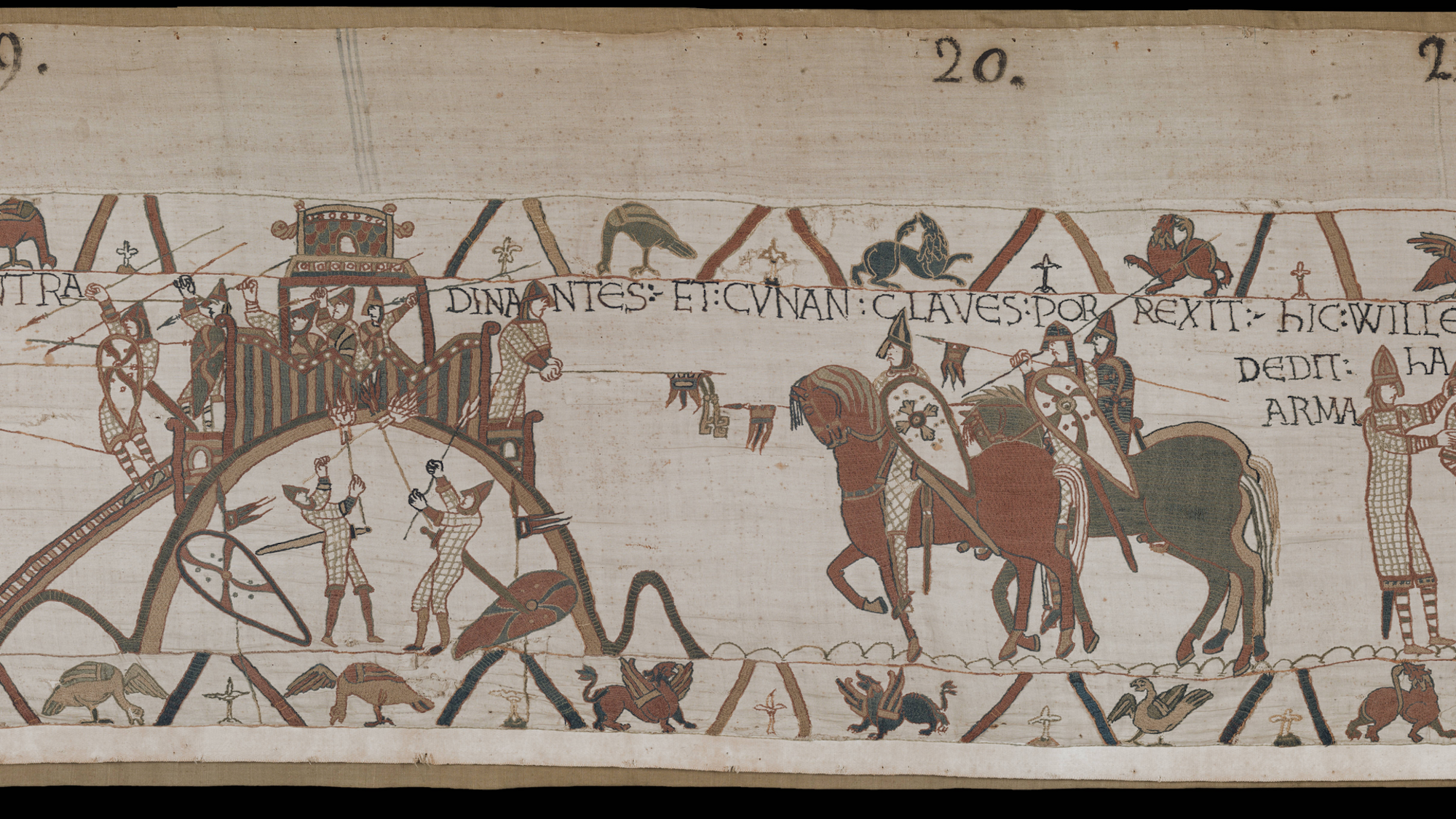
As the 1,000-year anniversary of the Battle of Hastings approaches in the coming decades, the work of scholars like Tom Licence ensures that the story of England’s foundation remains a living, breathing field of study. The legend of the march may be fading, but in its place is a more complex and impressive reality of a king who utilized every resource at his disposal—land and sea—to defend his kingdom. The Bayeux Tapestry, once thought to depict the march, may now be viewed as a record of a much more sophisticated maritime mobilization, proving that even the most "settled" history is always subject to the light of new discovery.