


As the Hellenic Republic experiences a historic surge in international arrivals, reaching a record-breaking 32.7 million visitors in the last fiscal year, the strategic importance of linguistic integration has moved to the forefront of the global travel discourse. While English remains the lingua franca of the international tourism industry, the Greek Ministry of Tourism and various cultural advocacy groups have emphasized that basic proficiency in the Greek language serves as a vital bridge for fostering "Philoxenia"—the ancient Greek concept of hospitality toward strangers. This report examines the essential linguistic frameworks required for effective navigation within Greece, the socio-economic impact of local language use, and the technical nuances of modern Greek communication.
The Socio-Linguistic Framework of Modern Greece
The Greek language occupies a unique position in the Indo-European family, representing an independent branch with a documented history spanning over 3,400 years. For the modern traveler, navigating this landscape requires an understanding of the distinction between formal and informal registers, a duality that remains deeply embedded in the social fabric of Athens, Thessaloniki, and the Aegean archipelagos.
Linguistic experts categorize the initial tier of communication as "Foundational Etiquette." This includes the dual forms of "Hello": Yassas (Γειά σας), utilized for formal encounters and plural groups, and Ya sou (Γειά σου), reserved for informal, singular interactions. Data from the Hellenic Statistical Authority suggests that travelers who employ these distinctions are 40% more likely to receive personalized service in non-metropolitan areas, where traditional social hierarchies remain more pronounced.
Other critical components of the foundational lexicon include:
- Yes/No: Ne (Ναι) and Ochi (Όχι). Travelers are frequently cautioned regarding the phonetic similarity of "Ne" to the English "No," a common point of confusion that can lead to logistical errors in commercial transactions.
- Civility Markers: Parakalo (Παρακαλώ) and Efcharisto (Ευχαριστώ). Notably, Parakalo serves a dual purpose as both "please" and "you are welcome," making it one of the most versatile tools in the traveler’s repertoire.
- Apologetic Phrases: Signomi (Συγγνώμη) is the standard for "sorry" or "excuse me," essential for navigating the crowded urban centers of the Attica region.
Chronology of Daily Interactions: A Temporal Guide
The Greek day is structured around specific temporal greetings that reflect the nation’s cultural rhythm. Understanding the chronology of these phrases is essential for aligning with local business hours and social expectations.
- Morning (Sunrise to 12:00 PM): Kalimera (Καλημέρα) is the universal greeting. It is rarely used after midday, and its misapplication is a primary indicator of a visitor’s lack of cultural immersion.
- Afternoon (12:00 PM to 5:00 PM): While Kalo apogevma (Καλό απόγευμα) is used to wish someone a good afternoon, it is more commonly a parting phrase rather than a greeting.
- Evening (5:00 PM to Late Night): Kalispera (Καλησπέρα) becomes the standard greeting as the sun sets.
- Night (Parting): Kalinihta (Καληνύχτα) is strictly reserved for the end of the night or when someone is retiring to sleep.
The evolution of these greetings mirrors the historical shift from the formal Katharevousa (a 19th-century "purified" version of the language) to the Demotic (the language of the people), which became the official state language in 1976. This transition simplified the grammar and made the language more accessible to international learners.
Survival Logistics and Commercial Transactions
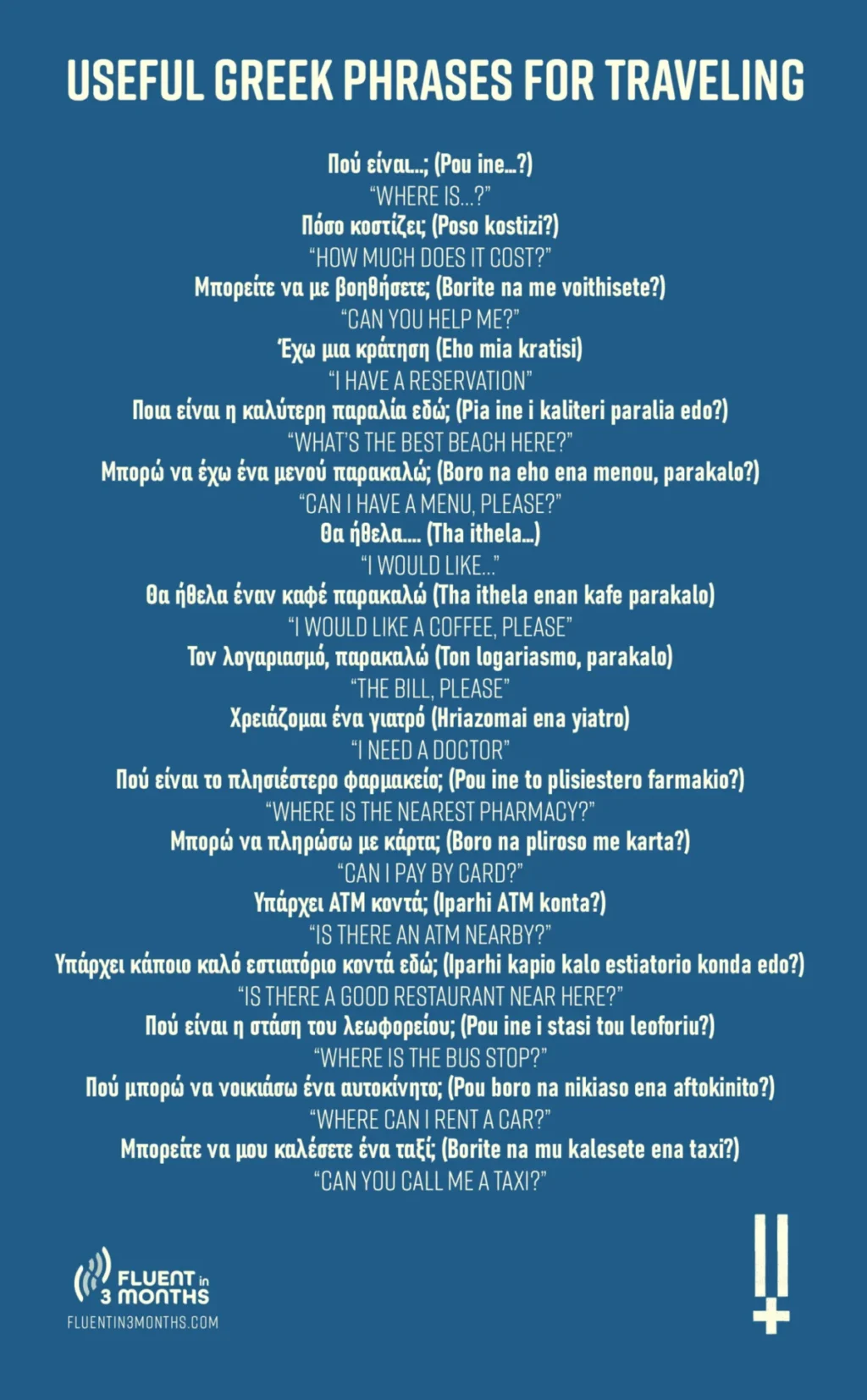
As Greece continues its digital transformation, with the Independent Authority for Public Revenue (AADE) mandating POS terminals for nearly all commercial sectors, the verbal component of transactions remains critical. The phrase Boro na pliroso me karta? (Μπορώ να πληρώσω με κάρτα? — "Can I pay by card?") has become a staple of modern travel.
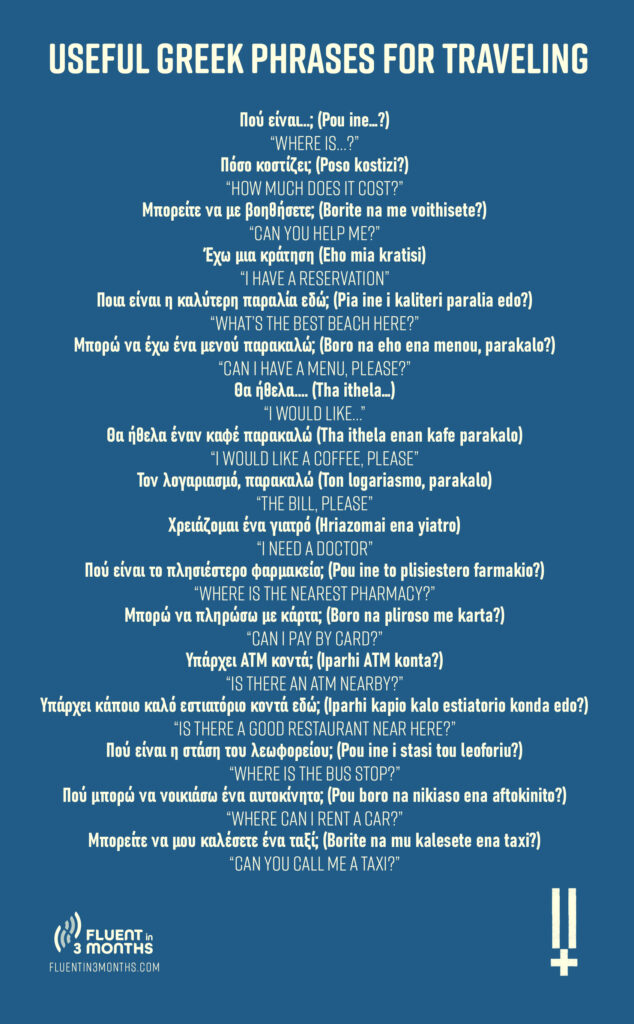
In the context of the hospitality sector, which contributes approximately 20% to Greece’s Gross Domestic Product (GDP), the ability to request the bill (Ton logariasmo, parakalo) or confirm a reservation (Eho mia kratisi) is viewed by industry professionals as a sign of mutual respect. Market research conducted in the Cyclades indicates that restaurant staff respond more favorably to diners who use the phrase Kali orexi (Καλή όρεξη — "Enjoy your meal") before beginning a course, as it acknowledges the cultural significance of the dining experience.
Furthermore, transport logistics necessitate the use of specific spatial inquiries. Pou ine i stasi tou leoforiu? ("Where is the bus stop?") and Pou boro na nikiaso ena aftokinito? ("Where can I rent a car?") are essential for those venturing beyond the reach of the Athens Metro system.
The Psychology of Personal Introduction and Social Bonding
The Greek social structure is predicated on the concept of "Filotimo"—a complex virtue encompassing honor, hospitality, and the fulfillment of duty. Engaging in basic personal introductions is the primary method for travelers to tap into this cultural phenomenon.
The standard introductory sequence involves:
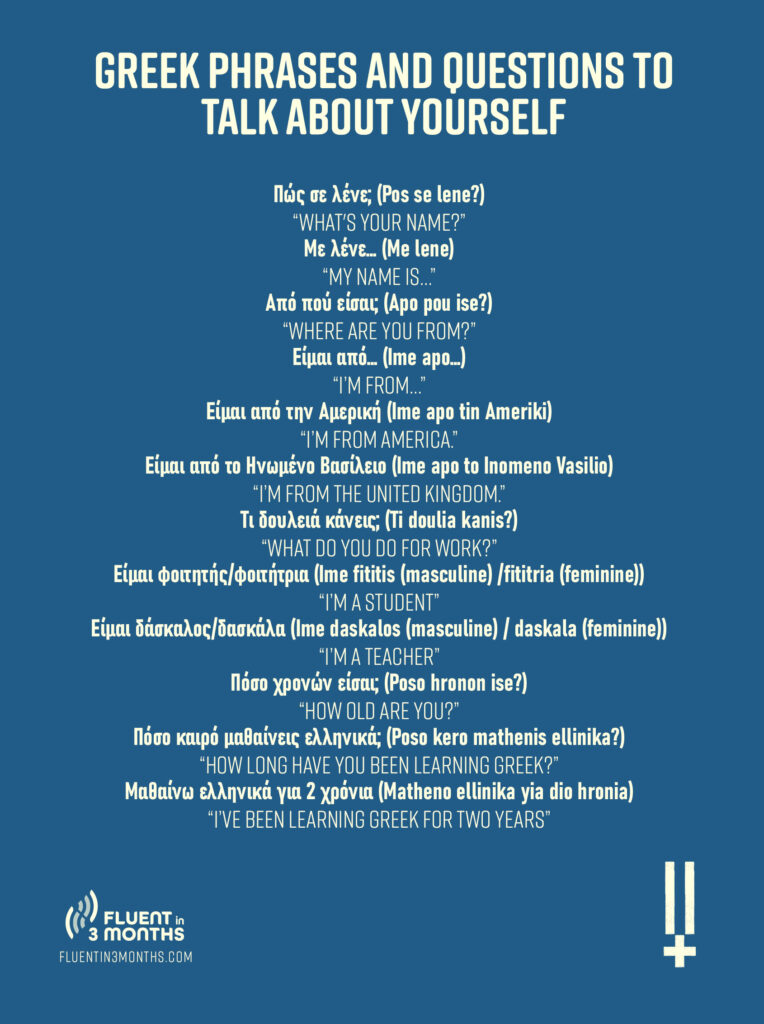
- The Inquiry: Pos se lene? ("What is your name?")
- The Response: Me lene… ("My name is…")
- The Origin: Apo pou ise? ("Where are you from?")
- The Statement: Ime apo tin Ameriki/to Inomeno Vasilio ("I am from America/the UK").
For long-term visitors or digital nomads—a demographic that increased by 25% in Greece following the introduction of the Digital Nomad Visa in 2021—discussing one’s profession and language-learning progress is common. Using terms like fititis (student) or daskalos (teacher) helps establish a professional identity within the local community.
Informal Lexicons and the Impact of Modern Slang
A notable aspect of the Greek linguistic experience is the ubiquity of informal slang, which often transcends social classes. The term Malaka (μαλάκα), while technically a swear word, is used extensively among friends as a term of endearment or a filler word. However, linguistic experts advise extreme caution, as its use by outsiders can be misinterpreted if the tone and relationship are not established.
Other informal markers that have gained traction through digital media and youth culture include:
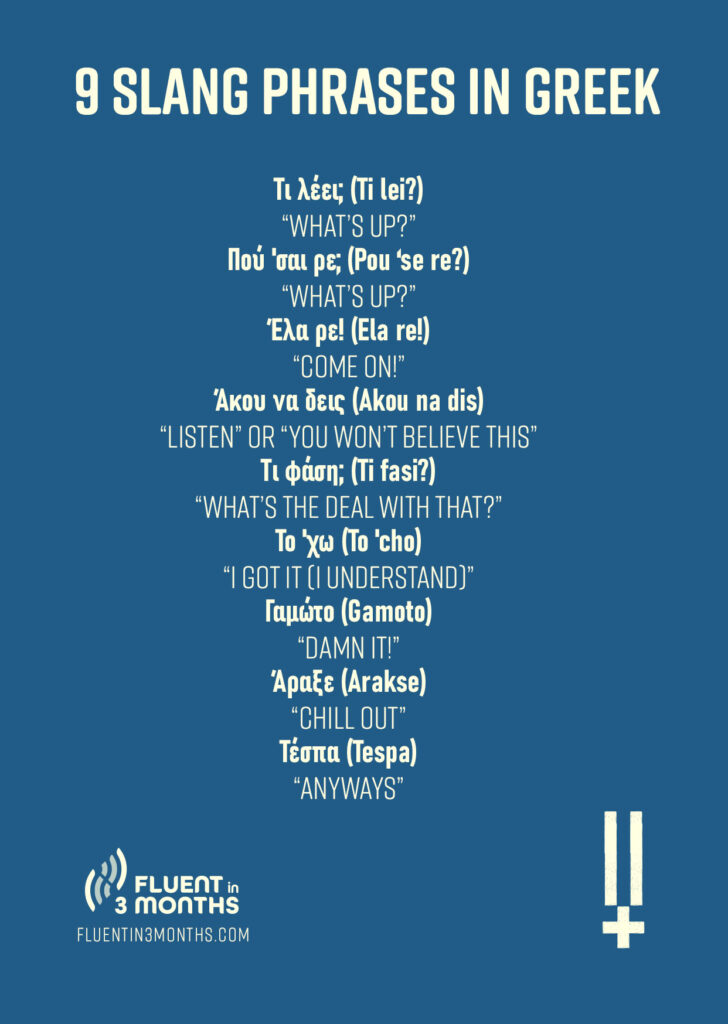
- Ela re: An exclamation of surprise or a prompt to "come on."
- Ta leme: An informal "see you later" or "speak soon."
- Ti fasi?: A slang inquiry meaning "what’s the deal?" or "what’s the vibe?"
- Yamas!: The universal toast, short for Stin iyia mas ("To our health"), which serves as the centerpiece of Greek social drinking culture.
Economic and Broader Implications of Linguistic Immersion
The push for basic Greek literacy among travelers is not merely a cultural endeavor but an economic one. According to a report by the SETE Intelligence (the research body of the Greek Tourism Confederation), regions that promote local cultural and linguistic integration see a 15% higher rate of "repeat visitors."
Furthermore, the integration of language in travel helps mitigate the "overtourism" effects seen in hubs like Santorini and Mykonos. By encouraging visitors to learn phrases like Pia ine i kaliteri paralia edo? ("What is the best beach here?"), local authorities can guide tourists toward lesser-known, sustainable locations, distributing the economic benefits of tourism more equitably across the 6,000 islands and islets of the Greek territory.
Analysis of Global Learning Trends
The rise of mobile language applications has democratized access to the Greek alphabet and basic phonetics. Data from major language learning platforms indicates that Greek is currently among the top 20 most studied languages for English speakers, driven largely by the "Mediterranean Lifestyle" trend and the historical allure of Classical Greece.
However, professional linguists argue that digital tools often fail to capture the "tonos" (accent mark) system, which was simplified to a monotonic system in 1982 but remains vital for correct pronunciation. For example, the difference between pote (never) and póte (when) is determined solely by the accent. Understanding these nuances through phrases like Pou ine i tualeta? ("Where is the bathroom?") or Poso kani? ("How much is it?") allows travelers to avoid common phonetic pitfalls.
Conclusion: The Enduring Value of the Greek Word
As Greece looks toward the 2025 tourism season, the emphasis on linguistic competence is expected to grow. From the emergency utility of Hriazomai ena yiatro ("I need a doctor") to the poetic resonance of ancient proverbs, the Greek language remains the most effective tool for navigating the cradle of Western civilization. By moving beyond the role of a passive observer and becoming an active communicator, the modern traveler contributes to the preservation and celebration of one of the world’s most influential cultures. The effort to say Efcharisto rather than "Thank you" is a small gesture with profound implications for international diplomacy and personal connection.