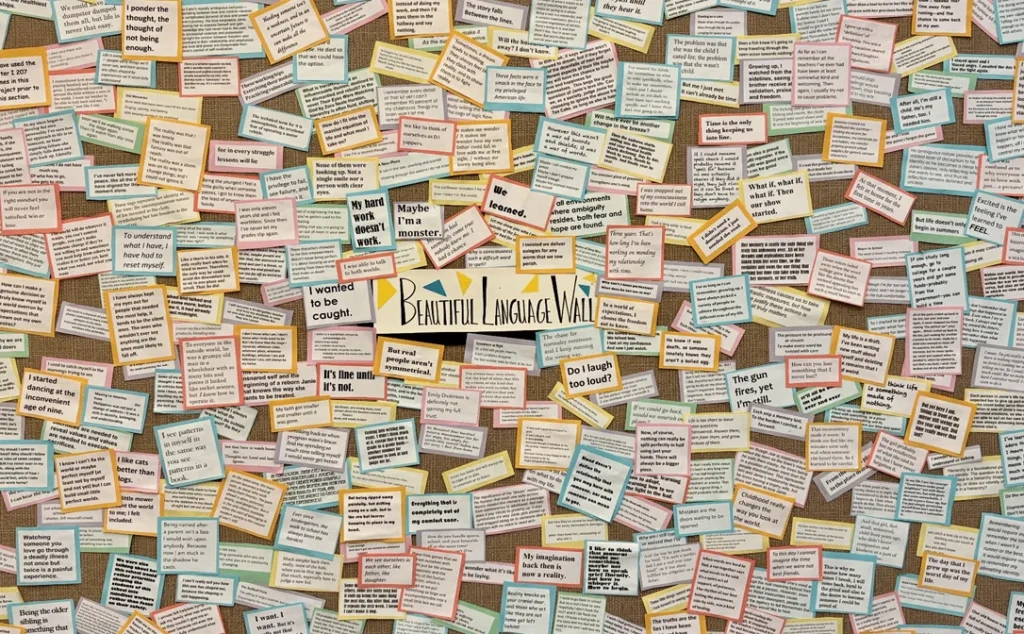



A groundbreaking pedagogical approach, developed through extensive research and classroom implementation, is demonstrating significant success in revitalizing student writing and fostering authentic intellectual engagement. Led by educator and researcher Nashwa Elkoshairi, this method integrates structured freewriting with an inquiry-based learning cycle, anchored by principles of Culturally Responsive Leadership (CRL), to empower students to take ownership of their writing and trust their unique voices. The initiative directly addresses long-standing challenges in writing instruction, moving beyond formulaic structures that often stifle creativity and critical thought in students.
The Crisis in Conventional Writing Instruction
For years, educators have grappled with the efficacy of traditional writing instruction, often constrained by standardized testing mandates, rigid curricula, and intense pressures to meet state-level performance indicators. This environment frequently leads to an over-reliance on formulaic structures, such as the ubiquitous five-paragraph essay or the RACES (Restate, Answer, Cite, Explain, Summarize) strategy, coupled with strict rubrics. While these methods are often introduced with the intention of providing scaffolding and clarity, they can inadvertently reduce writing to a transactional activity. Students often perceive their task as merely "checking boxes" to earn grades, rather than engaging in genuine expression or deep, critical thinking.
Research consistently indicates that such prescriptive approaches can be detrimental to student confidence and intrinsic motivation. For example, the 2022 National Assessment of Educational Progress (NAEP) revealed that only 27% of eighth-grade students performed at or above the "proficient" level in writing, a figure that has remained largely stagnant for years. Educators frequently observe that students perceive writing as a punitive exercise, with heavily marked-up papers and low grades eroding their belief in their own writing abilities. This often results in generic, lifeless prose that lacks the individuality and critical insight characteristic of authentic communication.
Attempts to introduce student choice, such as through choice boards, often fall short when still tethered to overly strict rubrics and teacher-centric expectations. Students might select a format for presentation, but the underlying demands remain focused on compliance rather than genuine exploration or personal connection. This systemic issue prompted Elkoshairi, during her PhD dissertation research, to investigate how to cultivate student ownership and voice in writing, challenging the prevailing paradigm that left students feeling disempowered and their writing devoid of personal resonance. Her doctoral work sought to answer the fundamental question: How do I help students take ownership of their writing and trust their voice?
The Genesis of Freewriting as a Transformative Solution
Elkoshairi’s research into more effective writing pedagogy revealed a critical disconnect: students rarely experienced writing as real writers do. Professional writers engage in iterative processes of expression, contemplation, and wrestling with complex ideas, a stark contrast to the formulaic exercises often assigned in classrooms. Inspired by the foundational work of reflective writing pioneers like Peter Elbow, Ken Macrorie, and John Dewey, Elkoshairi delved into various freewriting methodologies to inform her pedagogical innovation.
Peter Elbow, in his seminal work Writing Without Teachers (1973), famously advocated for freewriting as a means to separate the acts of generating ideas and editing, thereby liberating writers from the paralyzing grip of self-censorship and perfectionism. Ken Macrorie, known for his concept of "telling truths," similarly championed honest, unfiltered writing to discover and cultivate an authentic voice, moving beyond academic pretense. John Dewey’s philosophy of experiential learning and reflective thought provided a broader framework for understanding how inquiry and personal connection drive deeper understanding and expression, emphasizing the importance of learning by doing and reflecting on that experience. These scholars laid the groundwork for Elkoshairi’s adapted approach.
Defining Inquiry-Based Freewriting
Freewriting, at its core, is an open, continuous writing practice where individuals commit their thoughts to paper without pausing to edit, correct, or plan. The primary objective is discovery—to unearth ideas and connections that might otherwise remain dormant within the writer’s mind. By prioritizing fluidity and uninterrupted thought flow over perfection, freewriting allows writers to bypass internal critics and access a deeper stream of consciousness, encouraging them to think on paper. Elkoshairi adapted these scholarly insights, embedding structured freewriting within an inquiry-based learning cycle tailored specifically for her middle school students.
The results observed in Elkoshairi’s classroom were transformative. Initially, students struggled to produce even 150 words in their freewrites, exhibiting primarily surface-level thinking. By the academic year’s conclusion, all participants were consistently generating over 500 words, demonstrating what Elkoshairi termed "transformational reflection"—a qualitative leap in their ability to analyze, synthesize, and articulate complex ideas with depth and personal insight. This paradigm shift marked a pivotal moment, making writing student-centered for the first time in Elkoshairi’s career. While initially implemented in a virtual learning environment, the challenges addressed and the practices developed are universally applicable across diverse educational settings, offering a scalable solution to a widespread problem.
The Urgency of Authentic Voice in the Age of AI
The relevance of cultivating authentic student voice has become even more critical in the contemporary educational landscape, profoundly shaped by the pervasive influence of artificial intelligence (AI) and the challenges of dwindling attention spans. When writing is reduced to a formulaic recipe, it inherently stifles genuine thinking. However, when students are empowered to write about topics and ideas that deeply resonate with them, they forge meaningful connections, challenge their own preconceptions, and actively evolve their thinking processes.

The rapid proliferation of AI-generated text presents a significant challenge to traditional notions of authorship and student agency. Students, already conditioned by years of formulaic instruction to believe they are not "good writers," are increasingly tempted to delegate their thinking and writing to AI tools. A 2023 survey by Turnitin indicated that over 70% of students admit to using AI tools for academic work, raising concerns about originality and the development of critical thinking skills. This trend risks further eroding students’ confidence in their own intellectual capabilities and their capacity for independent thought. Elkoshairi’s approach directly counteracts this by shifting the narrative, creating structures that enable students to build writing fluency on accessible topics rooted in their identities and lived experiences. When writing becomes authentic and meaningful, students begin to recognize the inherent value and strength of their own thoughts, asserting their intellectual autonomy against the backdrop of AI’s burgeoning capabilities.
Formulaic approaches, such as the RACES strategy or the five-paragraph essay, while sometimes useful as initial scaffolds, can quickly become cognitive traps. They often suppress curiosity, creativity, and, critically, the development of individual identity in writing, locking students into rigid formats that leave no room for original thought or genuine exploration. Inquiry-based freewriting, conversely, opens doors to risk-taking, intellectual ownership, and genuine self-expression without the pervasive fear of penalty for deviation. This inquiry-driven method fosters a crucial shift from mere compliance to active curiosity, transforming writing into a space students genuinely desire to explore and understand themselves through.
Culturally Responsive Leadership: Setting the Stage for Success
The profound success of inquiry-based freewriting is inextricably linked to the establishment of a classroom environment rooted in Culturally Responsive Leadership (CRL). Recognizing that traditional school structures often fail to align with culturally responsive practices, Elkoshairi took proactive steps to disrupt inequities in belonging and voice within her classroom. Drawing on the foundational work of researchers like Muhammad Khalifa and colleagues, who describe CRL as leadership commencing with critical self-reflection and extending to how educators support teachers, shape school environments, and engage students and families, Elkoshairi adapted the CRL framework to her specific classroom context. The "Culturally Responsive School Leadership" framework provided a vital visual guide for her work.
Her approach translated the broader tenets of CRL into four grounding practices designed to cultivate safety, inclusion, and a strong sense of belonging for her middle school students. These practices included fostering deep relational trust between teacher and students, valuing and incorporating diverse perspectives into learning activities, creating a low-stakes environment that encourages experimentation and minimizes judgment, and intentionally connecting learning content to students’ cultural backgrounds and personal identities. These elements were paramount in preparing students for the reflective and vulnerable work demanded by inquiry-based freewriting. When safety and inclusion are prioritized, authentic thinking is not only welcomed but actively encouraged, allowing students to engage with their ideas without fear of judgment or marginalization.
Inquiry-Based Freewriting in Action: A Sample Unit Breakdown
The inquiry-based freewriting routine revolves around a compelling driving question, such as "How do stories connect us?" or "What drives the choices we make?" These questions are meticulously designed to be relevant and human-centered, sparking genuine curiosity in middle schoolers and providing an enduring anchor for the unit that transcends mere standards-based tasks. The ELA standards themselves are integrated and taught organically through the analysis of various media within the inquiry cycle, making learning more contextualized and meaningful.
Here’s a detailed breakdown of a sample unit focusing on the essential question of friendship:
Week 1: Setting the Question and Building Background
- Driving Question: Why does friendship matter?
- Main Standards: Informational reading, author’s purpose and perspective, basic research, and foundational narrative writing elements.
- Entry Freewrite: Students commence the unit with an "entry freewrite" on the driving question, drawing exclusively on their own experiences and existing opinions. This initial freewrite serves as a crucial baseline assessment, providing the educator with a snapshot of their prior thinking and personal connections to the topic. Scaffolding prompts are available as optional supports for students who require assistance in initiating their writing, but students are always free to adapt them or write beyond them, encouraging genuine, uninhibited expression.
- Informational Texts: The class then engages with a curated selection of informational texts on friendship. Topics typically include:
- The psychological and emotional benefits of friendship from a scientific perspective.
- Cross-cultural perspectives on social bonds and the varied roles of friendship across societies.
- The developmental evolution of friendship in adolescence, exploring its changing nature.
- Research findings on how social connections broadly impact overall human well-being and health.
This phase functions as a robust informational text mini-unit, systematically building foundational knowledge and diverse perspectives that will subsequently feed into later project work and the culminating exit freewrite.
Week 2: Shifting into Literature and Point of View
- Main Standards: Literary reading, point of view/perspective, and the concept of unreliable narrators.
- Literary Exploration: The driving question, "Why does friendship matter?" continues to guide the week as students delve into literature. They:
- Read carefully selected short stories or excerpts from novels that explore complex dynamics of friendship.
- Analyze character motivations, relationships, and the intricate emotional landscapes depicted.
- Discuss different narrative perspectives (first, second, third person) and delve into the nuanced concept of unreliable narrators, understanding how perspective shapes interpretation.
- Engage in targeted literary analysis activities, connecting thematic elements to the overarching driving question.
- Assessment: Assessments during this week are varied, ranging from traditional multiple-choice or short-answer questions designed to gauge comprehension to more performance-based tasks that require deeper analytical application, thereby ensuring rigor while maintaining the core focus on meaning derived from the central inquiry.
Week 3: Writing the Narrative, Applying the Standards
- Main Standards: Narrative writing, developing purpose and audience awareness, employing effective description, crafting authentic dialogue, and cultivating a distinct writing style.
- Narrative Project: In Week 3, students transition into a substantial writing project that grows directly out of their accumulated reading and thinking from the previous weeks. This project skillfully integrates reading and writing skills into a single, comprehensive performance assessment that counts as a major grade. Students are tasked with designing and drafting a narrative scene that explores friendship through the lens of perspective and point of view. Across several dedicated lessons, they:
- Brainstorm diverse narrative ideas, drawing inspiration from the unit’s overarching themes and texts.
- Develop compelling characters and vivid settings, consciously considering specific perspectives.
- Draft engaging dialogue and rich descriptive passages designed to convey emotional depth and advance the narrative.
- Revise and refine their narrative scenes, focusing intently on narrative craft and developing a distinctive writing style.
- Rigor: Rigor is meticulously maintained through a standards-based rubric that assesses both general narrative writing proficiency and, crucially, students’ ability to transfer analytical reading skills (such as analyzing purpose, perspective, and point of view) into their own creative writing choices.
Week 4: Exit Freewrite and Synthesis
- Main Standards: Research and synthesis, sophisticated reflective writing, and clear explanation supported by evidence.
- Exit Freewrite: At the culmination of the unit, students complete an "exit freewrite" on the same driving question: Why does friendship matter? As with the entry freewrite, optional reflection prompts are available as supports, but students ultimately determine their own focus and approach, fostering autonomy.
- Demonstrated Growth: This time, students write with:
- An enriched and expanded understanding derived from the informational texts.
- Deeper insights gleaned from their literary analysis of stories.
- Personal reflections profoundly shaped by their own narrative writing project.
- A more developed and confident sense of their own voice and evolving perspectives on the topic.
- Synthesis: As they engage in this final writing task, students naturally explain how their thinking has evolved, been challenged, or confirmed throughout the unit. They seamlessly weave together personal experience with evidence and ideas drawn from the various texts, demonstrating significant growth in both understanding and voice. This final freewrite thus becomes a powerful demonstration of synthesis, reflection, and explanation, all framed within a deeply human and personally relevant context, illustrating how standards and identity meet on the page.
Crucially, the freewrite is intentionally designed to be low-constraint. Assessment primarily focuses on two criteria: (1) reflecting personally on the given topic and (2) meeting a word count that gradually increases across units, encouraging fluency. Spelling and conventions are explicitly de-emphasized to encourage uninhibited thought flow and reduce anxiety. This