



Visualizing complex information is an innate human tendency, a spontaneous act often employed to clarify intricate ideas or processes. From sketching a rudimentary machine diagram to outlining a garden layout, humans instinctively leverage visual representations to bridge understanding. Among the most effective and scientifically validated methods for this is concept mapping, a sophisticated graphic organizer that transforms abstract knowledge into tangible, interconnected networks. Recent insights from leading cognitive scientists, including Dr. Kripa Sundar and Dr. Pooja Agarwal, underscore the profound impact of concept maps on enhancing learning and memory retention, positioning them as an indispensable tool in modern pedagogy.
Concept maps, often distinguished from simpler mind maps or spider maps by their emphasis on explicit relationships, are structured visual representations where key concepts are encased in "nodes"—boxes or bubbles—and linked by lines or arrows. Crucially, these connections are typically labeled with "linking words" that articulate the precise relationship between concepts, forming propositional statements. Despite their deceptively simple appearance and minimal technological requirements, concept maps are potent instruments for fostering deep learning, particularly when guided by established cognitive principles.
Dr. Kripa Sundar, a distinguished cognitive scientist specializing in concept mapping research, is a key advocate for this strategy. Her contributions to the book, Smart Teaching Stronger Learning: Practical Tips from 10 Cognitive Scientists, edited by Dr. Pooja Agarwal, highlight the actionable, evidence-based practices that can transform classroom instruction. Dr. Sundar’s chapter on concept mapping elucidates why these visual tools are so effective and outlines specific best practices for their optimal utilization. The book itself is a testament to a collaborative effort among cognitive scientists to translate robust research into practical classroom strategies, building on previous discussions regarding other high-impact techniques like retrieval practice.
The Cognitive Underpinnings of Concept Mapping: A Scientific Explanation
Dr. Sundar consistently emphasizes the multifaceted benefits of concept maps for learning, describing them as a "packed strategy." Her assertions are firmly rooted in extensive research; she notes in an article for the American Federation of Teachers (AFT) that multiple meta-analyses robustly support the effectiveness of concept maps. These studies frequently suggest that concept mapping yields greater learning gains than traditional methods such as lectures, open-ended discussions, or mere text summaries. This superior efficacy is attributed to concept maps’ ability to engage learners in several critical cognitive processes simultaneously.
At its core, concept mapping actively involves all three fundamental stages of memory formation: encoding, storage, and retrieval.

-
Encoding: When learners construct a concept map, they are actively processing and organizing new information. They must identify key concepts, discern their hierarchical relationships, and articulate the links between them using concise linking words. This active engagement, unlike passive listening or reading, creates stronger and more elaborative memory traces. The act of summarizing and synthesizing information visually compels a deeper level of semantic processing.
-
Storage: The visual and spatial organization inherent in concept maps aids in structuring knowledge in a coherent, interconnected manner. Rather than storing isolated facts, the brain processes information within a meaningful framework. This structured storage facilitates the integration of new knowledge with existing schema, making the information more accessible and less prone to decay over time. The visual nature also taps into dual-coding theory, proposed by Allan Paivio, which suggests that information is better remembered when encoded both visually and verbally.
-
Retrieval: A well-constructed concept map acts as a powerful retrieval cue. When learners need to recall information, the map provides a visual pathway, allowing them to navigate their stored knowledge efficiently. The interconnected nodes and labeled links serve as multiple access points, making it easier to retrieve not just individual facts, but the relationships and overarching structure of a topic. This structured retrieval practice is far more effective than rote memorization for long-term retention and transfer of learning.
Beyond these foundational memory processes, concept mapping fosters several other crucial cognitive benefits:
- Elaboration: The necessity to define relationships with linking words forces learners to elaborate on their understanding, asking "how" and "why" concepts are connected, rather than simply listing them.
- Organization: It encourages learners to impose a logical structure on information, moving beyond a linear presentation to a hierarchical or network-based understanding. This helps in identifying main ideas and supporting details.
- Metacognition: The process of creating a concept map prompts learners to reflect on their own understanding, identify gaps in their knowledge, and correct misconceptions. It makes their thinking visible.
- Reduced Cognitive Load: While initially demanding, a well-structured concept map can reduce extraneous cognitive load by presenting complex information in an organized, digestible format, allowing learners to focus on essential processing.
A Brief History and Theoretical Foundations
The formal development of concept mapping is largely attributed to Joseph D. Novak and his research team at Cornell University in the 1970s. Their work stemmed from a broader research program aimed at understanding how children’s science knowledge changes over time. Novak’s methodology was profoundly influenced by David Ausubel’s assimilation theory of meaningful learning, which posits that new concepts must be related to existing knowledge in a non-arbitrary, non-verbatim fashion for true understanding to occur.
Ausubel emphasized the role of "advance organizers" in scaffolding new learning by providing a conceptual framework. Concept maps serve as highly effective advance organizers, allowing learners to consciously link new information to their prior knowledge, thereby constructing more robust and integrated cognitive structures. This aligns strongly with constructivist learning theories, where learners are seen as active builders of their own knowledge, rather than passive recipients. Concept maps provide a concrete means for students to externalize and refine these internal knowledge constructions.
Strategic Implementation: Principles for Effective Concept Map Design
While concept maps are powerful, their effectiveness is significantly amplified by adhering to certain best practices, as outlined by Dr. Sundar. These principles guide both teachers in designing maps and students in creating their own.
1. Be Clear About Your Motivation and Purpose:
Dr. Sundar underscores that the first step in utilizing any instructional strategy, including concept mapping, is to clarify its purpose. "Why are you choosing a concept map for what you’re trying to do?" she asks. Concept maps are remarkably versatile and can be employed in various contexts: as a group activity to foster collaboration, a whole-class exercise for shared understanding, an individual tool for personal learning and note-taking, or even as a formal assessment method. Defining the objective—whether it’s to brainstorm, review, diagnose misconceptions, or summarize a unit—will dictate the map’s scope, complexity, and expected outcomes. For instance, a map used for initial brainstorming might be less structured than one used for summative assessment.
2. Have a Guiding Question:
One of the most critical principles for effective concept mapping is to anchor the activity with a clear, specific guiding question. This question acts as a compass, narrowing the focus and preventing the map from becoming an overwhelming tangle of unrelated concepts. Without a guiding question, learners might struggle with where to start, what to include, and how to prioritize information, leading to "concept map shock."
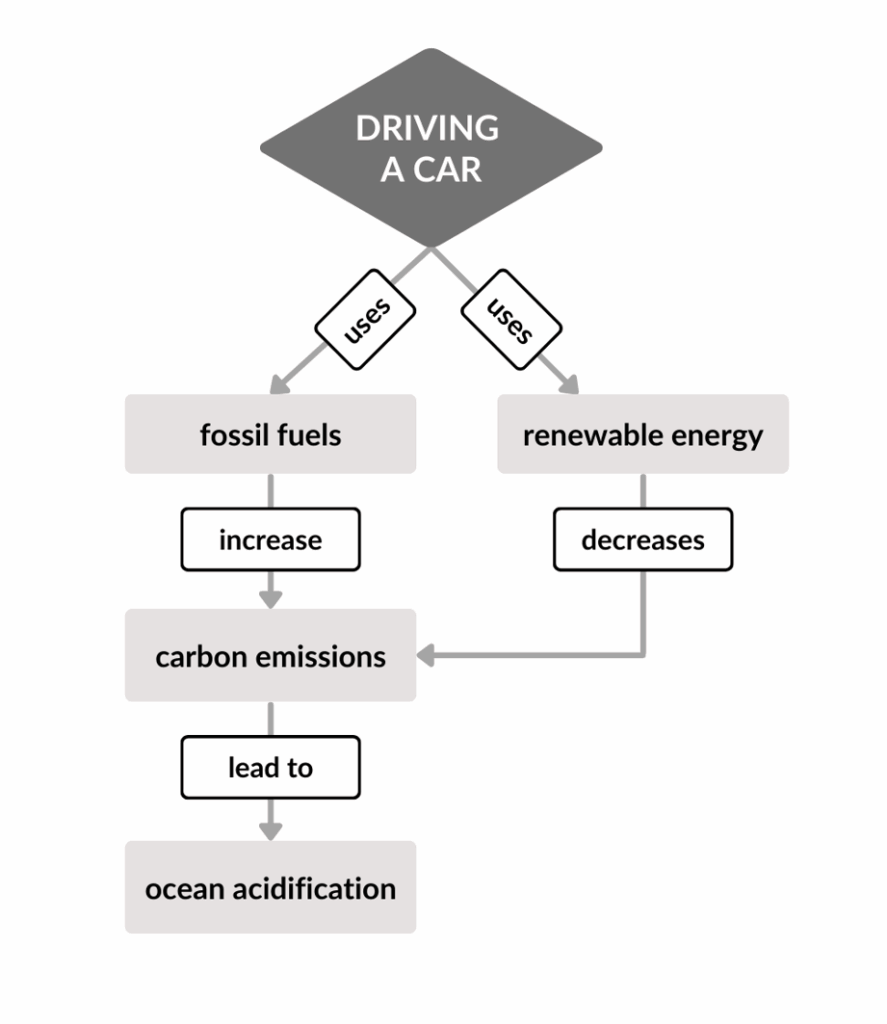
Dr. Sundar illustrates this with examples related to ocean acidification. A guiding question like "What is the relationship between driving a car and ocean acidification?" yields a relatively focused and linear map, tracing the chain of events from car emissions to atmospheric carbon dioxide, its absorption by oceans, and subsequent acidification. In contrast, a broader question such as "What is the relationship between human activities and ocean acidification?" necessitates a far more complex and branched map, encompassing industrial emissions, deforestation, agricultural runoff, and their various pathways to ocean chemistry disruption. The guiding question thus fundamentally shapes the conceptual landscape and the depth of inquiry.
3. Use Linking Words (Propositions):
Perhaps the most distinctive and impactful feature that differentiates true concept maps from simpler associative diagrams is the inclusion of linking words on the lines connecting nodes. These aren’t merely decorative labels; they transform simple connections into meaningful propositions. For example, instead of just "Car -> Ocean Acidification," a concept map might show "Driving a car releases Carbon Dioxide which contributes to Ocean Acidification."
While Dr. Sundar acknowledges that adding linking words requires significant cognitive effort—she describes it as "a pain in the beep"—she firmly states that this effort is precisely what makes the map a "more robust learning tool." This active process forces learners to articulate the nature of the relationship, demanding deeper understanding and synthesis. It compels them to move beyond superficial recall to a genuine comprehension of how concepts interact and influence one another. This act of constructing propositional statements is where the real learning happens, solidifying connections and revealing the learner’s true grasp of the subject matter.

Versatile Applications in Educational Settings
Concept maps offer a rich array of applications within the classroom, serving multiple pedagogical functions from introducing new topics to assessing deep understanding.
1. Expert Maps as Advance Organizers:
Teachers can create "expert maps" that serve as a visual representation of the key concepts and their relationships within an entire unit or course. These maps act as powerful advance organizers, providing students with a "big picture" overview from the outset. As Dr. Sundar explains, this allows learners to see how diverse topics, which might initially feel disparate or random, ultimately connect within a larger framework. "It’s a wonderful way to show people, look, over the next 16 weeks, we’re going to talk about all of these things. It’s going to feel random at points, but here’s how they all connect."
However, teachers must be mindful of "concept map shock"—the potential for students to become overwhelmed by too much information presented at once. To mitigate this, expert maps can be introduced progressively. Teachers can initially present a simplified version focusing only on the major concepts and their primary links, then gradually reveal more granular details as the unit unfolds. This scaffolding approach allows students to build their understanding incrementally, integrating new information into an evolving, coherent framework.
2. Note-Taking and Knowledge Construction:
Traditional linear note-taking, while common, can often obscure the relationships between ideas, presenting information as a series of disconnected facts. Concept maps offer a far more efficient and effective alternative for note-taking. Rather than lengthy paragraphs, students can capture core information in nodes and visually represent connections, fostering a more holistic understanding.
"Sometimes when we write, we just go on and on," Dr. Sundar observes. Concept maps, by contrast, "capture more information in just a few words and diagrams," bypassing the need for extensive prose. This visual and relational approach helps students synthesize information, identify main ideas, and recognize patterns more readily. A practical strategy recommended by Sundar is to maintain a running list of key terms (on a whiteboard, digital document, or in student notebooks) and periodically have students construct maps from these terms, illustrating their interconnections. This not only aids in retention but also encourages active processing during lectures or readings.
3. Formative and Summative Assessment:
Concept maps are excellent tools for both formative and summative assessment. They provide teachers with a direct window into students’ conceptual understanding, revealing not just what facts they know, but how they organize and relate those facts. This makes them particularly valuable for diagnosing misconceptions.
For formative assessment, teachers can present students with a partially completed concept map and ask them to fill in missing nodes or linking words, or to extend existing branches. This approach can quickly highlight areas where students are struggling with specific concepts or relationships. For summative assessment, students can be tasked with creating an entire concept map on a given topic, either from a provided list of terms or from their own synthesis of learned material. Rubrics can be developed to assess the accuracy of concepts, the validity of linking words, the hierarchical structure, and the overall completeness and coherence of the map. This form of assessment goes beyond rote recall, requiring students to demonstrate deep conceptual understanding and the ability to synthesize complex information.
Broader Pedagogical Implications and Future Directions
The advocacy for concept mapping by cognitive scientists like Dr. Sundar and Dr. Agarwal extends beyond mere technique; it represents a broader shift towards evidence-based teaching practices that prioritize deep understanding over superficial memorization. The implications for education are far-reaching:
- Developing Metacognition: The act of constructing a concept map inherently fosters metacognitive skills. Students are compelled to think about their own thinking, monitor their comprehension, and evaluate the connections they are making. This self-awareness is crucial for becoming independent and lifelong learners.
- Fostering Critical Thinking: Concept mapping requires students to analyze information, synthesize disparate ideas, identify patterns, and justify relationships. This moves them beyond passive reception of information to active critical engagement.
- Addressing Diverse Learning Styles: While often perceived as a visual learning tool, concept mapping engages multiple modalities—visual (diagrams), verbal (linking words), and kinesthetic (the act of drawing and connecting). This multi-modal engagement can benefit a wider range of learners.
- Curriculum Integration: Concept mapping is not confined to specific subjects or grade levels. Its principles can be applied across the curriculum, from science and history to literature and mathematics, promoting interdisciplinary connections and a more integrated understanding of knowledge.
- Facilitating Collaborative Learning: Group concept mapping activities encourage rich discussions, negotiation of meaning, and the co-construction of knowledge, enhancing social learning and communication skills.
Despite its proven benefits, successful implementation of concept mapping requires thoughtful integration. Teachers may need explicit training in its principles and practical application, and students will benefit from guided practice and constructive feedback. Initial resistance due to the perceived difficulty or unfamiliarity can be overcome through modeling, scaffolding, and clearly communicating the learning benefits.
In an educational landscape increasingly focused on fostering critical thinking, problem-solving, and adaptive learning, concept maps offer a powerful, scientifically validated pathway. By transforming information into interconnected visual structures, they empower learners to build robust mental models, navigate complexity with greater ease, and ultimately achieve a deeper, more enduring understanding of the world around them. The insights from cognitive scientists like Dr. Kripa Sundar reinforce that these simple yet profound tools are not just an alternative, but an essential component of effective, future-ready pedagogy.