



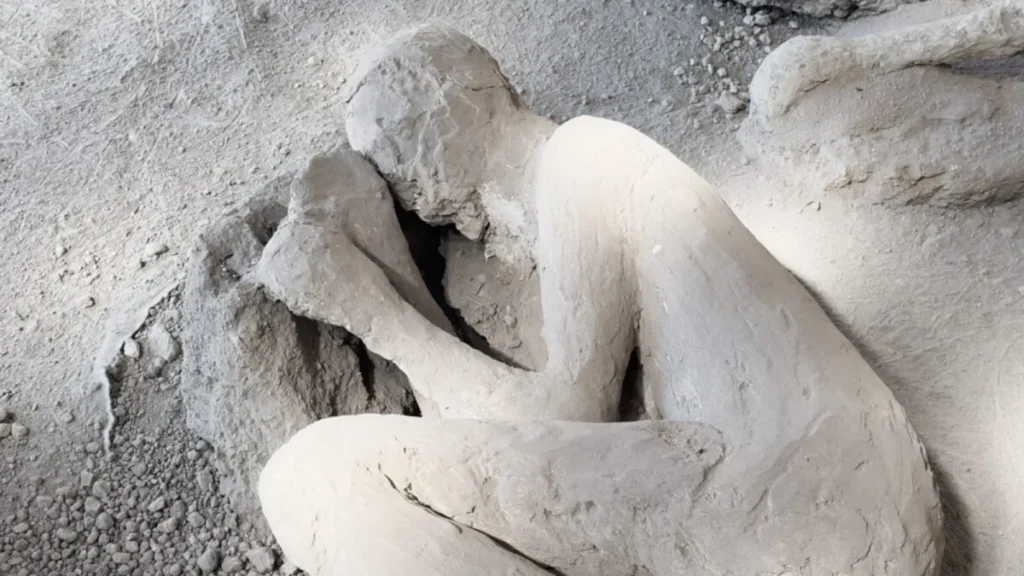
In a significant intersection of ancient history and modern diagnostic technology, researchers at the Pompeii Archaeological Park have identified the professional identity of a victim discovered in one of the city’s most poignant excavation sites. Through the application of non-invasive X-ray and computer tomography (CT) scanning, archaeologists have determined that a man found in the Garden of Fugitives was an ancient Roman physician, or medicus. This discovery, detailed in a recent report in the E-journal of the Pompeii Excavations, provides a rare, humanizing glimpse into the professional lives of those who perished during the catastrophic eruption of Mount Vesuvius in 79 CE.
The Garden of Fugitives, a former vineyard located near the Nocera Gate, has long been recognized as one of the most haunting locations within the preserved city. It was here, during the 1961 excavations, that the remains of 13 individuals were found huddled together, caught in their final moments as they attempted to flee the suffocating ash and searing heat of the volcanic surge. While their physical forms were long ago replaced by the hollow voids they left in the hardened ash, the use of plaster casting techniques has preserved their final postures for over sixty years. The recent technological breakthrough allows experts to look "inside" these casts, revealing the personal belongings that these individuals carried as they fled for their lives.
The Science of the Casts: Peering Through Plaster
The methodology used to identify the physician relies on the pioneering work of Giuseppe Fiorelli, who in 1863 realized that the decomposed bodies of Pompeii’s victims left behind distinct cavities in the compacted volcanic ash. By pouring liquid plaster into these voids, archaeologists could create "casts" that captured the exact shape, clothing, and even facial expressions of the deceased. However, while these casts are visually striking, they often encapsulate skeletal remains and personal artifacts that are invisible to the naked eye.
Modern bioarchaeology has moved toward non-destructive analysis to preserve the integrity of these historical treasures. By utilizing multi-slice CT scans and high-resolution X-ray equipment, the research team was able to penetrate the dense plaster and volcanic material. These scans revealed a high-density cluster of objects near one of the victims. Specifically, the imaging identified a cloth bag containing a collection of bronze and silver coins, suggesting the individual possessed significant liquid assets at the time of his flight. More importantly, the scans pinpointed a small container made of organic material—likely wood or bone—reinforced with metal fittings.
Inside this container, researchers identified a slate tablet and a suite of delicate metal tools. In the Roman world, slate tablets were frequently used by medical practitioners to grind and mix ingredients for ointments, medicines, and even cosmetics. The metal accessories, characterized by their specific shapes and sizes, bear a striking resemblance to surgical instruments used in the first century, including scalpels or probes. The presence of these items collectively points toward a single conclusion: the man was a practicing physician who, even in the face of total annihilation, sought to save his professional kit.
The Role of the Medicus in Roman Society
The identification of a medicus in the Garden of Fugitives offers a broader opportunity to examine the state of healthcare in the early Roman Empire. Medicine in 79 CE was a sophisticated, if often perilous, discipline. Roman physicians were heavily influenced by Greek medical traditions, and many practitioners in cities like Pompeii were of Greek origin or were highly trained freedmen.
Medical practice was not confined to centralized hospitals, though military forts often featured valetudinaria (infirmaries). In a civilian setting like Pompeii, a medicus would often visit patients in their homes or operate out of a small storefront or taberna. The tools discovered in the physician’s bag—specifically the mixing tablet and surgical instruments—suggest he was a general practitioner capable of both pharmaceutical preparation and minor surgical intervention.
The coins found alongside the tools also provide socio-economic context. The mixture of silver and bronze suggests a person of respectable middle-class standing, likely earning a comfortable living from his practice. In the hierarchy of Pompeii, a physician would have been a vital member of the community, and his decision to carry his tools during the eruption speaks to the value he placed on his vocation.
Chronology of a Catastrophe: The Final Hours in the Garden
To understand the context of this discovery, one must look at the timeline of the eruption. Mount Vesuvius began its violent activity in the afternoon, sending a massive column of ash and pumice into the stratosphere—a phenomenon now known as a Plinian eruption. For hours, the city was pelted with falling stone, causing roofs to collapse and blocking doorways.
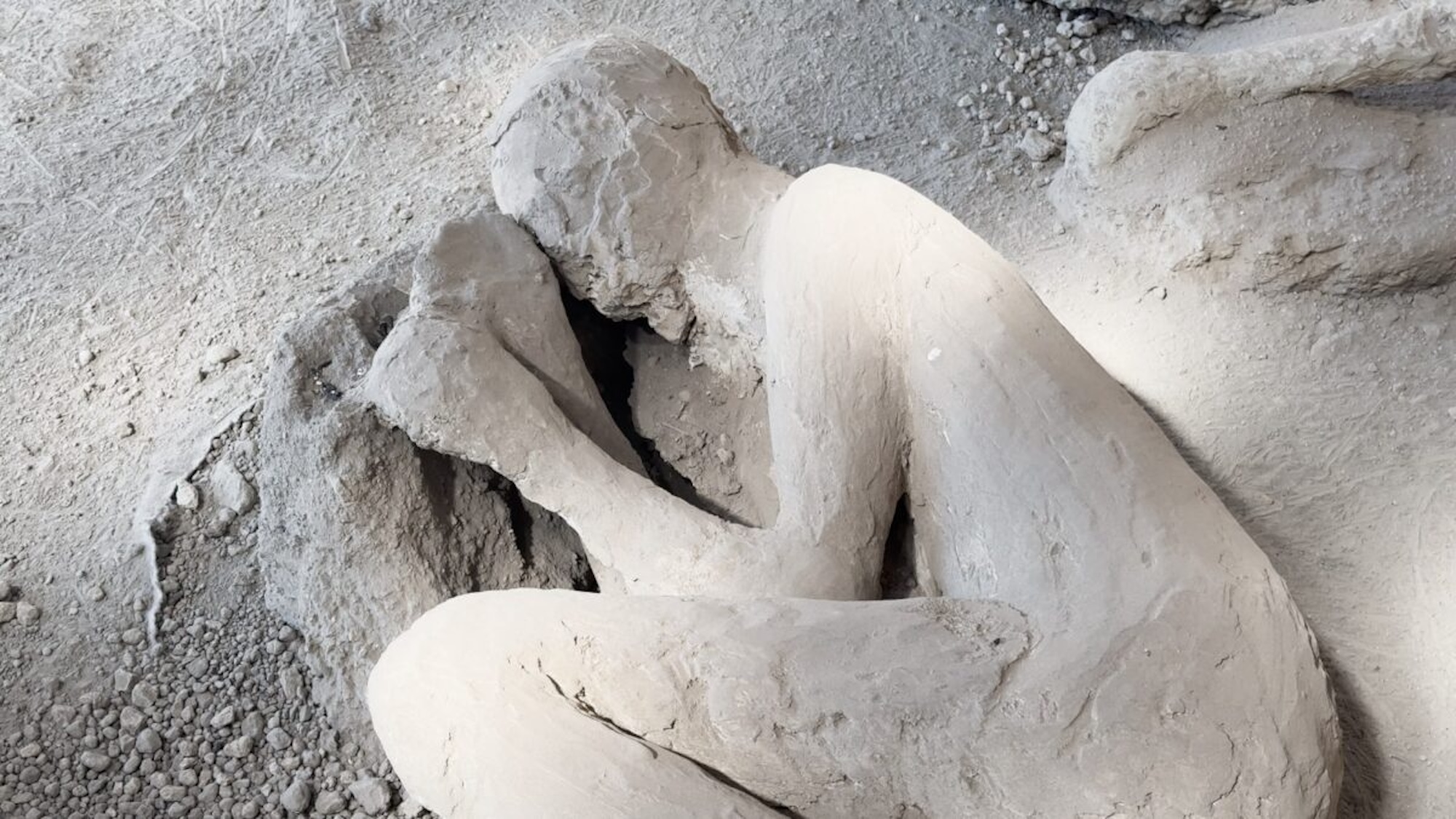
The victims in the Garden of Fugitives, however, likely survived this initial phase. They were found in a layer of ash associated with the pyroclastic surges—clouds of superheated gas and volcanic matter that tumbled down the slopes of the mountain at hurricane speeds.
- Phase One (Plinian Phase): Ash and lapilli (small stones) fall on Pompeii. Many residents flee early or take shelter indoors.
- Phase Two (The Surges): In the early morning hours of the second day, the eruption column collapses. The first of several pyroclastic flows reaches the city walls.
- The Flight to the Garden: The 13 individuals found in the vineyard were likely attempting to exit the city via the Nocera Gate, heading south toward the Sarno River or the coast.
- The End: As they reached the vineyard, a massive surge of gas and fine ash enveloped them. The temperature of these flows could reach over 300 degrees Celsius (572 degrees Fahrenheit), causing near-instantaneous death by thermal shock and asphyxiation.
The physician was among this group. His choice of flight path suggests he stayed in the city as long as possible, perhaps tending to the injured before realizing that the situation was terminal.
Official Responses and Archaeological Significance
Gabriel Zuchtriegel, the Director of the Pompeii Archaeological Park, emphasized the profound human element revealed by this technological investigation. In a statement released following the findings, Zuchtriegel noted that the discovery challenges the notion of medicine as a mere job.
"As far back as two thousand years ago, there were those who did not merely practice medicine—confined to specific office hours—but simply were physicians at every moment," Zuchtriegel stated. "This man brought his tools with him to be ready to rebuild his life elsewhere… but perhaps also to help others."
Archaeologists involved in the project noted that this discovery is part of a larger initiative to re-examine the city’s victims using 21st-century tools. While the casts have been a staple of the Pompeii experience for over a century, they have often been treated more as statues than as biological and historical archives. This new study proves that the casts still hold secrets that can redefine our understanding of the city’s demographics and the professional diversity of its inhabitants.
Broader Implications for Archaeological Science
The identification of the Pompeii physician is a landmark case for the "new archaeology" practiced at the site today. For decades, the focus of Pompeii was on the preservation of its grand villas and intricate frescoes. However, the current administration has shifted focus toward the "micro-histories" of its people—slaves, laborers, and professionals who made the city function.
The use of CT scanning on the plaster casts allows for a "digital excavation" that preserves the original artifact while extracting maximum data. This approach is particularly important because the plaster itself is fragile, and the skeletal remains inside are often brittle. By creating 3D models of the physician’s tools, researchers can compare them to other medical kits found in the House of the Surgeon and other sites across the Roman Empire, such as those in Rimini or Roman Britain.
Furthermore, this discovery underscores the level of preparation and the psychological state of those fleeing the eruption. The fact that the physician carried a mixing tablet and surgical tools—items that are heavy and cumbersome compared to just carrying gold or jewelry—suggests a deep-seated identity tied to his craft. He was not just a man running for his life; he was a doctor carrying the means to continue his life’s work.
As the Pompeii Archaeological Park continues to explore the unexcavated portions of the city—roughly one-third of which remains buried—it is expected that more "named" or "identified" victims will emerge. Each discovery adds a layer of complexity to the narrative of 79 CE, transforming a distant historical disaster into a vivid, relatable human tragedy. The physician of the Garden of Fugitives stands as a testament to the enduring nature of professional duty and the sophisticated society that was silenced in an instant by the fire of Vesuvius.