



A Landmark Study Reconfigures Understanding of AI Creativity
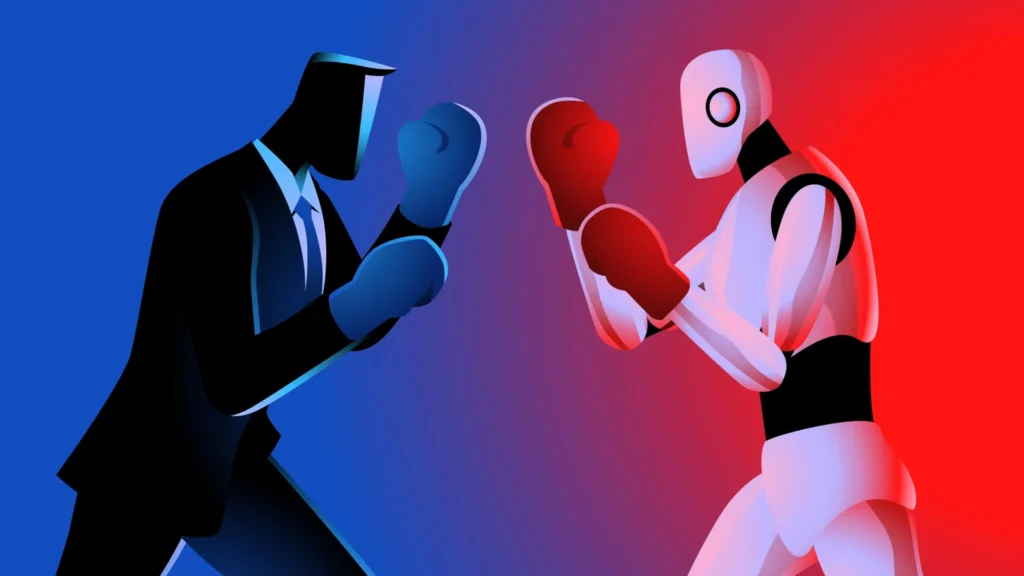
Published on January 21, 2026, in Scientific Reports (Nature Portfolio), this groundbreaking research signals a pivotal moment in the ongoing discourse surrounding artificial intelligence and its capacity for original thought. The comprehensive study, involving over 100,000 human participants and several leading large language models (LLMs) including ChatGPT, Claude, and Gemini, reveals a significant shift: generative AI systems have now reached a level where they can outperform the average human on specific measures of creativity. Crucially, however, the study firmly establishes that the most creative individuals continue to exhibit a distinct and consistent advantage over even the most advanced AI models. This nuanced finding challenges simplistic narratives about AI replacing human ingenuity, instead painting a picture of evolving collaboration and redefined creative frontiers.
The Genesis of a Grand Comparison: Unraveling Creativity’s Core
The impetus for such a large-scale investigation arose from the rapid advancements in generative AI, particularly large language models, which have moved from mere information processing to sophisticated content generation. As these systems demonstrated increasing capabilities in text, image, and even code creation, the fundamental question of whether their outputs truly constituted "creativity" became paramount. Professor Karim Jerbi, known for his interdisciplinary work spanning neuroscience and psychology, recognized the urgent need for a rigorous, data-driven comparison. His expertise, coupled with the profound insights of Yoshua Bengio, a Turing Award laureate and a foundational figure in deep learning, provided the intellectual bedrock for the study’s ambitious scope.
The research was meticulously planned over an extended period, moving from initial conceptualization and methodology design in the early 2020s to extensive data collection in 2024, involving a global cohort of participants. The integration of leading AI models, which were continuously evolving during the study’s timeframe, necessitated adaptive experimental protocols to ensure fairness and relevance. The final analysis and peer review culminated in its publication in early 2026, marking it as a timely and authoritative statement on the state of AI creativity. The collaboration itself was a testament to interdisciplinary efforts, bringing together experts from Université de Montréal, Université Concordia, University of Toronto Mississauga, Mila (Quebec AI Institute), and Google DeepMind, pooling diverse expertise from cognitive psychology, computer science, and machine learning.
Methodology: Quantifying the Unquantifiable
To fairly evaluate creativity across humans and machines, the research team developed and utilized a rigorous framework, employing a suite of established psychological tests. The primary tool was the Divergent Association Task (DAT), a widely validated psychological test specifically designed to measure divergent creativity—the ability to generate diverse, novel, and original ideas from a single prompt. Co-created by study co-author Jay Olson from the University of Toronto, the DAT asks participants, whether human or AI, to list ten words that are as semantically unrelated as possible. This task goes beyond simple vocabulary, engaging broader cognitive processes essential for creative thinking across various domains.
For instance, a highly creative response might include words such as "galaxy, fork, freedom, algae, harmonica, quantum, nostalgia, velvet, hurricane, photosynthesis." The disparate nature of these terms indicates a mind capable of making remote associations, a hallmark of divergent thinking. The effectiveness of the DAT lies in its simplicity and efficiency, taking only two to four minutes to complete, yet yielding results strongly correlated with performance on other established creativity tests used in writing, idea generation, and creative problem solving. Its accessibility online also facilitated the unprecedented scale of human participation, gathering data from over 100,000 individuals globally. This vast dataset provided a robust baseline against which the capabilities of AI models could be accurately benchmarked.
Beyond the DAT, the researchers expanded their investigation into more complex and realistic creative activities. This included challenges in creative writing, such as composing haiku (a concise three-line poetic form), crafting compelling movie plot summaries, and producing short stories. These tasks were chosen to assess not just divergent thinking, but also the AI’s capacity for narrative coherence, emotional resonance, and stylistic originality—qualities often considered uniquely human. By applying the same evaluation criteria to both human and AI outputs across these diverse tasks, the study aimed to provide a holistic view of their respective creative strengths and limitations.
AI Reaches Average Human Creativity Levels: A Turning Point
The study’s findings unveiled a clear turning point in the landscape of artificial intelligence. Several leading large language models, including OpenAI’s GPT-4, Google’s Gemini, and Anthropic’s Claude, were evaluated. The results indicated that some of these advanced AI systems now exceed average human scores on tasks specifically designed to measure divergent linguistic creativity. This outcome, as Professor Karim Jerbi noted, "may be surprising — even unsettling" for many who have long viewed creativity as an exclusively human domain. The sheer volume of data, comparing the performance of these AI models against over 100,000 human participants, lends significant weight to this conclusion. The ability of an algorithm to consistently generate more novel and varied associations than the typical person represents a major milestone in AI development.
This achievement underscores the remarkable progress in neural network architectures and training methodologies that allow LLMs to process vast datasets of human language and learn intricate patterns of association, semantics, and context. Their capacity to draw on an almost infinite pool of linguistic data enables them to generate outputs that often surprise with their originality and breadth, especially when compared to the average individual’s more constrained associative pathways.
The Enduring Human Edge: Peak Creativity Remains Unrivaled
Despite AI’s impressive ascent to average human creative levels, the study delivered an equally profound and reassuring observation: the pinnacle of creativity remains firmly human. "Even the best AI systems still fall short of the levels reached by the most creative humans," emphasized Professor Jerbi. Further detailed analysis by the study’s co-first authors, postdoctoral researcher Antoine Bellemare-Pépin (Université de Montréal) and PhD candidate François Lespinasse (Université Concordia), revealed a striking pattern. When researchers specifically examined the performance of the most creative half of the human participants, their average scores consistently surpassed those of every AI model tested. This gap widened even further when focusing on the top 10 percent of the most creative individuals, demonstrating a clear and statistically significant advantage.
This persistent human edge was not confined to abstract word association tasks. When the study extended its comparison to more complex creative writing challenges—such as composing haiku, writing movie plot summaries, and crafting short stories—the pattern held firm. While AI systems occasionally matched or even exceeded the performance of average humans in terms of technical proficiency or grammatical correctness, the most skilled human creators consistently delivered work characterized by deeper originality, emotional depth, nuanced understanding of human experience, and a unique artistic voice that the AI models could not replicate. This suggests that while AI can mimic and synthesize, it currently lacks the subjective experience, intuition, and lived understanding that fuel truly groundbreaking human creativity.
Can AI Creativity Be Adjusted? The Role of Temperature and Prompting
A fascinating aspect of the study explored the malleability of AI creativity. The research demonstrates that AI’s creative output is not fixed but can be significantly adjusted by altering specific technical settings, primarily the model’s "temperature" parameter. In the context of generative AI, temperature controls the randomness and predictability of the generated responses. At lower temperature settings (e.g., closer to 0), the AI system tends to produce more deterministic, safer, and conventional outputs, often sticking to the most probable word choices. As the temperature is increased (e.g., towards 1 or higher), the responses become more varied, less predictable, and more exploratory, allowing the system to deviate from familiar patterns and generate more novel ideas. This finding provides AI developers and users with a powerful lever to fine-tune creative outputs, tailoring them to specific needs for novelty versus coherence.
Moreover, the study highlighted the critical influence of how instructions, or "prompts," are formulated. The researchers found that carefully crafted prompts could significantly enhance AI’s creative performance. For example, prompts designed to encourage models to delve into word origins and etymological structures led to more unexpected associations and higher creativity scores on the DAT. This underscores a crucial point: AI creativity, while advanced, is heavily dependent on human guidance. The quality and specificity of human-AI interaction, particularly through sophisticated prompting techniques, become central to unlocking the full creative potential of these systems. This transforms the user from a passive recipient into an active collaborator, shaping the AI’s creative trajectory.
Implications for Creative Industries and the Future of Work
The findings of this study offer a balanced and nuanced perspective on the widespread anxieties surrounding AI’s potential to displace creative professionals. While AI systems can now match or even surpass average human creativity on certain well-defined tasks, they still operate with clear limitations and, critically, remain reliant on human direction and intention. This suggests that fears of a wholesale replacement of artists, writers, designers, and other creative professionals may be overblown. Instead, the research points towards a future where AI serves as a powerful creative assistant and amplifier.
"Even though AI can now reach human-level creativity on certain tests, we need to move beyond this misleading sense of competition," stated Professor Karim Jerbi. He elaborated, "Generative AI has above all become an extremely powerful tool in the service of human creativity: it will not replace creators, but profoundly transform how they imagine, explore, and create — for those who choose to use it." This perspective positions AI not as a competitor, but as a sophisticated tool that can expand ideas, generate novel variations, accelerate prototyping, and open new avenues for exploration that might otherwise remain undiscovered. In fields like graphic design, AI can rapidly generate multiple layout options; in music, it can suggest melodic variations; and in writing, it can help brainstorm plot points or character dialogues.
For creative industries, this signals a shift towards new skill sets focused on effective AI prompting, curation, and the integration of AI-generated content into a human-driven vision. The value of human creativity will likely shift from purely generating initial ideas to refining, contextualizing, and imbuing outputs with emotional intelligence and cultural relevance—aspects where humans still hold a significant advantage. The study’s results are poised to ignite further discussions among educators, policymakers, and industry leaders about the evolving nature of creative education, intellectual property in the age of AI, and the ethical considerations surrounding AI-generated art.
Rethinking Creativity in the Digital Age
Ultimately, this landmark study challenges us to rethink the very definition of creativity in the digital age. By directly confronting human and machine capabilities through rigorous scientific inquiry, the research pushes the boundaries of our understanding. Is creativity solely about generating novel ideas, or does it encompass intention, consciousness, and the unique human experience? If AI can generate novel ideas, does that make it truly creative, or merely a sophisticated imitator of human patterns?
"By directly confronting human and machine capabilities, studies like ours push us to rethink what we mean by creativity," concludes Professor Karim Jerbi. The study underscores that while AI excels at pattern recognition, synthesis, and divergence within a learned framework, true human creativity often involves breaking existing frameworks, injecting subjective meaning, and expressing a unique inner world. The future will likely see a symbiotic relationship where AI enhances human creative processes, allowing individuals to push their own boundaries further, leading to an unprecedented era of innovation and artistic expression. This collaboration promises not the end of human creativity, but its profound evolution.
About the Study and Research Team
The paper titled "Divergent creativity in humans and large language models" was published in Scientific Reports on January 21, 2026. The research was a collaborative effort involving leading scientists from Université de Montréal, Université Concordia, University of Toronto Mississauga, Mila (Quebec AI Institute), and Google DeepMind, underscoring the interdisciplinary nature of modern AI research.
Professor Karim Jerbi, from the Department of Psychology at the Université de Montréal and an associate professor at Mila, led the study. His expertise in cognitive neuroscience provided the crucial framework for understanding and measuring human creative processes. Antoine Bellemare-Pépin from Université de Montréal and François Lespinasse from Université Concordia served as co-first authors, contributing significantly to the experimental design and data analysis. The research team also notably included Yoshua Bengio, founder of Mila and LoiZéiro, a recipient of the Turing Award, and a pioneering figure in deep learning, the foundational technology behind modern AI systems like ChatGPT. His involvement highlights the study’s scientific rigor and its profound implications for the field of artificial intelligence. Jay Olson from the University of Toronto, the creator of the Divergent Association Task, was also a key co-author, ensuring the validity and appropriate application of the primary creative assessment tool.