



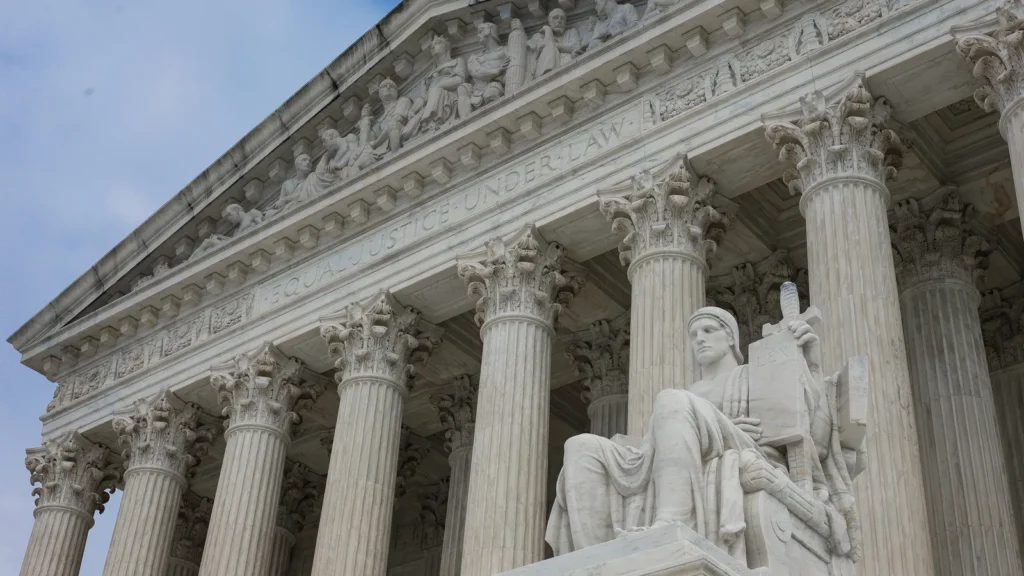
The U.S. Supreme Court has agreed to hear a pivotal case that could reshape the landscape of employment discrimination lawsuits under Title IX, specifically addressing whether employees of federally funded educational institutions can pursue private legal action against their employers for sex-based discrimination. This decision comes after a notable divergence by the 11th U.S. Court of Appeals from the prevailing interpretation held by at least eight other federal appellate courts. The case, Thomas Crowther v. Board of Regents of University System of Georgia, will examine whether the right to sue, long understood to be available to students, extends to staff members who allege they have faced sex discrimination.
The Supreme Court’s decision to take on this case, announced on May 18, 2026, signifies a critical juncture in the interpretation and enforcement of Title IX, the landmark federal law enacted in 1972 as part of the Education Amendments. Title IX prohibits discrimination on the basis of sex in any education program or activity receiving federal financial assistance. While its protections for students have been widely recognized and litigated, the scope of private enforcement rights for employees has become a point of contention, particularly following the 11th Circuit’s ruling.
Background of the Dispute: A Divergent Ruling
The core of the legal battle lies in a 2024 decision by the 11th U.S. Court of Appeals, which concluded that Title IX’s private right of action does not extend to employees. This ruling directly contradicts the long-standing precedent established by numerous other federal appellate courts, which have consistently affirmed that employees, like students, possess the right to sue their employers for violations of Title IX. The 11th Circuit’s rationale was rooted in its interpretation of Title IX’s origins under the Spending Clause of the U.S. Constitution. The court suggested that recipients of federal funds might not have reasonably understood that they were accepting potential liability for damages in employment discrimination claims under Title IX, especially when such claims are explicitly addressed and regulated by Title VII of the Civil Rights Act of 1964, which specifically prohibits sex-based employment discrimination. This distinction between the scope of Title IX and Title VII in employment contexts is central to the 11th Circuit’s reasoning. The court further denied a rehearing in 2025, solidifying its position.
The Plaintiffs’ Claims: Allegations of Sex Discrimination
The case before the Supreme Court stems from the experiences of two individuals employed within the University System of Georgia. MaChelle Joseph, a former women’s basketball coach at Georgia Tech, and Thomas Crowther, an art professor at Augusta University, both allege that they were subjected to sex discrimination by their employer.
Joseph’s termination in 2019 followed her internal complaint alleging that her program was not receiving equitable resources compared to the men’s basketball program, a disparity she believed constituted sex-based discrimination. Her complaint highlighted concerns about unequal funding and opportunities, suggesting that the university system was failing to provide the same level of support and resources to her female athletes and coaching staff as it did to their male counterparts.
Crowther’s situation involved allegations of inappropriate conduct in his classroom, including sexual harassment, leading to student complaints and the initiation of a Title IX investigation. Subsequently, in 2021, Augusta University informed him that his contract would not be renewed. Crowther contends that his non-renewal was a retaliatory action or based on discriminatory grounds, stemming from his engagement with the Title IX process.
Both Joseph and Crowther pursued legal avenues following their employment disputes. They filed claims with the U.S. Equal Employment Opportunity Commission (EEOC), a federal agency tasked with enforcing civil rights laws in the workplace. Concurrently, they initiated lawsuits in the U.S. District Court for the Northern District of Georgia, asserting claims under Title IX and other relevant statutes. The 11th Circuit eventually consolidated these two cases, leading to its precedent-setting ruling that denied employees the right to sue under Title IX.

A Historical Precedent: Jackson v. Birmingham Board of Education
The Supreme Court’s willingness to hear the Crowther case evokes a significant precedent set two decades prior: Jackson v. Birmingham Board of Education (2005). In that landmark decision, the Supreme Court definitively ruled that individuals who report sex discrimination, even if they are not the direct targets of the discrimination themselves, have the right to pursue private litigation under Title IX. The Jackson case involved Roderick Jackson, a girls’ basketball coach at a public high school, who was fired after complaining about unequal funding and access to facilities for his team compared to the boys’ team. The Supreme Court’s affirmation in Jackson established a broad interpretation of Title IX’s enforcement mechanisms, empowering individuals to challenge discriminatory practices within federally funded educational institutions.
Lawyers representing Joseph and Crowther emphasized this historical context in their August 2025 petition to the Supreme Court. They argued that since the Jackson decision, "every court of appeals to have considered the question presented here has answered yes" regarding the right of employees to sue under Title IX. The 11th Circuit’s departure from this consensus, they contend, creates an unacceptable patchwork of legal protections and undermines the consistent application of federal anti-discrimination law.
Broader Implications and Potential Impacts
The Supreme Court’s decision in Crowther v. Board of Regents of University System of Georgia carries profound implications for countless individuals working in the education sector across the United States. If the Court upholds the 11th Circuit’s ruling, it could significantly curtail the ability of school and university employees to seek legal recourse when they believe they have been subjected to sex discrimination. This would leave many individuals with fewer avenues for redress, potentially relying solely on administrative complaints or internal grievance procedures, which may lack the same enforcement power as private litigation.
Conversely, if the Supreme Court reverses the 11th Circuit and reaffirms the right of employees to sue under Title IX, it would reinforce existing protections and ensure a more uniform application of the law nationwide. This outcome would likely empower more employees to come forward with their claims, fostering greater accountability among educational institutions.

The case also highlights the ongoing debate surrounding the interplay between Title IX and Title VII. While Title VII specifically addresses employment discrimination, Title IX’s broader mandate to prevent sex discrimination in federally funded education programs has often been invoked in employment contexts. The Supreme Court’s ruling may provide further clarity on the distinct roles and enforcement mechanisms of these two critical pieces of civil rights legislation.
The legal arguments presented to the Supreme Court will likely delve into the legislative intent behind Title IX, the scope of implied rights of action under Spending Clause legislation, and the practical consequences of limiting employee protections. Educational institutions, civil rights organizations, and employee advocacy groups will be closely monitoring the proceedings, as the outcome will undoubtedly shape the future of workplace equity in American education. The case has been accepted for the October 2026 term, with oral arguments expected later this year and a decision anticipated by mid-2027. The nation awaits a ruling that could redefine the reach of Title IX and its protections for those who dedicate their careers to educating future generations.