

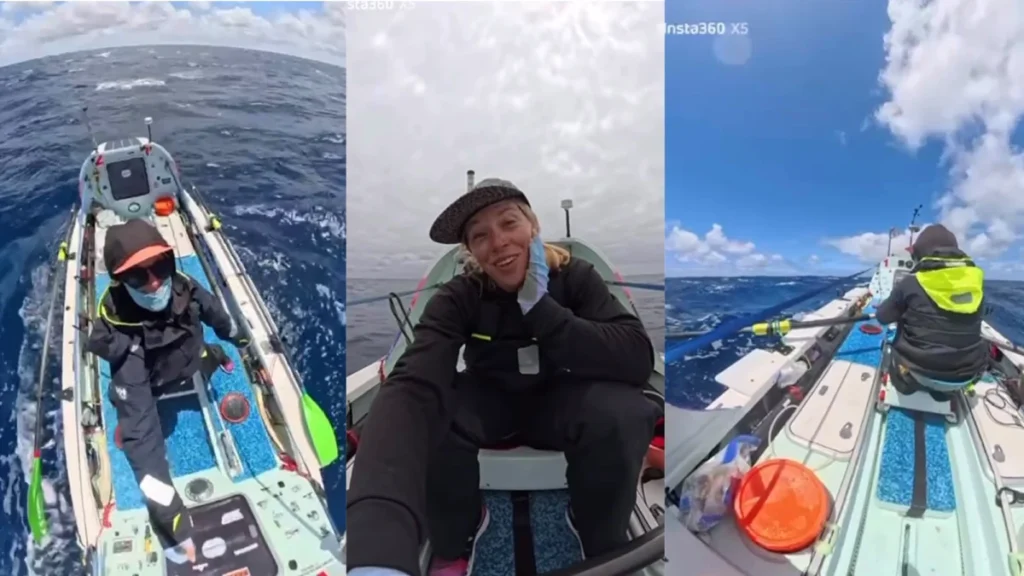
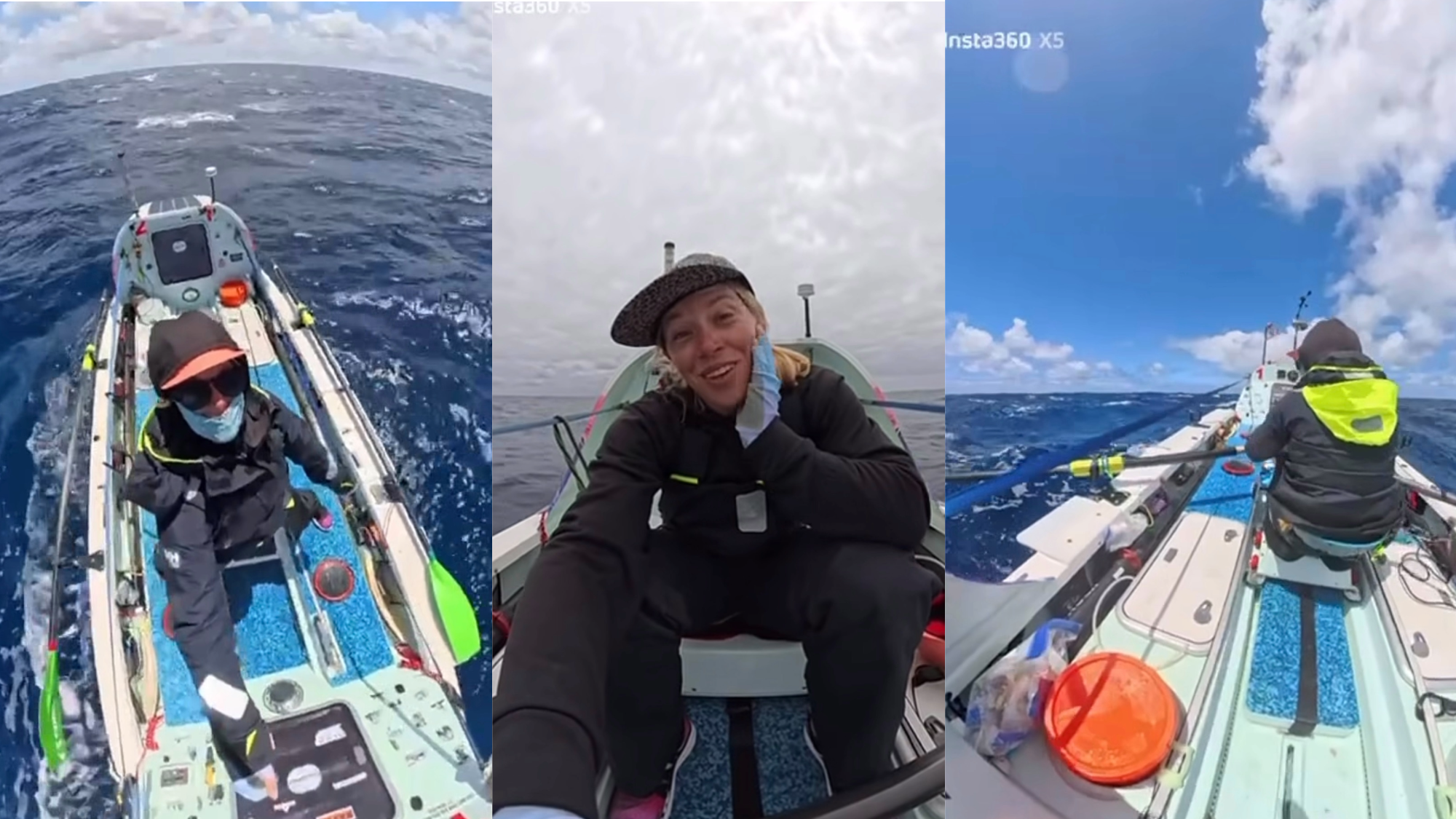
In an extraordinary display of human endurance and maritime ambition, 31-year-old Kelsey Pfendler has officially commenced her attempt to become the youngest woman to row solo and unassisted across the Pacific Ocean from California to Hawaii. Setting off from Monterey, California, on May 21, 2026, the New York native faces a daunting 2,400-mile journey through some of the most unpredictable and isolated waters on the planet. If successful, Pfendler will not only secure a world record for her age group but will also make history as the first American woman to complete this specific solo crossing. The expedition, which is expected to last between two and three months, is a grueling test of physical stamina, technical proficiency, and psychological resilience, conducted entirely without the aid of a support vessel or resupply drops.
The Genesis of the Expedition and Initial Launch
Kelsey Pfendler is no stranger to the demands of the Pacific. In 2024, she successfully served as the skipper for a four-person rowing crew that completed the same route in 40 days, 22 hours, and 14 minutes. However, the transition from a team environment to a solo endeavor represents a massive increase in difficulty. In a crewed vessel, rowers can rotate shifts, allowing for continuous movement and shared maintenance duties. Solo rowing requires the individual to manage navigation, repairs, cooking, and rowing alone, meaning the boat often drifts backward or off-course during necessary sleep intervals.
Pfendler’s departure from Monterey was timed to capitalize on the early summer weather windows, yet the Pacific coast is notoriously difficult to navigate during the initial departure phase. The first 100 miles are often the most treacherous due to the California Current and powerful coastal headwinds that threaten to push small, human-powered craft back toward the rocky shoreline. During her first week at sea, Pfendler encountered these exact conditions. The relentless resistance from the wind required maximum physical output just to maintain a westward trajectory, resulting in severe blistering on her hands—a common but painful rite of passage for ocean rowers.
Technical Challenges and the Freshwater Crisis
By the end of her first week, Pfendler’s journey transitioned from a test of muscle to a test of survival logistics. As she moved further from the continental shelf, she encountered a significant weather front characterized by plummeting temperatures and punishing 14-foot waves. While her specialized ocean rowing boat is designed to be self-righting in the event of a capsize, the environmental conditions created a secondary, more pressing crisis regarding her life-support systems.
The most critical challenge arose when Pfendler lost the cap to her primary heavy-duty freshwater storage bag while seeking cover from breaking waves. Under normal operating conditions, an ocean rower relies on an electric desalination unit—a solar-powered reverse osmosis system—to convert seawater into potable drinking water. However, the storm front brought thick, overcast skies that prevented her solar panels from generating sufficient wattage to run the desalinator.
Without a functioning power source for water production and with her primary storage bag compromised, Pfendler was forced to transition to her emergency rations: 25 small bottles of water. This scarcity has immediate downstream effects on her nutrition. Most of her caloric intake is derived from freeze-dried meals, which require significant amounts of hot water to rehydrate. To preserve her limited water supply for hydration, Pfendler has been forced to subsist on cold, non-dehydrated rations, such as tortillas and peanut butter. This "dry" diet is sustainable for a short period but lacks the caloric density required for a rower burning between 5,000 and 7,000 calories per day.
Geographical Milestones and Marine Encounters
Despite the logistical hardships, the voyage has reached significant geographical milestones. Pfendler recently crossed the continental shelf, the point where the relatively shallow coastal waters drop off into the deep ocean basin. This transition is marked by a dramatic change in water color and marine activity. The shelf break is a site of intense upwelling, where nutrient-rich cold water rises from the depths, supporting a diverse ecosystem.
During this transition, Pfendler reported intimate encounters with the Pacific’s inhabitants. In one instance, she observed a predator—likely a sea lion or a dolphin—hunting fish in the dark. The hunt caused schools of fish to leap from the water in a bioluminescent display around her hull. These moments of natural wonder provide a necessary psychological reprieve from the isolation of the "blue desert."
As of May 28, live tracking data indicated that Pfendler was moving at a speed of approximately 1.6 knots. While this may seem slow by motorized standards, it is a respectable pace for a solo rower battling lateral currents. Her position off the Southern California coast marks the end of the "coastal phase" and the beginning of the "deep ocean phase," where she will eventually pick up the trade winds that she hopes will carry her toward the Hawaiian Islands.
The Physical and Psychological Toll of Solo Rowing
The science of solo ocean rowing is a study in human limits. To maintain progress, rowers typically adhere to a "two hours on, two hours off" schedule, 24 hours a day. This leads to chronic sleep deprivation and a state of perpetual physical exhaustion. Furthermore, the salt-saturated environment causes "salt sores" where clothing rubs against the skin, and the constant motion of the boat requires the core muscles to remain engaged even during sleep.
Psychologically, the isolation is profound. Beyond the occasional radio check-in or social media update via satellite link, Pfendler is alone in a wilderness that spans millions of square miles. The "hallucination phase" is a well-documented phenomenon among solo rowers, where the brain, starved of varied sensory input and sleep, begins to project images or voices onto the rhythmic sound of the waves. Pfendler’s ability to maintain her mental focus through these episodes will be as critical to her success as her physical strength.
Comparative Benchmarks and the World Record
The current benchmark for women’s solo rowing on this route was established in 2020 by British adventurer Lia Ditton. Ditton’s historic journey lasted 86 days, 10 hours, and 56 seconds, a feat that involved surviving a major hurricane and several near-capsizes. Pfendler’s progress is being closely watched by the ocean rowing community to see if she can challenge this time.
However, Pfendler’s primary objective remains the successful completion of the journey and the attainment of the "youngest woman" and "first American woman" titles. At 31, she represents a new generation of endurance athletes who utilize social media platforms like TikTok and Instagram to bring the public along on their journeys, effectively "shrinking" the ocean through digital connectivity while remaining physically isolated.
Philanthropic Mission: The Whale Foundation
Beyond the personal and athletic goals, Pfendler’s voyage serves as a major fundraising platform for The Whale Foundation. This non-profit organization is dedicated to providing mental and physical health services, as well as financial assistance and career counseling, to the Grand Canyon river guiding community.
River guides often work in seasonal, high-stress environments with limited access to traditional healthcare or support networks. Pfendler, who has deep ties to the guiding community, is using the visibility of her Pacific crossing to highlight the importance of mental health support for those who dedicate their lives to the wilderness. By linking her journey to a cause, she adds a layer of external motivation that many solo adventurers find essential during the darkest moments of their expeditions.
Analysis of Implications and Future Outlook
The success of Kelsey Pfendler’s expedition would signal a significant milestone in American maritime achievement. While ocean rowing has long been dominated by British and European athletes, Pfendler’s attempt reflects a growing interest in the sport within the United States. Her journey also highlights the advancing technology of small-craft survival, from high-efficiency solar arrays to satellite-based tracking systems that allow for real-time safety monitoring.
From an environmental perspective, Pfendler’s transit will take her through regions of the Pacific increasingly impacted by plastic pollution and changing migratory patterns due to warming sea temperatures. While her primary focus is rowing, solo adventurers often serve as "citizen scientists," providing first-hand observations of ocean health in areas rarely visited by research vessels.
The coming weeks will be pivotal for Pfendler. As she moves further west, the influence of the California Current will wane, and her success will depend on her ability to harness the North Pacific High—a high-pressure system that dictates the wind patterns toward Hawaii. If the sun returns and her desalination system resumes operation, she will be able to return to a high-calorie diet and regain the strength needed for the final 2,000 miles.
As of her latest update, Pfendler remains optimistic, buoyed by the favorable wind shifts that have allowed her boat to "catch and ride" the swells. Though her hands are blistered and her diet is currently limited to peanut butter and tortillas, the New York rower continues to push westward, one stroke at a time, toward the Hawaiian horizon and a place in the record books. The world continues to watch her tracker, witnessing a modern-day odyssey unfolding in real-time across the vast expanse of the Pacific.