



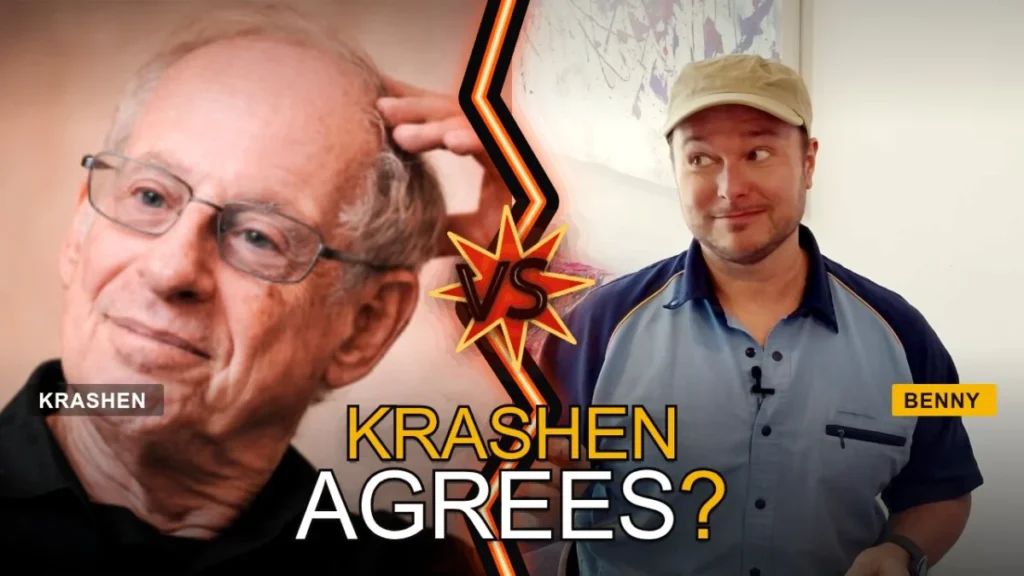
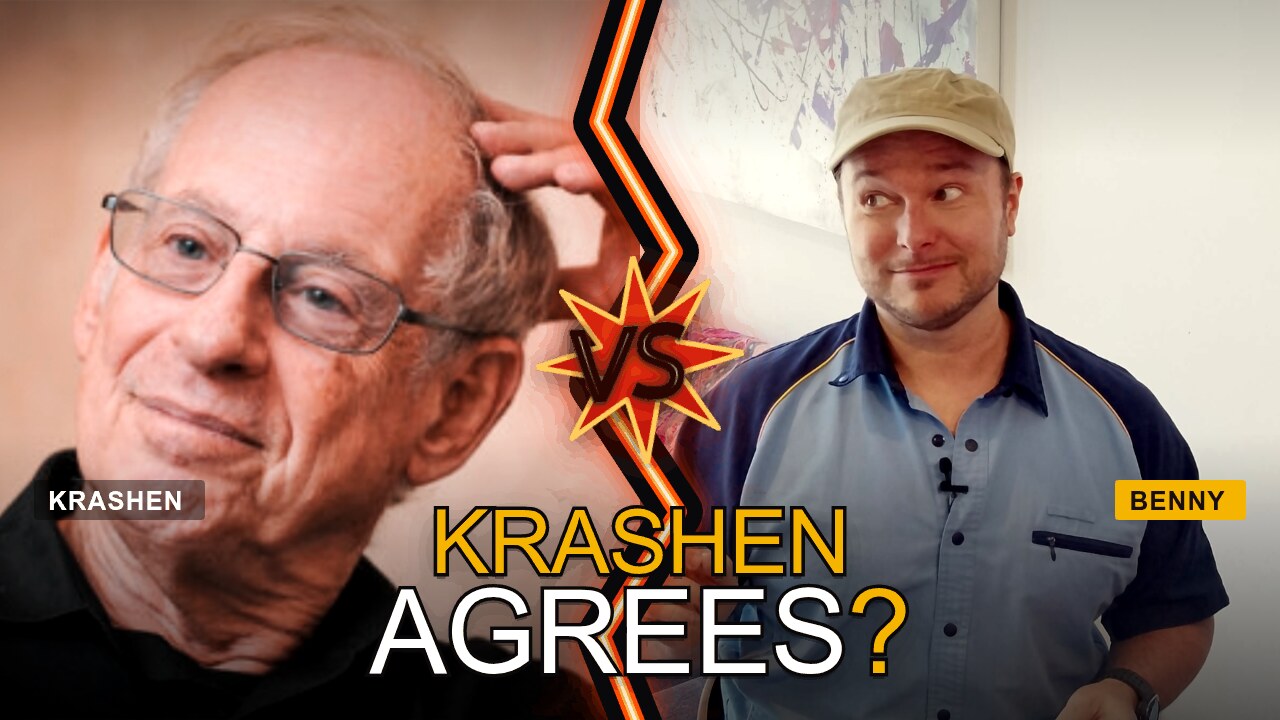
The long-standing debate within the field of Second Language Acquisition (SLA) regarding the efficacy of "comprehensible input" versus "early output" has reached a significant point of reconciliation. For decades, language learners and educators have often viewed the theories of Dr. Stephen Krashen, a professor emeritus at the University of Southern California, and the practical methodologies of polyglot Benny Lewis as mutually exclusive. However, recent dialogues between the two figures have revealed a substantial theoretical overlap, suggesting that the "input versus output" dichotomy may be more of a spectrum of emphasis rather than a fundamental disagreement on the mechanics of language acquisition.
The Theoretical Foundations of the Input Hypothesis
To understand the significance of this reconciliation, one must first examine the historical context of Dr. Stephen Krashen’s work. In the late 1970s and early 1980s, Krashen introduced the Input Hypothesis, which became a cornerstone of modern linguistics. His theory posits that humans acquire language in only one way: by understanding messages, or by receiving "comprehensible input." According to Krashen, the ability to speak is not the cause of language learning but rather a result of it. He argued that "output" (speaking) does not directly result in acquisition; instead, the language "grows" on its own as the brain processes understandable information.
Krashen’s model is built upon five main hypotheses: the Acquisition-Learning hypothesis, the Monitor hypothesis, the Natural Order hypothesis, the Input hypothesis, and the Affective Filter hypothesis. The latter is particularly relevant to the discussion of early speaking. It suggests that variables such as fear, anxiety, and lack of self-confidence can create a mental block—an "affective filter"—that prevents input from reaching the language acquisition device in the brain. For many years, Krashen’s proponents used these theories to argue against "speaking from day one," claiming that forcing a beginner to produce language increases anxiety and inhibits progress.
The Communicative Approach of Benny Lewis
In contrast to the purely input-based model, Benny Lewis, founder of the "Fluent in 3 Months" movement, has spent over two decades advocating for a communicative-first approach. Lewis’s methodology, often summarized as "Speak from Day One," encourages learners to engage in conversation immediately, regardless of their proficiency level. The rationale behind this approach is rooted in the social and practical utility of language. Lewis argues that by attempting to speak, learners identify their own linguistic "holes"—the specific words and structures they lack—thereby making subsequent study more targeted and efficient.
For years, the language-learning community viewed Lewis’s advocacy for early embarrassment and social interaction as a direct challenge to Krashen’s scientific model. Critics of Lewis argued that early output was "miserable" for introverts and led to the fossilization of errors. Meanwhile, Lewis maintained that the psychological barrier to speaking was the primary hurdle for most adult learners and that overcoming this barrier through low-stakes interaction was essential for long-term fluency.
The 2024 Synthesis: A Convergence of Theories
The perceived conflict between these two schools of thought was largely addressed during a series of discussions between Lewis and Krashen. During these interactions, Krashen clarified that his theory does not strictly forbid early speaking. Instead, he noted that the two approaches represent "different weights" applied to the same underlying principles.
Krashen acknowledged that Lewis’s "Speak from Day One" method succeeds because it inherently generates massive amounts of comprehensible input. When a beginner attempts to speak with a patient native speaker, the interlocutor naturally adjusts their language—slowing down, using simpler vocabulary, and employing gestures. This creates a "custom-made" version of the language that is perfectly tuned to the learner’s current level. Consequently, the act of speaking becomes a vehicle for receiving high-quality input.
Furthermore, Krashen revealed that he had read Lewis’s work extensively and found that the practical applications Lewis suggested were "all within the theory." This admission marks a shift from a prescriptive "input-only" stance to a more descriptive understanding of how diverse methodologies can lead to the same goal of acquisition.
The Mechanics of "Output-Aiming Input"
A critical enrichment of this dialogue is the concept of output as a tool for focusing input. Data from various SLA studies suggest that the "Noticing Hypothesis," proposed by Richard Schmidt, plays a vital role here. When a learner attempts to produce a sentence and fails, they "notice the gap" between what they want to say and what they are capable of saying.
This phenomenon transforms the learner’s subsequent input sessions. Instead of passively listening to a podcast or reading a book, the learner’s brain becomes sensitized to the specific structures they struggled with during their conversation. In this framework, output is not the primary driver of acquisition, but it acts as a "searchlight," illuminating the specific parts of the input that the learner needs to process next. This synergy suggests that a hybrid approach—high input coupled with strategic, low-stakes output—may be the most efficient path to proficiency.
Re-evaluating the Affective Filter in Social Contexts
The dialogue also provided a new perspective on Krashen’s Affective Filter. Traditionally, the "Speak from Day One" approach was thought to raise the filter by causing stress. However, Lewis argues—and Krashen has conceded—that the context of the speaking determines the emotional response.
In a formal classroom setting where a student is graded on grammar, the affective filter is indeed high. However, in a "friendly, low-stakes chat," the social connection can actually lower the filter. The desire to communicate and the empathy of a conversation partner can create a supportive environment that facilitates acquisition. This suggests that the "misery" associated with early speaking is often a byproduct of the educational environment rather than the act of communication itself.
Supporting Data and Chronology of Learning
The evolution of these methodologies is reflected in the changing habits of the proponents themselves. Benny Lewis has noted that his recent strategies have incorporated more of Krashen’s "Graded Readers"—books specifically written for language learners with controlled vocabulary. Lewis admitted that he previously delayed reading until reaching intermediate levels, but now recognizes that early reading provides a stable foundation of input that supports his speaking efforts.
Conversely, Dr. Krashen has integrated more interactive elements into his own language maintenance. He noted that he has begun seeking out conversation partners via digital platforms to supplement his input-heavy regimen. This cross-pollination of techniques indicates a maturing of the field, where practitioners no longer feel the need to adhere strictly to a single "pure" methodology.
| Feature | Krashen’s Input Hypothesis | Lewis’s "Speak from Day One" | The Unified Approach |
|---|---|---|---|
| Primary Goal | Subconscious Acquisition | Practical Communication | Acquisition via Interaction |
| Role of Output | A result of acquisition | A tool for engagement | A generator of targeted input |
| Affective Filter | Minimized by avoiding pressure | Lowered through social bond | Managed via low-stakes context |
| Key Resource | Graded Readers/Media | Native Speakers/Tutors | Balanced Input + Interaction |
Broader Implications for Language Education
The reconciliation between Krashen and Lewis has significant implications for both institutional and independent language learning. For decades, the "Communicative Language Teaching" (CLT) movement has struggled to balance the need for grammatical accuracy with the need for fluency. The Krashen-Lewis synthesis suggests that the focus should remain on "meaningful messages," whether those messages are being received or produced.
- For Classrooms: Educators can move away from the binary choice of "grammar drills" vs. "immersion." Instead, the focus can shift to creating "low-stakes communicative environments" where students are encouraged to use the language to accomplish tasks, thereby receiving the "custom-made input" Krashen described.
- For Technology: Language learning apps and platforms may begin to place higher value on tools that facilitate "comprehensible output"—interactions where the system or a tutor reacts dynamically to the learner’s attempts, providing immediate, understandable feedback.
- For Independent Learners: The "unified theory" provides a roadmap that reduces the guilt often felt by learners. Those who prefer reading can do so knowing they are acquiring the language, while those who crave social interaction can speak early, knowing they are simply "managing their input" through conversation.
Conclusion: The "Dinner Party" Metric of Fluency
The ultimate objective of language acquisition, as highlighted by Lewis’s recent experiences in Mexico, is the transition from "processing" a language to "living" in it. This state—often described as "flow"—occurs when the learner stops noticing the linguistic mechanics and focuses entirely on the social interaction.
The consensus reached between the world’s most famous linguist and its most prominent polyglot is that there are many paths to this state of flow. Whether one chooses to prioritize masses of input or to engage in early, awkward conversations, the underlying engine of progress remains the same: the brain’s ability to process understandable messages in a low-stress environment. By acknowledging that "input" and "output" are two sides of the same coin, the language learning community can move past theoretical infighting and toward more holistic, effective methodologies.