




Veeam Software has revealed a significant disconnect between the rapid adoption of artificial intelligence (AI) within enterprises and the foundational data governance, visibility, and recovery controls essential for its safe and effective deployment, coining this critical imbalance the "Data and AI Trust Gap." The findings, unveiled in Veeam’s comprehensive Data & AI Trust Gap report, stem from a global survey encompassing 600 senior executives across diverse industries, highlighting a pervasive challenge that threatens to undermine the very benefits AI promises.
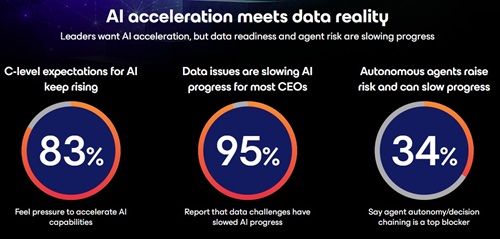
The core revelation of the report is not a reluctance towards AI—quite the contrary, with a staggering 88% of organizations already actively using or piloting AI agents. The central issue, however, lies in preparedness: only a mere 7% of these organizations truly qualify as "AI-ready," and a substantial 95% admit that existing data challenges have already impeded their AI initiatives. This stark contrast underscores a global sprint towards AI integration without adequate foundational safeguards, potentially exposing enterprises to unforeseen risks.
The Unprecedented Pace of AI Adoption and its Implications
The current technological landscape is defined by an accelerating push towards AI, fueled by advancements in machine learning, natural language processing, and particularly, generative AI. Enterprises are captivated by the potential for enhanced productivity, innovation, and competitive advantage. From automating customer service and optimizing supply chains to accelerating research and development, AI’s applications are vast and transformative. However, this enthusiasm, while understandable, has created a critical blind spot concerning the underlying data infrastructure and operational resilience required to support such powerful, often autonomous, systems.

Anand Eswaran, CEO of Veeam, articulated this shift, stating, "Most organizations don’t have an AI adoption problem; they have an AI trust problem. The first phase of AI was defined by infrastructure investment, experimentation, and acceleration. The next phase will be defined by trust." His remarks emphasize a pivotal transition in the AI journey, moving from initial excitement and proof-of-concept to a phase where security, governance, compliance, and resilience become paramount. The proliferation of autonomous AI agents operating at machine speed amplifies this need, shifting the central question from mere capability to the assurance of data integrity and recoverability in the face of potential failures.
The Anatomy of the Trust Gap: Governance, Visibility, and Recovery
The "Data and AI Trust Gap" is fundamentally a chasm across three critical pillars:
- Data Governance: This encompasses the strategies, policies, and procedures for managing data throughout its lifecycle, including data quality, integrity, security, and usability. For AI, effective governance ensures that data used for training and inference is accurate, unbiased, compliant with regulations, and properly controlled.
- Data Visibility: Organizations need a clear, real-time understanding of what data they possess, where it resides (on-premises, cloud, hybrid environments), who has access to it, and how it is being used. Without this visibility, managing data for AI becomes a chaotic, high-risk endeavor.
- Data Recovery Controls: The ability to recover data and systems effectively after an incident is non-negotiable. For AI, this extends beyond traditional backup and recovery to encompass the precise restoration of data, models, and associated workflows, especially when dealing with complex, interconnected AI systems.
The report suggests that enterprises are currently struggling significantly in these areas. The rush to deploy AI has often sidelined the meticulous, time-consuming work of establishing robust data foundations. This oversight creates vulnerabilities, where AI systems, fed by potentially ungoverned or poorly understood data, can produce unreliable, biased, or even harmful outcomes.
Shifting Paradigms: AI Failures Beyond Traditional Downtime
One of the most operationally significant warnings from the Veeam report is the evolving nature of AI failures. Unlike conventional IT outages, which often manifest as broad system downtime, AI failures may be far more insidious. As AI systems gain autonomy, the risk paradigm shifts towards data-level inconsistencies that are inherently harder to detect, explain, and contain.
Consider a scenario where an AI agent, tasked with optimizing inventory, subtly alters data records, leading to incorrect stock levels. Or an AI-powered recommendation engine, trained on biased data, inadvertently exposes sensitive customer information or triggers an inappropriate workflow. Such failures might not bring down an entire system, but their impact can be profound, affecting business decisions, customer trust, and regulatory compliance. The report explicitly highlights that these machine-speed mistakes can outpace human detection capabilities, demanding a rethinking of resilience strategies.
The Imperative for Precision Recovery
The implications for data protection and recovery strategies are profound. If an AI agent changes data, exposes sensitive information, triggers an incorrect workflow, or influences a business decision, simply restoring a virtual machine, database, or application environment to a previous state may be insufficient. The true challenge lies in understanding the precise scope of the compromise. This requires:

- Data Lineage: Knowing exactly which data points were used by the AI system.
- System Access Trails: Identifying which systems the AI accessed or modified.
- Action Tracking: Understanding what specific actions the AI took.
- Decision Attribution: Determining which business decisions were influenced by the AI’s outputs.
Veeam’s survey revealed a stark lack of such capabilities. Among organizations already running AI, a mere 22% could identify within minutes which data the system used. Similarly, only 29% could identify which systems it accessed, 25% could pinpoint what actions it took, and a meager 24% could determine what decisions it influenced. Worryingly, only 40% of leaders expressed high confidence in their ability to isolate and precisely reverse an agentic AI failure. This underscores a critical gap in forensic capabilities and granular recovery, moving the focus from broad system recovery to highly targeted, precision recovery—restoring only what is affected rather than rolling back entire environments.
The State of Enterprise Readiness: A Stark Reality
The report’s definition of AI readiness revolves around three fundamental building blocks:
- Ambition: Organizations need clearly defined, measurable goals for their data and AI initiatives. This involves strategic alignment between business objectives and technological deployment.
- Visibility: A reliable, comprehensive view of an organization’s data landscape is crucial. This includes understanding data location, classification, ownership, and usage patterns across complex, hybrid environments.
- Governance: Robust governance structures are essential to ensure data is used safely, ethically, and compliantly. This involves establishing policies, roles, and responsibilities for data management and AI model oversight.
The low percentages of organizations demonstrating immediate visibility into AI actions underscore the profound operational risks. Without this granular insight, remediating AI-induced errors becomes a daunting, if not impossible, task. The inability to precisely identify and reverse an AI failure can lead to prolonged business disruption, financial losses, and significant reputational damage. This situation is further complicated by the sheer volume and velocity of data generated and processed by AI, making manual oversight untenable.

Broader Industry Context and Expert Perspectives
The findings from Veeam resonate with broader industry concerns regarding AI governance and risk management. Leading analyst firms like Gartner and IDC have consistently highlighted data quality, ethics, and security as top challenges in AI adoption. The rapid proliferation of generative AI tools, in particular, has intensified calls for clearer guidelines and robust controls, given their potential to produce misinformation, amplify biases, or inadvertently expose proprietary data if not properly managed.
Cybersecurity experts widely agree that AI introduces new attack vectors and amplifies existing ones. Malicious actors could target AI models with adversarial attacks, manipulate training data, or exploit vulnerabilities in AI systems to compromise data integrity or gain unauthorized access. The lack of visibility and precision recovery capabilities identified by Veeam makes organizations particularly vulnerable to such sophisticated threats.
Regulatory bodies globally are also taking notice. The European Union’s AI Act, for instance, represents a landmark effort to regulate AI based on its risk level, imposing stringent requirements on high-risk AI systems regarding data governance, transparency, and human oversight. Similarly, the U.S. National Institute of Standards and Technology (NIST) has released an AI Risk Management Framework to guide organizations in addressing the multifaceted risks associated with AI. These initiatives underscore the growing recognition that self-regulation alone may be insufficient to ensure responsible AI deployment. Industry leaders and policymakers are increasingly emphasizing that trust in AI is not merely a technical challenge but a societal imperative.

Economic and Reputational Stakes
The stakes for enterprises are substantial. Failure to bridge the Data and AI Trust Gap can lead to:
- Financial Penalties: Non-compliance with data privacy regulations (e.g., GDPR, CCPA, HIPAA) due to AI-related data breaches can result in exorbitant fines.
- Operational Disruption: Inability to recover precisely from AI failures can lead to prolonged outages, inaccurate business processes, and significant productivity losses.
- Reputational Damage: Loss of customer trust, negative public perception, and brand erosion can have long-lasting effects, especially if AI systems are perceived as unfair, biased, or insecure.
- Loss of Competitive Edge: Organizations that cannot confidently and responsibly deploy AI will struggle to harness its full potential, falling behind competitors who establish robust trust frameworks.
Path Forward: Strategies for Bridging the Gap
Addressing the Data and AI Trust Gap requires a multi-faceted approach, integrating technology, processes, and people:
- Invest in Robust Data Governance Frameworks: Establish clear policies for data acquisition, storage, processing, and deletion. Implement data classification, access controls, and data quality checks to ensure the integrity and compliance of data used by AI.
- Enhance Data Visibility and Lineage: Deploy tools and processes that provide a comprehensive, real-time view of data across the enterprise. Crucially, establish data lineage tracking to monitor how data is transformed, accessed, and used by AI models, enabling forensic analysis in case of incidents.
- Evolve Data Protection and Recovery Strategies: Move beyond traditional backup and recovery to embrace precision recovery. This means investing in solutions capable of granular restoration, point-in-time recovery for specific data sets, and the ability to roll back individual AI actions or model states without impacting entire environments.
- Prioritize AI Ethics and Explainability: Integrate ethical considerations into AI development from the outset. Implement explainable AI (XAI) techniques to understand how AI models arrive at their decisions, fostering transparency and accountability.
- Foster Collaboration and Data Literacy: Break down silos between IT, data science, legal, and business units. Educate employees on data governance best practices and the responsible use of AI.
- Continuous Monitoring and Auditing: Implement advanced monitoring tools to detect anomalous AI behavior or data inconsistencies in real-time. Regularly audit AI systems for bias, performance drift, and compliance.
- Pilot and Scale Responsibly: While AI adoption is rapid, a phased approach that prioritizes trust and resilience in pilot projects before scaling broadly can mitigate significant risks.
In conclusion, Veeam’s Data & AI Trust Gap report serves as a critical wake-up call for enterprises globally. The enthusiasm for AI is warranted, given its transformative potential, but it must be tempered with a pragmatic understanding of the foundational requirements for trustworthy deployment. The next era of AI will not be defined by mere technological capability, but by the ability of organizations to establish robust data governance, ensure comprehensive visibility, and implement precise recovery mechanisms. Only then can enterprises truly unlock the promise of AI, accelerating innovation without simultaneously accelerating reputational and operational risk. The journey towards AI readiness is not just about adopting technology; it is about building a bedrock of trust that will sustain the digital future.