




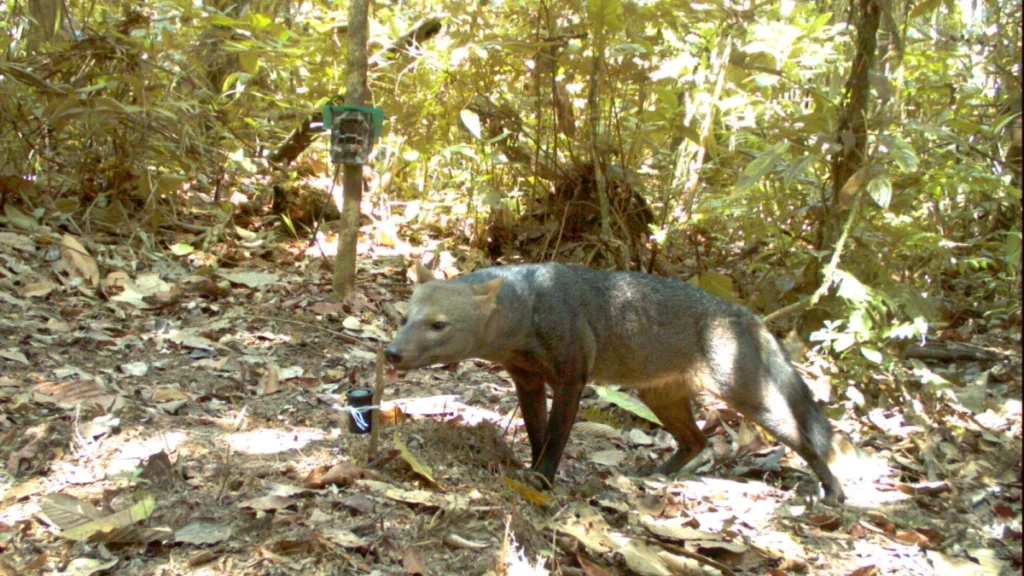
Deep within the dense, emerald canopy of the Amazonian lowlands, a creature of near-mythic proportions has long eluded the gaze of modern science. Known colloquially as the "ghost dog" due to its uncanny ability to vanish into the undergrowth, the short-eared dog (Atelocynus microtis) has remained one of the most enigmatic carnivores on the planet. However, a landmark study spanning twenty-five years has finally pierced the veil of secrecy surrounding this elusive canid. Published in the journal Neotropical Biology and Conservation, the research provides the most comprehensive data to date on the species’ population density, habitat preferences, and behavioral patterns, revealing that while the ghost dog remains rare, it is significantly more prevalent than previously feared.
The short-eared dog is the only member of the genus Atelocynus, representing a unique evolutionary lineage within the Canidae family. Despite its distinctiveness, it has historically been categorized as one of the least-studied wild dogs in the world. This lack of data has long hindered conservation efforts, as scientists struggled to determine whether the animal was naturally rare or facing a silent extinction. The new study, led by Dr. Robert Wallace of the Wildlife Conservation Society (WCS) and a collaborative team of international researchers, represents a monumental effort to bridge this knowledge gap using a quarter-century of accumulated field data from Bolivia and Peru.
A Twenty-Five Year Chronology of Discovery
The path to understanding the short-eared dog was not paved with rapid breakthroughs but with patient, persistent observation. The study is the culmination of 34 intensive camera-trap surveys conducted between the late 1990s and the early 2020s. These surveys were strategically placed across the lowland rainforests of the Amazon basin, focusing on regions where anecdotal sightings had occurred but scientific confirmation remained sparse.
In the early stages of the research, sightings were so infrequent that many scientists considered the short-eared dog to be on the brink of total disappearance in many parts of its range. The "ghost dog" moniker was earned not just for its stealth, but for the haunting way it would appear briefly on a single frame of film before disappearing for years. As digital camera-trap technology evolved, allowing for longer deployments and higher-resolution imagery, the volume of data began to grow. By the end of the twenty-five-year period, the research team had amassed 594 individual photographs—a treasure trove for a species that many biologists spend their entire careers without seeing in the wild.
This longitudinal approach allowed researchers to account for seasonal variations and long-term environmental shifts, providing a robust dataset that a shorter study could never achieve. The chronology of the project mirrors the evolution of conservation technology itself, moving from traditional film cameras that required manual checking to sophisticated infrared sensors capable of capturing high-definition video in total darkness.
Physical Characteristics and Evolutionary Enigmas
The data collected through these hundreds of images has allowed for a detailed morphological profile of the species. The short-eared dog is characterized by a sturdy build, a large head, and notably small, rounded ears—an adaptation that distinguishes it from many of its more familiar cousins, such as the maned wolf or the crab-eating fox. Its coat is a masterclass in camouflage, varying from a deep reddish-brown to a dark, blackish gray, often with a sleek, almost metallic sheen that helps it blend into the shadows of the forest floor.
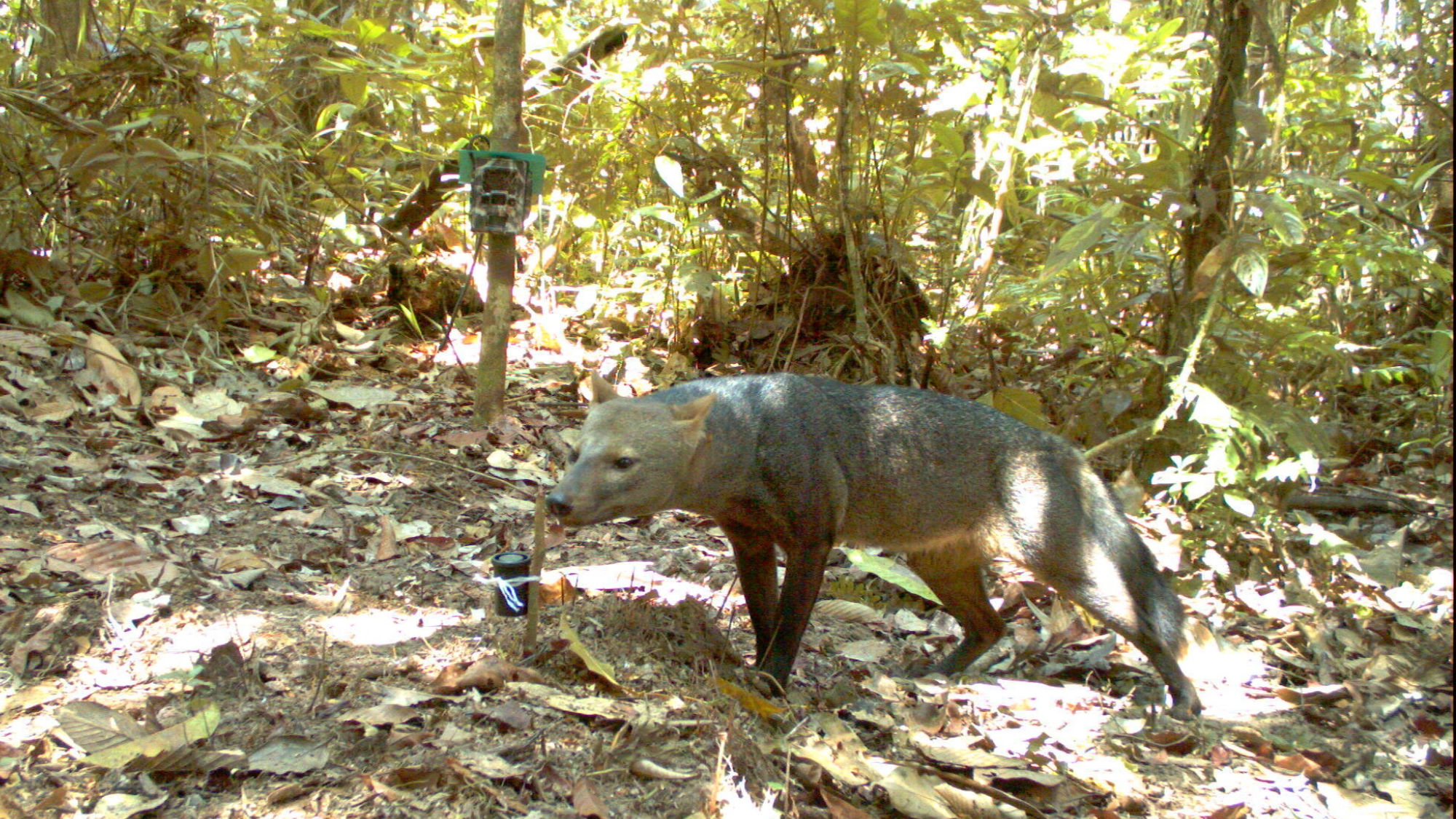
Perhaps the most intriguing physical trait identified is the presence of partially webbed paws. In most canid species, webbing is minimal, but in the short-eared dog, it is quite pronounced. This led early naturalists to speculate that the animal might be semi-aquatic, similar to the bush dog (Speothos venaticus). However, the results of this 25-year study suggest a more complex reality. While the webbing exists, the camera-trap data confirms that the species is a "true forest specialist." It shows a marked preference for upland forests, often staying far from major river systems. This evolutionary vestige—the webbed feet—remains a subject of scientific debate, potentially pointing to an ancestral past linked to wetter environments or serving as an adaptation for navigating the muddy, inundated soils of the Amazon during the rainy season.
Quantitative Analysis of Population Density
One of the most significant contributions of the study is the first reliable estimate of the short-eared dog’s population density. For decades, the species was thought to exist in such low numbers that it might be functionally extinct in certain corridors. The researchers utilized the camera-trap data to calculate a density of approximately 15 dogs per 100 square kilometers (roughly 38.61 square miles).
To put this number into ecological perspective, the researchers compared the ghost dog’s density to other Amazonian predators. The study found that short-eared dogs are actually more abundant than the region’s apex predator, the jaguar (Panthera onca). However, they remain significantly less common than medium-sized carnivores like the ocelot (Leopardus pardalis).
"The most surprising aspect of the results was that despite being an almost mythical beast, short-eared dogs are much more abundant than we had imagined," the research team stated. This finding is a major relief for conservationists, as it suggests the species maintains a stable, if low-density, presence across a vast range. The data indicates that the "rarity" of the dog is likely a reflection of its secretive behavior and specialized habitat requirements rather than a dangerously low total population count.
Behavioral Patterns and the Morning "Ghost"
The study also shed light on the daily life of Atelocynus microtis. By analyzing the timestamps of the 594 photographs, the team determined that the species is primarily diurnal, with a peak activity window between 6:00 a.m. and noon. This morning-centric lifestyle is likely a strategy to avoid larger, nocturnal predators and to capitalize on the activity cycles of their primary prey, which includes small mammals, birds, and reptiles.
The reason humans so rarely encounter these animals, even during their active hours, is attributed to their extraordinary sensory capabilities. Short-eared dogs possess highly developed senses of hearing and smell, allowing them to detect the approach of humans long before they are spotted. Their secretive nature is an evolutionary survival mechanism in a forest filled with larger competitors and potential threats.
The Critical Role of Protected Areas and Indigenous Territories
The study’s findings carry heavy implications for land management and conservation policy. A key takeaway from the data is the correlation between dog abundance and land protection status. The researchers found that the relative abundance of short-eared dogs was significantly higher in nationally protected areas and, crucially, within overlapping Indigenous territories.

In contrast, data from unprotected areas showed a marked decline in sightings. This suggests that the species is highly sensitive to habitat fragmentation and human encroachment. Unlike some more adaptable canids that can thrive on the fringes of agricultural land, the ghost dog requires the integrity of "old-growth" or primary forest.
Dr. Robert Wallace emphasized that the successful management of these protected zones is the single most important factor in ensuring the species’ survival. The study highlights that Indigenous territories, which often act as buffers against industrial-scale deforestation, are as vital as national parks for the preservation of Amazonian biodiversity. The presence of the short-eared dog serves as a biological indicator of forest health; where the ghost dog thrives, the ecosystem’s complex web of life is likely still intact.
Broader Ecological Impact and Future Implications
The revelation that the short-eared dog is more abundant than previously thought does not mean the species is out of danger. The Amazon continues to face unprecedented threats from logging, mining, and climate change. As a forest specialist, the ghost dog is uniquely vulnerable to the "edge effects" of deforestation—the changes in microclimate and species composition that occur when a forest is fragmented.
Furthermore, the study raises new questions for future research. Now that scientists have a better grasp of where these dogs live and how many there are, the focus can shift to their reproductive biology and diet. Very little is still known about their social structure—whether they hunt in pairs or are solitary—and their role in seed dispersal or controlling prey populations remains largely theoretical.
The 25-year study of the short-eared dog stands as a testament to the power of long-term ecological monitoring. It demonstrates that in the world of conservation, patience is often the most valuable tool. By combining traditional fieldcraft with modern remote sensing, researchers have finally given a voice to one of the Amazon’s most silent inhabitants.
As the Wildlife Conservation Society and its partners move forward, the data from this study will be used to refine "range maps" and prioritize specific corridors for protection. The "ghost dog" may still be a master of disguise, but it is no longer a total mystery. In the fight to save the Amazon, understanding the residents of the forest—even the ones that don’t want to be found—is the first step toward a sustainable future. The survival of the short-eared dog is now inextricably linked to the survival of the forest itself, a reminder that in the deep woods of Bolivia and Peru, every shadow has a story to tell.