

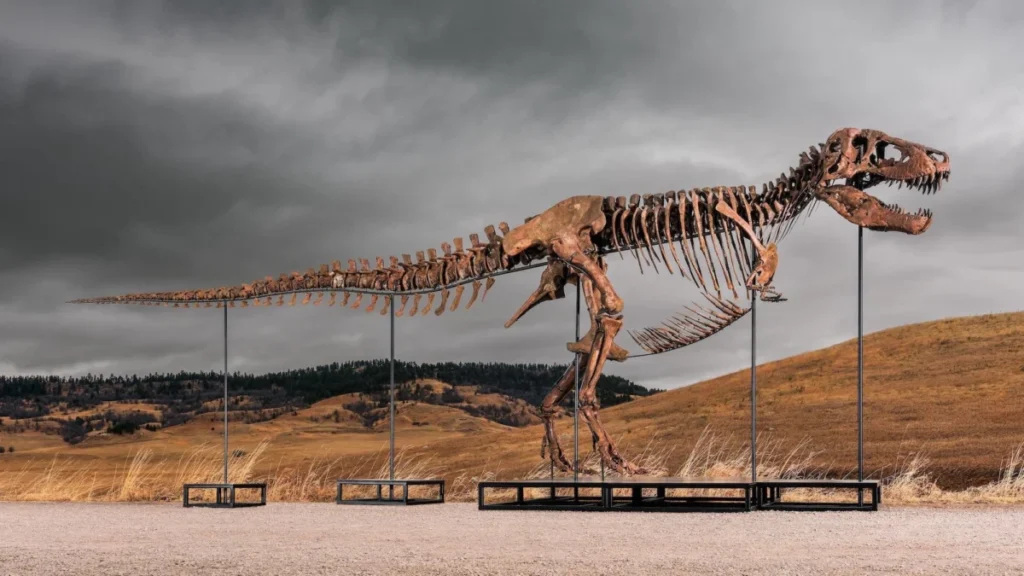
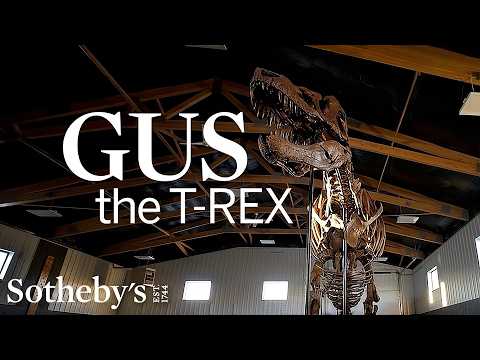
The international auction house Sotheby’s has announced the upcoming sale of a remarkably preserved Tyrannosaurus rex skeleton, affectionately known as Gus, with a pre-sale valuation estimated between $20 million and $30 million. This figure represents the highest valuation ever placed on a dinosaur specimen in auction history, signaling a robust and growing market for prehistoric artifacts among private collectors and institutions alike. Standing 12.5 feet tall and stretching approximately 38 feet in length, Gus is one of the most complete specimens of the "king of the tyrant lizards" ever recovered from the fossil-rich soils of the American West. The skeleton is scheduled to be the centerpiece of Sotheby’s Natural History auction on July 14, following a public exhibition at the auction house’s New York City galleries beginning July 1.
The discovery of Gus is a testament to the intersection of serendipity and meticulous scientific labor. The specimen was found on a 6,500-acre cattle ranch in South Dakota, a region globally renowned for the Hell Creek Formation, a geologic division dating back to the Late Cretaceous period. The ranch’s owner, the late Gary "Gus" Licking, had spent years observing fragments of bone and fossilized teeth eroding from the surface of his land. Recognizing the potential significance of these finds, Licking eventually partnered with Thomas Heitkamp and the specialized team from Theropoda Expeditions to conduct a professional survey of the property.
The Journey from Earth to Auction
The excavation of Gus was a grueling three-year endeavor that began in 2021. Paleontologists and field technicians worked through extreme weather conditions in the South Dakota badlands, meticulously mapping the site to preserve the contextual data of the find. According to Thomas Heitkamp, the site was a complex fossil bed that did not only yield the T. rex but also provided a snapshot of the broader Cretaceous ecosystem, including preserved flora and fauna that existed alongside the predator approximately 67 million years ago.
The recovery process required a high degree of technical precision. Because the bones were encased in dense sedimentary rock, the team had to use a combination of heavy machinery for overburden removal and delicate hand tools for the final extraction. Once the fossils were safely transported to the laboratory, an additional three years were dedicated to the "prep" phase. This involved using pneumatic air scribes and fine brushes to remove the remaining matrix from the bone surfaces, followed by stabilization with archival-grade adhesives.
Gary Licking, for whom the specimen is named, passed away in 2022, only one year into the excavation process. While he did not live to see the skeleton fully mounted, his family has expressed pride in the discovery. His wife, Dana Licking, noted that the find represented a hidden chapter of history within the land the couple had stewarded for decades.
Anatomical Significance and Completeness
In the world of paleontology, "completeness" is the primary metric of a specimen’s value, both scientifically and commercially. Gus comprises 183 fossil bones, representing approximately 82 percent of the total skeletal structure by bone count. This level of preservation is exceedingly rare for a large theropod; most T. rex finds consist of fewer than 50 percent of the skeleton.
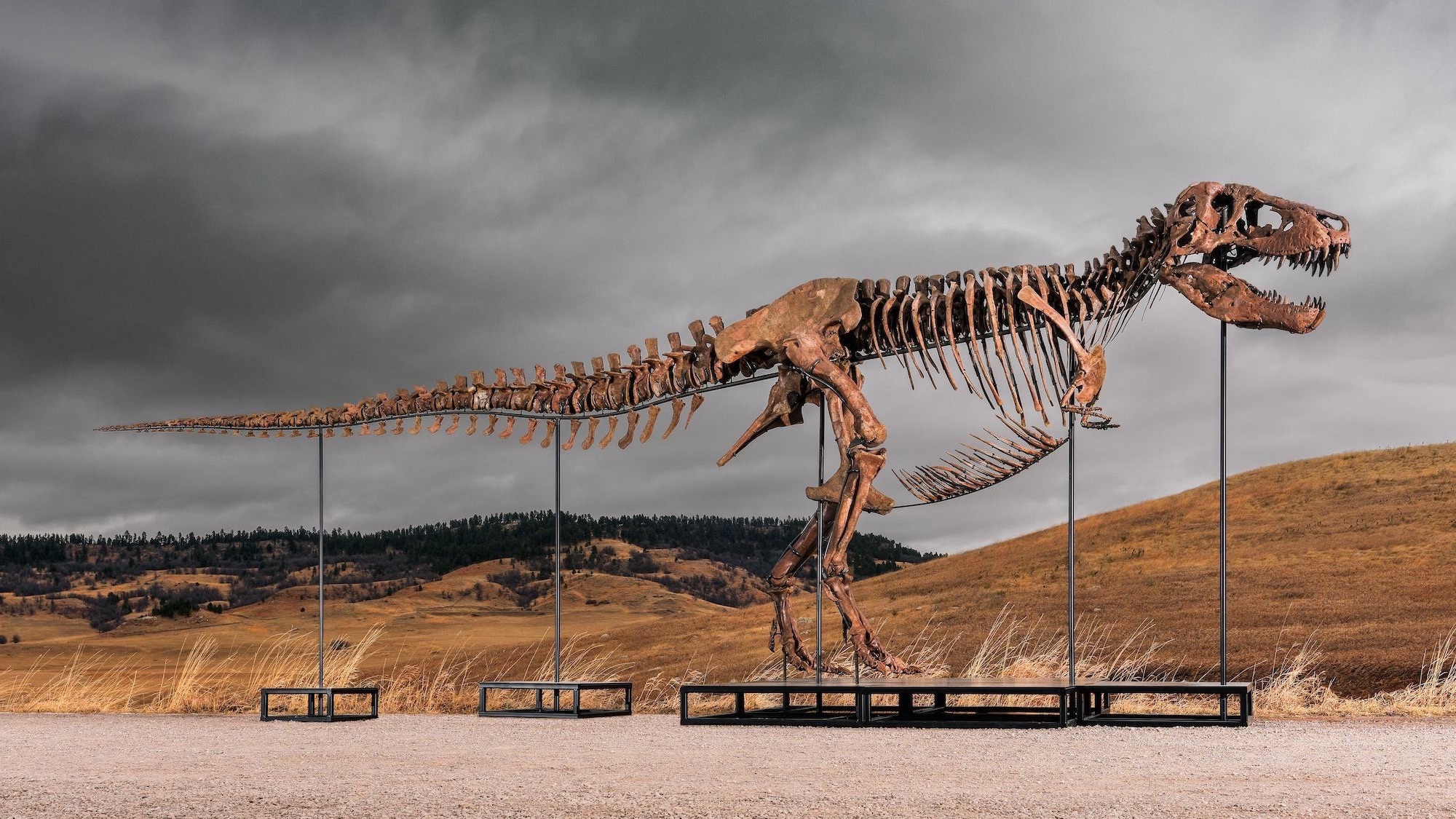
Key highlights of the Gus specimen include:
- The Skull: A well-preserved skull measuring over four feet in length. The skull of a T. rex is a marvel of evolutionary engineering, featuring kinetic joints that allowed the animal to absorb the shock of a bite force estimated at 12,000 pounds per square inch.
- The Pelvis: A completely represented pelvic structure, which is vital for researchers studying the locomotion and weight distribution of these multi-ton bipeds.
- The Furcula: The presence of the furcula, or wishbone, is of particular interest to evolutionary biologists, as it reinforces the ancestral link between theropod dinosaurs and modern avian species.
The mounting of Gus allows viewers to appreciate the sheer scale of the apex predator. At 38 feet long, the specimen occupies a massive physical footprint, providing a visceral sense of the animal’s dominance during the Maastrichtian age.
A Chronology of High-Stakes Dinosaur Auctions
The sale of Gus is the latest in a series of high-profile dinosaur auctions that have redefined the market for natural history over the last three decades. To understand the current $30 million valuation, one must look at the precedent set by previous sales.
- Sue (1997): The first T. rex to gain global celebrity status was Sue, discovered by Susan Hendrickson. Sold at Sotheby’s for $8.36 million to the Field Museum of Natural History in Chicago, the sale was made possible through financial backing from corporations like McDonald’s and Disney. At the time, the price was considered astronomical.
- Stan (2020): In October 2020, a T. rex named Stan was sold at Christie’s for a record-breaking $31.8 million. The sale initially sparked concerns about the specimen disappearing into a private collection, but it was later revealed that Stan would be the crown jewel of a new natural history museum in Abu Dhabi.
- Apex the Stegosaurus (2024): More recently, Sotheby’s sold a nearly complete Stegosaurus skeleton for $44.6 million, far exceeding its initial estimate. This sale confirmed that the appetite for high-quality, "investment-grade" fossils is at an all-time high.
The $20–$30 million estimate for Gus reflects this upward trajectory. Given that Gus is more complete than many previous offerings and possesses a highly sought-after provenance from the Hell Creek Formation, auction experts suggest the final hammer price could easily exceed the upper estimate.
The Intersection of Commerce and Science
While the auction of Gus is a milestone for the art and collectibles market, it also reignites a long-standing debate within the scientific community. Organizations such as the Society of Vertebrate Paleontology (SVP) have frequently expressed concern over the commercialization of fossils. The primary argument against such auctions is that high prices move specimens into private hands, where they may be inaccessible to researchers.
Critics argue that when a fossil is held in a private living room or corporate lobby, it cannot be subjected to peer-reviewed study, CT scanning, or histological analysis, effectively "silencing" the data the fossil contains. Furthermore, there is the concern that the high monetary value of fossils encourages "commercial prospecting," where the focus is on finding marketable bones rather than preserving the delicate stratigraphic and environmental context required for rigorous science.
Conversely, proponents of the private market argue that commercial collectors and professional excavators like Theropoda Expeditions often have the resources to find and stabilize fossils that would otherwise erode into dust due to a lack of public funding for paleontological surveys. They point out that in the United States, fossils found on private land are the legal property of the landowner, and the right to sell them is a protected property right.
Global Regulatory Frameworks
The legal status of Gus is clear under U.S. law, but the international landscape is far more restrictive. Countries such as Brazil, South Africa, Mongolia, and Canada have implemented strict heritage laws that declare fossils found within their borders to be state property. In these jurisdictions, the private sale or export of significant paleontological finds is strictly prohibited.
The U.S. remains one of the few nations where a "free market" for fossils exists, provided they are found on private property. This has made the American West the global epicenter for the commercial fossil trade. As prices continue to climb, there is ongoing discussion among policymakers regarding whether the U.S. should adopt more stringent protections for what many consider to be "natural heritage."
Market Outlook and Future Implications
As the July 14 auction approaches, the eyes of the world will be on Sotheby’s. The outcome of the sale will serve as a barometer for the health of the natural history market. If Gus reaches or exceeds its $30 million estimate, it will likely encourage more private landowners in the fossil-rich regions of Montana, Wyoming, and the Dakotas to open their land to commercial diggers.
For the winning bidder, Gus represents more than just a prehistoric curiosity; it is a piece of deep time, a physical manifestation of a world that existed millions of years before the arrival of humans. Whether the specimen ends up in a public museum where it can inspire future generations of scientists, or in a private collection as a symbol of ultimate rarity, its journey from a South Dakota ranch to the global stage marks a significant chapter in the ongoing story of our fascination with the Tyrant King.
Sotheby’s exhibition in New York will provide a rare opportunity for the public to view Gus in its fully mounted glory before it moves to its new home. For those who cannot attend, the auction house will provide a digital catalogue featuring high-resolution imagery and detailed condition reports, ensuring that the legacy of Gary "Gus" Licking and the creature that bears his name is documented for posterity.