


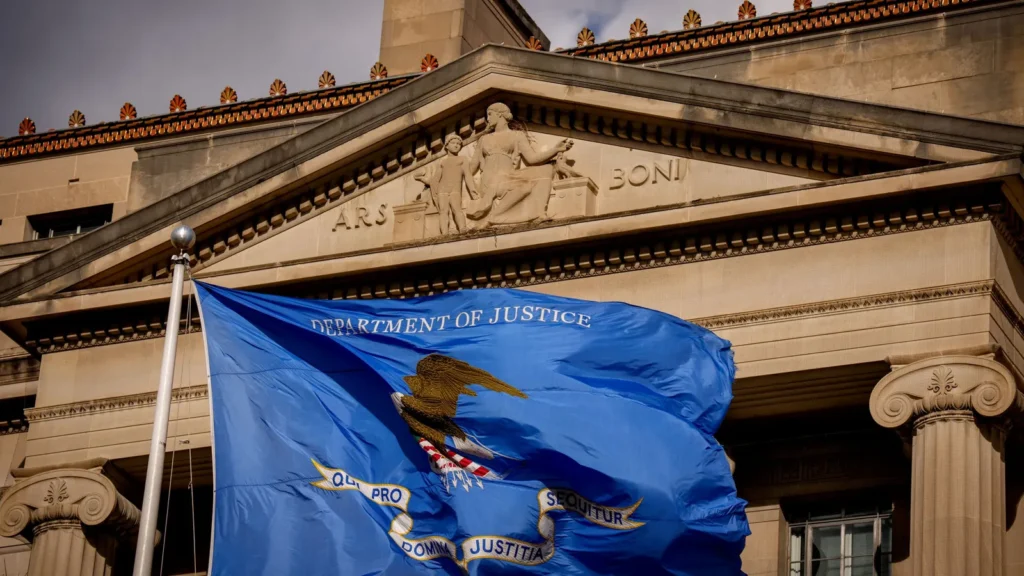
The U.S. Department of Education announced on Tuesday that it is transferring certain civil rights enforcement responsibilities to the U.S. Department of Justice. This significant organizational shift has ignited concerns among civil rights advocates and education stakeholders about the potential impact on the effectiveness of civil rights protections for students nationwide. The move is part of a broader strategy by the Education Department to streamline its operations and reduce its perceived bureaucratic footprint.
A senior official from the Education Department, speaking on a press call Tuesday, characterized the interagency agreement as a measure that "strengthens the enforcement of federal civil rights laws" by establishing a "federally coordinated law enforcement mechanism between the two agencies." This announcement follows a series of other functional transfers from the Education Department to different federal agencies, including aspects of special education responsibilities, as part of an ongoing initiative to "downsize the department and reduce bureaucratic bloat." The official further articulated the Secretary’s vision, stating, "The secretary has been very clear about the final mission of the U.S. Department of Education, and she has been clear that our primary goal is to return education to the states."
The precise division of responsibilities between the Justice Department’s Civil Rights Division and the Education Department’s Office for Civil Rights (OCR) is still being finalized, but initial details reveal a significant reallocation of investigative and resolution processes.
Key Reallocations and Remaining Responsibilities
In June, the Education Department entered into three new interagency agreements with the Justice Department, initiating the transfer of specific civil rights enforcement functions. While the full scope of these transfers is still being delineated, the agreement, made publicly available, indicates that the Justice Department will provide assistance to OCR in its core enforcement areas. These areas include, but are not limited to, Title IX (prohibiting sex-based discrimination in federally funded education programs), Title VI (prohibiting discrimination based on race, color, or national origin), Section 504 of the Rehabilitation Act (prohibiting disability discrimination), Title II of the Americans with Disabilities Act, the Age Discrimination Act, and the Boy Scouts of America Equal Access Act.
Despite these transfers, the Education Department has stated that it will retain responsibility for statutory and regulatory oversight. The department will continue to manage and lead the Office for Civil Rights. This includes continuing to handle specific aspects of complaint intake and initial processing, though the subsequent evaluation, investigation, and resolution processes for certain complaints may now involve the Justice Department. The extent to which all or specific categories of civil rights complaints will be referred to the Justice Department remains a point of clarification.
Officials emphasized that the interagency agreement represents "the first step of the partnership." The complex task of identifying staffing needs, allocating resources, and distributing workloads to ensure continued relief for students, parents, and families through OCR is an ongoing process. "How to identify staffing needs, how to allocate resources, how to allocate the workload to ensure that students, parents, and families still have relief through OCR is something that we will continue to work closely and strategically with DOJ to solve over the coming weeks," a senior department official stated on Tuesday.
Historical Context and DOJ’s Evolving Role
The Education Department’s move to collaborate more closely with the Justice Department on civil rights matters is not entirely unprecedented. In the period leading up to this announcement, the Justice Department had already been expanding its engagement in K-12 civil rights issues. This included coordinated efforts with the Education Department on matters that now fall under the purview of these new agreements.
Over the past year, the Justice Department has undertaken actions such as overturning several desegregation orders that had been binding on school districts in states like Louisiana, Mississippi, Tennessee, and Florida. In one instance, regarding the Plaquemines Parish School Board in Louisiana, the department stated that it had "righted a historical wrong, freeing the local school district of federal oversight" and was redirecting "precious local resources over an integration issue that ended two generations ago."
Furthermore, the Justice Department has been an active partner with the Education Department through its Title IX Special Investigations Team. This team, established by the current administration, focuses on enforcing anti-discrimination policies, particularly in relation to transgender students’ participation in sports and access to facilities. In recent months, the Justice Department has initiated a series of Title IX investigations, including compliance reviews in four California school districts as recently as last week. The department has also previously referred completed investigations to the Justice Department for litigation, as seen in cases in Maine and Minnesota where states resisted resolution agreements that would have barred transgender students from teams or facilities aligned with their gender identities.
Stakeholder Concerns and Potential Implications
The decision to shift civil rights enforcement functions has been met with apprehension from various civil rights organizations and education experts. These concerns are amplified by a year of reported staffing challenges within the Education Department’s regional OCR offices, which have led to disruptions in investigations and have been a source of frustration for complainants.
Critics argue that this move will undermine oversight and accountability mechanisms for states and could ultimately weaken protections for students. Verjeana McCotter-Jacobs, executive director and CEO of the National School Boards Association, expressed in a June 17 statement that the transfer "fundamentally alters the relationship between federal oversight and local schools." She elaborated, "It replaces collaborative compliance and vital technical assistance with a purely prosecutorial framework, potentially harming the very students it is meant to protect."
The National Center for Youth Law (NCYL), which previously took legal action to reverse OCR layoffs, has voiced concerns that the Justice Department may not possess the requisite expertise or established systems to manage the substantial volume of complaints filed annually with the Education Department. Shakti Belway, executive director of NCYL, stated in a June 16 statement, "While the Department of Justice’s Civil Rights Division plays a vital role in enforcing federal civil rights laws, it is not structured to administer the high-volume, complaint-based enforcement system that OCR operates."
Data highlights the scale of OCR’s workload. In fiscal year 2025, OCR received over 23,000 complaints. However, a Congressional report released in April by Senator Bernie Sanders indicated that the number of resolution agreements issued by OCR reached a 12-year low in the same fiscal year. This trend suggests a potential bottleneck in the resolution process even before the current organizational changes.
Nancy Potter, an education attorney and founder of Nancy Potter Law, noted the structural differences between the two departments: "That matters because DOJ is built for litigation. OCR has historically been the place where families, students, and schools could seek a civil rights resolution without starting in court." This distinction implies that the shift could move the focus from collaborative problem-solving and resolution towards a more adversarial legal approach.
Official Reassurance vs. Expert Disagreement
The Education Department has maintained that these changes will not negatively impact students, parents, or families. An official stated, "OCR investigations will not be impacted by this partnership, and OCR enforcement staff remain available to answer questions regarding the status of complaints, and remain the points of contact for complainants." The department also clarified that students, parents, or advocates wishing to file discrimination complaints may continue to do so with OCR.
For states and school districts, the department indicated that access to technical assistance should not be disrupted by the partnership concerning the Special Programs and Policy Office (SPPO). However, on issues pertaining to desegregation, school boards can anticipate support from the Justice Department.
Despite these assurances, many education industry experts and advocacy groups remain unconvinced. The National Association of School Psychologists predicts that the agreement "will exacerbate the backlog of civil rights complaints requiring investigation and adjudication, and it will likely weaken the enforcement of civil rights laws protecting students."
Potter raised concerns about potential confusion for families navigating where to file complaints, particularly when issues involve multiple protected categories such as disability, race, discipline, or language access, and do not fit neatly into a single agency’s jurisdiction. "For schools, this could mean less of the problem-solving function they have relied on from OCR and more enforcement through agencies with different missions and processes," Potter added.
McCotter-Jacobs echoed these sentiments, stating that "a structural change of this magnitude would complicate compliance, delay services, bureaucratize the resolution of discrimination complaints, and strain local capacity – at a time when schools are already navigating staffing shortages, rising costs, and increasing student needs." The implications of this significant organizational shift are far-reaching, potentially altering the landscape of civil rights enforcement for millions of students across the nation. The coming weeks and months will be crucial in determining the practical outcomes of this interagency collaboration and its true impact on the protection of student rights.