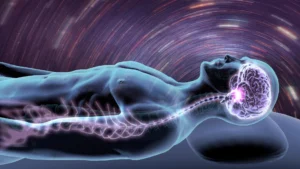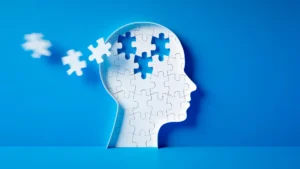

For memories to be useful, the brain must seamlessly connect what happened with the specific situation in which it occurred. Researchers at the University of Bonn have now made a groundbreaking discovery, revealing precisely how the human brain orchestrates this intricate task. Their findings, published in the esteemed journal Nature, demonstrate that two distinct groups of neurons operate in concert: one storing the raw content of an experience and the other its contextual backdrop. Critically, these groups do not blend information within the same cells, as previously observed in some animal models, but rather maintain separate "neural libraries" that coordinate their activity to form complete, adaptable memories. This novel mechanism sheds light on the remarkable flexibility and efficiency of human recall, suggesting that our brains are engineered to keep information compartmentalized, linking it only when needed, thereby enabling us to apply the same knowledge across a myriad of diverse situations.
Unraveling the Architecture of Human Memory
The human capacity for memory is one of our most complex and vital cognitive functions, underpinning everything from personal identity to learning and decision-making. Scientists have long sought to understand how the brain encodes, stores, and retrieves information, particularly how it manages to differentiate between similar events or apply learned knowledge to new circumstances. One of the enduring mysteries has been the neural architecture that allows for both the recognition of familiar elements and the appreciation of the unique context in which they appear. For instance, an individual can effortlessly recognize a friend whether they are encountered at a casual dinner party or a formal business meeting. This ability, while seemingly simple, requires a sophisticated neural mechanism to tag the core identity of the person with the specific environmental and situational cues of the encounter.
Prof. Florian Mormann from the Clinic for Epileptology at the University Hospital Bonn (UKB) and a member of the Transdisciplinary Research Area (TRA) "Life & Health" at the University of Bonn, explains the established understanding: "We already know that deep in the memory centers of the brain, specific cells, called concept neurons, respond to this friend, regardless of the environment in which he appears." These "concept neurons," sometimes colloquially referred to as "Jennifer Aniston neurons" due to early research demonstrating their specific responses to particular individuals or objects, are foundational to our ability to identify entities consistently. However, the critical challenge for the brain is not just to identify the ‘friend’ but to integrate that identification with the ‘dinner party’ or ‘business meeting’ context to form a coherent, usable memory.
The prevailing understanding, often derived from studies in rodents, suggested that individual neurons might often combine both types of information – content and context – within the same cellular units. This model, while effective for simpler memory tasks, raised questions about the sheer computational load and potential inflexibility it might impose on a more complex system like the human brain. Dr. Marcel Bausch, working group leader at the Department of Epileptology and also a member of TRA "Life & Health," articulated the central hypothesis driving their investigation: "We asked ourselves: Does the human brain function fundamentally differently here? Does it map content and context separately to enable a more flexible memory? And how do these separate pieces of information connect when we need to remember specific content according to context?" This question probed the very heart of human memory’s unique adaptability.
Methodology: Glimpsing the Brain in Action
To answer these profound questions, the research team employed a unique and ethically rigorous methodology, leveraging a rare opportunity to directly observe human neural activity. The study involved patients with drug-resistant epilepsy who, as part of their comprehensive clinical evaluation at the UKB, had already undergone the surgical implantation of intracranial electrodes. These electrodes are strategically placed in brain regions critical for memory, such as the hippocampus and surrounding medial temporal lobe structures, to precisely localize the origin of their seizures and guide potential surgical interventions. This clinical necessity provided an unparalleled "window" into the live, individual neuronal activity within the human brain, something not typically accessible through non-invasive techniques.
While under continuous monitoring for their seizures, and with their full voluntary consent, the patients participated in a series of computer-based memory tasks. This dual-purpose setup allowed the research team to collect invaluable neurophysiological data without imposing additional invasive procedures. During these experiments, participants were shown pairs of images and subsequently prompted with various types of questions about them. For example, they might view an image of a biscuit and then be asked, "Bigger?" or "Smaller?"
Prof. Mormann elaborated on the experimental design’s strategic advantage: "This allowed us to observe how the brain processes exactly the same image in different task contexts." By manipulating the contextual question while keeping the visual content constant, the researchers could precisely dissociate the neural responses related to the image itself from those related to the cognitive task or context. This meticulous experimental control was crucial for identifying the distinct neural populations hypothesized to handle content and context separately. The real-time recording of electrical signals from individual neurons provided an unprecedented level of detail, capturing the dynamic interplay of brain cells as memories were formed and retrieved.
The Discovery: Two Neural Libraries
The meticulous analysis of data from more than 3,000 neurons yielded a seminal discovery: the identification of two largely separate and functionally distinct groups of neurons. One group, which the researchers termed "content neurons," consistently responded to specific images presented to the participants, such as a picture of a biscuit or a cat, regardless of the question being posed about it. These neurons effectively acted as identifiers for the visual content itself, maintaining their activity across varying contextual demands.
In parallel, a second, equally distinct group, designated "context neurons," responded specifically to the type of question being asked – for instance, activating when the prompt was "Bigger?" or "Smaller?" – irrespective of the particular image displayed on the screen. These neurons appeared to encode the cognitive task or the situational demand, rather than the sensory input. This clear functional segregation was a significant departure from previous findings predominantly observed in rodent models, where individual neurons often demonstrated mixed selectivity, responding to both specific content and its context. In the human participants, only a small fraction of the neurons observed exhibited this dual-encoding property, underscoring a fundamental difference in how human memory is organized at the cellular level.
Dr. Bausch highlighted the robustness of this finding: "A key finding was that these two independent groups of neurons encoded content and context together and most reliably when the patients solved the task correctly." This indicates that the successful formation and retrieval of a memory are intrinsically linked to the precise and coordinated activation of these separate neural systems. The implication is profound: rather than a single, integrated neural representation for each specific memory, the human brain appears to employ a modular approach, keeping content and context in separate, yet interacting, neural repositories.
The Orchestration of Recall: How Memories Come Together
The discovery of distinct content and context neuron groups was just the beginning. The Bonn team then delved into understanding how these separate systems interact to reconstruct a complete memory. Their observations revealed a dynamic and adaptive interplay: as the experiment progressed and participants became more familiar with the tasks, the interaction between these two neuron groups visibly strengthened. This strengthening was not arbitrary; it showed a directed flow of information. Activity in a content neuron began to reliably predict the subsequent response of a context neuron, often within a mere few tens of milliseconds.
Prof. Mormann vividly described this learning process: "It seemed as if the ‘biscuit’ neuron was learning to stimulate the ‘Bigger?’ neuron." This neural "conversation" or coordinated activation is crucial. It acts as a sophisticated control system, ensuring that during memory recall, only the relevant context is retrieved alongside the pertinent content. This mechanism is central to what neuroscientists call "pattern completion," a vital process that allows the brain to reconstruct a full and detailed memory even when only partial information or a specific cue is available. For example, seeing a friend’s face (content) can immediately trigger memories of a past conversation (context) even if the physical environment is completely different.
This separation of roles, according to the researchers, is the probable explanation for the unparalleled flexibility and adaptability of human memory. Dr. Bausch elaborated: "This division of labor probably explains the flexibility of human memory: the brain can reuse the same concept in countless new situations without needing a specialized neuron for each individual combination, by storing content and context in separate ‘neural libraries’." Instead of requiring a unique neuron for every possible combination of a person, object, or event with every conceivable context, the brain maintains a more efficient system. It can, for instance, activate the "friend" content neuron and then, depending on the current situation, link it with the "dinner party" context neuron or the "business meeting" context neuron.
Prof. Mormann further emphasized the adaptive benefits: "The ability of these neuronal groups to link spontaneously allows us to generalize information while preserving the specific details of individual events." This means we can recognize a general concept (like a biscuit) but also remember the specific instance where we were asked to compare its size. This neural architecture provides a powerful cognitive advantage, allowing for both broad understanding and precise recollection, forming the bedrock of complex learning and reasoning.
Implications for Cognitive Science and Beyond
The findings from the University of Bonn represent a significant leap forward in cognitive neuroscience, fundamentally altering our understanding of human memory formation and retrieval. This dual-system model challenges previous assumptions, particularly those extrapolated from animal models, suggesting that the human brain has evolved a more specialized and efficient way to handle content and context. It positions human memory as not merely a storage vault, but a dynamic, reconstructive process facilitated by modular neural components.
From a broader perspective, this research carries profound implications across several fields:
- Revolutionizing Our Understanding of Memory: For cognitive scientists, this discovery offers a new paradigm for modeling memory. It explains how we achieve such high levels of generalization and specificity simultaneously, a hallmark of human intelligence. Future theoretical frameworks of memory will likely incorporate this content-context separation as a foundational principle.
- Potential Avenues for Neurological Health: The insights could be critical for understanding and potentially treating memory-related disorders. Conditions like Alzheimer’s disease, various forms of amnesia, or even Post-Traumatic Stress Disorder (PTSD) often involve impairments in memory recall or the inappropriate linking of emotional content with neutral contexts. If the interaction or integrity of these content and context neuron groups is compromised, it could explain specific deficits. For example, if context neurons fail to properly activate, a person might remember an event (content) but be unable to place it in time or location (context), leading to confusion or disorientation. Conversely, in PTSD, an overly strong or inappropriate link between a traumatic content and a benign context could trigger flashbacks. Understanding the normal function provides a blueprint for identifying and addressing dysfunction.
- Inspirations for Artificial Intelligence: The modular, yet interconnected, nature of this neural system could offer valuable inspiration for the development of more sophisticated artificial intelligence and machine learning algorithms. Current AI systems often struggle with contextual understanding and flexible knowledge application. A neural network architecture that separates "feature extraction" (content) from "situational awareness" (context) and then dynamically links them could lead to AI that learns and recalls information in a more human-like, adaptable manner. This could enhance capabilities in areas like natural language processing, contextual search, and adaptive robotics.
- Educational Strategies: Understanding how the brain separates and links information could also inform pedagogical approaches. Educators might design learning strategies that explicitly help students to both grasp core concepts (content) and understand the various situations or problems (contexts) in which those concepts are applicable, thereby fostering deeper and more flexible learning.
The Road Ahead: Future Research Pathways
The University of Bonn team is already charting the course for future investigations, building upon this foundational discovery. One immediate next step involves expanding the definition of "context." In the current study, context was defined by the explicit questions presented on a screen. However, real-world contexts are often far more subtle and passive, such as the physical environment one is in, the time of day, or even internal states like mood. Future research will need to determine whether the brain processes these more nuanced, everyday contexts using the same segregated content-context neural architecture. This would involve designing experiments that mimic more naturalistic memory formation scenarios.
Another critical avenue for future exploration is to test these mechanisms outside of the clinical settings. While the epilepsy patients provided an invaluable window into direct neural activity, confirming these findings in healthy individuals using non-invasive techniques (such as fMRI or EEG, perhaps combined with advanced computational modeling) would solidify the generalizability of the discovery to the broader human population.
Perhaps the most exciting and therapeutically relevant next step is to examine what happens if the interaction between these content and context neuron groups is intentionally disrupted. This could involve targeted neurostimulation techniques or pharmacological interventions, performed under strict ethical guidelines. Such studies could reveal whether interfering with this neural linking mechanism directly affects a person’s ability to recall the correct memory in the right context or to make accurate, contextually appropriate decisions. If specific disruptions lead to predictable memory impairments, it would not only further validate the model but also open doors for potential diagnostic tools or therapeutic strategies for memory disorders.
The research was made possible through significant financial support from the DFG (German Research Foundation), the Volkswagen Foundation, and the NRW joint project "iBehave," underscoring the collaborative and interdisciplinary nature of this cutting-edge scientific endeavor. As memory remains a frontier of neuroscience, these findings from the University of Bonn offer a compelling new framework for understanding the intricacies of human cognition and promise to ignite further exploration into the neural basis of our most cherished experiences.