


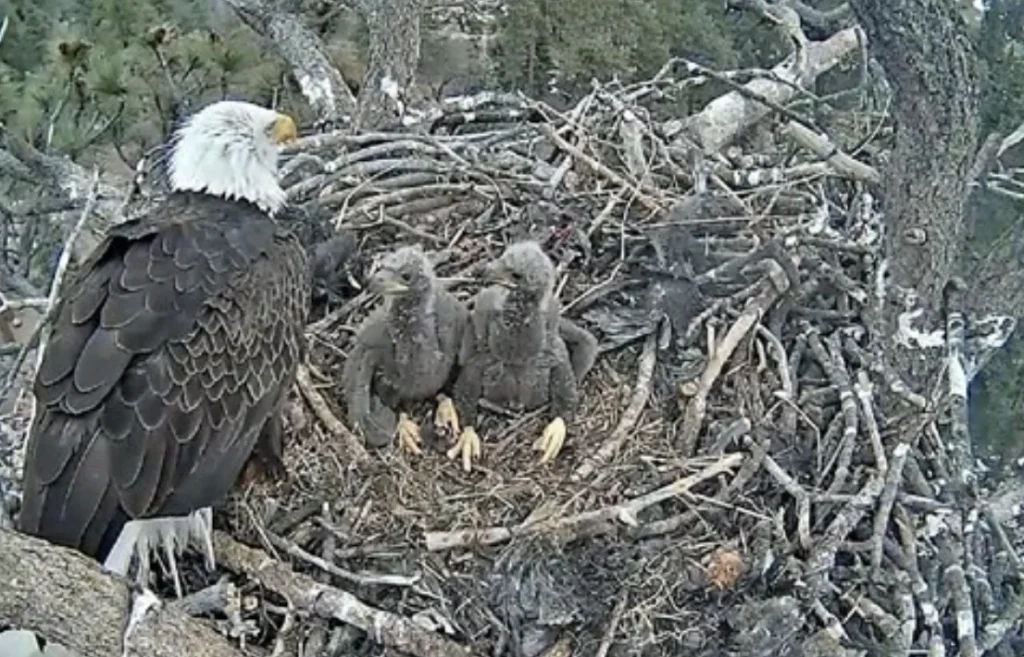
The high-altitude ecosystem of Big Bear Valley in California’s San Bernardino National Forest has become the stage for one of the most-watched wildlife dramas in the world. Through the lens of a 24/7 high-definition live stream, a pair of bald eagles known as Jackie and Shadow have captured the hearts of a global audience. Managed by the non-profit organization Friends of Big Bear Valley (FOBBV), this window into the avian world provides not only entertainment but also invaluable scientific data regarding the nesting habits, parental behaviors, and survival challenges of Haliaeetus leucocephalus in an alpine environment. While many viewers tune in for the heartwarming moments of chick-rearing, the history of these birds is a complex tapestry of territorial shifts, tragic losses, and remarkable biological adaptations.
The Origins of a Big Bear Dynasty
The presence of nesting bald eagles in Big Bear Valley is a relatively recent phenomenon in the region’s ecological history. Prior to the 2011-2012 nesting season, there were no documented instances of bald eagle chicks successfully hatching in the valley. The lineage that led to the current pair began with an older couple, Lucy and Ricky, who established a territory in the area around 2010. In the spring of 2012, they produced a chick that would eventually become the matriarch of the current nest.
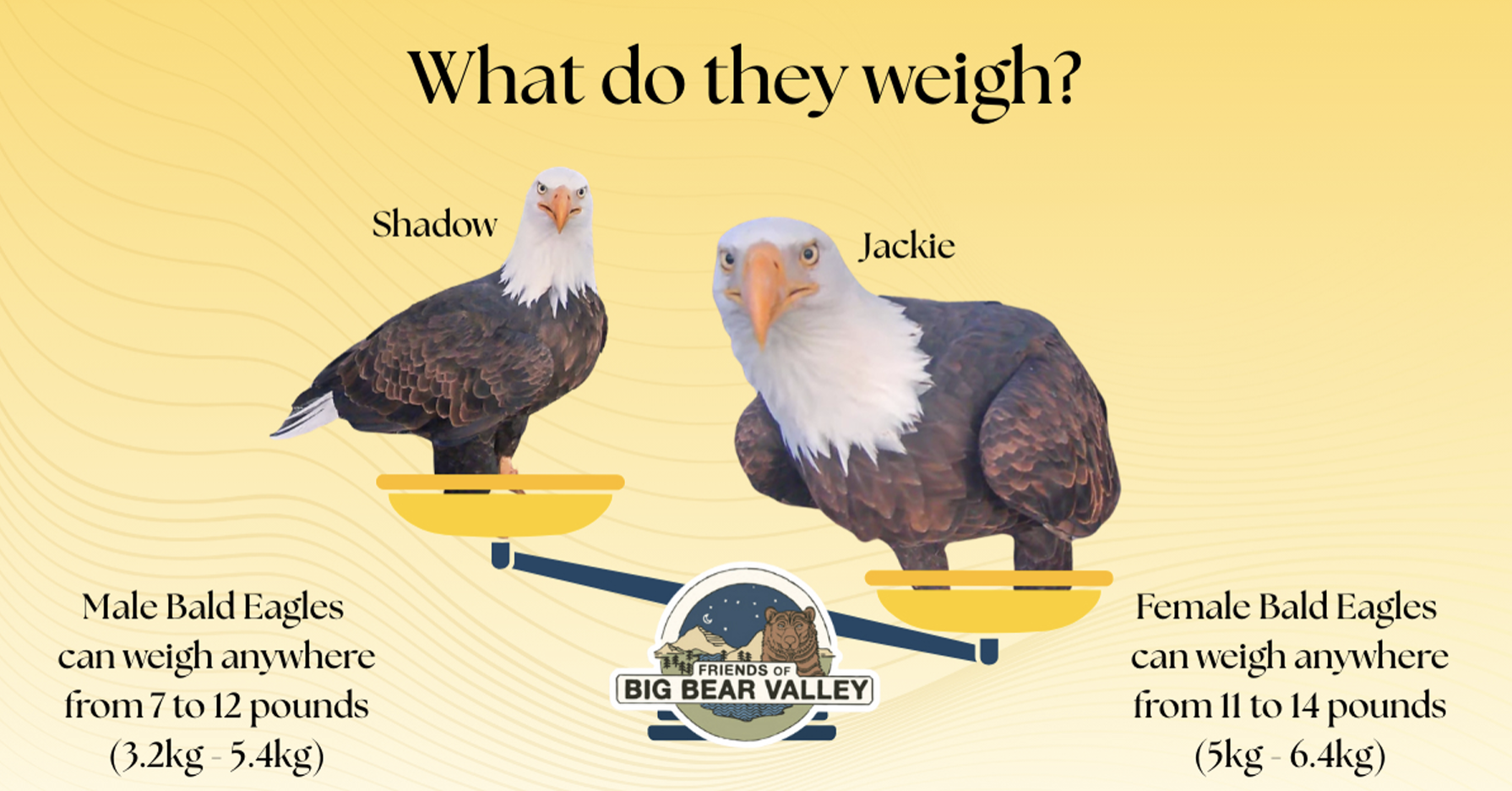
Initially, this chick was named Jack in honor of a dedicated volunteer for the U.S. Forest Service. However, as the eaglet matured and grew significantly larger than its father, biologists and observers realized the bird was female. Following the naming conventions of the time, Jack was renamed Jackie. This size disparity is a hallmark of the species; female bald eagles are typically 25% larger than males, a biological trait known as reverse sexual dimorphism.
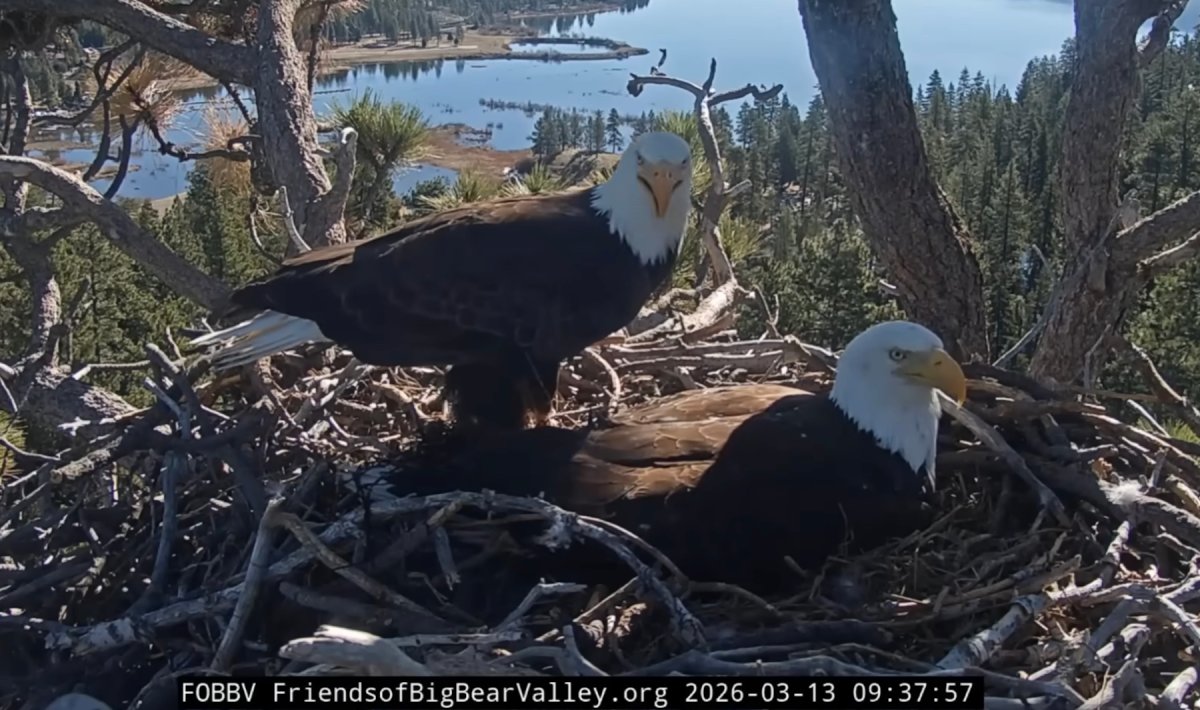
Jackie was not the only offspring of Lucy and Ricky. During the 2014-2015 season, the pair produced another chick named Shadow (not to be confused with Jackie’s current mate). This original Shadow was named by local third-grade students and the Forest Service after successfully fledging. While the original Shadow moved on to establish its own territory, Jackie remained in the valley, eventually reclaiming her parents’ territory after they disappeared from the area following the 2015-2016 season.
Territorial Shifts and the Rise of Shadow
The transition of the Big Bear nest from one generation to the next was marked by significant drama. In the 2016-2017 season, a five-year-old Jackie began a partnership with a male dubbed Mr. B. Although the pair was observed mating, their first season together yielded no eggs. The following year, 2017-2018, was more successful, resulting in the hatching of two chicks, one of whom was named Stormy.
However, the stability of this pairing was short-lived. During the period when Stormy was still in the nest, a new, younger male began frequently intruding on the territory. Despite efforts by Jackie, Mr. B, and even the young Stormy to drive the intruder away, the new male remained persistent. Eventually, Mr. B abdicated the territory, leaving the nest and Jackie behind. The intruder, who would eventually be named Shadow, successfully integrated himself into the territory and has remained Jackie’s mate for nearly eight years.
This succession highlights the competitive nature of bald eagle territories. While bald eagles are often described as mating for life, this is generally true only as long as both partners remain healthy and can defend their territory. If a mate dies or is driven off by a stronger rival, the remaining bird will typically find a new partner quickly to ensure the continued viability of the nesting site.
Compulsive Nest Building and Pair Bonding
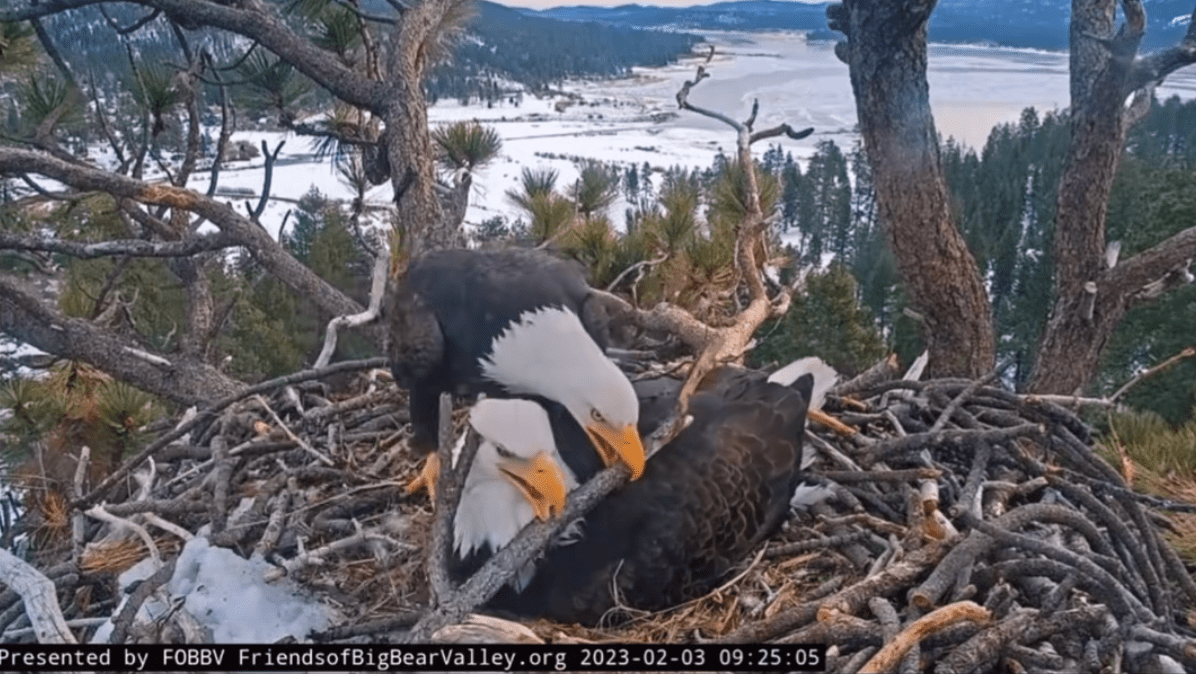
One of the most characteristic behaviors observed on the FOBBV live cam is the pair’s dedication to nest maintenance. Bald eagles are often described by ornithologists as "compulsive nest builders." This activity is most intense between October and December as the pair prepares for the winter egg-laying season.
For Jackie and Shadow, the delivery of sticks is more than just a construction project; it is a vital ritual for pair bonding. Observers frequently witness Shadow arriving with large, unwieldy branches, sometimes inadvertently striking Jackie in his enthusiasm to place the material. Despite these minor accidents, the shared labor strengthens the pair’s coordination.
The nest itself is a massive structure. The current nest used by Jackie and Shadow was originally constructed by Lucy and Ricky during the 2012-2013 season after their previous nest, located in a dead tree, was destroyed by a storm. The current nest is situated in a much sturdier, living Jeffrey Pine, approximately 50 feet from the original site. Over years of additions, eagle nests can reach weights of over 1,000 pounds and diameters of up to 10 feet, providing a stable, insulated platform for the eggs.
Biological Profiles and Vocal Recognition
The physical differences between Jackie and Shadow are striking when they are viewed together on the nest. Jackie, the female, weighs between 11 and 14 pounds, while Shadow, the male, is notably smaller, weighing between 7 and 12 pounds. This size difference allows the pair to fill different roles; the larger female is often better suited for defending the nest and providing warmth during incubation, while the smaller, more agile male is often the primary hunter during the early stages of chick development.
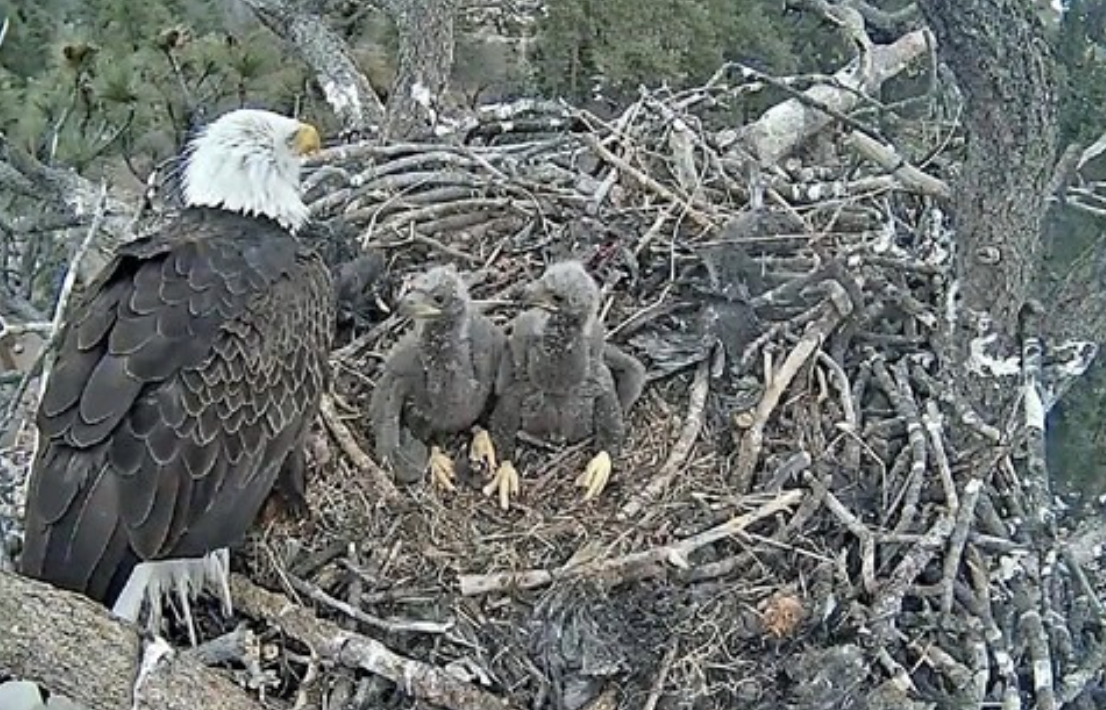
Beyond physical traits, the pair communicates through a series of high-pitched whistles and chirps. Research into eagle biology suggests that these birds have acute hearing, comparable to human hearing but specialized for the frequencies of their own species. Jackie and Shadow can recognize each other’s unique vocalizations, which they use to coordinate nest exchanges or signal readiness for mating. These vocal cues are essential for maintaining the "work schedule" of the nest, ensuring that the eggs are never left exposed to the freezing alpine temperatures of Big Bear for more than a few moments.
The Harsh Realities of Survival
While the live stream provides many moments of joy, it also documents the sobering reality of the "70 percent rule." According to the California Department of Fish and Wildlife, only about 30 percent of bald eagles survive their first year of life. The threats to young eagles are numerous and include car collisions, lead poisoning from scavenging carcasses containing lead shot, entanglement in power lines, and extreme weather events.
Jackie has experienced this mortality firsthand. Of her ten known hatched chicks, at least two—Stormy and Simba—died after fledging. Their identities were confirmed via tracking bands after their remains were found in separate locations in Southern California. In recent years, FOBBV has moved away from banding chicks to minimize human interference, meaning the fates of later fledglings like Sunny and Gizmo remain a mystery once they leave the valley.
Weather is another significant factor in chick survival. During the 2024-2025 season, a severe March snowstorm decimated the brood. High winds and heavy snow accumulation proved too much for the oldest of three newly hatched chicks. In a poignant display of parental behavior, Shadow was observed removing the deceased chick from the nest bowl, while Jackie appeared to undergo a period of lethargy and grief, spending more time away from the nest than usual. During this time, Shadow stepped up to take longer incubation shifts, demonstrating the resilience and adaptability of the pair in the face of loss.
Environmental Impact and Public Engagement
The saga of Jackie and Shadow has had a profound impact on public interest in conservation. By providing an unedited look at the lives of these apex predators, Friends of Big Bear Valley has fostered a global community of "citizen scientists" who monitor the nest and report behaviors. This level of engagement has practical benefits for conservation; for instance, the popularity of the eagles has helped raise awareness about the dangers of lead ammunition and the importance of preserving old-growth trees in national forests.
As of the 2026 season, Jackie has successfully hatched ten chicks—nine with Shadow and one with Mr. B. The names of these offspring, such as Spirit, Sandy, and Luna, have become household names for followers of the stream. The dispersal of these birds is vast; fledglings from Southern California have been tracked as far north as British Columbia and as far east as Yellowstone National Park.
The story of Jackie and Shadow is a testament to the recovery of the bald eagle species, which was once on the brink of extinction in the lower 48 states due to DDT and habitat loss. Today, their presence in Big Bear Valley serves as a living laboratory, offering a window into the endurance of nature and the complex emotional and biological lives of one of America’s most iconic symbols. As they continue to navigate the challenges of the San Bernardino Mountains, their story remains a vital record of the delicate balance between wildlife and the changing environment.