


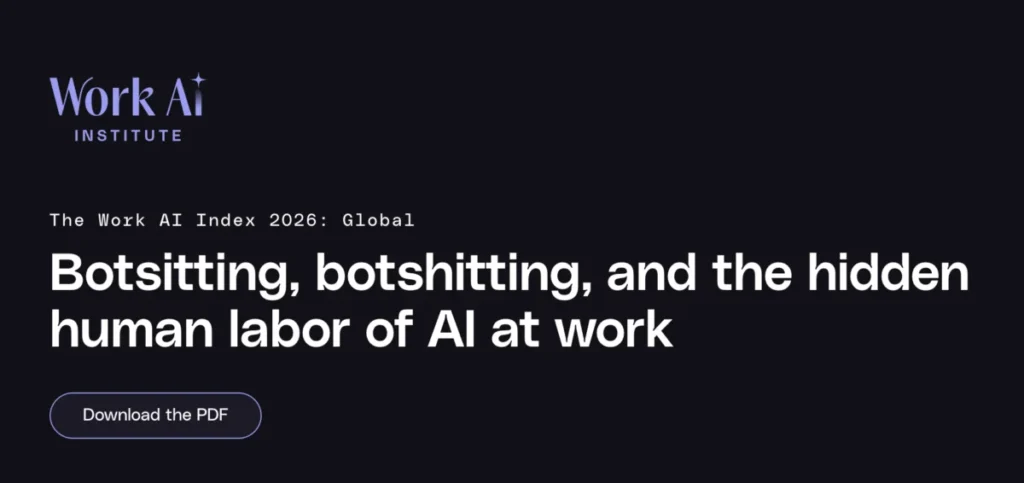
A recent report by the Financial Times, detailing insights from an interview with Rebecca Hinds, head of the Work AI Institute, has illuminated a profound paradox at the heart of modern enterprise: despite widespread adoption of artificial intelligence tools, a significant chasm exists between perceived time savings and tangible improvements in company performance. The report, drawing from a comprehensive survey of 6,000 digital workers, revealed an arresting statistic: while respondents claimed an average saving of 11 hours per week through AI utilization, a mere 13% reported any discernible enhancement in their company’s overall performance. This stark discrepancy challenges the prevailing narrative surrounding AI’s transformative power in the workplace and suggests that the issues hindering productivity are far more deeply rooted than previously assumed.
The Productivity Paradox Unveiled: A Deeper Look
The findings from the Work AI Institute’s survey present a critical challenge to the tech industry, particularly for companies like OpenAI and Anthropic, which are reportedly gearing up for significant initial public offerings (IPOs). The expectation that AI would serve as an unequivocal accelerant for corporate efficiency and output is being met with a sobering reality. Rebecca Hinds offered three primary explanations for this paradoxical outcome, explanations that resonate deeply with long-standing critiques of contemporary work methodologies:
-
Lack of Effective Training and Integration: The rapid deployment of AI tools often outpaces the development of comprehensive training programs and strategic integration frameworks. Employees may be provided with advanced technologies but lack the nuanced understanding or the redesigned workflows necessary to leverage them effectively. This leads to superficial usage, where AI automates trivial tasks without impacting core, value-generating processes, or even exacerbates existing inefficiencies by adding another layer of complexity to an already convoluted system. Without proper change management and skill development, AI becomes another tool in the arsenal, not a catalyst for systemic improvement.
-
Exacerbation of Context Switching and Digital Overload: The promise of AI to streamline tasks often overlooks the pervasive problem of context switching. While AI might automate a specific micro-task, the overall digital environment remains fragmented. Workers are still toggling between numerous applications, communication channels, and project management platforms. AI, in some instances, may even contribute to this fragmentation by generating more information, requiring more oversight, or creating additional prompts for interaction. The cognitive load associated with constantly shifting attention—a phenomenon well-documented in productivity research—remains a formidable barrier to deep work and sustained focus, regardless of AI’s capabilities.
-
The Pervasiveness of Pseudo-Productivity: Perhaps the most insidious explanation is the entrenched culture of "pseudo-productivity" or "workplace theater." This refers to the tendency for organizations and individuals to prioritize visible activity over actual output. Tasks that appear productive but contribute little to strategic goals—such as endless meetings, exhaustive email chains, or meticulously formatted but ultimately inconsequential reports—consume vast amounts of time. AI, in this context, can merely automate pseudo-productive tasks, making them faster but no more valuable. If the underlying work culture rewards busyness rather than meaningful accomplishment, AI becomes an enabler of more efficient busywork, not a driver of genuine progress.
A Historical Lens on Workplace Inefficiency
The revelation that AI isn’t fundamentally breaking work, but rather exposing its pre-existing fractures, is a critical insight. The issues identified by Hinds and echoed by productivity experts are not novel challenges introduced by artificial intelligence. Instead, they represent a magnification of problems that have plagued the digital workplace for decades.
The advent of earlier generations of digital tools — from email and instant messaging to video conferencing platforms and mobile computing — was met with similar enthusiasm and promises of unprecedented efficiency. Yet, each technological leap, while undeniably offering benefits, also introduced new forms of inefficiency and distraction.
- Email: Initially hailed as a revolutionary communication tool, email quickly became a source of constant interruption, information overload, and a primary driver of the "always-on" work culture. Studies consistently show that professionals spend a significant portion of their day managing email, often engaging in shallow processing rather than focused tasks.
- Instant Messaging and Collaboration Platforms (e.g., Slack): These tools aimed to reduce email volume and foster real-time collaboration. However, they often amplified the problem of context switching, creating a perpetual stream of notifications and conversations that fragment attention and make sustained concentration nearly impossible. The expectation of immediate responses further entrenches a reactive work style.
- Video Conferencing: While essential for remote work, the proliferation of video meetings has led to "zoom fatigue," excessive meeting hours, and a feeling that much of the time spent in virtual gatherings could be better utilized for actual work.
- Mobile Computing: The ability to work from anywhere, at any time, blurred the lines between professional and personal life, contributing to burnout and a feeling of being constantly tethered to work.
These technologies, much like AI today, offered immense potential for productivity gains, yet their implementation often overlooked the human element, the organizational culture, and the necessity for thoughtful process redesign. The result was a workplace characterized by fragmented attention, superficial engagement, and a pervasive sense of busyness that often masked a lack of true output.
This historical pattern is precisely what Cal Newport, a prominent computer science professor and author, articulated in his book Slow Productivity, published in early 2024. Remarkably, Newport’s work, which doesn’t explicitly mention AI, meticulously diagnoses the systemic issues that hinder modern productivity. He argues for a return to focused, deliberate work, emphasizing the importance of deep work, strategic prioritization, and a rejection of the cult of busyness. His insights, developed prior to the mainstream AI boom, provide a compelling framework for understanding why current AI deployments are failing to deliver expected performance improvements: the underlying system was already broken.
The Magnifying Glass of AI: Opportunities for Rectification
While the findings present a challenging outlook for tech companies and businesses, they also contain a crucial silver lining. The sheer novelty and excitement surrounding AI have captured the attention of business leaders in a way that previous digital transformations did not. This heightened awareness offers an unprecedented opportunity to address the long-standing, systemic flaws in how we work.
The pressure to demonstrate a return on investment (ROI) from substantial AI investments is forcing a re-evaluation of fundamental work processes. Instead of merely layering AI onto existing broken systems, organizations are now compelled to ask deeper questions:
- What are our true productivity metrics? Are we measuring activity or outcome?
- How do we design workflows that enable deep work and minimize context switching?
- What kind of training and cultural shifts are necessary to maximize the value of advanced tools?
- How can we foster a culture that values thoughtful execution over frenetic activity?
This introspection is vital. For too long, companies have chased technological solutions to what are fundamentally organizational and cultural problems. AI, by failing to magically fix these issues, is shining an inescapable spotlight on them.
Supporting Data and Broader Implications
The Work AI Institute’s findings are corroborated by broader trends and data points from various research organizations. For instance, reports from the McKinsey Global Institute consistently highlight a stagnation in global productivity growth despite continuous technological advancements. They often point to factors like misallocated capital, insufficient investment in skills development, and the failure to fully integrate new technologies into optimized business processes.
Gartner’s research on digital workplace trends frequently identifies "digital friction" and "information overload" as major inhibitors of employee productivity and engagement. Their studies suggest that employees spend an inordinate amount of time navigating complex digital environments rather than performing their core duties. The average knowledge worker, for example, might toggle between dozens of applications daily, losing precious minutes to each transition and the subsequent mental reorientation.
The economic stakes are considerable. Billions of dollars are being poured into AI research, development, and deployment. If these investments do not translate into tangible performance improvements, it could lead to widespread disillusionment, misallocation of resources, and a significant drag on global economic growth. For companies like OpenAI and Anthropic, whose valuations are built on the promise of revolutionizing work, these survey results underscore the imperative to move beyond mere technological prowess and address the complexities of human-machine interaction within existing organizational structures.
Official Responses and Strategic Imperatives (Inferred)
While no direct "official responses" from tech giants or industry bodies were cited in the original snippet, it is logical to infer the kinds of reactions and strategic shifts these findings would provoke:
- For AI Developers (OpenAI, Anthropic): There would be an increased focus on developing more intuitive, seamlessly integrated AI solutions that require less extensive training and are designed with human cognitive load in mind. Partnerships with organizational change management experts and a deeper understanding of enterprise workflows would become paramount. The emphasis might shift from raw computational power to user-centric design and intelligent workflow integration.
- For Business Leaders and CIOs: The conversation would move beyond simply "adopting AI" to "strategically integrating AI." This would necessitate a greater investment in change management, employee training, and a critical re-evaluation of existing business processes before or during AI deployment. Performance metrics would need to evolve to measure actual outcomes and value creation, not just activity levels.
- For Human Resources and Learning & Development: HR departments would likely be tasked with designing comprehensive digital literacy programs, fostering a culture of continuous learning, and advocating for work models that prioritize deep work and employee well-being. The role of HR would expand to include championing "AI literacy" and ensuring that technology adoption genuinely empowers employees rather than overwhelming them.
- For Management Consultants: The findings would present a fertile ground for new service offerings focused on "AI readiness assessments," "workflow optimization for AI," and "cultural transformation for AI integration." The demand for expertise in marrying technological potential with human and organizational realities would intensify.
The Path Forward: Reimagining Work Structures
The insights from the Work AI Institute and Cal Newport’s analysis collectively point towards a crucial turning point. The promise of AI remains immense, but its realization hinges not just on technological advancement, but on a fundamental reimagining of how we define and execute work.
- Strategic AI Implementation: Businesses must move beyond haphazard adoption. This involves identifying specific, high-value problems that AI can solve, rather than deploying it indiscriminately. It requires a clear understanding of how AI tools will integrate into existing workflows and a willingness to redesign those workflows where necessary.
- Investment in Human Capital: The focus must shift from merely providing tools to empowering employees. This means robust training programs, digital literacy initiatives, and fostering a culture where employees are encouraged to experiment with and adapt AI tools effectively. It also means investing in "meta-skills" like critical thinking, problem-solving, and creativity, which AI complements but does not replace.
- Prioritizing Deep Work: Organizations need to actively cultivate environments that support sustained, focused attention. This could involve designated "deep work" periods, stricter control over communication channels, and a conscious effort to reduce meetings and other interruptions. AI, when properly integrated, should free up time for this kind of high-value cognitive work.
- Redefining Productivity Metrics: A fundamental shift is required from measuring inputs (hours worked, tasks completed, emails sent) to measuring outputs and outcomes (achieved goals, innovative solutions, demonstrable business impact). This will help dismantle the culture of pseudo-productivity.
- Leadership by Example: Leaders play a critical role in modeling effective AI usage and fostering a culture that values quality over quantity, focus over frenetic activity. Their commitment to these principles will be crucial for successful transformation.
The current wave of AI technology offers a unique opportunity to not just incrementally improve existing processes, but to fundamentally rethink the structure and culture of work. By confronting the uncomfortable truth that our workplaces were already broken, business leaders can now harness AI not as a superficial patch, but as a powerful catalyst for building genuinely productive, fulfilling, and future-ready organizations. The journey to truly unlock AI’s potential will be less about the technology itself, and more about our willingness to critically examine and rebuild the foundations of how we work.