



The poetic narrative of Genesis, specifically its second chapter, offers a profound account of humanity’s genesis. "The Lord formed Adam from the dust of the earth," it states, continuing, "He blew into his nostrils the breath of life and man became a living being." This foundational text, rich in symbolic meaning, has been a cornerstone for theological and philosophical inquiry into the essence of human existence for millennia. The seemingly straightforward phrase "living being" (Hebrew: nefesh chaya) holds layers of interpretation that directly inform contemporary debates surrounding artificial intelligence and its burgeoning capacity for communication.
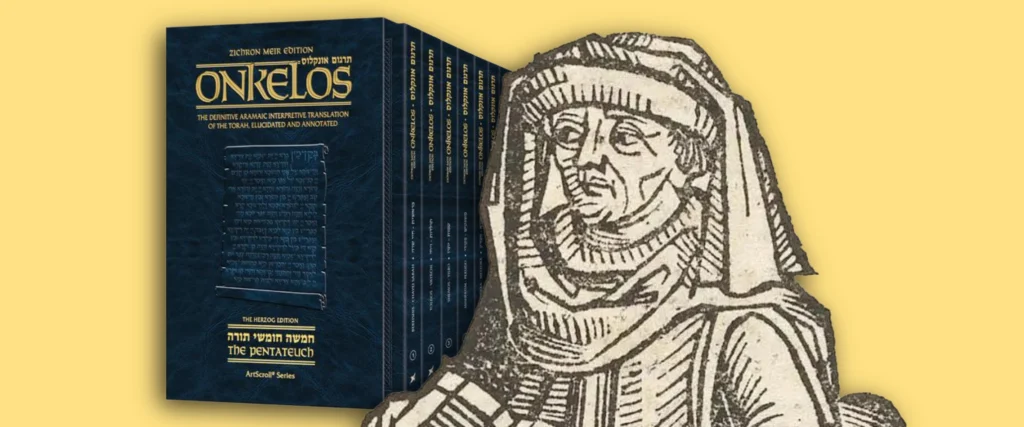
One pivotal interpretation comes from Onkelos, a Roman nobleman who converted to Judaism and became a revered Torah scholar. His Aramaic translation of nefesh chaya rendered it as ruach memalela, meaning "speaking spirit." As elaborated by Rabbi Shai Held in "The Heart of the Torah," Onkelos’s translation suggests that speech is not merely a human attribute but is "constitutive of what it means to be a human – a core part of our humanity is our ability to communicate with words." This interpretation elevates verbal communication from a biological function to an intrinsic element of human identity, separating humanity from all other forms of life described in the biblical narrative.
The Uniqueness of Human Utterance: A Historical and Philosophical Perspective
The concept of speech as a defining characteristic of humanity is not exclusive to Onkelos. The medieval commentator Rashi further reinforced this notion, asserting that speech is not only central to human identity but also the key to human uniqueness. In Jewish tradition, humanity stands alone among God’s creations in its capacity for articulate speech. This perspective aligns with broader philosophical traditions, such as the Greek concept of logos, which encompasses both reason and speech, positing humanity as the "rational animal" due to its capacity for complex thought expressed through language.
Historically, the development of speech and, subsequently, written language, represents one of the most significant evolutionary leaps for Homo sapiens. Anthropological studies suggest that the capacity for complex language likely emerged tens of thousands of years ago, coinciding with the "cognitive revolution" that led to the proliferation of art, ritual, and advanced tool-making. Language allowed for abstract thought, the transmission of complex knowledge across generations, and the coordination of large-scale social structures. Without language, the intricate societies and cumulative cultural advancements characteristic of human civilization would have been impossible.
The advent of alphabet systems in the ancient Near East, roughly around the second millennium BCE, marked another transformative period. These systems, more efficient and accessible than earlier pictographic or cuneiform scripts, democratized literacy. This shift had profound societal implications. Prior to widespread literacy, knowledge and religious understanding were often the exclusive domain of priestly classes or scribes. The ability for individuals to read sacred texts for themselves fostered a sense of personal connection to the divine and, arguably, birthed nascent notions of human dignity and universal justice. The idea that every individual, regardless of status, could access and interpret sacred law laid the groundwork for egalitarian principles that underpin modern ethical frameworks. Speech, therefore, is not merely a tool for communication; it is a vehicle for culture, identity, spirituality, and the very concept of human rights.
The Rise of Generative AI and the Mimicry of Ruach Memalela
Fast forward to the 21st century, and humanity finds itself at the precipice of a technological revolution that challenges these deeply ingrained understandings of speech. The rapid advancement of generative artificial intelligence, particularly large language models (LLMs), has introduced machines capable of producing text and even spoken language with astonishing fluency and coherence. Companies like OpenAI, Google, and Anthropic have developed systems that can engage in seemingly natural conversations, write essays, compose poetry, and generate code, blurring the lines between human and artificial communication.
The genesis of this capability lies in sophisticated algorithmic architectures, most notably the Transformer model introduced by Google in 2017. This architecture, leveraging attention mechanisms, allowed AI models to process entire sequences of text at once, rather than sequentially, dramatically improving their understanding of context and long-range dependencies in language. Subsequent innovations, combined with access to vast datasets of human-generated text (billions of words from books, articles, and websites), have enabled LLMs to learn complex patterns, grammar, semantics, and even stylistic nuances of human language.
When a chatbot generates a response, it is performing a complex series of "matrix multiplications," probabilistically predicting the next "token" (word or sub-word unit) in a sequence based on the input it received and its extensive training data. This "autoregressive" generation creates the illusion of understanding and intentionality. The lexical fluidity we observe is a statistical marvel, a testament to pattern recognition at an unprecedented scale, rather than genuine comprehension or consciousness in the human sense. Yet, for many, this illusion is profoundly unsettling.
The Ethical Collision: When Synthetic Speech Feels Profane
The unease experienced by individuals conversing with a fluent chatbot is a growing phenomenon. While intellectually acknowledging that the AI’s responses are the product of algorithms and data, a visceral discomfort often arises. This sensation, described by some as a "discomforting sense of transgression," can be directly attributed to the deeply rooted understanding of speech as sacred and intrinsically human.
The ethical questions stemming from this technological leap are profound and multifaceted. If ruach memalela defines human essence, what are the implications of machines adopting this defining characteristic? Should humanity be so quick to extend the role of a "speaking spirit" to machines, allowing them to become active participants in a ritual so fundamental to our experience? The prospect of AI writing and speaking on humanity’s behalf, or serving as a "golemic conversation partner" when authentic human companionship is scarce, raises serious concerns about authenticity, connection, and the very definition of human interaction. For many, this feels, for lack of a better word, "profane"—a violation of a deeply held, almost spiritual, boundary.
This feeling is not merely anecdotal. It touches upon fundamental philosophical debates about consciousness, personhood, and the nature of intelligence. If a machine can convincingly mimic empathy, wisdom, and creativity through language, does it diminish the value of these human qualities? Or, more optimistically, does it free humans to explore new dimensions of their unique capabilities? Critics argue that over-reliance on AI for communication could lead to a degradation of human conversational skills, an erosion of critical thinking, and a diminished capacity for genuine emotional connection. The rise of deepfakes and AI-generated disinformation further highlights the potential for malicious use, where the illusion of authentic speech can be weaponized to manipulate and deceive.
Digital Ethics: A Nascent Field Confronting Unprecedented Challenges
The current moment in generative AI development mirrors the challenges faced by bioethics five decades ago. In the mid-20th century, breakthroughs in medical technology—such as organ transplantation, life support systems, and genetic engineering—forced society to grapple with complex moral quandaries that existing ethical frameworks were ill-equipped to address. The field of bioethics emerged to provide a structured approach to these issues, developing principles like autonomy, beneficence, non-maleficence, and justice to guide medical practice and research.
Today, digital ethics is in a similar nascent stage, confronted by an equally transformative technological paradigm. The questions are vast: How do we ensure fairness and prevent bias in AI algorithms? What are the implications for privacy and data security? Who is accountable when AI makes critical decisions with harmful outcomes? And most fundamentally, what is the appropriate role for AI in human society, particularly when it encroaches upon activities traditionally considered uniquely human, like complex communication and creative expression?
The timeline of digital ethics itself is short but rapidly accelerating. While early discussions around "computer ethics" began in the 1970s and 80s, focusing on issues like data privacy and hacking, the current wave of generative AI has brought forth entirely new categories of ethical dilemmas. Global efforts are underway to develop regulatory frameworks, such as the European Union’s AI Act, which aims to classify AI systems by risk level and impose corresponding requirements. In the United States, various executive orders and legislative proposals seek to address AI safety, security, and innovation. These initiatives underscore the widespread recognition that technological progress must be guided by robust ethical considerations.
Navigating the Future: Towards Responsible AI Integration
As powerful AI models become increasingly ubiquitous, society faces a critical juncture. The allure of efficiency, innovation, and convenience offered by AI is undeniable. Yet, the potential for unintended consequences, particularly those that impact the fundamental understanding of human identity and interaction, demands cautious deliberation. Before uncritically embracing every new AI product championed by tech leaders, there is significant work to be done in defining "what we’re willing to accept."
This work requires an interdisciplinary approach, bringing together technologists, ethicists, philosophers, theologians, social scientists, and policymakers. It involves not only technical safeguards against misuse but also a deep societal conversation about the values we wish to uphold in an AI-permeated world. Questions about the future of human connection, the nature of creativity, the role of education, and the integrity of information in an age of synthetic media are paramount.
Ultimately, the challenge lies in harmonizing technological advancement with a profound respect for human distinctiveness. While AI can augment human capabilities and offer unprecedented tools, the sacredness of human speech, as understood through centuries of tradition and philosophy, serves as a powerful reminder of what it means to be human. Safeguarding the essence of ruach memalela in an era of intelligent machines is not about rejecting progress, but about ensuring that progress truly serves humanity’s highest aspirations, preserving the authentic and unique spirit that defines us. The choices made today will shape not only the future of technology but also the very fabric of human experience.