




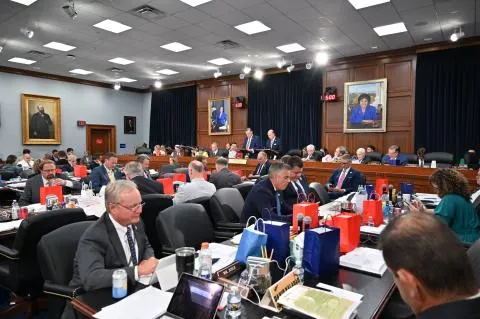
A significant proposed funding reduction for the U.S. Department of Education, including substantial cuts to programs serving low-income students, has advanced through the House Appropriations Committee, signaling a contentious fiscal year 2027 budget cycle for federal education initiatives. The Republican-led committee approved a bill on Tuesday that would slash the Education Department’s overall funding by approximately 10%, a move that critics argue will disproportionately harm vulnerable student populations and undermine educational progress nationwide.
Key Provisions of the Proposed Bill
The legislation, which now proceeds to the full House for consideration, recommends a total of $71 billion for the Department of Education for fiscal year 2027. This represents a notable decrease from the current fiscal year’s allocation of $79 billion. This proposed funding level is even lower than the $76.5 billion recommended by the Trump administration. However, the committee did reject the Trump administration’s proposal to eliminate and consolidate several key programs under the Individuals with Disabilities Education Act (IDEA), such as teacher training and technical assistance initiatives, demonstrating a point of bipartisan agreement on the necessity of these specific disability services.
For K-12 education specifically, the bill proposes allocating $40.2 billion, a reduction of $4.6 billion compared to the fiscal year 2026 budget. This cut is a central point of contention, with Democrats on the committee arguing that it will have severe repercussions for schools across the country.
The bill encompasses funding for the U.S. Labor and Health and Human Services departments in addition to the Department of Education. Representative Robert Aderholt, R-Ala., chair of the House Appropriations Subcommittee for Labor, Health and Human Services, Education, and Related Agencies, defended the proposed cuts. He stated that the bill strikes "a balance between physical stewardship and maintaining necessary investments," including those for student supports. Aderholt cited the nation’s substantial national debt, which exceeds $40 trillion, as a primary driver for the proposed spending reductions, asserting that "We would be foolish to ignore discretionary spending reductions as part of the answer."
Conversely, Representative Rosa DeLauro, D-Conn., ranking member of the Appropriations Committee, expressed strong opposition to the bill, arguing that it "undermines education." DeLauro specifically highlighted the proposed reduction in Title I funding, which provides critical support to schools with high concentrations of students from low-income families. She estimated that this cut could result in the loss of approximately 30,000 teaching positions nationwide. "These cuts are an attempt to undo the progress we have made, to cut off access to these opportunities," DeLauro stated. "It is a step down the path toward eliminating public education."
Impact on Specific K-12 Programs
While the full details of specific K-12 program allocations were not elaborated upon in the initial reporting, the overarching reduction in K-12 funding suggests a broad impact. The proposed cuts to Title I funding are particularly concerning given its role in addressing educational disparities. Title I funds are often used to hire additional teachers, provide supplementary academic services, and support professional development, all of which are crucial for improving outcomes for disadvantaged students. A significant reduction in this funding could force school districts to make difficult decisions, potentially leading to larger class sizes, fewer specialized support staff, and diminished access to enrichment programs.
In addition to the K-12 allocations, the bill proposes funding for Head Start at $12.4 billion, an increase of approximately $10 million above the fiscal year 2026 level. Head Start is a comprehensive early childhood education program that serves children up to age 5 from low-income families and is administered by the Department of Health and Human Services. This increase suggests a recognition of the importance of early childhood intervention, even amidst broader fiscal austerity.
The committee also recommended maintaining level funding for the Department of Education’s Office for Civil Rights at $140 million. This figure represents an increase of $50 million over the Trump administration’s proposed budget for this office, indicating a bipartisan commitment to enforcing civil rights protections in education.
Bipartisan Focus on Literacy Initiatives
One of the most notable bipartisan efforts within the proposed legislation is a renewed focus on reading and literacy. The bill includes provisions to reinstate the National Reading Panel, a body that was convened in 1997 and concluded its work in 2000 with a comprehensive report to Congress. Under the proposed bill, the panel would be tasked with evaluating the effectiveness of various approaches to teaching children to read and would be required to submit its findings to Congress and the Departments of Education and Health and Human Services. The panelists would consist of reading researchers, representatives from colleges of education, reading teachers, administrators, and parents, mirroring the composition of the original panel.
Representative Josh Harder, D-Calif., a vocal proponent of this initiative, highlighted the declining state of literacy in the United States. "Over the last two decades that important work on literacy has really degraded, and it’s come at a cost," Harder stated. "We have paid for that neglect." He pointed to concerning data indicating that students graduating from high school are currently scoring lower in literacy than at any other point in recorded history. The re-establishment of the National Reading Panel reflects a shared concern across the aisle about the critical need to improve reading proficiency among American students.
Broader Context and Future Outlook
The House Appropriations Committee’s actions set the stage for a significant debate over federal education spending in the coming months. The bill’s journey to the full House represents a crucial step, but its ultimate passage will depend on negotiations and potential amendments. The Senate will subsequently take up its own version of a Labor, Health and Human Services, Education, and Related Agencies appropriations bill for fiscal year 2027. The differing priorities and fiscal approaches of the House and Senate committees will likely lead to further negotiations and compromise.
The fiscal year 2027 begins on October 1, 2026, meaning that Congress has a defined timeline to reconcile its spending priorities. The proposed cuts, particularly to programs serving low-income students, raise concerns about equity and access in education. Proponents of robust federal funding argue that these investments are essential for providing all students with the resources they need to succeed, regardless of their socioeconomic background. Critics, however, contend that federal spending must be reined in to address the nation’s fiscal challenges, and that states and local districts should bear greater responsibility for educational funding.
Analysis of Implications
The proposed 10% cut to the Department of Education’s budget, if enacted, would represent a significant shift in federal investment in education. For low-income schools, the reduction in Title I funding could exacerbate existing resource gaps. Title I is the largest federal aid program for elementary and secondary schools, and its impact on student achievement, particularly for those facing economic disadvantages, has been well-documented. A decrease in this funding could force schools to reduce staff, cut essential programs, and potentially increase class sizes, all of which can negatively affect educational quality.
The slight increase for special education spending, while a positive development, may not fully offset the broader cuts. The Individuals with Disabilities Education Act (IDEA) mandates that public schools provide free appropriate public education to eligible children with disabilities. While the committee rejected some of the more drastic proposals to cut IDEA programs, the overall reduction in the Department’s budget could still impact the implementation and effectiveness of these services.
The bipartisan support for reinstating the National Reading Panel highlights a shared recognition of the urgency of addressing declining literacy rates. This initiative could provide valuable research and guidance to improve reading instruction, but its impact will depend on the scope of its mandate and the commitment to implementing its recommendations.
The differing perspectives between the Republican-controlled House Appropriations Committee and Democratic members underscore the ongoing ideological debates surrounding the role and scope of federal involvement in education. As the bill moves through the legislative process, the nation will be watching to see how these competing priorities are reconciled and what the ultimate impact will be on American students and schools. The $40 trillion national debt remains a significant factor influencing these discussions, pushing lawmakers to make difficult choices about federal spending priorities. The debate over the fiscal year 2027 education budget is thus intertwined with broader national economic concerns, making the path forward complex and likely to involve significant negotiation.