



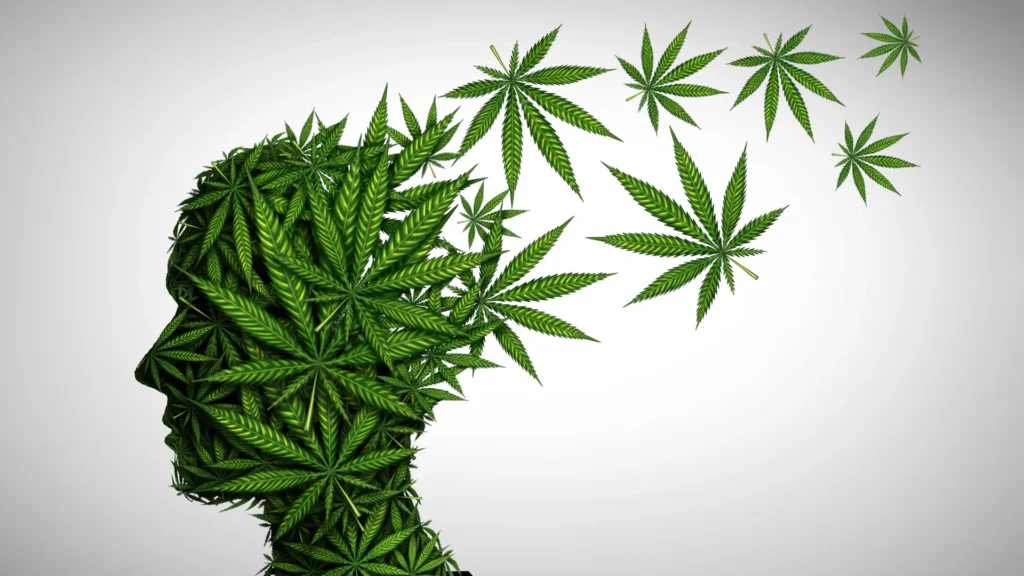
A groundbreaking study from Washington State University (WSU) has unveiled significant insights into how smoking cannabis can acutely impair various facets of human memory, extending far beyond the commonly perceived "fuzziness" associated with cannabis use. Published in the prestigious Journal of Psychopharmacology, the research provides the most comprehensive examination to date of cannabis’s influence on memory, revealing that Tetrahydrocannabinol (THC) not only affects simple recall but also critically alters how memories are formed, stored, and retrieved in everyday life, even leading to the creation of false memories.
The study’s findings are particularly pertinent in an era marked by expanding cannabis legalization and increasing public access. It highlights that individuals who consumed THC were demonstrably more prone to recalling words that were never presented to them and faced greater difficulties in navigating routine memory tasks, such as remembering future appointments or tracking the origins of information. This comprehensive approach, analyzing a wide array of memory systems simultaneously, distinguishes the WSU research from previous, more narrowly focused investigations, offering a clearer picture of cannabis’s pervasive cognitive impact.
Unpacking the Broad Spectrum of Memory Impairment
The research, led by Carrie Cuttler, senior author and an associate professor of psychology at WSU, and co-author Ryan McLaughlin, an associate professor in the Department of Integrative Physiology and Neuroscience, challenged conventional understanding by examining seven distinct types of memory: verbal, visuospatial, prospective, source, false, episodic content, and temporal order memory. Most prior studies typically focused on only one or two, often limited to simple word recall tests. "This is the first study to comprehensively examine many different memory systems at once, and what we found is that acute cannabis intoxication appears to broadly disrupt most of them," Cuttler noted, emphasizing the study’s unique breadth.
The methodology involved recruiting 120 regular cannabis users who participated in a double-blind experiment. Participants were randomly assigned to vaporize either a placebo cannabis, 20 milligrams (mg) of THC, or 40 mg of THC. Following consumption, each participant underwent approximately an hour of rigorous memory assessments designed to probe the various memory systems. The results were striking: cannabis consumers performed significantly worse than the placebo group across the majority of tests, with significant differences observed in 15 out of 21 memory measures.
A surprising revelation from the study was the lack of substantial difference in memory impairment between participants who consumed 20 mg of THC and those who consumed 40 mg. This suggests a potential ceiling effect, where even moderate amounts of THC can exert a significant and nearly maximal interference with memory function, implying that simply reducing dosage slightly might not entirely mitigate these cognitive risks.
The Peril of False Memories and Source Confusion
Among the most alarming findings were the pronounced effects on false memory and source memory. False memory refers to the recollection of events or details that did not actually occur, while source memory is the ability to accurately recall where information originated. Both are critical for reliable decision-making and accurate perception of reality.
In one particularly illustrative test, participants listened to lists of thematically related words, yet the central keyword connecting them was deliberately omitted. Later, individuals under the influence of cannabis were markedly more likely to erroneously claim they had heard the unpresented central keyword. "I found it was really common for people to come up with words that were never on the list," Cuttler explained. "Sometimes they were related to the theme of the list, and sometimes they were completely unrelated." This vulnerability to creating false memories under cannabis intoxication carries profound implications, particularly in contexts where precise recall is paramount, such as legal testimonies or medical diagnoses.
Furthermore, cannabis users exhibited greater difficulty in identifying the original source of previously acquired information. This impairment in source memory means individuals might struggle to differentiate whether a piece of information came from a credible news source, a casual conversation, or an unreliable online forum. Such distortions can undermine critical thinking and contribute to the spread of misinformation, impacting personal judgments and broader societal discourse. The potential for such memory errors to influence eyewitness accounts or to be exacerbated by suggestive questioning underscores a serious concern for the justice system and beyond.
Impacts on Everyday Functioning: Prospective Memory and Daily Tasks
Beyond the more abstract concepts of false and source memory, the study also pinpointed significant impairments in prospective memory—the ability to remember to perform intended actions in the future. This form of memory is fundamental to daily life, governing tasks such as taking prescribed medication on time, attending scheduled meetings, or remembering to pick up groceries on the way home. The observed deficits suggest that cannabis use could directly impede an individual’s capacity to manage routine responsibilities effectively. "These are things we rely on constantly in our day-to-day lives," Cuttler highlighted. "If you have something you need to remember to do later, you probably don’t want to be high at the time you need to remember to do it."
Interestingly, one memory system—episodic content memory, which involves recalling personal experiences—did not show a statistically significant effect in this particular study. However, Cuttler cautioned that further research is essential before drawing definitive conclusions about this specific type of memory.
The Broader Context: Cannabis Legalization and Research Barriers
The WSU study arrives at a critical juncture in the evolving landscape of cannabis policy and public health. Across North America, states like Washington have progressively moved towards legalizing recreational and medicinal cannabis, leading to a significant increase in its availability and use. Data from the National Survey on Drug Use and Health (NSDUH) indicates a steady rise in cannabis use across various demographics, particularly among young adults. In Washington State, the cannabis market has seen robust growth since legalization in 2012, with billions of dollars in sales and a wide array of products available, from traditional flower to edibles, concentrates, and vapes. The average THC potency in cannabis products has also seen a dramatic increase over recent decades, with some concentrates exceeding 90% THC, far higher than the 3-5% common in the 1970s. This rising potency may contribute to more pronounced cognitive effects than observed in earlier research.
Despite the widespread adoption and increasing normalization of cannabis, there remains a substantial gap in scientific understanding regarding its short-term and long-term cognitive and physiological effects. A primary impediment to comprehensive research has been the federal classification of cannabis as a Schedule I substance under the Controlled Substances Act. This classification, which designates substances as having a high potential for abuse and no accepted medical use, has historically imposed stringent regulatory hurdles, making it exceptionally difficult for researchers to obtain cannabis for study, secure funding, and navigate complex federal oversight. This regulatory environment has stifled scientific inquiry for decades, leaving policymakers, healthcare providers, and the public with incomplete information.
Neurobiological Underpinnings: How THC Interacts with Memory
To understand how cannabis impacts memory, it’s essential to consider the brain’s endocannabinoid system (ECS). This complex system plays a crucial role in regulating a wide range of physiological and cognitive processes, including mood, appetite, pain sensation, and, critically, memory. The ECS comprises endocannabinoids (naturally produced compounds), receptors (CB1 and CB2), and enzymes that synthesize and degrade these compounds. THC, the primary psychoactive component of cannabis, mimics the action of the brain’s natural endocannabinoids, binding primarily to CB1 receptors, which are densely concentrated in brain regions vital for memory, such as the hippocampus, prefrontal cortex, and amygdala.
When THC binds to these CB1 receptors, it disrupts the normal signaling pathways that facilitate memory formation and retrieval. The hippocampus, in particular, is a key area for converting short-term memories into long-term ones and for spatial navigation. Interference with hippocampal function by THC can explain difficulties in forming new memories (anterograde amnesia, often experienced as difficulty learning new information while intoxicated) and issues with recalling recent events. The prefrontal cortex, involved in executive functions like planning, decision-making, and working memory, is also affected, contributing to difficulties in complex memory tasks and problem-solving.
Implications for Public Health and Safety
The findings of the WSU study carry significant implications for public health, safety, and policy.
- Driving Safety: Impaired prospective memory and source memory could pose serious risks for individuals operating vehicles or heavy machinery. Difficulty remembering crucial details, making quick decisions, or accurately recalling the sequence of events could lead to accidents. Public health campaigns increasingly emphasize the dangers of impaired driving, and these findings reinforce the need for clear messaging on cognitive impairment from cannabis.
- Workplace Performance: In professions requiring high levels of concentration, accurate recall, and adherence to protocols, acute cannabis intoxication could compromise safety and productivity. Employers may need to re-evaluate policies regarding cannabis use and impairment in the workplace.
- Academic and Educational Settings: Students using cannabis could experience diminished capacity for learning new material, retaining information from lectures, or accurately recalling facts for examinations. This could have a detrimental impact on academic achievement.
- Medical Decision-Making: For patients managing complex health conditions or medication regimens, memory impairments could lead to errors in medication adherence or difficulty following medical advice, potentially compromising health outcomes.
- Legal and Judicial System: The heightened susceptibility to false memories and source confusion has critical implications for legal processes, particularly in eyewitness testimony and interrogations, where the accuracy of recall is paramount.
Moving Forward: Addressing Research Gaps and Informing Policy
Carrie Cuttler and her team underscore that this study represents a crucial step in understanding the acute effects of cannabis, but it is by no means the final word. "We’re living in a state where cannabis use is very common, but there’s still a lot we don’t know about its acute effects," Cuttler stated. "The goal is to help people make informed decisions about the risks and benefits."
Future research needs to delve deeper into several areas:
- Long-term Effects: While this study focused on acute intoxication, more longitudinal studies are needed to understand the chronic effects of regular cannabis use on memory and cognitive function over months and years, especially during critical developmental periods like adolescence.
- Individual Variability: Genetic predispositions, frequency of use, age of initiation, and individual differences in the endocannabinoid system may all influence how cannabis affects memory.
- Other Cannabinoids: The cannabis plant contains over 100 cannabinoids besides THC, such as Cannabidiol (CBD). Research into the independent and synergistic effects of these compounds on memory is essential, as some, like CBD, are thought to potentially mitigate some of THC’s psychoactive effects.
- Dosage and Potency Thresholds: While this study showed a plateau effect between 20mg and 40mg, further research is needed to pinpoint the exact dosage thresholds at which various memory systems begin to be significantly impacted and whether lower doses have milder effects.
- Impact on Specific Populations: Research on pregnant individuals, adolescents, the elderly, and those with pre-existing mental health conditions or cognitive impairments is particularly critical.
The WSU study serves as a vital call to action for policymakers, researchers, and public health advocates. As cannabis continues to integrate into mainstream society, a robust scientific understanding of its myriad effects is indispensable. This means advocating for reforms to federal cannabis research regulations, increasing funding for independent scientific inquiry, and developing evidence-based public education campaigns. By bridging the current knowledge gaps, society can better equip individuals to make informed choices about cannabis use and mitigate potential public health and safety risks in an evolving regulatory landscape.