




A persistent challenge for educators across the globe is fostering genuine student ownership of the learning process. Despite the implementation of innovative pedagogical approaches such as project-based learning, Universal Design for Learning (UDL), and makerspace initiatives, many teachers report a lingering frustration: students perform assigned tasks diligently but often fail to internalize the learning, leading to a superficial engagement rather than deep understanding. This widespread observation underscores a critical gap in educational practice: the explicit teaching of "learn-to-learn" skills. These foundational competencies, often overlooked as a byproduct of engaging activities, are in fact the essential tools that empower students to become active, self-directed learners.
The issue was recently highlighted during instructional rounds in a classroom where students were observed working in groups. A teacher, emerging from the room, expressed a common sentiment: "I am trying to get them to own their learning. They are sweet. They do what I ask, but they just won’t own it." This anecdote encapsulates the core problem. While teachers invest considerable effort in lesson planning, designing engaging activities, and providing scaffolded support, the ultimate act of learning remains the learner’s responsibility. The brain’s information processing cycle—involving attention, elaboration, and consolidation—cannot be compelled. It requires active engagement, intellectual curiosity, a psychologically safe environment, and the specific skills to effectively integrate new content. Without these, even the most meticulously designed instruction may not translate into lasting learning.
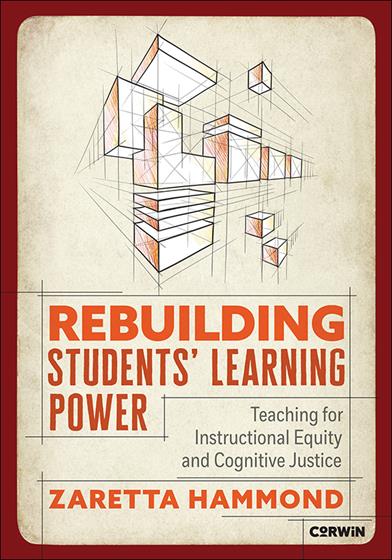
Zaretta Hammond, author of Rebuilding Students’ Learning Power (Corwin, 2025), argues that the solution lies not merely in motivating students or discussing brain function, but in equipping them with concrete tools and "moves" that transform them into effective information processors, making learning "sticky." This approach shifts the focus from external motivation to internal capacity building, recognizing that true ownership stems from competence in the learning process itself.
Defining ‘Learn-to-Learn’ Skills: The Craftsmanship of Cognition
"Learn-to-learn" skills, while seemingly a contemporary construct, represent a deep understanding of metacognition and self-regulated learning that has roots in educational psychology for decades. David Perkins of Harvard’s Project Zero refers to this as the "game of learning," while Ron Berger of EL Education calls it the "craftsmanship of learning." At their core, these are the "trade secrets" of effective learning, often implicitly understood by high-achieving students but rarely explicitly taught to all. From an equity perspective, these skills constitute a vital "hidden curriculum" that can significantly narrow opportunity gaps and promote more equitable academic outcomes by demystifying the learning process for every student.
It is crucial to differentiate learn-to-learn skills from executive function skills. While executive functions—such as planning, organization, time management, and task initiation—are undeniably important for academic success, they primarily address the logistical and behavioral aspects of learning. They help students manage their workload and environment. Learn-to-learn skills, conversely, delve deeper into the cognitive load management and the actual processing of information. They are about how the brain actively engages with new content to construct meaning and integrate it into existing knowledge structures.
Hammond introduces "moves" as discrete actions or techniques that constitute a broader skill. A "move" is a specific, actionable step—like a chess move or a dance move—with a clear beginning and end. A "skill," however, is a developed ability or competency that encompasses understanding when, how, and why to employ various moves effectively. For instance, in basketball, a specific "crossover dribble" is a move, but the overall "ball-handling" is a skill that involves choosing and executing many such moves adaptively. Similarly, learn-to-learn skills are built by mastering and flexibly applying a set of cognitive "moves" to process new content meaningfully and deeply.
The Five Essential Learn-to-Learn Moves
The process of effective information processing can be broken down into five fundamental "learn-to-learn" moves, each targeting a critical stage of cognitive engagement:
Move 1: Size It Up and Break It Down
This initial move is foundational, engaging students in strategic task analysis. "Size It Up" prompts the learner to undertake a structured cognitive routine to fully comprehend the demands of a task. It involves asking a series of decision-making questions that help clarify the task’s scope, purpose, and potential challenges. For example, students might ask: "What exactly is this task asking me to do?" "What is the desired outcome?" "What prior knowledge might be relevant?"
Following this, "Break It Down" focuses on crafting a plan of attack. Here, the student dissects the task into its constituent cognitive activities, identifying the specific tools, strategies, and resources required for successful completion. This move ignites the information processing cycle by preparing the brain for focused engagement, helping to set an appropriate emotional and intellectual stance. Research in metacognition consistently shows that students who engage in pre-task planning and goal-setting demonstrate superior performance and self-regulation.
Move 2: Scan the Hard Drive
Neuroscience confirms that all new learning must be meaningfully connected to existing knowledge. The "Scan the Hard Drive" move is designed to activate a student’s background knowledge—their "funds of knowledge" or schema—in preparation for encountering new content. When the brain processes new information during the attention phase, it instinctively searches for connections, however tangential, within its vast network of existing experiences, definitions, and concepts.
This move can be employed immediately after task analysis or whenever a learner encounters new or confusing information. It prompts the brain to embark on a "scavenger hunt" through its stored knowledge, seeking relevant anchors for the incoming data. By consciously recalling what they already know about a topic, students create a scaffold upon which new information can be securely built. This active recall and connection-making significantly enhances the brain’s capacity for encoding and retaining new memories, directly addressing the principle of elaborative rehearsal.
Move 3: Chew and Remix
Central to the elaboration phase of information processing, the "Chew and Remix" move is where new content actively integrates with activated schema. Once a student has scanned their "hard drive" and identified related background knowledge, they must then dynamically mix the "new with the known." This active "chewing" is the essence of meaning-making, leading to a "remix" where novel information is assimilated and accommodated within existing cognitive frameworks.
This phase necessitates productive struggle within the learner’s zone of proximal development (ZPD). Students grapple with complex, conflicting, or competing information, moving beyond surface-level understanding to deeper learning. This process aligns with higher-order thinking skills on Bloom’s Taxonomy and Webb’s Depth of Knowledge wheel, requiring analysis, synthesis, and evaluation. By actively manipulating and integrating information, students build richer, more interconnected neural networks, making the learning more robust and accessible for future recall.
Move 4: Engage in Skillful Practice
While "Chew and Remix" focuses on general meaning-making, "Skillful Practice" targets the deepening of understanding for core concepts and the development of automaticity for specific skills and procedures, particularly in subjects like mathematics and reading. This move emphasizes deliberate practice—a structured, repetitive engagement aimed at myelination of neural pathways, which accelerates neural impulses and builds proficiency.
Students execute this move when they need to refine their application of a concept or execution of a skill. It involves continuous refinement, where the learner uses "metastrategic awareness" to identify weaknesses in their execution and focuses intensely on improving small, specific components. This iterative process of repetition with refinement is crucial for transforming conscious effort into unconscious competence, freeing up cognitive resources for more complex tasks. Research on expert performance consistently highlights deliberate practice as the cornerstone of mastery.

Move 5: Make It Sticky
The final move, "Make It Sticky," is critical for strengthening the consolidation phase of information processing and counteracting the brain’s natural pruning mechanism. Without active engagement and application, fragile dendrites—new neural connections formed during initial learning—can be eliminated within 24 to 48 hours. The goal here is to transform these fragile connections into strong, enduring neural pathways through varied application of newly acquired content in different contexts.
Students employ this move at the conclusion of a learning episode and ideally within twelve hours afterward, often during out-of-school time. It requires applying the skill or thinking about the information in novel ways to reinforce and solidify it. Examples include explaining the concept to someone else, connecting it to real-world scenarios, creating a visual representation, or using it to solve a new problem. This spaced retrieval and active application prevent neural pruning, ensuring that learning becomes a permanent part of the student’s cognitive repertoire.
Cultivating Cognitive Independence: Strategies for Teachers
The true challenge lies not just in defining these moves but in empowering students to consistently use them without constant teacher prompting—the hallmark of a cognitively independent learner. Simply explaining these moves or using them as engagement strategies from the front of the classroom is often insufficient because students may merely be following directions rather than internalizing the ownership of the process. For students to genuinely own their learning, they must understand that they are the primary agents in working these cognitive moves, much like an athlete must actively execute and correct their own technique, even with a coach demonstrating.
To foster this crucial shift, educators can employ three key strategies:
1. Initiate Students into a Cognitive Apprenticeship
Drawing parallels with traditional apprenticeships in crafts like carpentry or culinary arts, classrooms can be structured as cognitive apprenticeships. This involves an explicit "onboarding" process, followed by phases of skill-building and habit formation, leading ultimately to mastery of learning how to learn. This initiation period, ideally lasting 4-6 weeks, explicitly outlines the path to becoming a master learner. During this time, the teacher serves as a mentor, modeling the moves, thinking aloud through problem-solving, and gradually releasing responsibility to students.
The goal of this apprenticeship is to cultivate six specific capacities of a good information processor, which include self-monitoring, strategic thinking, perseverance, and adaptability. This structured approach helps students understand the meta-level of learning, transforming them from passive recipients of information into active participants in their own cognitive development.
2. Invite Students to Revise Their Learner Identity
A critical component of this cognitive apprenticeship is inviting students to re-evaluate their self-perception as learners. Learner identity encompasses an individual’s beliefs about their abilities, motivations, and belonging within the academic sphere. Many students, particularly those who have struggled academically, may harbor negative self-identities, such as "I’m not a math person" or "I’m just not good at writing." These limiting beliefs can create significant barriers to engagement and perseverance.
By explicitly teaching learn-to-learn skills, teachers provide tangible evidence of students’ capacity for growth and mastery. As students experience success through applying these moves, they begin to revise their learner identity, shifting from a fixed mindset to a growth mindset. This empowers them to see themselves as capable, strategic learners who can navigate academic challenges effectively, thereby enhancing their sense of belonging and efficacy in school.
3. Integrate Regular Opportunities for Reflection
Developing learning power is an iterative process that demands continuous reflection and feedback. Just like any other complex skill set, metacognitive mastery requires students to regularly articulate and analyze their learning journey. Several times a week, students need structured opportunities to engage in "instructional conversations" where they reflect on their learning process, including challenges, confusions, and the specific moves they employed to overcome obstacles.
These reflections can take various forms: journaling, peer discussions, self-assessment rubrics, or one-on-one conferences with the teacher. Key questions might include: "Which learning move did you use most effectively today and why?" "What was a ‘choke point’ for you in this task, and how did you navigate it?" "What ‘pitfall’ did you avoid, or what did you learn from falling into one?"
A choke point refers to a natural cognitive constraint, such as the limited capacity of working memory (typically 3-5 "chunks" of new information) or its short duration before forgetting sets in. Every learner must learn to identify and manage these universal constraints. A pitfall, in contrast, is a form of self-sabotage, often stemming from ineffective strategies or misconceptions about learning. Examples include cramming by re-reading the night before a test instead of using spaced self-quizzing, or multitasking during new content acquisition. Through guided reflection, students learn to distinguish between inherent cognitive limitations and self-defeating habits, developing personalized strategies to optimize their learning.
Broader Implications: Toward Instructional Equity and Future Readiness
Creating these conditions and explicitly inviting students to adopt and master learn-to-learn skills transcends individual lesson enhancements; it is a fundamental shift toward instructional equity. These are not merely engagement strategies but the "hidden equity curriculum" that every student deserves to master. By demystifying the learning process and providing explicit tools for cognitive engagement, educators empower all students, regardless of their prior academic background or socio-economic status, to become truly independent learners.
The mastery of these skills has profound implications beyond academic performance. In an increasingly complex and rapidly changing world, the ability to "learn how to learn" is arguably the most critical skill for lifelong success. It prepares individuals not just for exams but for navigating new information, adapting to new technologies, and thriving in dynamic professional and personal environments. Every student deserves the opportunity to develop this craftsmanship of learning, fostering a generation of agile, resilient, and self-directed thinkers.