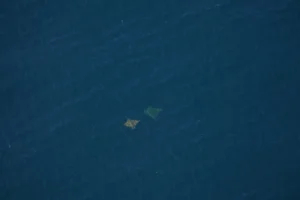



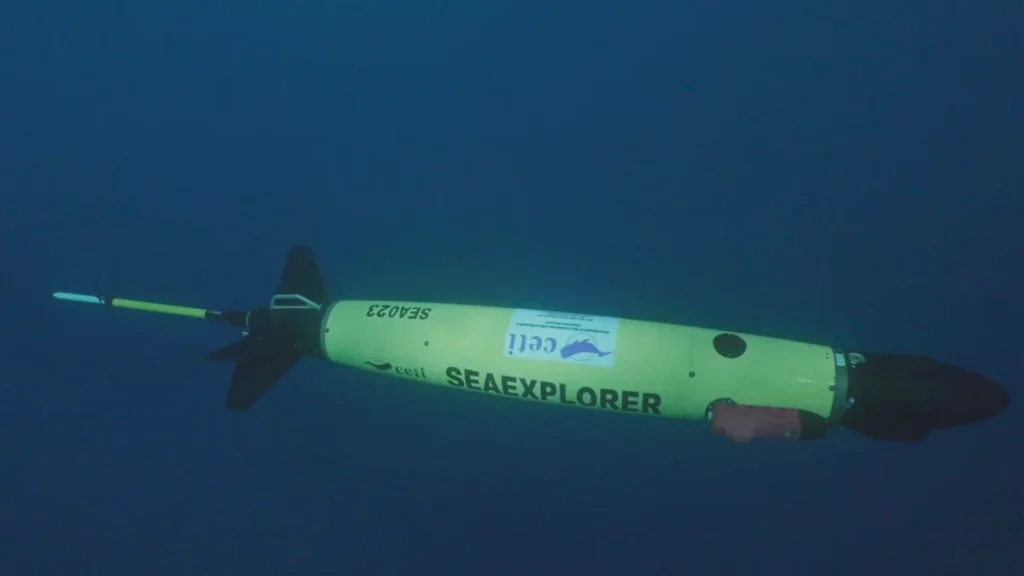
The quest to understand the ocean’s most enigmatic giants has taken a significant leap forward with the introduction of a sophisticated, AI-enabled autonomous underwater glider system. Developed by Project CETI (Cetacean Translation Initiative) in collaboration with the French ocean robotics firm Alseamar, this technology marks a pivotal shift in marine biology, allowing researchers to track and listen to sperm whales (Physeter macrocephalus) with unprecedented precision and minimal disturbance. Detailed in a recently published study in the journal Scientific Reports, the system integrates advanced artificial intelligence directly into the glider’s hardware, enabling the vessel to interpret acoustic data and adjust its course in real-time to follow the deep-diving mammals.
Sperm whales are among the most challenging species to study in their natural habitat. As the largest of the toothed whales, they are known for their extreme physiological capabilities, frequently diving to depths between 1,300 and 4,000 feet to hunt giant squid in the abyss. Furthermore, their migratory patterns are vast, with some individuals traveling up to 15,000 miles annually. Traditional methods of study, such as ship-based observation or short-term suction-cup tags, have long been limited by the physical constraints of the ocean and the elusive nature of the whales themselves. This new glider system aims to bridge that gap, providing a persistent, quiet, and autonomous presence in the open sea.
The Challenge of Deep-Sea Monitoring
For decades, the primary hurdle in cetacean research has been the "observation gap." While scientists can observe whales at the surface, the vast majority of a sperm whale’s life is spent in the dark, high-pressure depths of the mesopelagic and bathypelagic zones. Traditional acoustic tags, which are manually attached to the whales, offer high-resolution data but typically detach within 24 to 72 hours. This provides only a snapshot of the animal’s behavior and communication.
Furthermore, the use of large research vessels to follow whales presents its own set of problems. These ships are loud, expensive to operate, and can inadvertently alter the behavior of the animals being studied. The noise from ship engines can mask the very vocalizations researchers are trying to record. To truly understand the social structures and communication of sperm whales, a more discreet and long-term solution was required. Project CETI’s glider addresses these issues by utilizing a buoyancy-driven propulsion system that is nearly silent, allowing it to remain in the water for months at a time without needing to refuel or return to port.
Technological Architecture of the Autonomous Glider
The core innovation of the Project CETI glider lies in its "backseat driver" architecture. Standard underwater gliders are equipped with a primary navigation computer responsible for basic functions like maintaining buoyancy, managing battery life, and following a pre-programmed GPS path. However, these systems are generally rigid and cannot adapt to the unpredictable movements of biological subjects.
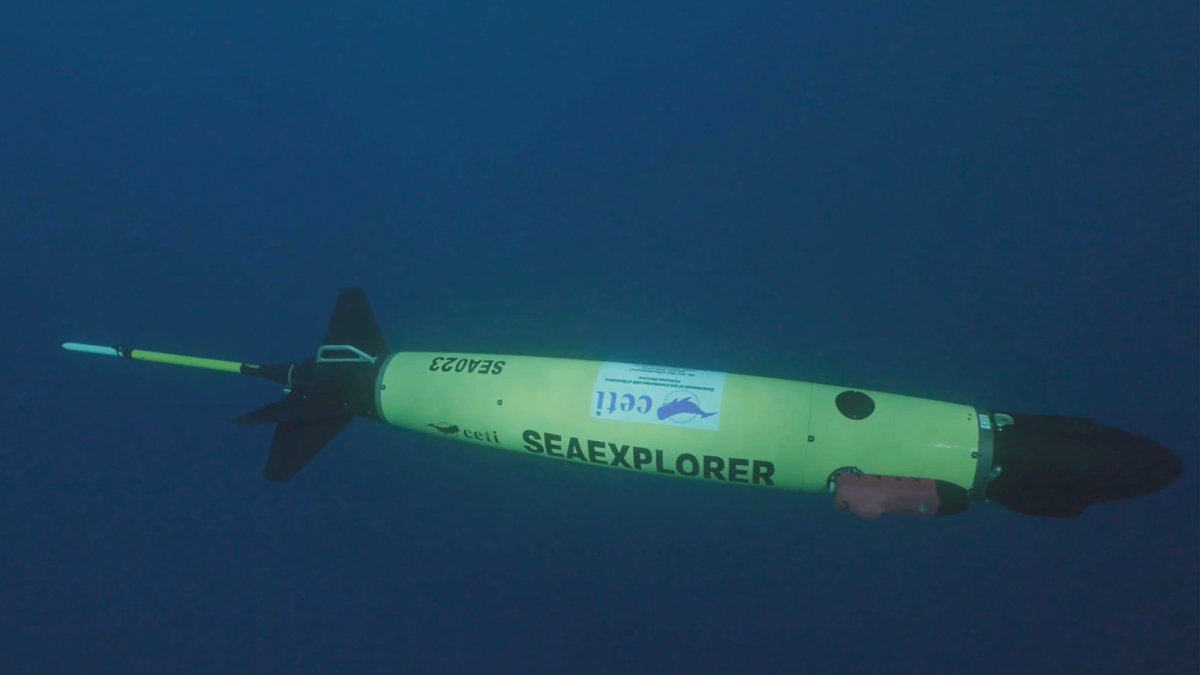
To overcome this, the team developed a secondary onboard computer—the "backseat driver"—which is dedicated to processing acoustic data. This computer is equipped with custom-built AI algorithms trained to recognize the distinct "clicks" and "codas" produced by sperm whales. Unlike previous systems that required data to be uploaded to a surface server for analysis, this glider performs "edge computing," meaning the processing happens entirely underwater.
When the glider’s four custom-integrated hydrophones detect a sperm whale vocalization, the AI calculates the "angle-of-arrival" of the sound. It then overrides the primary navigation system, instructing the glider to change its dive plan or direction to stay within acoustic range of the whale. This fully autonomous control represents a first for the industry, effectively creating a "Waymo of the underwater world," according to Roee Diamant, Project CETI’s Underwater Acoustics Lead.
Chronology of Development and Testing
The development of this system is the result of several years of interdisciplinary collaboration. Project CETI was founded with the ambitious goal of using machine learning and advanced robotics to decode the communication of sperm whales. The initiative brought together marine biologists, roboticists, and AI experts to create a non-invasive toolkit for marine research.
In 2023, the team began rigorous testing of the acoustic sensing system off the coast of Dominica in the Caribbean. This region was chosen because it hosts a resident population of sperm whales that have been studied for years, providing a reliable baseline for the glider’s performance. The testing phase focused on ensuring the AI could distinguish between whale clicks and environmental noise, such as rain, ship traffic, or other marine life.
The successful deployment of the glider has now transitioned from a proof-of-concept to a functional research tool. Every two to four hours, the glider surfaces to transmit a summary of its findings via satellite and receive updated mission parameters from researchers on shore. This hybrid approach allows for human oversight while maintaining the benefits of total underwater autonomy.
A Minimally Invasive Philosophy
A cornerstone of Project CETI’s mission is the concept of "minimally invasive marine biology." Historically, gathering data on large marine mammals often required intrusive methods, such as dart-attached tags or close-range vessel pursuits. David Gruber, the Founder and President of Project CETI, emphasizes that the new glider system is designed to respect the animals’ space.

The glider is programmed to maintain a respectful distance, using its acoustic sensors to follow the whales from a range that does not trigger a flight response. This is complemented by other CETI technologies, such as "tap-and-go" biosensors deployed by drones, which avoid the need for boats to approach the whales directly. By operating quietly and autonomously, the glider allows scientists to observe natural behaviors that might otherwise be suppressed in the presence of humans.
Scientific Implications: Decoding the Sperm Whale Alphabet
The data collected by these gliders is expected to be instrumental in Project CETI’s larger goal of linguistic analysis. Sperm whales communicate through complex sequences of clicks known as codas. Recent research has suggested that these codas are not merely simple signals but may constitute a sophisticated "alphabet" with regional dialects and clan-specific markers.
By following individual whales for extended periods, the glider can record long-term social interactions, such as how a calf learns the specific dialect of its matrilineal clan. This level of longitudinal data was previously impossible to obtain. The ability to monitor populations across thousands of miles of open ocean will also help researchers understand how these clans interact and how their "culture" is passed down through generations.
Broader Impact and Environmental Conservation
Beyond the realm of linguistics, the autonomous glider system has significant implications for marine conservation. Sperm whales are currently listed as "vulnerable" by the International Union for Conservation of Nature (IUCN). They face numerous threats, including ship strikes, entanglement in fishing gear, and the effects of climate change on their primary food sources.
The ability to track whale movements in real-time could lead to the creation of "dynamic marine protected areas." Instead of static boundaries, conservationists could implement temporary speed limits for shipping vessels in areas where the gliders detect high whale activity. Additionally, the gliders can monitor ocean health by collecting data on water temperature, salinity, and oxygen levels, providing a holistic view of the ecosystem the whales inhabit.
The integration of AI into marine robotics also sets a precedent for the study of other elusive species. The "backseat driver" framework could theoretically be adapted to track blue whales, beaked whales, or even schools of migratory fish, expanding the scope of autonomous oceanography.
Future Horizons for Project CETI
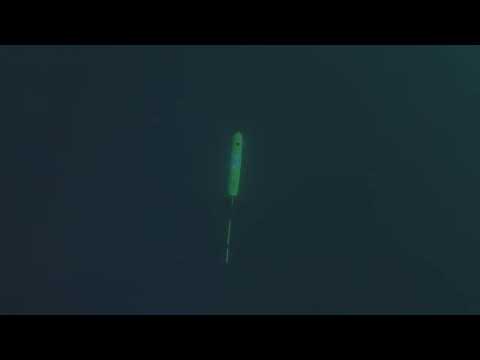
As Project CETI expands its operations, the team plans to deploy a fleet of these gliders across different oceanic regions. While the current focus remains on the Caribbean, the ultimate goal is to create a global network of autonomous listeners. This would allow for the first-ever large-scale study of sperm whale communication across different oceans, potentially revealing a global map of cetacean culture.
The successful implementation of this technology signifies a new era in which AI is not just a tool for analyzing data after the fact, but an active participant in the discovery process. By enabling machines to "listen" and "react" to the natural world, scientists are gaining a silent, persistent ally in the effort to unlock the secrets of the deep.
In conclusion, the AI-enabled underwater glider developed by Project CETI and Alseamar represents a triumph of engineering and biological research. It provides a solution to the long-standing challenges of deep-sea monitoring while adhering to the highest ethical standards of non-invasive study. As these gliders continue to patrol the world’s oceans, the sounds they capture may eventually allow humanity to understand, for the first time, the complex narratives of the world’s largest predators.