



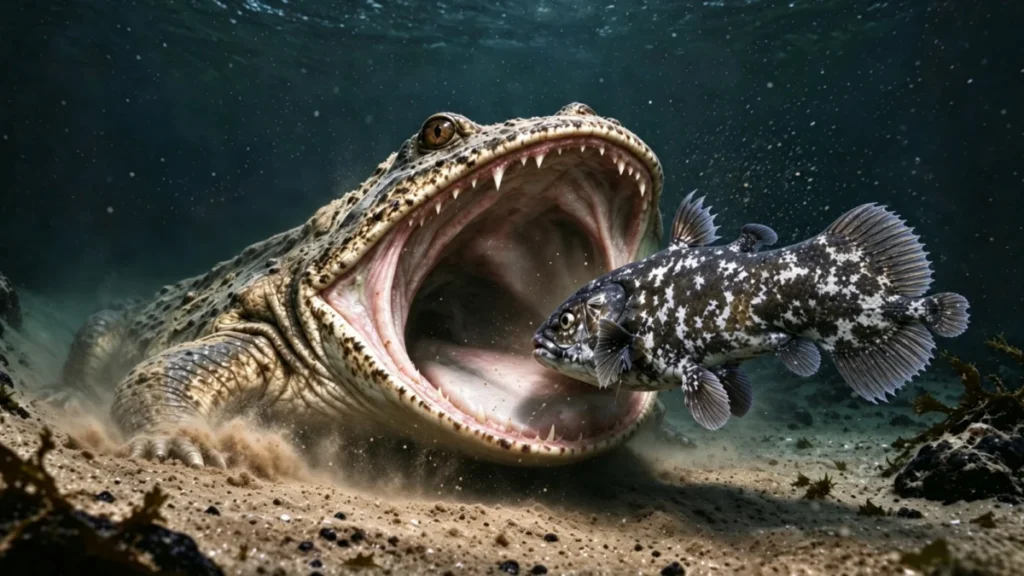
Nearly 237 million years ago, during the Late Triassic period, a heavy-bodied, heavily armored aquatic predator inhabited the open oceans covering what is now southern China. Paleontologists analyzing two remarkably well-preserved fossil skeletons discovered in the Guizhou Province have identified a groundbreaking new species: Gerrothorax maritimus. Described in a study published in the journal Nature Ecology & Evolution, this creature represents a milestone in paleontology as the first fully marine amphibian ever documented in the fossil record.
Modern biology recognizes more than 8,000 living amphibian species, including frogs, toads, salamanders, and caecilians. Notably, not a single contemporary amphibian lives its entire life cycle in a fully marine, saltwater environment. While fewer than two percent of modern species—such as the crab-eating frog (Fejervarya cancrivora) and certain populations of spotted salamanders—exhibit limited salt tolerance, they generally require access to freshwater to recover from physiological stress caused by brackish conditions. Conversely, other four-limbed vertebrate groups, including reptiles, birds, and mammals, successfully populated the world’s oceans millions of years ago. Until now, however, amphibians were thought to be strictly bound to freshwater or terrestrial habitats throughout evolutionary history.
The Discovery and Excavation Chronology
The groundbreaking discovery centers on the remote karst landscape of Guizhou Province, a region globally recognized by geologists and paleontologists for its extraordinarily rich marine fossil deposits from the Triassic period. For decades, international research teams—comprising scientists from Peking University, the Geological Museum of Guizhou, and the University of California, Davis—have worked to reconstruct the complex marine ecosystem that existed hundreds of millions of years ago.
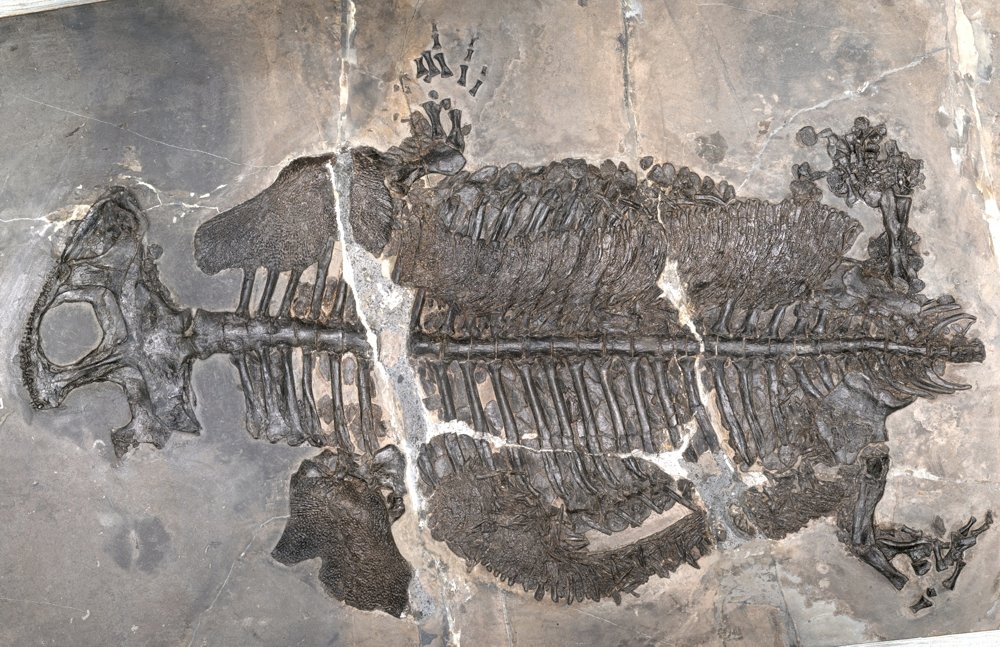
The excavation yielded two nearly complete skeletons of Gerrothorax maritimus. Unlike fragmented or disarticulated remains that are typically swept great distances by ocean currents before burial, these specimens were found intact within deep-sea sedimentary layers hundreds of miles away from any major ancient landmass.
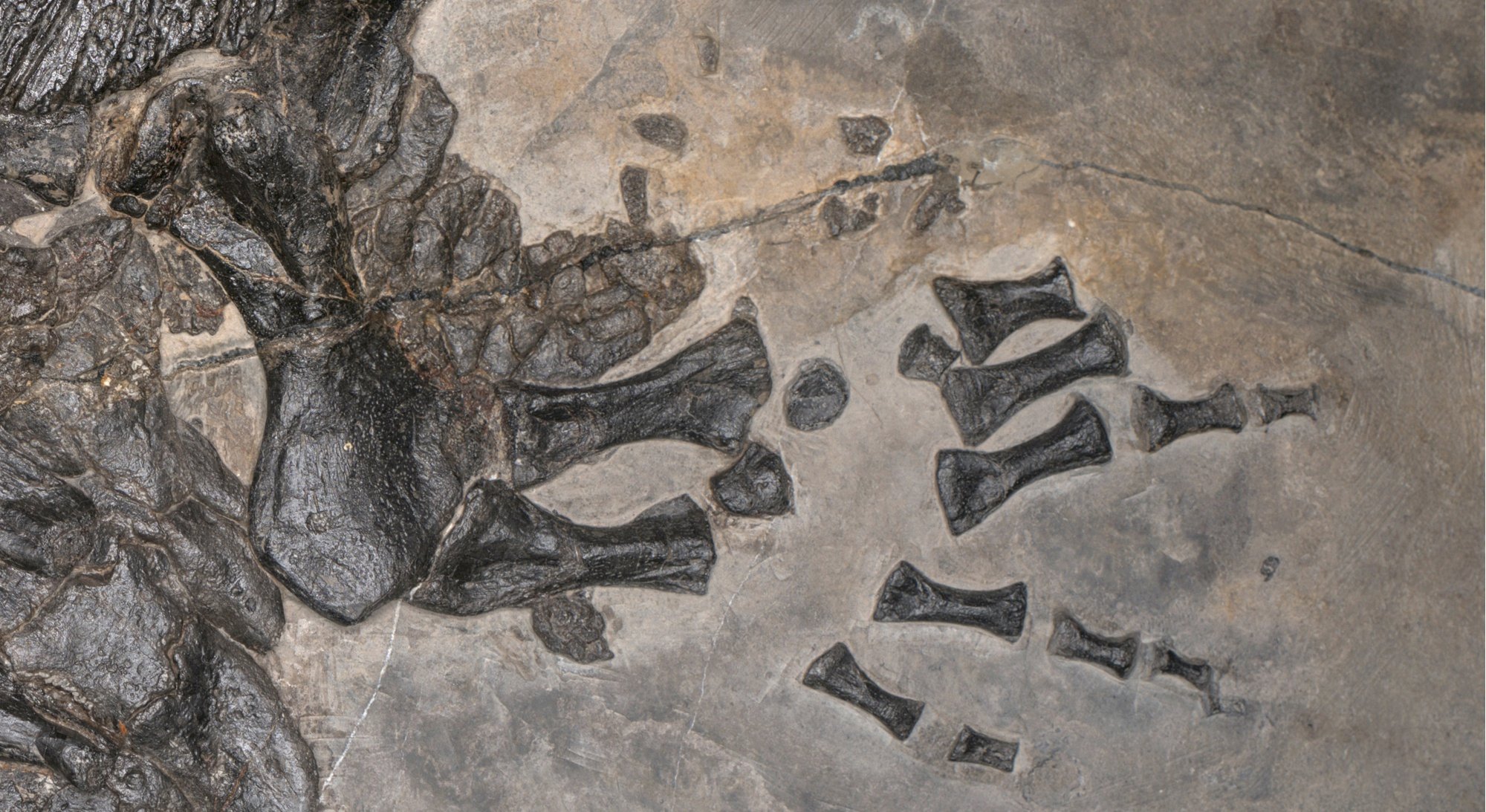
According to Ryosuke Motani, a paleontologist at UC Davis and co-author of the study, the preservation of delicate anatomical structures provided definitive proof of the animal’s lifestyle. "Carcasses at sea, unless they sink to the bottom right away, tend to dry out and lose limbs prior to sinking to the bottom," Motani explained in a statement. "But these animals had their fingers preserved, so that means they probably died near where they lived."
Morphology and Ecological Niche
Detailed anatomical analysis of the fossils revealed a creature unlike any living amphibian. Measuring approximately three feet in length, Gerrothorax maritimus featured a flattened, disc-shaped body mass. While its overall body mass was roughly comparable to that of modern giant salamanders, its proportions were exceptionally stout and chunky rather than elongated.
The most striking adaptation of Gerrothorax maritimus was its extensive network of bony armor covering its flat body. Researchers believe this heavy dermal armor served as a crucial defense mechanism against apex predators of the Triassic oceans, including massive, 10-foot-long ichthyosaurs that regularly pattered the ancient seas.
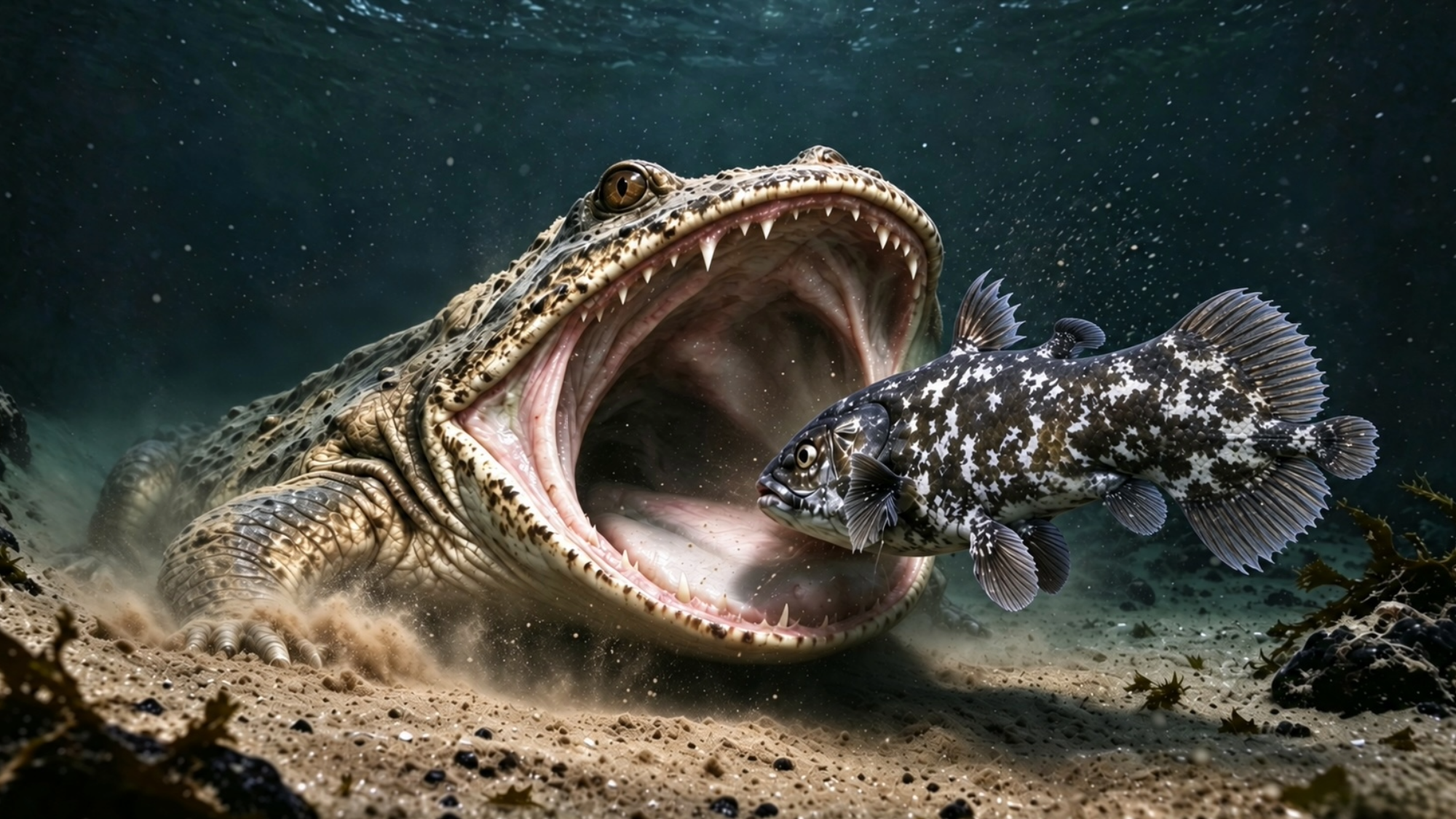
Furthermore, the shape of the creature’s skull and the distribution of its armor strongly suggest that it operated as a benthic, or bottom-dwelling, suction feeder. This hunting strategy closely mirrors that of modern wobbegongs—a family of twelve species of bottom-dwelling carpet sharks found in contemporary marine waters. Rather than actively chasing down fast-swimming prey, Gerrothorax maritimus likely rested motionless on the ocean floor, blending into the sediment before lunging upward and creating sudden negative pressure to rapidly engulf passing fish and invertebrates.
Overcoming Physiological Barriers to Marine Life
The discovery of a marine amphibian challenges long-held assumptions regarding the physiological limitations of the class Amphibia. Modern amphibians possess highly permeable, unscaled skin that plays a vital role in cutaneous respiration, allowing them to absorb oxygen and water directly through their integument.
However, this biological trait renders them profoundly vulnerable to osmotic stress in saltwater environments. In a marine setting, a standard amphibian’s permeable skin would cause rapid dehydration through the osmotic draw of salt water, while high sodium concentrations would disrupt internal cellular balances. Consequently, living amphibians cannot survive exposure to full-strength oceanic salinity.
To resolve how Gerrothorax maritimus overcame this formidable physiological hurdle, the research team examined its unique physical adaptations. They propose that the animal’s thick layer of bony armor acted as a protective barrier, drastically reducing the permeability of its skin and preventing excessive water loss and salt absorption.
Deprived of cutaneous respiration and osmoregulation, Gerrothorax maritimus would have relied on drinking seawater directly through its mouth, processing the fluid through its digestive tract, and utilizing specialized gills to filter and excrete excess sodium. The presence of well-developed gill structures aligns with the anatomical traits observed in other members of the Gerrothorax genus, supporting the hypothesis that these animals retained aquatic respiratory organs into adulthood.
Implications for Evolutionary Biology
The identification of Gerrothorax maritimus forces evolutionary biologists to reassess the ecological breadth of early tetrapods and the historical limits of amphibian evolution. For generations, the absence of marine amphibians in the fossil record led scientists to conclude that the physiological constraints of soft, permeable skin presented an insurmountable barrier to marine colonization following the divergence of modern amphibian lineages.
By demonstrating that at least one prehistoric lineage successfully adapted bony armor to seal its skin and conquer the open ocean, the finding proves that tetrapod evolution was far more flexible during the Mesozoic era than previously understood. The Late Triassic ocean ecosystem was a theater of intense evolutionary experimentation, where various vertebrate groups independently developed novel strategies to exploit marine resources.
As researchers continue to analyze the Guizhou fossil beds and prepare detailed descriptions of associated microfossils and sediment samples, Gerrothorax maritimus stands as a testament to the unexpected pathways of vertebrate history. This armored, bottom-dwelling amphibian not only fills a long-vacant gap in the marine fossil record but also redefines our understanding of what an amphibian could achieve in a world dominated by saltwater.