


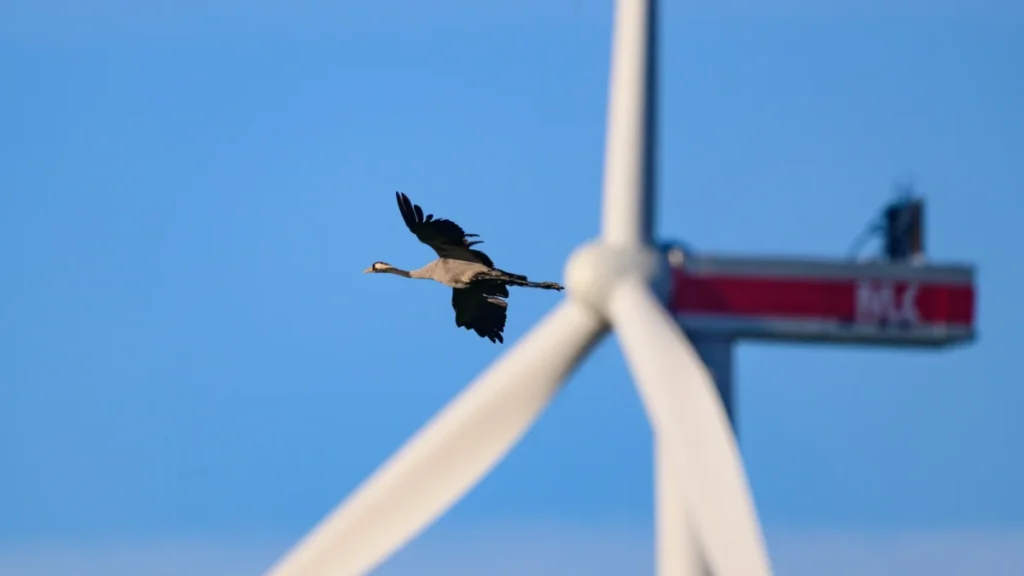
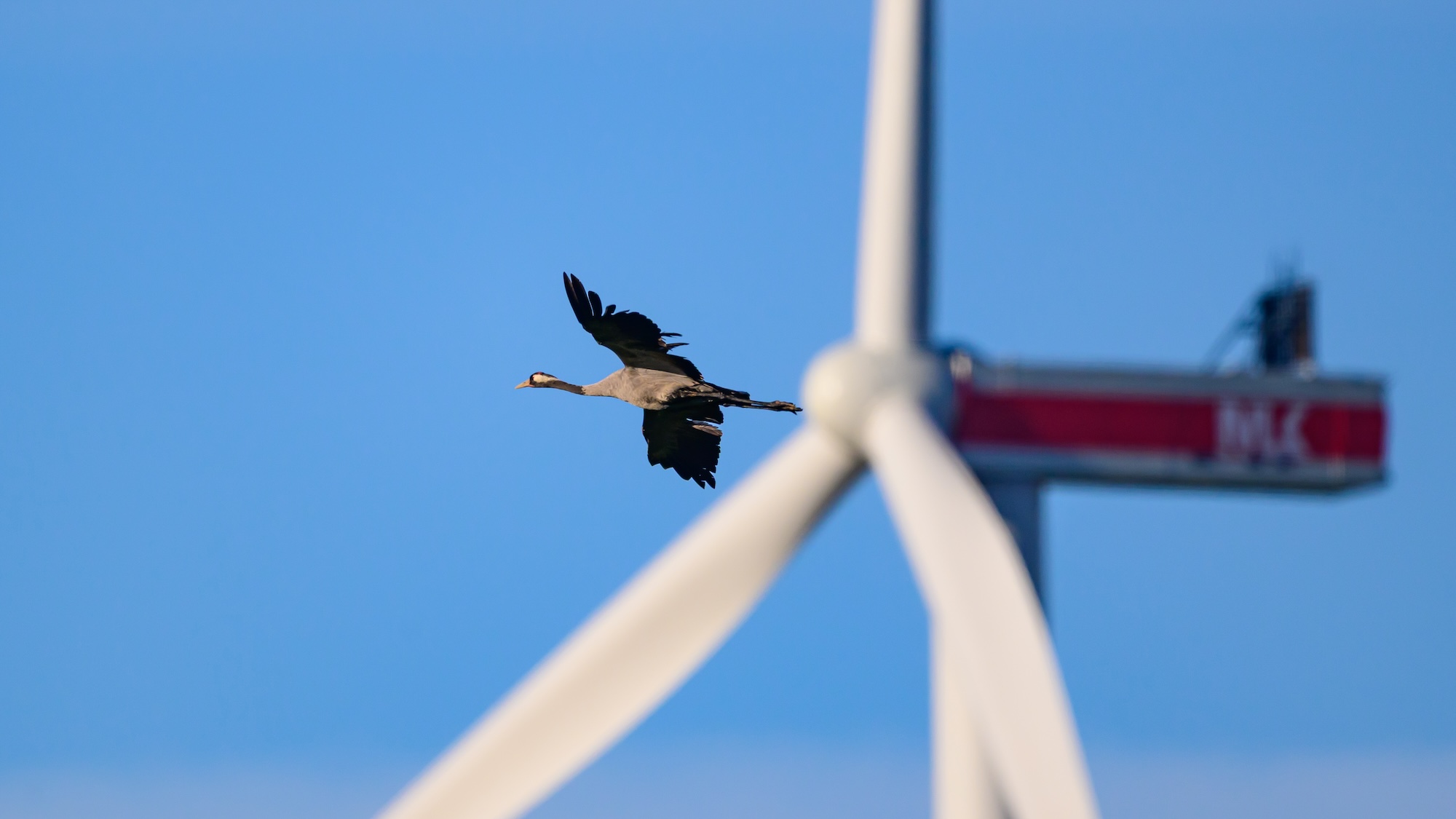
The global transition toward renewable energy has positioned wind power as a cornerstone of sustainable development, yet the expansion of wind farms has long been shadowed by the unintended ecological cost of avian and chiropteran mortality. As nations strive to meet ambitious Net Zero carbon targets, the challenge of reconciling clean energy infrastructure with biodiversity conservation has become a focal point for environmental scientists and engineers. A recent study published in the journal Behavioral Ecology suggests that the solution to reducing bird strikes may lie not in complex radar systems or ultrasonic deterrents, but in a fundamental shift in the visual design of turbine blades. By adopting biomimetic color patterns inspired by the warning signals of venomous snakes and toxic amphibians, researchers have demonstrated a significant reduction in the likelihood of birds approaching spinning turbines, potentially offering a low-cost, scalable remedy for a decades-old environmental dilemma.
The Ecological Paradox of Wind Energy
Wind energy is widely regarded as a net positive for the environment, providing a carbon-neutral alternative to fossil fuels that mitigates the overarching threat of climate change. However, the physical presence of massive, rotating blades in migratory corridors and hunting grounds poses a direct threat to winged wildlife. Current estimates from the Renewable Energy Wildlife Institute (REWI) indicate that wind farms may unintentionally kill between two and six birds and four to seven bats per megawatt of installed capacity annually. While these numbers are statistically lower than the avian deaths caused by domestic cats or collisions with glass buildings, the demographic impact is often more severe. Wind turbines tend to affect larger, long-lived, and slow-reproducing species such as eagles, hawks, and cranes, whose populations are more sensitive to the loss of breeding adults.
The primary issue identified by researchers is the "motion smear" effect. As turbine blades spin at high speeds, they become a blur to the avian eye, making them virtually invisible to birds flying at high velocities. Standard industrial designs typically utilize white or light gray coatings to minimize the visual impact on human landscapes; however, these colors offer poor contrast against bright or overcast skies, exacerbating the risk of fatal collisions.
Biomimicry and the Science of Aposematism
The new research, led by environmental scientist Johanna Mappes of the University of Helsinki and ecologist George Hancock of the University of Exeter, explores the application of aposematism—a biological phenomenon where animals use bright, high-contrast colors to signal their toxicity or danger to predators. In nature, the striking patterns of coral snakes, cinnabar moths, and poison dart frogs serve as a "stop sign" that most birds are evolutionarily programmed to recognize and avoid.
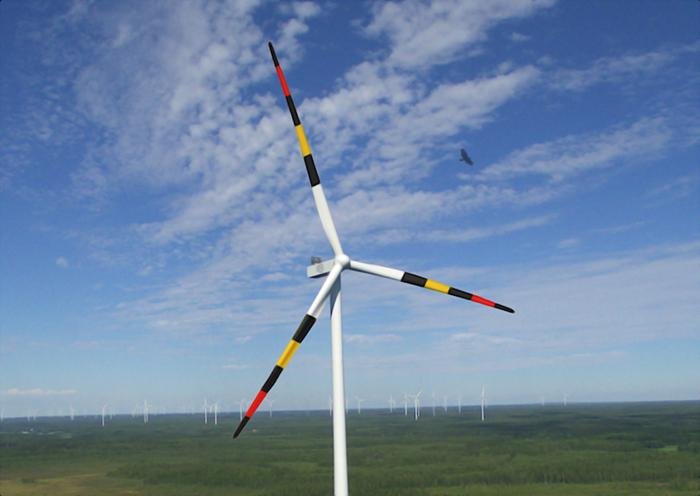
To test whether these evolutionary triggers could be harnessed for industrial safety, the research team conducted a series of controlled laboratory experiments. Using a specialized touchscreen interface designed for avian subjects, the researchers presented birds with various simulated turbine scenarios. The subjects were observed as they interacted with digital blades featuring different color schemes: traditional white, a single black-painted blade, red-and-white stripes, and a biomimetic pattern consisting of red, black, and yellow stripes.
The results were definitive. White blades, the industry standard, were the most frequently approached by the birds, confirming their inadequacy as a visual deterrent. In contrast, the biomimetic patterns inspired by nature’s warning signals elicited the strongest avoidance behavior. Even at varying rotation speeds, the birds were significantly more cautious around blades that mimicked the high-contrast aesthetic of dangerous organisms.
A Chronology of Mitigation Efforts
The quest to make wind turbines safer for birds has evolved through several stages of technological and behavioral research:
- The Early Era (1980s–2000s): Early wind farms, such as those in Altamont Pass, California, were built with lattice towers that invited birds to perch, leading to high mortality rates. This led to the adoption of tubular towers and larger, slower-spinning blades.
- The Altamont Lessons (2000s–2010s): Regulatory bodies began requiring pre-construction surveys to avoid placing turbines in high-traffic migratory paths.
- The Smøla Study (2020): A landmark study at the Smøla wind farm in Norway demonstrated that painting a single turbine blade black could reduce bird fatalities by over 70%. This provided the first real-world evidence that visual contrast was key to avian safety.
- The Biomimetic Shift (2024–Present): The current research by Mappes and Hancock builds on the Smøla findings by suggesting that multi-color, biologically inspired patterns are even more effective than simple black-and-white contrast.
Data and Statistical Context
The urgency of implementing these findings is underscored by the rapid growth of the wind energy sector. According to the Global Wind Energy Council (GWEC), global wind power capacity surpassed 1,000 gigawatts (GW) in 2023. If the average mortality rate of four birds per megawatt holds true, the global industry could be responsible for millions of avian deaths annually.
Furthermore, the impact on bats is often more pronounced. Bats are attracted to the pressure changes around spinning blades (barotrauma) and may also mistake the smooth surface of the towers for water or trees. While the current study focused on birds, researchers believe the high-contrast patterns may also assist in bat deterrence, though further testing is required to confirm the response of nocturnal species to these color schemes.
Industry Reactions and Implementation Challenges
While the scientific community has welcomed the study, the wind energy industry faces several practical hurdles in adopting biomimetic color schemes.
Cost and Manufacturing: Standardizing the application of complex, multi-colored patterns on blades that can exceed 100 meters in length requires changes to the manufacturing process. However, proponents argue that the cost of paint is negligible compared to the potential legal fees and project delays caused by the deaths of protected species, such as the Bald Eagle in the United States.
Public Perception: One of the primary reasons turbines are painted white or light gray is to satisfy "Not In My Back Yard" (NIMBY) concerns regarding visual pollution. Transitioning to turbines with bright red, yellow, and black stripes could face resistance from local communities who view the infrastructure as an eyesore.
Regulatory Hurdles: Aviation authorities, such as the Federal Aviation Administration (FAA) in the U.S., have strict requirements for turbine lighting and coloration to ensure they are visible to aircraft. Any new color scheme would need to be harmonized with international aviation safety standards.
Despite these challenges, the potential for a "passive" safety system—one that does not require electricity or complex sensors—is highly attractive to developers. George Hancock noted that the large effect observed in the lab suggests that simple visual changes could be a "remarkably" effective tool for conservation.
Broader Implications for Infrastructure
The success of biomimetic patterns in this study has opened the door for similar interventions across other sectors of human infrastructure. High-voltage power lines and glass-fronted skyscrapers are responsible for hundreds of millions of avian deaths each year. If the "aposematic" approach proves successful in field trials for wind turbines, it could be adapted for window decals or wire markings.
Environmental scientist Johanna Mappes emphasized that if these results are replicated in practical, real-world conditions across different geographical regions and with diverse species, it could represent a "significant change for the entire wind power industry."
Conclusion
The integration of evolutionary biology into industrial design marks a sophisticated turn in the pursuit of sustainable energy. By acknowledging the sensory limitations of wildlife and utilizing the "visual language" of the natural world, engineers can create a more harmonious coexistence between technology and the environment. As the world scales up its renewable capacity to combat the climate crisis, the adoption of biomimetic color schemes may ensure that the transition to a greener future does not come at the expense of the planet’s biodiversity. The next phase of research will involve large-scale field trials to determine how these patterns perform under varying weather conditions and whether they can provide a universal solution for the global wind industry.