

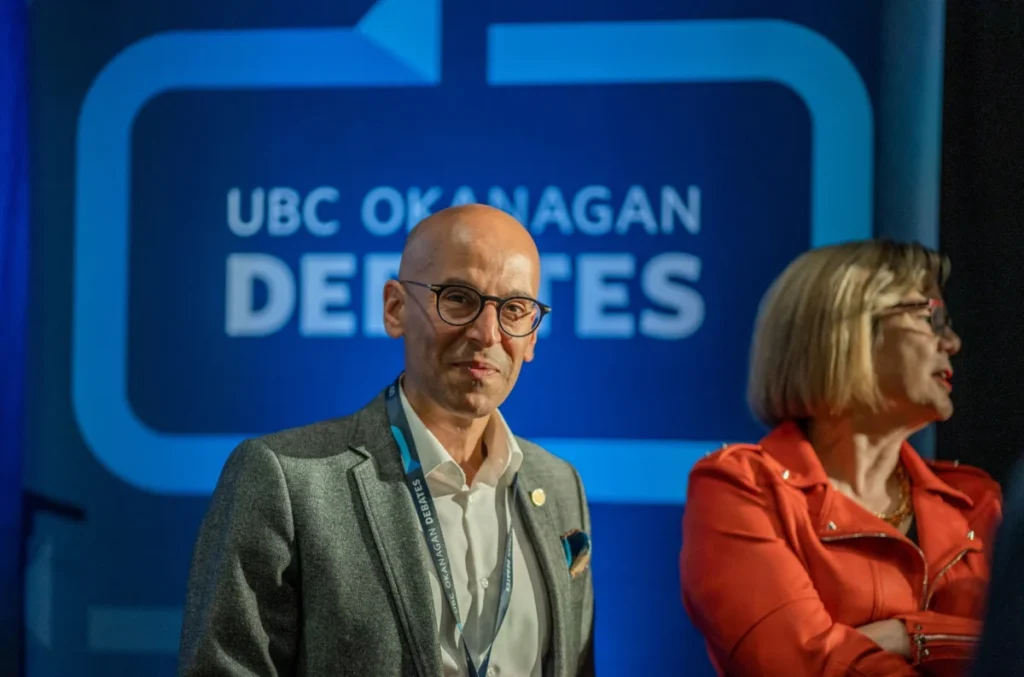
The University of British Columbia (UBC) recently convened a pivotal public debate, marking a significant step in its commitment to fostering civil discourse amidst growing societal polarization. The pilot event, held at Vancouver’s Robson Square theatre, drew a capacity crowd comprising a diverse cross-section of the community – from seasoned politicians and essential workers to recent graduates and newcomers to Canada. The central, and at times contentious, topic of discussion was the efficacy and implications of Canada’s Temporary Foreign Worker (TFW) program, specifically addressing whether the nation’s immigration system is inadvertently creating a permanent "service class" of foreign workers.
This in-person-only forum was meticulously designed to present a balanced examination of a complex issue, featuring two distinguished panels of experts. One side argued that the current TFW program contributes to the formation of a marginalized service class, while the opposing panel contended that temporary foreign workers are a vital component of Canada’s economic engine.
The Debate’s Core Arguments
On the side advocating for reform and highlighting the creation of a "service class" were Dr. Catherine Dauvergne, former dean of the Peter A. Allard School of Law at UBC and a recognized authority in refugee, immigration, and citizenship law, and Don Wright, former deputy minister and head of the public service for British Columbia.
Dr. Dauvergne articulated a critical perspective, stating, "The biggest failure of temporary foreign work is that, in fact, it’s impossible to hire workers. You are only able to hire human beings – and human beings grow old, they fall in love, they get sick, they change their plans. This is the real problem: when you design a program for workers but instead get people, that’s the policy failure." Her argument underscored the inherent unpredictability of human lives and the potential for programs designed for transient labour to fall short of their intended targets, leading to unforeseen social and economic consequences. The implication is that the system’s rigidity may not adequately account for the dynamic nature of individuals, potentially trapping them in precarious employment situations.
Countering this view, and asserting the indispensable role of temporary foreign workers in the economy, were Stan Vander Waal, a second-generation farmer with deep ties to the agricultural sector, and Robert Russo, a human rights and labour lawyer and instructor at the UBC School of Law.
Mr. Vander Waal presented a perspective rooted in economic necessity and integration, proposing, "We should be scoring individuals for what skills they can offer, and we should look at the needs we have inside the country and trying to enhance our productivity. The employer has been given the ability to test whether they actually will be contributing people – and on top of that, they can then come and be part of contributing to Canadian society versus taking that money back home. That would be the most beautiful thing in terms of a successful integration strategy." His remarks highlighted the need for a skills-based immigration approach that aligns with national labour demands and suggested that a more integrated system could benefit both the workers and Canadian society. This perspective emphasizes the economic contributions of temporary workers and advocates for pathways that foster greater societal integration rather than perpetual temporary status.
The spirited exchange encompassed a broad spectrum of Canadian immigration policies, the nuances of migration rights, the experiences of international students, and the realities faced by young temporary foreign workers filling critical roles in sectors ranging from agriculture to entry-level positions in food service establishments like Tim Hortons.
A Deliberate Move to Downtown Vancouver
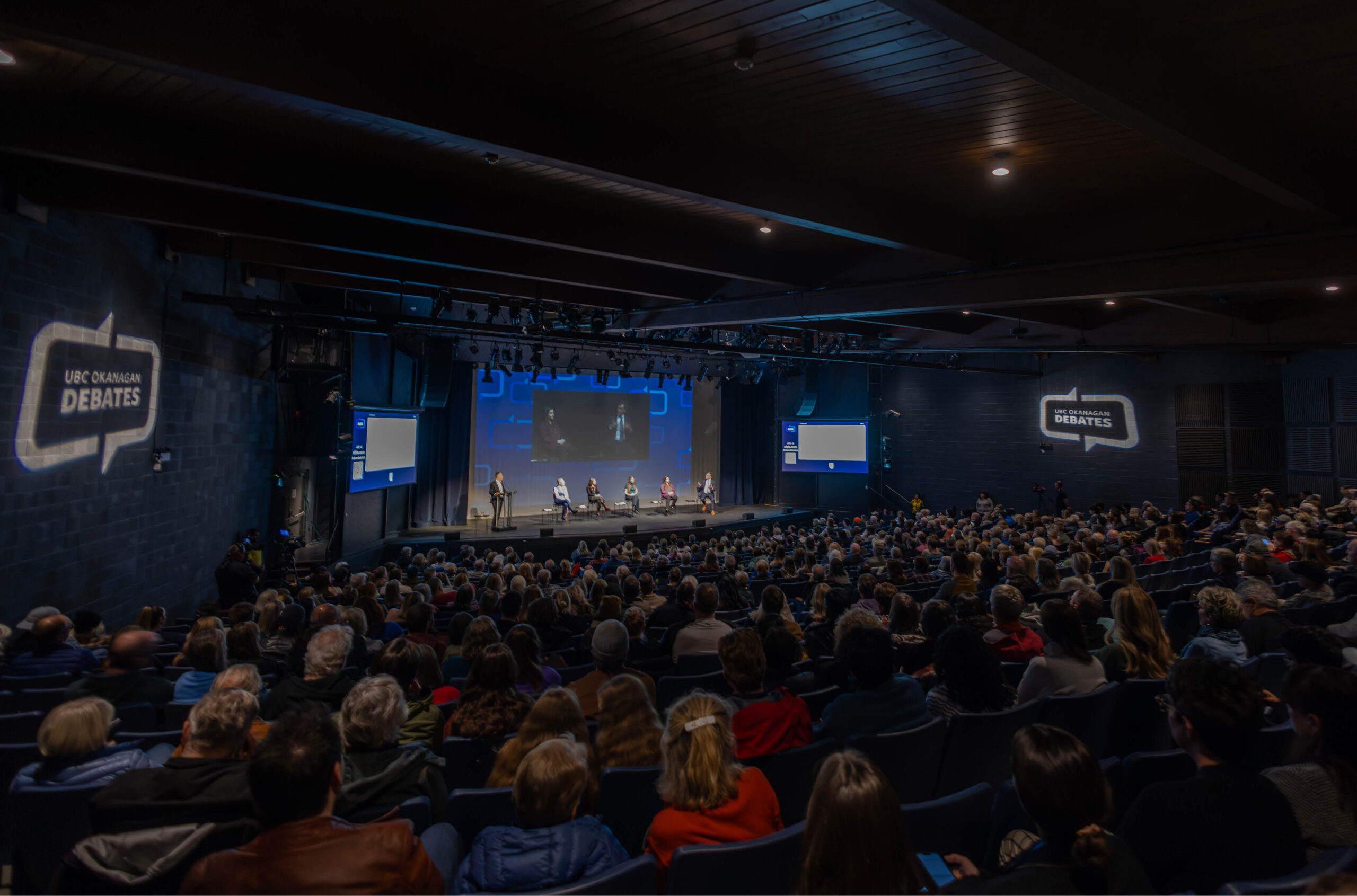
Organizers emphasized that the choice of venue – the publicly accessible Robson Square theatre in downtown Vancouver – was a strategic decision aimed at achieving a larger objective: to demonstrate that universities are ideal environments for modeling respectful disagreement. This initiative comes at a time when public discourse is increasingly characterized by echo chambers and online vitriol, making spaces for reasoned debate more crucial than ever.
UBC President Benoit Antoine-Bacon, who hosted the debate, articulated the university’s role in this context: "Who else is going to model civil discourse, if not universities? That’s our fundamental reason for being. To, on the basis of facts, history and deep thought, find in the best way possible the path forward for society." His statement underscores a core academic mission to engage with complex societal challenges through rigorous analysis and open dialogue, moving beyond partisan divides to seek evidence-based solutions.
Roots of the Debate Series: A Response to Polarization
The Vancouver debate followed a successful model initiated more than four years ago by Marten Youssef, associate vice-president (university relations) at UBC’s Okanagan campus. Mr. Youssef, a former journalist from Egypt, was motivated by the escalating polarization within Canadian society and a perceived decline in public trust towards academic institutions.
"There was so much polarization that benefits businesses, politics, certainly algorithms – and now no one seems to gain from actually ending it," Mr. Youssef observed. He expressed concern over the trend of "cancelling" controversial speakers at some institutions and the media’s tendency to frame civil discourse as a zero-sum game, often at the expense of empowering audiences to understand diverse viewpoints. "We thought maybe the model was broken," he stated, adding, "And we thought universities are the best places to convene the contrast."
The UBC Okanagan debate series has previously tackled a range of provocative subjects, including the state of masculinity, Canada’s relationship with the United States, and the potential impact of artificial intelligence on the human experience. These events have frequently featured moments of intense disagreement alongside unexpected convergences of thought.
One notable instance of the series’ impact was the experience of Johnathan Kay, editor of the conservative online outlet The Quillette. In a closing statement at a previous debate, Kay acknowledged that the event had significantly shifted his perception of Canadian universities. "You’re breaking all kinds of stereotypes," he remarked, admitting, "I talk trash about Canadian academia a lot on social media – I’m going to have to rethink that. This is real good stuff." This anecdote exemplifies the potential of structured debates to challenge preconceived notions and foster genuine intellectual engagement.
UBC’s Strategic Shift Towards Neutrality
Melanie Stewart, associate vice-president (university relations) at UBC, indicated that the debate series aligns with the university’s broader strategic goals to reposition itself as a neutral and inclusive space for dialogue. She noted a historical shift, stating, "In the past, there were a lot of really political statements that were put out there, and the question would have to come to mind: is this the role of a university? To be weighing in at the top of the institution on contentious political topics?"
President Bacon has actively steered the university towards a more centrist stance, a direction made evident earlier in his tenure. During the period of pro-Palestine encampments on university campuses, including UBC, in April 2024, Dr. Bacon communicated to the UBC community: "Any university position, even if supported by a majority, by definition undermines the right of holders of different views to express themselves and participate in the debate." In a subsequent memo, he reiterated the critical importance of the university remaining a sanctuary for reasoned debate where conflicting viewpoints can coexist peacefully, emphasizing that "Our academic and social mission depend on it." This stance reflects a commitment to academic freedom and the principle that universities should not adopt official positions on contentious political issues, thereby preserving their role as platforms for diverse intellectual inquiry.
The Broader Imperative for Civil Discourse in Academia
While UBC is taking a leading role, the need for enhanced civil discourse extends far beyond the university’s West Coast campus. Institutions across Canada are grappling with similar challenges.
At the University of Toronto, a Working Group on Civil Discourse, chaired by Professor Randy Boyagoda, released a comprehensive list of recommendations in 2024 aimed at addressing "growing challenges in sustaining productive and respectful dialogue within the university community." The group’s report advocates for the adoption and widespread dissemination of a clear, adaptable definition of civil discourse. Key recommendations include integrating opportunities for practicing respectful disagreement into classroom settings, providing training for students, faculty, and staff on navigating contentious discussions, and establishing support networks for local "civil discourse champions."
Dr. Boyagoda highlighted the contemporary struggle with open communication: "People are struggling to think out loud with each other these days – in their personal lives, their professional lives, and our shared public life." He stressed that universities possess a unique responsibility to equip young individuals with the skills necessary to engage thoughtfully and constructively in their future professional, community, and public lives.
President Bacon expressed his hope that the UBC debate series will serve as a powerful demonstration to the university’s 75,000 students that respectful disagreement is not only possible but also essential for intellectual growth. He aims to encourage students to critically examine their own assumptions and the origins of their beliefs.
"I would like to say to young people: if you hold an idea strongly, really ask yourself if it’s your idea or if someone else put it there. Was it put there by your upbringing? Was it put there by the algorithms or the social media you listen to? Have you considered alternative positions? Can you defend the opposite position?" Dr. Bacon challenged. "If you can’t, that means you’re not thinking."
Implications and Future Directions
The pilot debate at UBC and the broader initiatives at institutions like the University of Toronto signal a growing recognition within academia of its pivotal role in cultivating the skills necessary for a healthy democracy. In an era defined by information overload and often tribalistic online interactions, universities have a distinct obligation to provide structured environments where individuals can learn to engage with diverse perspectives, develop critical thinking skills, and articulate their views respectfully.
The success of these initiatives could have far-reaching implications. By modeling civil discourse, universities can influence broader societal trends, fostering a more nuanced and productive public sphere. The focus on the Temporary Foreign Worker program specifically highlights how academic institutions can serve as vital platforms for dissecting complex policy issues that directly impact diverse communities within Canada. The active participation of various community members – workers, politicians, students, and newcomers – underscores the potential for universities to bridge divides and foster a shared understanding of critical national challenges. The continuation and expansion of such debate series are likely to be crucial in shaping future policy discussions and promoting a more engaged and informed citizenry.