



When Prescillia Micollet embarked on her PhD in education at Université Laval (ULaval), her academic vision was firmly rooted in the theoretical: exploring abstract concepts, immersing herself in scholarly literature, conducting in-depth analyses, and developing sophisticated theoretical frameworks. The prospect of engaging directly with community organizations or piloting educational initiatives in real-world classroom settings, particularly on sensitive subjects like homelessness, was a distant horizon, if considered at all. This preconceived notion, however, was about to be significantly broadened by an unexpected pedagogical approach that would reshape her doctoral journey and illuminate the tangible impact of academic pursuit.
The catalyst for this shift was a directive from her doctoral supervisor, Sivane Hirsch, a professor of education at ULaval. Professor Hirsch’s objective was to equip her undergraduate students, who were training to become secondary school teachers, with practical skills by tasking them with the creation of learning activities based on "Dans la rue," an educational album designed for children to understand the complexities of homelessness. This innovative assignment necessitated a direct collaboration with the organization responsible for the creation of the book. Ms. Micollet’s intellectual curiosity was immediately ignited by this integrated approach. Expressing a keen interest, she soon found herself actively involved, not just as an observer, but as a co-creator of learning activities tailored for elementary school students, forged in direct partnership with a local community organization. "I thought it was a great idea," she recalls, highlighting the inherent appeal of translating academic learning into practical, community-benefiting applications.
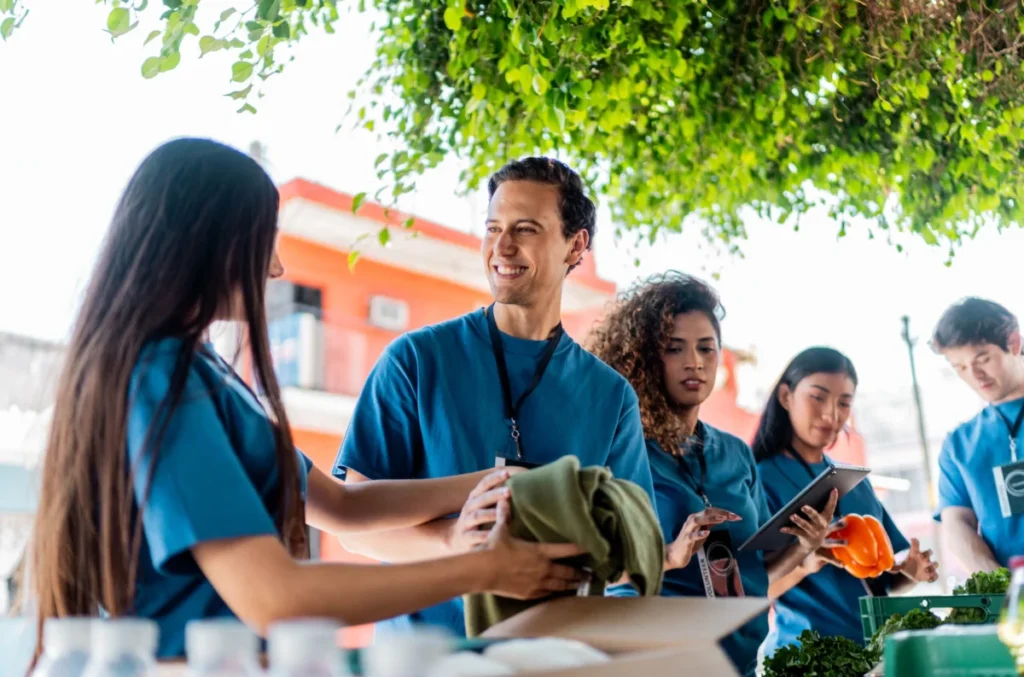
This experiential pedagogical approach, now widely recognized as Community Service Learning (CSL), is fundamentally about fostering a symbiotic relationship between academic institutions and the broader societal landscape. It empowers students to engage actively with community organizations, often through volunteer commitments, and to collaboratively undertake projects that address tangible community needs. The core principle is to move beyond the confines of academic discourse and contribute directly to societal well-being, making knowledge both accessible and actionable.
ULaval’s Accès savoirs: A Model of Academic-Community Integration
Université Laval has been at the forefront of integrating CSL into its academic fabric through its "Accès savoirs" program. This initiative serves as a vital conduit, connecting academic expertise with community organizations, with the overarching goal of supporting the specific needs of the Quebec City region. The program’s philosophy, as articulated by Professor Sivane Hirsch, is clear: "The idea is to make academic knowledge accessible, not just through scientific articles, but by putting academics to service in the community." This commitment translates into a structured framework where students’ academic work directly contributes to addressing societal challenges.
Since its inception in 2013, Accès savoirs has demonstrated remarkable success in fostering these vital connections. As of the previous year, the program had facilitated an impressive 545 projects, representing a significant collaborative effort with 361 distinct community groups. These impactful initiatives are not relegated to extracurricular activities; rather, they are seamlessly integrated into the regular curriculum, often manifesting as term papers, research projects, or capstone assignments. This integration ensures that CSL is viewed not as an add-on, but as an integral component of a comprehensive educational experience.
Revitalizing Research Through Real-World Application
Ms. Micollet’s personal journey exemplifies the transformative power of CSL. Her work with Engrenage St-Roch, a community organization situated in Quebec City’s St-Roch neighborhood, focused on developing educational materials addressing homelessness. A crucial element of this process involved a series of in-depth interviews with Annie Mathieu, the editor of "Dans la rue." These discussions were instrumental in understanding the multifaceted realities of homelessness and identifying the most pertinent messages for a young audience. This collaborative research allowed Ms. Micollet to gain a nuanced perspective that transcended purely academic understanding.
The practical application of her research was equally significant. "She and I tested my activities in two classrooms," Ms. Micollet recounts, referring to her collaboration with Ms. Mathieu. This hands-on testing phase provided invaluable feedback. "With my supervisor’s guidance, I incorporated the comments I received from students and teachers to improve the activities and meet the organization’s needs." This iterative process of development, testing, and refinement underscored the dynamic nature of CSL, where academic insights are continuously informed by real-world feedback.
The impact of this experiential learning was profound for Ms. Micollet. She candidly admits, "Academics are sometimes disconnected from the real world. I liked working in the field. Talking with the community organization, teachers and students helped me identify their needs. It was tangible." This tangible engagement provided a sense of purpose and relevance that theoretical study alone might not have offered.
The benefits of such collaborations are not unidirectional. Engrenage St-Roch also experienced significant advantages. Ms. Mathieu highlights the complementary nature of their expertise: "We have complementary expertise, so the project allowed us to exchange knowledge." The initial aim of creating a psychoeducational resource for children and families evolved into a broader application. "We set out to create a psychoeducational resource to teach children and families about homelessness. Now it’s also being used to train new teachers. That makes it all the more useful," Ms. Mathieu observed, underscoring the expanded impact of the collaborative effort. This illustrates how CSL projects can generate unexpected yet highly valuable outcomes for community partners.
University of Ottawa’s CSL Program: Accessibility and Broad Reach
The University of Ottawa (UOttawa) also champions community service learning through its dedicated CSL program, established in 2004. This program offers students a flexible alternative to traditional final projects, allowing them to dedicate approximately 30 hours of their semester to volunteering with a community organization. This model recognizes the significant learning and development that can occur through direct community engagement.
UOttawa’s CSL program boasts an extensive network of over 1,000 community partners. This diverse roster includes non-profit organizations, civil society groups, governmental bodies, and arms-length government agencies, reflecting the broad applicability of CSL across various sectors. The program’s reach is substantial, with a notable participation rate: in the 2025-26 academic year alone, 3,451 students across 122 courses were engaged in CSL projects. This scale of involvement signifies a deep institutional commitment to fostering civic engagement and experiential learning.
Christian Tremblay, Associate Director of Career Services and Community Engagement at UOttawa, emphasizes the program’s accessibility as a key differentiator. "Unlike internships, there is no GPA threshold or interview requirement," he explains. "Students who want to participate can do so on a first-come, first-served basis." This inclusive approach ensures that CSL is available to a wider range of students, democratizing access to valuable experiential learning opportunities regardless of academic standing or prior experience.
CSL as a Stepping Stone to Professional Careers
Beyond the academic and community benefits, CSL programs provide invaluable workforce experience, equipping students with practical skills and insights that are highly sought after by employers. Feven Assefa, who pursued biomedical sciences at UOttawa, is a testament to this aspect of CSL. During her final term, she volunteered at Bruyère Health Saint-Vincent Hospital, dedicating several hours each week to interacting with elderly patients.
This direct experience formed the basis of a course assignment, where she was tasked with proposing an innovative idea for the hospital. Inspired by her interactions, Ms. Assefa presented a proposal for a "nature room" designed to bring the calming influence of the outdoors inside for patients who are unable to access natural environments. Her suggestion included incorporating plants and a light therapy lamp, a concept directly born from her observations and empathy developed during her volunteer work.
The impact of this project extended beyond the academic requirement. "I proposed creating a nature room with plants and a light therapy lamp to bring a bit of nature indoors for patients who can’t go outside," she explains. This project, deeply rooted in her CSL experience, solidified her aspirations to pursue a career within a hospital setting. Even after the completion of her semester, Ms. Assefa continues her volunteer work at Saint-Vincent Hospital, actively contributing to the realization of her proposed nature room, demonstrating a sustained commitment and a clear career trajectory shaped by her CSL involvement.
Broader Implications: Community Empowerment and Academic Evolution
For the partner organizations, CSL collaborations represent a crucial avenue for implementing projects that might otherwise remain on the drawing board due to resource constraints. Christian Tremblay elaborates on this point, stating that these partnerships "create opportunities to implement projects that are otherwise shelved due to a lack of resources." This highlights the vital role universities can play in bolstering the capacity of community-based initiatives.
However, the successful implementation of CSL requires a careful balance to ensure that partner organizations are not overburdened. Sivane Hirsch stresses the importance of this equilibrium: "We want the CSL program to help them rather than adding to their workload." This awareness underscores a commitment to ethical engagement, where university initiatives are designed to be supportive and additive, not burdensome.
Furthermore, these CSL initiatives have the potential to fundamentally reshape academic work and the perception of research itself. Professor Hirsch posits that "As professors, we tend to advance our academic careers through research and teaching. Community engagement projects remind us that we’re not just working for ourselves." The tangible application of student-developed tools and insights within the community offers a profound sense of purpose and validates the relevance of academic endeavors beyond the confines of scholarly journals. Witnessing the direct impact of knowledge transfer and practical problem-solving fosters a deeper connection to societal needs and reinforces the idea that academia has a vital role to play in contributing to the public good. "I like to help make knowledge accessible," Professor Hirsch concludes, encapsulating the shared motivation that drives these transformative CSL programs. The ongoing evolution of these programs suggests a future where the lines between academic inquiry and societal impact are increasingly blurred, fostering a more engaged and responsive academic landscape.