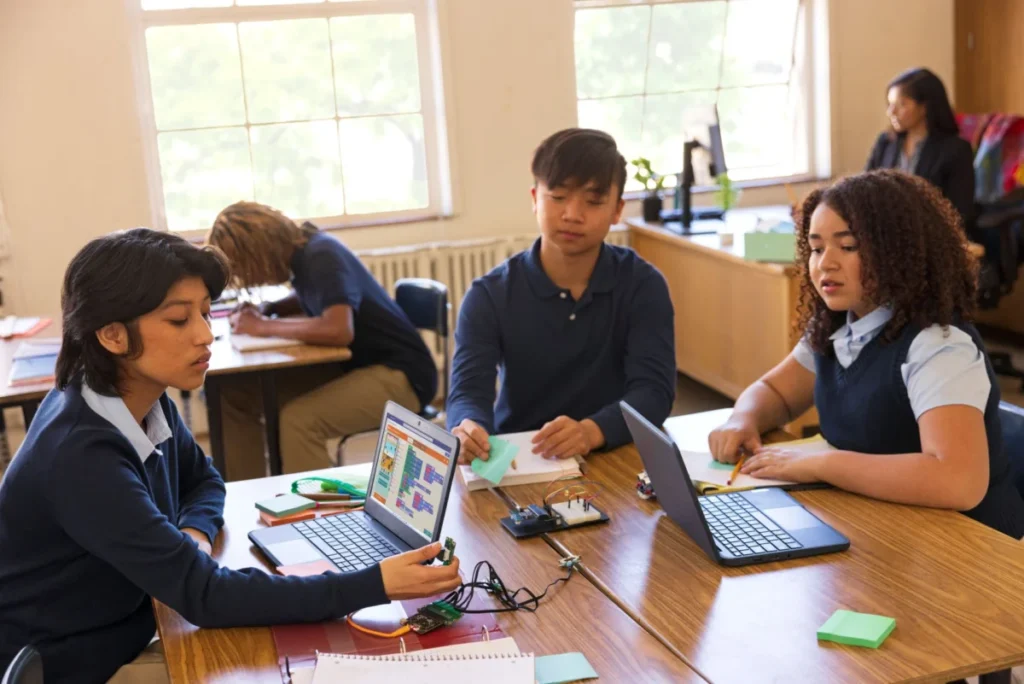

A pervasive challenge frequently vocalized by educators across the globe centers on student ownership of learning. Despite sophisticated lesson planning, engaging activities, and comprehensive scaffolded support, teachers often observe a disconnect: students may comply with instructions and complete tasks, yet struggle to internalize the material or independently drive their intellectual growth. This phenomenon was recently underscored during an instructional rounds observation, where a teacher, with an air of exasperation, confessed, "I am trying to get them to own their learning. They are sweet. They do what I ask, but they just won’t own it." This sentiment reflects a critical gap in contemporary education, pointing towards the necessity of explicitly cultivating "learn-to-learn" skills.
The Educator’s Dilemma: Beyond Engagement to Ownership
The frustration expressed by the teacher is far from isolated. It highlights a fundamental truth about the learning process: true learning is an internal act, solely dependent on the learner. While educators can create optimal environments and deliver compelling instruction, they cannot compel a student’s brain to initiate the complex information processing cycle. If teaching fails to ignite intellectual curiosity, if the learning environment lacks psychological safety, or if students lack the intrinsic tools to move new content through the attention, elaboration, and consolidation phases of information processing, then deep, lasting learning remains elusive.
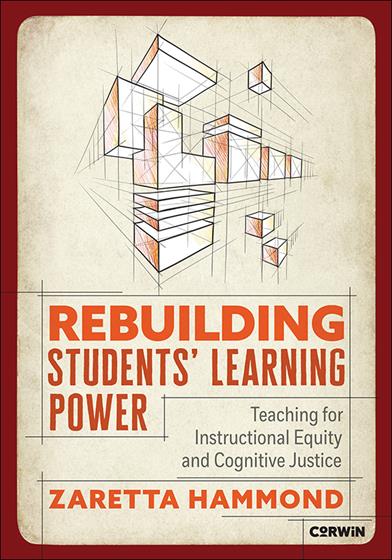
Popular pedagogical approaches such as project-based learning, Universal Design for Learning (UDL), or makerspace learning are powerful and evidence-backed strategies for engagement. However, their full potential can only be unlocked when students are equipped with explicit tools, techniques, and cognitive "moves" that empower them to become active architects of their own understanding. This critical insight forms the core argument of Zaretta Hammond’s forthcoming work, Rebuilding Students’ Learning Power (Corwin, 2025). Rather than relying solely on motivational tactics or theoretical discussions about brain function, Hammond advocates for coupling these with specific, actionable tools that transform students into proficient information processors, making learning "sticky." This journey begins with a foundational set of "learn-to-learn" skills.
Defining "Learn-to-Learn" Skills: The Craftsmanship of Cognition

What exactly are "learn-to-learn" skills? While the term might sound novel, the concept is deeply rooted in educational psychology and cognitive science. David Perkins of Harvard’s Project Zero refers to it as the "game of learning," while Ron Berger, founder of EL Education, calls it the "craftsmanship of learning." These are essentially the "trade secrets" of effective learning, often hidden in plain sight. From an equity perspective, these skills represent a crucial "hidden curriculum" that can significantly close the opportunity gap and propel us toward more equitable academic outcomes, ensuring all students, regardless of background, have access to the tools for intellectual empowerment.
It is vital to distinguish learn-to-learn skills, which are central to information processing, from executive function skills. While executive function skills, such as planning, organization, and time management (often addressed through binders and study techniques), are undoubtedly important for academic success, they do not directly enhance a student’s capacity to carry more of the cognitive load involved in internalizing new information. Learn-to-learn skills, by contrast, directly address how the brain engages with, processes, and retains new content.
Hammond introduces these learn-to-learn skills as a set of five individual "moves" that students can flexibly employ depending on the cognitive task at hand. The distinction between a "move" and a "skill" is crucial: a move is a specific, discrete action or technique executed in a particular moment (e.g., a specific strategy for activating prior knowledge), whereas a skill is a broader, developed ability or competency that encompasses understanding, judgment, and the capacity to effectively execute various moves. Skills involve knowing when, how, and why to use different moves. Just as a basketball player learns individual dribbling or shooting moves to develop the overarching skill of playing the game, students develop the skill of "learning how to learn" by mastering and adaptively applying these cognitive moves.
The Five Essential Learn-to-Learn Moves: A Framework for Cognitive Mastery
This framework provides a structured approach for students to navigate the complexities of information processing, moving from surface-level understanding to deep, meaningful learning.
Move 1: Size It Up and Break It Down
The initial step in fostering cognitive independence involves teaching students to critically analyze and strategize. "Size It Up" prompts the learner to engage in task analysis, employing a structured cognitive routine to decipher precisely what a given task demands. This involves asking a series of decision-making questions that help clarify the task’s scope and nature. Following this, "Break It Down" focuses on crafting a strategic plan of attack. The student learns to deconstruct the task into its constituent cognitive activities, assessing the specific tools and strategies required for successful completion. This move is paramount as it ignites the information processing cycle by establishing an appropriate emotional stance towards the task and outlining a clear pathway forward.

- Key Questions: What is this task truly asking me to do? What knowledge or skills do I need? What are the potential challenges? How can I break this into manageable steps? What resources are available? What emotional state best suits this task?
- Cognitive Benefit: Develops metacognitive awareness, strategic planning, and problem-solving abilities, laying the groundwork for focused attention.
Move 2: Scan the Hard Drive
Central to effective learning is the activation of prior knowledge, a principle encapsulated in the "Scan the Hard Drive" move. Neuroscience affirms that all new learning is most effectively coupled with existing learning. This move stimulates the neural pathways containing a student’s background knowledge, or "funds of knowledge" (schema), preparing the brain to integrate new content. When a learner encounters new information during the attention phase of information processing, the brain instinctively searches its schema for related experiences, definitions, or concepts, no matter how tangential the connection might initially seem. This proactive search facilitates meaning-making and can be deployed whenever new or confusing information is presented.
- Key Actions: Reflect on past experiences, concepts, or definitions related to the new topic. Ask: "What do I already know about this?" "Where have I seen something similar?" "What connections can I make?"
- Cognitive Benefit: Strengthens existing neural networks, enhances comprehension, and reduces cognitive load by providing a familiar framework for new information. Research consistently shows that activating prior knowledge significantly improves retention and understanding.
Move 3: Chew and Remix
Once a student has activated their schema, the "Chew and Remix" move propels them into the elaboration phase of information processing. This is where active integration occurs: students dynamically mix new content with their identified related schema, essentially "chewing on" and "remixing" the "new with the known." This active engagement is the crucible of meaning-making, fostering a transition from superficial memorization to deeper understanding. It often involves productive struggle within the learner’s zone of proximal development (ZPD), enabling students to grapple with complex, conflicting, or competing information. This process elevates learning to higher levels of cognitive engagement, aligning with the upper echelons of Bloom’s Taxonomy (e.g., analysis, synthesis, evaluation) and Webb’s Depth of Knowledge wheel.
- Key Actions: Explain the new concept in one’s own words. Create analogies, metaphors, or mental models. Discuss with peers. Formulate questions about the content. Relate it to real-world scenarios.
- Cognitive Benefit: Deepens understanding, promotes critical thinking, and builds robust, interconnected knowledge structures, moving beyond rote memorization.
Move 4: Engage in Skillful Practice
While "Chew and Remix" focuses on general meaning-making, "Skillful Practice" is dedicated to solidifying understanding of core concepts and developing automaticity with specific skills and procedures, particularly in foundational areas like mathematics and reading. This move emphasizes deliberate practice—a structured and intentional approach to improving performance—to myelinate new neural pathways, thereby building proficiency and automaticity. Students utilize this move when they need to refine their application of a technique or improve their execution of a skill, whether it’s deepening their grasp of a historical event or mastering a mathematical formula. Skillful Practice cues the brain’s metastrategic awareness, allowing learners to identify weaknesses in their execution and focus on precise, targeted improvements through repetition with continuous refinement.
- Key Actions: Identify specific areas of difficulty. Practice small, targeted components of a skill. Seek immediate feedback. Adjust approach based on feedback. Repeat with refinement.
- Cognitive Benefit: Develops expertise, increases efficiency, reduces errors, and frees up working memory for higher-order thinking by making foundational skills automatic.
Move 5: Make It Sticky
The final, yet crucial, "Make It Sticky" move addresses the consolidation phase of information processing. Its primary goal is to strengthen newly formed neural pathways and counteract the brain’s natural pruning mechanism, which eliminates fragile dendrites if new learning is not revisited within 24 to 48 hours. This move involves applying newly acquired content in diverse settings, thereby transforming fragile dendrites into robust neural connections. Students should employ this move at the conclusion of a learning episode and, crucially, within twelve hours thereafter, often during out-of-school time. The active application and thoughtful engagement with the information are essential to deactivate the brain’s pruning feature and ensure long-term retention.
- Key Actions: Teach the concept to someone else. Apply the learning in a different context (e.g., relate classroom learning to a hobby or current event). Create flashcards or self-quizzing questions. Summarize or write about the topic without referring to notes.
- Cognitive Benefit: Ensures long-term retention, promotes transfer of learning to new situations, and reinforces the entire learning cycle, transforming temporary knowledge into enduring understanding.
Cultivating Cognitive Independence: Strategies for Implementation
Merely introducing these moves is insufficient; the real challenge lies in fostering consistent, independent application by students—the hallmark of a cognitively independent learner. This requires more than simply telling students about these moves or using them as engagement strategies from the front of the classroom; students must actively own them.
1. Initiate a Cognitive Apprenticeship
Drawing parallels with traditional apprenticeships in crafts like carpentry or culinary arts, educators must establish the classroom as a cognitive apprenticeship. This involves an explicit "onboarding process" where teachers lay out the path to mastery as a learner, followed by phases of skill-building and habit formation. Over an initial period of 4-6 weeks, the teacher explicitly guides students through the six capacities of a good information processor:
- Awareness: Understanding how one learns.
- Self-monitoring: Tracking one’s comprehension and progress.
- Strategy Use: Applying appropriate cognitive moves.
- Adaptability: Adjusting strategies based on task demands.
- Resilience: Persisting through challenges.
- Self-efficacy: Belief in one’s ability to learn.
This structured initiation helps students understand that learning is a craft requiring deliberate practice and conscious effort.
2. Invite Students to Revise Their Learner Identity
A critical, often overlooked, aspect of student ownership is learner identity—an individual’s perceptions and beliefs about their abilities, motivations, and place within the academic world. It is a cornerstone of belonging in school. Many students, particularly those who are underperforming, struggle not only with content but with a fragile sense of themselves as capable learners. Statements like, "I’m not a math person," exemplify this challenge. By explicitly inviting students to revise their learner identity as part of the cognitive apprenticeship, educators can foster a growth mindset. This involves helping students:
- Recognize their agency: Understanding that they have control over their learning process.
- Reframe challenges as opportunities: Viewing mistakes as data points for improvement, not indicators of inadequacy.
- Develop self-efficacy: Building confidence through successful application of learn-to-learn moves.
- Address "choke points" and "pitfalls": A choke point is a natural constraint in information processing, such as the limited capacity of working memory (typically 3-5 "chunks" of new content). Every learner must learn to manage these inherent limitations. A pitfall, conversely, is a form of self-sabotage, like "cramming" by rereading instead of active recall, or multitasking during learning. Helping students identify and overcome these internal obstacles is crucial for empowering their learner identity.
3. Integrate Regular Opportunities for Reflection
Developing "learning power" or the "craftsmanship of learning" demands consistent reflection and constructive feedback, akin to any other skill set. Educators must embed regular, structured instructional conversations into their routines, prompting students to reflect on their learning process. This includes examining how they navigate mistakes, address confusions, and consciously apply the learn-to-learn moves to correct their course. These metacognitive dialogues, conducted several times a week, are not merely checks for understanding but opportunities for students to articulate their strategies, evaluate their effectiveness, and internalize the process of self-correction. Such reflective practices transform passive compliance into active, self-directed learning.
Broader Implications for Educational Equity and the Future of Learning
Creating these conditions and explicitly inviting students to adopt learn-to-learn skills is a profound act of instructional equity. These are not merely isolated strategies to make lessons more engaging; they constitute a hidden equity curriculum that every student needs to become a truly independent learner. By demystifying the learning process and providing explicit cognitive tools, educators can bridge the achievement gap, particularly for students who may not have acquired these "trade secrets" through informal means.
In an increasingly complex and rapidly changing world, the ability to learn continuously and adaptively is paramount. Equipping students with these metacognitive skills prepares them not just for academic success, but for lifelong learning and navigating an unpredictable future. Every student deserves the opportunity to learn and master the craftsmanship of learning, transforming them from passive recipients of information into empowered, self-directed knowledge constructors. This shift represents a fundamental reorientation of pedagogical practice, moving from simply delivering content to cultivating the intellectual autonomy that defines true education.