



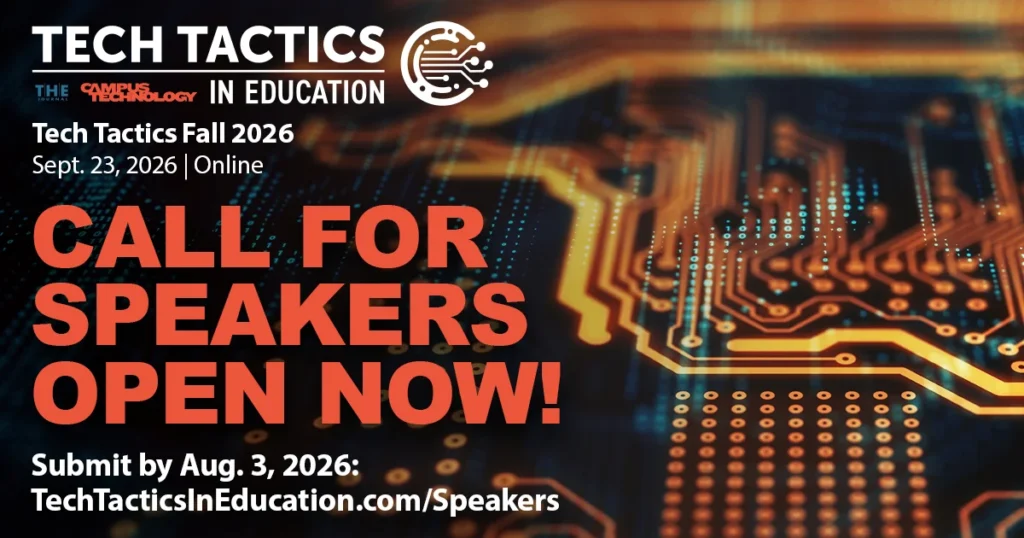
The producers of Campus Technology and THE Journal have officially opened the call for speakers for their highly anticipated Tech Tactics in Education Fall 2026 virtual conference, scheduled for September 23, 2026. This comprehensive digital event aims to equip K-12 and higher education professionals with practical insights and strategic frameworks to navigate the rapidly evolving technological landscape, with a significant emphasis on artificial intelligence (AI), cybersecurity, and data management. The conference is designed to foster hands-on learning, deliver actionable tips, and facilitate in-depth discussions on critical technology trends shaping the future of education.
Prospective presenters are invited to submit their proposals by August 3, 2026, for a diverse range of interactive sessions. These include dynamic panel discussions, practical hands-on tutorials, and insightful campus/expert perspectives. The organizing committee is particularly interested in submissions that provide concrete models for implementation, elucidate best practices, and offer strategic guidance for effective technology leadership within educational institutions. A key criterion for selection will be the ability of presenters to offer tangible exercises or direct takeaways that attendees can immediately apply to refine IT practices and pedagogical approaches at their respective organizations. This focus underscores the conference’s commitment to delivering immediate, practical value to its participants.
Thematic Pillars: Navigating AI’s Transformative Impact
The 2026 agenda is structured around three concurrent tracks, each meticulously designed to address distinct yet interconnected facets of technology in education, with AI serving as a foundational thread across all discussions. This structure reflects the pervasive influence of AI on educational methodologies, administrative operations, and the critical domain of institutional security.

AI’s Intersection with Students: Reshaping Learning and Support
This track delves into the profound impact of artificial intelligence across the entire educational spectrum, from classroom instruction to administrative functions and student support services. It seeks to explore how educational institutions can strategically leverage AI to enhance teaching and learning outcomes, streamline student support mechanisms, and advance their core missions. Submissions are encouraged to highlight practical applications of AI, offer expert advice on mitigating associated risks, identify emerging trends, and outline guidelines for responsible AI implementation. The discussions will move beyond theoretical concepts, focusing instead on real-world scenarios and scalable solutions.
Potential topics within this track are broad and timely, encompassing AI’s role in educational technology tools, the transformative effects of generative AI on learning processes, the emergence of agentic AI, methodologies for evaluating AI tools, the development of AI skills and training programs, the formulation of AI policies, the utility of predictive analytics, the deployment of AI chatbots for student engagement, and the integration of AI into various student services. Recent industry analyses indicate that the global AI in education market, valued at approximately $2.5 billion in 2023, is projected to grow substantially, reaching over $20 billion by 2032. This growth underscores the increasing imperative for educators and administrators to understand and strategically integrate AI into their operational and pedagogical frameworks. The track aims to provide a forum for sharing experiences and developing actionable strategies to harness this growth effectively.
AI’s Impact on Cybersecurity and Privacy: Fortifying Digital Defenses
Educational institutions, spanning K-12 districts to large universities, remain prime targets for a wide array of cyber threats, including ransomware, malware, phishing attacks, and sophisticated data breaches. The advent of AI has introduced both new capabilities for malicious actors and innovative tools for defense. This track is specifically curated to provide IT leaders with critical information to bolster their institutions’ defenses or facilitate recovery in the aftermath of a security incident, with a particular emphasis on how AI is reshaping cybersecurity strategies. The focus will be on best practices, compelling case studies, lessons learned from past incidents, and practical tips and tutorials for preventing or recovering from digital disasters. Discussions will also explore emerging trends and predictions in data and network security, offering a forward-looking perspective on safeguarding institutional assets.
The scope of potential topics for this track is extensive, reflecting the multifaceted nature of modern cybersecurity challenges. These include the deployment of AI-powered cybersecurity tools, responsible AI practices in security, comprehensive incident response planning, advanced threat detection methodologies, strategies for combating ransomware, robust network and data security measures, ensuring student and staff privacy, optimizing security operations centers, developing strategic cybersecurity plans, effective IT security leadership, navigating IT security funding and budgeting, implementing identity management solutions, adopting zero-trust architectures, securing cloud environments, mitigating phishing attacks, fostering cybersecurity awareness, understanding cyber liability insurance, securing remote work and learning environments, managing AI-related risks, executing disaster recovery plans, and comprehensive staff training programs. According to recent reports, educational institutions experienced an average of 2,860 cyberattacks per week in 2023, representing a significant increase over previous years and highlighting the urgent need for robust, AI-enhanced defense mechanisms. This track will provide essential guidance for addressing these escalating threats.

AI Leadership: From Strategy to Action: Guiding Institutional Transformation
This track is specifically tailored for education leaders who are transitioning from initial AI exploration to the development and implementation of intentional, institution-wide AI strategies. Presentations will illuminate practical approaches to align policy, pedagogy, and operational frameworks, effectively support stakeholders at varying levels of AI readiness, and establish responsible governance structures. Attendees will gain invaluable guidance on constructing sustainable AI strategies that meticulously balance innovation with paramount considerations of academic integrity, ethical use, and long-term institutional objectives. The track will foster discussions on how to build a culture of responsible AI adoption, ensuring that technological advancements serve the broader educational mission.
Key topics for this leadership-focused track include comprehensive AI strategy development, robust AI governance frameworks, effective data governance practices, seamless AI integration across departments, the formulation of impactful AI policies, assessing institutional AI readiness, implementing effective change management strategies, designing comprehensive AI professional development programs for faculty and staff, and developing innovative leadership strategies for the AI era. The successful integration of AI requires not just technical expertise but also visionary leadership capable of navigating complex ethical, logistical, and pedagogical challenges. This track provides a platform for leaders to share experiences and learn from peers who are at the forefront of AI adoption in education.
A Forum for Diverse Expertise and Practical Solutions
The Tech Tactics in Education conference serves as an essential platform for knowledge exchange among a wide array of professionals. Presentation types are varied to ensure a rich and engaging experience for all attendees. Panel discussions will feature a moderator guiding at least two panelists through conversational explorations of critical topics, encouraging diverse perspectives. Hands-on tutorials will offer practical, workshop-style sessions led by experienced education practitioners, where attendees can actively engage in brainstorming, problem-solving exercises, and small group activities directly relevant to their institutional technology needs. Campus/expert perspective sessions will provide a platform for individuals or teams to share first-hand experiences with technology projects or deep expertise on specific subjects, offering valuable case studies and insights.
The conference actively seeks presenters from the ranks of higher education and K-12 IT leaders and practitioners, independent consultants, leaders of association or nonprofit organizations, and other distinguished professionals in the field of technology in education. While industry experts are welcome, their presentations must maintain a non-promotional focus, prioritizing educational content and objective insights. All submissions will undergo a rigorous evaluation process, assessing their relevance to the education field, the clarity and precision of their titles and abstracts, their practical usefulness to attendees, and their comprehensive coverage of current issues and emerging trends. Speakers whose proposals are selected for presentation at the Fall 2026 Tech Tactics in Education conference will be granted complimentary event registration, acknowledging their valuable contribution to the collective knowledge base.

The Enduring Mission of Campus Technology and THE Journal
Tech Tactics in Education is an initiative spearheaded by the renowned producers of Campus Technology and THE Journal, two leading publications dedicated to covering technology trends and solutions across higher education and K-12, respectively. Campus Technology has long been recognized as a premier resource for IT leaders, faculty, and administrators in higher education, providing in-depth analysis, case studies, and strategic guidance on everything from enterprise systems to instructional technology. Similarly, THE Journal (Technological Horizons in Education) has served the K-12 sector for decades, offering insights into how technology can enhance learning, improve school administration, and support student success.
The Tech Tactics in Education series, born from the combined expertise and extensive reach of these publications, aims to bridge the gap between technological innovation and practical application in educational settings. These virtual conferences are designed to be accessible and impactful, ensuring that vital information and best practices reach a broad audience of educators and IT professionals who are on the front lines of digital transformation. By focusing on emerging and critical areas like AI and cybersecurity, the organizers continue their mission to empower educational institutions to harness technology effectively, securely, and ethically. The continuous evolution of these events reflects the dynamic nature of educational technology itself, always striving to address the most pressing challenges and opportunities facing schools and universities today.
Broader Implications for Educational Ecosystems
The themes of the Tech Tactics in Education Fall 2026 conference carry significant implications for the broader educational ecosystem. The rapid advancement of AI necessitates not only technological adaptation but also profound shifts in pedagogical approaches, curriculum design, and ethical frameworks. Educational leaders are increasingly tasked with balancing the transformative potential of AI to personalize learning and automate administrative tasks against concerns regarding data privacy, algorithmic bias, and academic integrity. Conferences like Tech Tactics provide a crucial forum for navigating these complex issues, offering practical strategies for responsible innovation.
Furthermore, the persistent threat of cyberattacks underscores the need for continuous vigilance and strategic investment in cybersecurity infrastructure and human capital. Educational institutions, often operating with limited resources compared to corporate entities, must adopt proactive and adaptive security postures. The integration of AI into cybersecurity, while promising, also introduces new layers of complexity, requiring IT leaders to stay abreast of the latest tools and threats. The insights shared at Tech Tactics will contribute directly to strengthening the digital resilience of schools and universities, protecting sensitive student and staff data, and ensuring the continuity of educational operations in an increasingly hostile digital environment.

In essence, the Tech Tactics in Education Fall 2026 conference is more than just an event; it is a critical juncture for educational professionals to converge, share knowledge, and collectively strategize for a future where technology is both a powerful enabler and a significant challenge. The call for speakers represents an opportunity for practitioners and thought leaders to contribute to this vital dialogue, shaping the narrative and providing the practical tools necessary for educational institutions to thrive in the digital age.
For those eager to contribute their expertise, the full call for speakers and proposal submission portal can be accessed at https://sessionize.com/tech-tactics-fall-2026/. Further details about the conference program, registration, and other relevant information are available on the official event website at https://techtacticsineducation.com/Home.aspx. This event promises to be an indispensable resource for anyone committed to leveraging technology to advance the mission of education.