



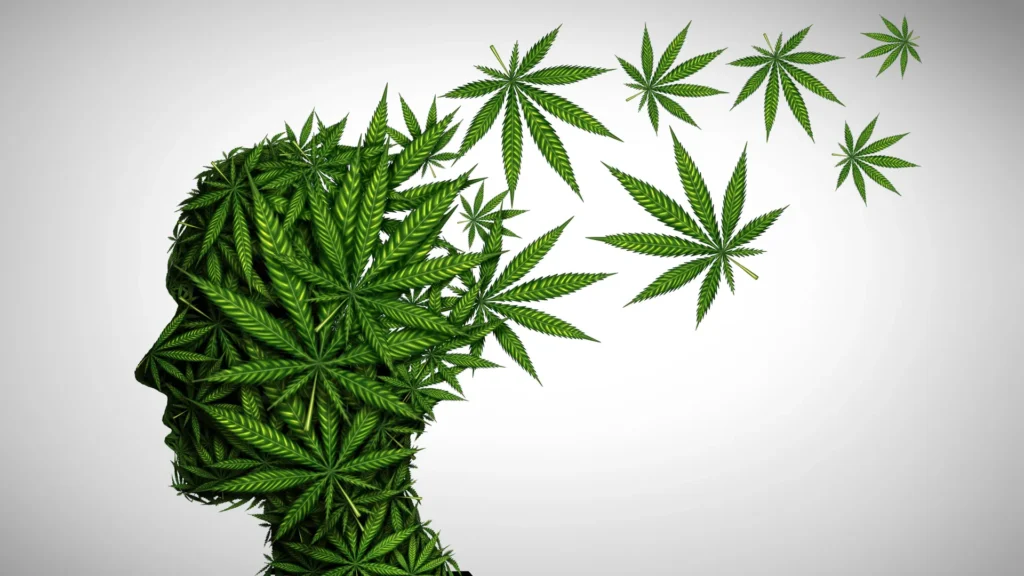
A groundbreaking study from Washington State University (WSU) has unveiled significant findings regarding the impact of cannabis consumption on human memory, indicating that the psychoactive compound THC does more than merely induce temporary forgetfulness; it appears to fundamentally alter how memories are formed, retrieved, and processed. The research, published in the Journal of Psychopharmacology, provides one of the most comprehensive examinations to date of how acute cannabis intoxication affects various memory systems crucial for daily functioning, revealing impairments across a broad spectrum of cognitive tasks, including the unsettling propensity for false memories.
The WSU study found that individuals who consumed THC were markedly more prone to recalling words that were never presented to them and demonstrated increased difficulty in executing routine memory-dependent tasks, such as remembering future appointments or tracking the origins of information. This research emerges at a critical juncture, as cannabis legalization expands across North America, bringing with it a greater need for a nuanced understanding of its cognitive ramifications.
A Deeper Dive into Memory Systems Under Cannabis Influence
Traditional research into cannabis and memory has often been limited in scope, typically focusing on one or two specific aspects of recall, such as rote memorization of word lists. The WSU study, however, adopted a far more ambitious approach, meticulously assessing multiple memory systems simultaneously. Carrie Cuttler, senior author of the study and an associate professor of psychology at WSU, emphasized the novelty of their methodology. "Most previous studies have only looked at one or two types of memory, like recalling lists of words," Cuttler noted. "This is the first study to comprehensively examine many different memory systems at once, and what we found is that acute cannabis intoxication appears to broadly disrupt most of them."
This extensive evaluation encompassed verbal memory (recalling spoken information), visuospatial memory (remembering locations and visual patterns), prospective memory (remembering to perform future actions), source memory (recalling where information came from), false memory (recalling events that never happened), episodic content memory (recalling personal experiences), and temporal order memory (recalling the sequence of events). The sheer breadth of affected memory types underscores the pervasive influence of THC on cognitive processes.
Methodology: A Double-Blind Experiment with Regular Users
To achieve their detailed findings, Cuttler and co-author Ryan McLaughlin, an associate professor in the Department of Integrative Physiology and Neuroscience at WSU, recruited a cohort of 120 regular cannabis users. Participants were randomly assigned to one of three groups in a meticulously designed double-blind experiment: one group vaporized a placebo cannabis, another consumed 20 milligrams of THC, and the third consumed 40 milligrams of THC. This double-blind design, where neither the participants nor the researchers knew who received which substance, is a cornerstone of robust scientific inquiry, minimizing bias.
Following the consumption of their assigned substance, participants engaged in approximately an hour of rigorous memory tests. The results were stark: individuals who had consumed actual cannabis performed significantly worse than the placebo group on the vast majority of assessments. Out of 21 distinct memory tests, cannabis use led to significant impairments in 15 of them, highlighting a widespread cognitive disruption rather than an isolated effect.
The Alarming Rise of False Memories and Source Confusion
Among the most pronounced and concerning effects identified were those on false memory and source memory. These two systems are fundamental to accurately perceiving and recalling reality, enabling individuals to distinguish between actual experiences and imagined ones, and to appropriately attribute the origin of learned information.
In a particularly telling experiment designed to probe false memory, participants listened to lists of thematically related words, yet the central keyword connecting them was deliberately omitted. For instance, a list might include "bed," "dream," "rest," and "snore," but the word "sleep" would never be spoken. When later asked to recall the words, individuals under the influence of cannabis were significantly more likely to confidently assert that they had heard the unpresented central keyword. Cuttler remarked on this observation: "I found it was really common for people to come up with words that were never on the list. Sometimes they were related to the theme of the list, and sometimes they were completely unrelated." This suggests a breakdown in the brain’s ability to discriminate between actual input and internally generated associations, leading to the creation of vivid but inaccurate recollections.
Equally critical was the impairment in source memory. Participants who had consumed cannabis exhibited greater difficulty in identifying the original source of previously learned information. This deficit has profound implications for daily life, making it challenging to discern whether a piece of information originated from a credible news source, a casual conversation with a friend, or perhaps a less reliable online forum. In an increasingly information-saturated world, the ability to accurately track information’s provenance is paramount for critical thinking and decision-making.
The implications of such memory distortions extend beyond personal inconvenience. In contexts where precise recall is paramount—such as eyewitness testimony in legal proceedings, medical diagnoses, or even academic learning—errors in memory or susceptibility to suggestive questioning under the influence could have serious, far-reaching consequences.
Impacts on Everyday Functioning: Prospective Memory Deficits
Beyond the more abstract concepts of false and source memory, the study also revealed significant impairments in prospective memory. This refers to the cognitive ability to remember to perform intended actions in the future, a cornerstone of daily productivity and responsibility. Examples include remembering to take prescribed medication, attending scheduled meetings, paying bills on time, or picking up groceries on the way home from work.
"These are things we rely on constantly in our day-to-day lives," Cuttler underscored. "If you have something you need to remember to do later, you probably don’t want to be high at the time you need to remember to do it." The disruption of prospective memory highlights a practical concern for individuals who regularly use cannabis, particularly those with demanding personal or professional responsibilities. The inability to reliably execute future intentions could lead to missed opportunities, forgotten obligations, and potentially adverse outcomes in various aspects of life.
Interestingly, one form of memory—episodic content memory, which involves recalling personal experiences and events—did not show a statistically significant effect in this particular study. However, Cuttler cautioned that additional research is necessary before drawing definitive conclusions about this specific memory type, suggesting that its complexities might require different experimental approaches or a larger sample size to fully elucidate any potential effects.
Surprising Dosage Findings: Even Moderate Amounts Disrupt Memory
One of the study’s more surprising revelations was the absence of a meaningful difference in memory impairment between participants who consumed 20 milligrams of THC and those who consumed 40 milligrams. This finding suggests that the dose-response curve for memory disruption might plateau relatively quickly, implying that even moderate amounts of THC can significantly interfere with memory processes. This challenges the common assumption that higher doses invariably lead to proportionally greater cognitive effects, indicating a potential threshold beyond which additional THC provides little further cognitive impairment in the acute phase. This has important implications for both recreational users and medical cannabis patients, suggesting that even carefully titrated doses could carry substantial short-term cognitive costs.
The Evolving Landscape of Cannabis Use and Persistent Research Gaps
The WSU study arrives amidst a rapidly changing landscape surrounding cannabis. States across the United States, including Washington where the study was conducted, have moved towards legalizing recreational or medical cannabis use. This trend is also evident internationally, with countries like Canada having fully legalized recreational cannabis, and many others exploring similar pathways. Data from the National Survey on Drug Use and Health (NSDUH) consistently shows an upward trend in cannabis use, particularly among young adults. For instance, recent reports indicate that daily cannabis use among college students and non-college young adults reached historic highs in 2023.
Despite this growing prevalence and accessibility, the scientific understanding of cannabis’s acute and long-term cognitive effects remains surprisingly limited. This knowledge gap is largely attributable to historical regulatory hurdles. For decades, cannabis has been classified as a Schedule I substance under federal law in the United States, a category reserved for drugs with a high potential for abuse and no accepted medical use. This classification has historically imposed severe restrictions on researchers, making it exceedingly difficult to obtain federal funding, acquire research-grade cannabis, and navigate the bureaucratic red tape necessary to conduct studies involving the substance. Researchers often faced challenges in sourcing consistent, legal cannabis for studies, leading to a fragmented body of evidence.
Carrie Cuttler highlighted this ongoing challenge: "We’re living in a state where cannabis use is very common, but there’s still a lot we don’t know about its acute effects." The goal of such research, she explains, is not to demonize cannabis but "to help people make informed decisions about the risks and benefits." As public policy continues to evolve, robust, independent scientific research becomes even more critical to inform public health campaigns, responsible consumption guidelines, and regulatory frameworks.
Broader Implications and the Call for Informed Decision-Making
The findings from the WSU study carry significant implications for public health, safety, and individual well-being. From an educational standpoint, students using cannabis may find their ability to absorb new information, recall facts, and critically evaluate sources significantly hampered. In professional settings, particularly those requiring high levels of concentration, accurate recall, and decision-making—such as healthcare, transportation, or intricate technical fields—cannabis-induced memory impairment could pose serious risks.
Public safety is another major concern. While the study focused on memory, cognitive impairments, including those related to attention and judgment, are widely recognized as factors contributing to impaired driving. The ability to recall sequences of events, process new information, and maintain vigilance—all affected by memory and broader cognitive function—are essential for safe operation of vehicles and machinery.
From a policy perspective, these findings underscore the necessity for continued investment in cannabis research. As legalization efforts proceed, policymakers must be armed with comprehensive scientific data to develop effective public education campaigns, establish clear guidelines for responsible use, and potentially inform regulations regarding potency limits or consumption restrictions in specific contexts. Public health officials might need to intensify efforts to educate the public, especially young adults, about the potential cognitive costs associated with cannabis use, emphasizing that "moderate" use can still lead to significant, acute memory disruption.
Ultimately, the Washington State University study serves as a crucial piece of the puzzle in understanding the complex effects of cannabis. It moves beyond anecdotal observations to provide empirical evidence of widespread, acute memory disruption, including the unsettling potential for false memories. As societies navigate the evolving landscape of cannabis legalization, studies like this are indispensable for promoting informed decision-making, safeguarding public health, and ensuring that the public is fully aware of both the perceived benefits and the empirically demonstrated risks associated with cannabis consumption. The call for more research is not merely an academic plea but a societal imperative in an era of expanding access and evolving perceptions.