



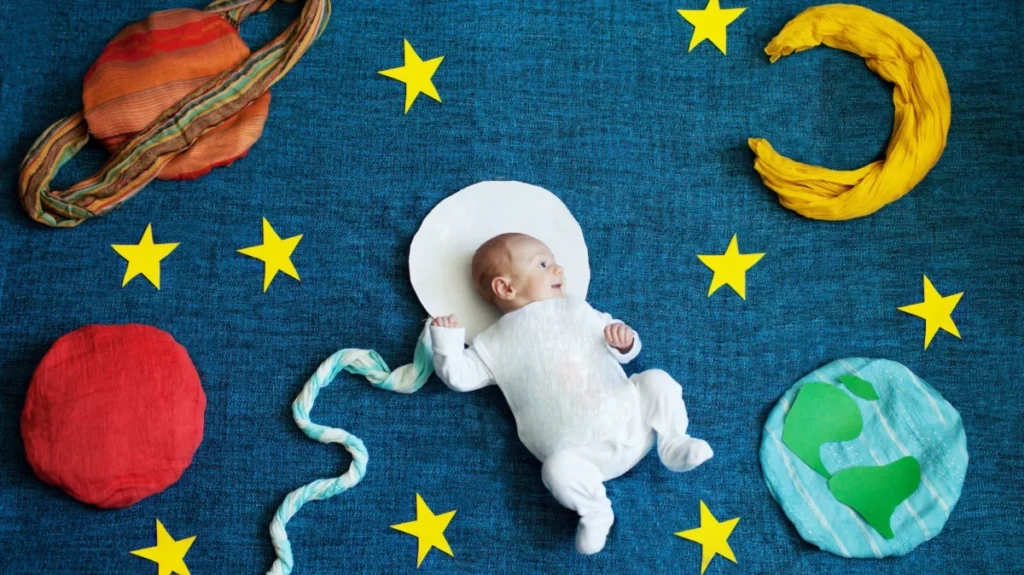
The Social Security Administration has officially released its comprehensive baby name dataset for the 2025 calendar year, providing a unique window into the cultural and societal shifts influencing American parents. Among the most notable trends identified in this year’s report is a significant surge in celestial and astronomically inspired names, suggesting that the "New Space Age"—characterized by high-profile lunar missions and increased Mars exploration—is leaving a lasting mark on the domestic sphere. From the red dusty plains of Mars to the gas giants of the outer solar system, parents are increasingly looking toward the stars to find unique monikers for the next generation. This shift reflects a broader movement away from traditional biblical and familial names toward those that evoke a sense of wonder, discovery, and scientific achievement.
The Planetary Popularity Contest: Mars and Jupiter Lead the Way
According to the 2025 data, Mars has emerged as the most popular proper planet name within the solar system. Historically a rare choice, the name has seen a steady climb in the rankings over the last decade, likely bolstered by the frequent news coverage of robotic rovers and the long-term human goal of reaching the fourth planet from the Sun. Following closely behind is Jupiter, the largest planet in our solar system, which claimed the second-place spot among planetary names.
The popularity of these names is not merely a reflection of astronomical interest but also an intersection with classical antiquity. Most planets in our solar system derive their names from the Roman and Greek pantheons. Mars, the Roman god of war, and Jupiter, the king of the gods (equivalent to the Greek Zeus), carry connotations of strength, leadership, and power. Analysts suggest that parents may be drawn to these names for their dual resonance: they satisfy a modern interest in science while maintaining a connection to ancient historical and mythological traditions.
Interestingly, the data shows a clear boundary in planetary naming conventions. While Mars and Jupiter flourished, other planets remained entirely absent from the charts. For the 2025 reporting period, the name Uranus did not appear on the list. The Social Security Administration maintains a privacy threshold, only releasing data for names given to five or more children in a single year. While it remains statistically possible that a handful of children were given the name, it did not reach the minimum threshold for public disclosure. This highlights a persistent social stigma or perhaps a simple lack of aesthetic appeal regarding certain celestial bodies, even as others become fashionable.
The Artemis Effect and NASA’s Cultural Footprint
One of the most significant data points in the 2025 report is the continued dominance of the name Artemis. Last year, 332 parents chose this name for their children, a figure that places it well ahead of most direct planetary names. While Artemis is a name of Greek origin meaning "safe" or "butcher" and refers to the goddess of the hunt and the moon, its current popularity is inextricably linked to NASA’s Artemis program.
As the United States and its international partners work toward returning humans to the lunar surface and establishing a sustainable presence on the Moon, the word "Artemis" has become a staple of public discourse. Much like the "Apollo" era of the 1960s and 70s influenced naming trends of that time, the modern lunar mission is inspiring a new cohort of parents. The mission’s goals—scientific discovery, economic opportunity, and inspiration for a new generation—seem to be translating directly into the nursery. Artemis serves as a prime example of how government-led scientific endeavors can permeate popular culture and influence personal identity choices on a national scale.
Beyond the Planets: Moons, Stars, and Dwarf Planets
The 2025 dataset also reveals that parents are looking beyond the major planets to other celestial objects and smaller bodies within the solar system. The general terms for cosmic entities have become increasingly popular as first names. In 2025, 65 babies were named Moon, while 101 children received the name Star. These names reflect a trend toward "nature names" that has been growing for several years, moving from terrestrial elements like River or Willow to the vastness of space.
Furthermore, 80 parents opted for the name Cosmo, a name that suggests the entirety of the universe. This choice reflects a broader philosophical lean toward universalism and a sense of belonging to a larger cosmic order. Even the smaller, often-overlooked members of our solar system made an appearance in the 2025 statistics:
- Pluto: Despite its reclassification as a dwarf planet nearly two decades ago, Pluto remains a sentimental favorite, with 17 babies receiving the name in 2025.
- Ceres: The largest object in the asteroid belt and another dwarf planet, Ceres was chosen by 15 parents. As a name, Ceres also ties back to the Roman goddess of agriculture and motherly relationships, providing a soft yet scientific option for new parents.
The Rise and Sudden Fall of Tesla
Perhaps the most striking revelation in the Social Security Administration’s longitudinal data is the complete disappearance of the name Tesla. In the mid-2010s, the name saw a meteoric rise, peaking in 2016 when 180 children were given the moniker. At that time, the name was largely associated with the visionary inventor Nikola Tesla and the burgeoning success of the electric vehicle company that bears his name.
However, the 2025 report shows that Tesla has fallen off the charts entirely, failing to meet the five-child minimum for the second consecutive year. After a sharp decline to just 13 babies in 2023, the name has now vanished from the public record. Industry analysts and sociologists point to a "brand fatigue" or "polarization effect." When a name becomes too closely associated with a specific corporation or a controversial public figure, its appeal as a personal identifier often diminishes. In the case of Tesla, the transition from a name representing futuristic innovation to one deeply entwined with the public persona of Elon Musk and corporate headlines may have rendered it less attractive to parents seeking a neutral or purely scientific name for their children.
Chronology of Celestial Naming Trends
To understand the 2025 data, it is helpful to look at the timeline of how space-related names have evolved in the United States:
- 1960s–1970s: The Apollo missions led to a modest spike in names like Apollo and Glenn (after John Glenn). However, naming conventions remained largely traditional.
- 1990s–2000s: Names like Orion and Luna began to enter the mainstream, moving from the fringes of "hippie" culture into the broader public consciousness.
- 2010–2020: The "SpaceX Era" and the revitalization of NASA led to a surge in technical and astronomical names. Nova, Stella, and Aurora became top-tier choices.
- 2021–2025: The current era shows a refinement of the trend. While general names like Luna remain popular, there is a distinct move toward specific planetary bodies (Mars, Jupiter) and mission-specific names (Artemis).
Methodology and Privacy Standards of the SSA
The Social Security Administration has been tracking baby name data since 1880. The data is compiled based on Social Security card applications for births that occurred within the United States. To ensure the privacy of individuals, the SSA adheres to a strict "Rule of Five." If a name is used fewer than five times in a given year for a specific gender, it is excluded from the publicly released dataset.
This methodology means that while the report captures the "top" trends, it may miss the very earliest stages of a new trend or highly unique choices. For instance, while no "Uranus" or "Neptune" appeared on the 2025 list, it does not mean those names were not used; it simply means they were used four or fewer times. This safeguard prevents the identification of specific children in smaller communities where a highly unusual name might serve as a de facto identifier.
Broader Implications and Societal Analysis
The 2025 baby name data serves as more than just a curiosity for expectant parents; it is a sociological indicator of a nation’s collective imagination. The shift toward the cosmos suggests a society that is looking outward and upward for inspiration. In a period often characterized by terrestrial challenges—ranging from climate change to political polarization—the stars represent a frontier of untapped potential and objective beauty.
Furthermore, the preference for names like Mars and Jupiter over traditional names suggests a decline in the influence of conventional institutions, such as the church, in favor of science and mythology. Parents today are more likely to seek names that feel "limitless." As private space travel becomes more common and the first human footprints on Mars move from the realm of science fiction to a foreseeable project, these names may move from being "unique" or "quirky" to being foundational staples of American nomenclature.
The disappearance of brand-related names like Tesla also provides a cautionary tale for the intersection of commerce and identity. It suggests that while science and exploration are enduringly aspirational, the commercial entities that facilitate them may be too transient or divisive to serve as long-term naming inspirations. As we move further into the late 2020s, the Social Security Administration’s data will likely continue to track this celestial trajectory, reflecting a world that is increasingly at home among the stars.