



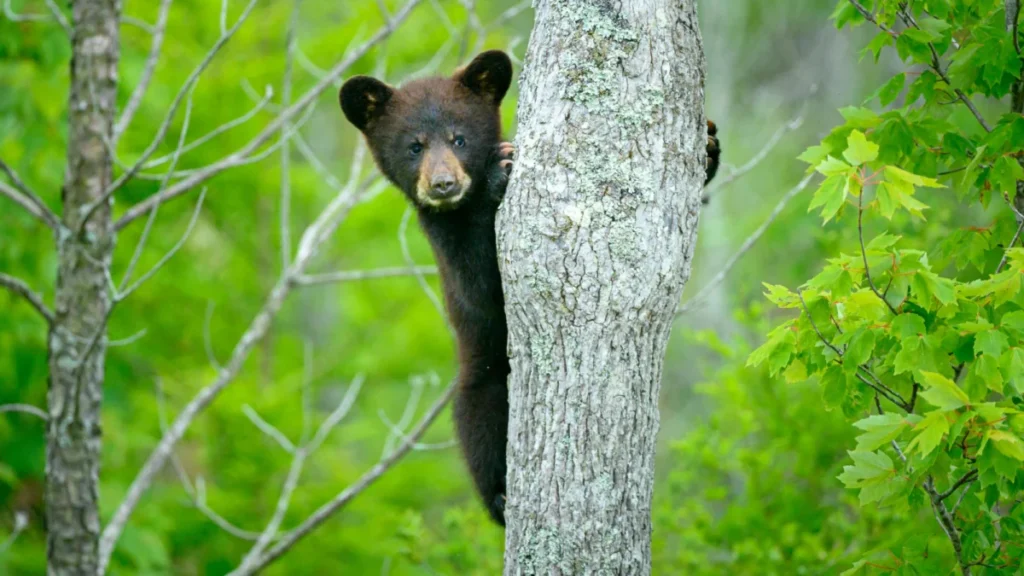
The state of Connecticut has reached a significant milestone in its ongoing wildlife recovery efforts with the first-ever confirmed sighting of a black bear mother accompanied by five cubs. This rare occurrence, captured on video and verified by the Connecticut Department of Energy and Environmental Protection (DEEP), marks a record for the largest litter ever observed in the Nutmeg State. While black bears (Ursus americanus) have become an increasingly common sight in the region over the last few decades, the emergence of a five-cub litter serves as a powerful indicator of the species’ reproductive success and the high quality of habitat currently available within the state’s borders.
The historic sighting was first brought to public attention through footage shared by NBC Connecticut, which depicted the sow navigating the landscape with her quintet of cubs in tow. Wildlife biologists with DEEP’s Wildlife Division subsequently reviewed the evidence, confirming that all five cubs belonged to the single mother. In the world of black bear biology, litters typically consist of two or three cubs. A litter of four is considered uncommon, and a litter of five is an extraordinary rarity that suggests the mother bear was in peak physical condition and had access to abundant nutritional resources prior to and during her winter denning period.
The Long Road to Recovery: A Century of Change
To understand the significance of this record-breaking litter, one must look back at the ecological history of Southern New England. The presence of a thriving bear population in Connecticut is a relatively recent phenomenon, representing a dramatic reversal of the trends seen in the 18th and 19th centuries.
During the mid-1800s, the black bear was effectively extirpated from Connecticut. This disappearance was not merely the result of hunting, but primarily due to massive habitat loss. As European settlers expanded their footprint, they cleared vast swaths of forest land to make way for subsistence and commercial farming. At the height of the agricultural era, it is estimated that as much as 75% of Connecticut’s landmass had been deforested. Without the dense forest cover required for protection and foraging, the black bear population vanished from the state.
The tide began to turn in the late 1900s. As the American economy shifted toward manufacturing and residents moved into urban centers, thousands of farms were abandoned. This allowed for a process of natural reforestation. Over many decades, stone walls that once marked pasture boundaries were swallowed by regrowing hardwoods and conifers. Today, Connecticut is approximately 60% forested, providing the contiguous corridors necessary for large mammals to thrive.
By the 1980s, DEEP’s Wildlife Division began receiving consistent reports of resident black bears, primarily in the mountainous and less populated northwestern corner of the state. Since then, the population has expanded both in number and in geographic range. What began as a handful of transient individuals has grown into a permanent, self-sustaining population of approximately 1,000 to 1,200 bears. While the highest densities remain in towns like Salisbury, Canaan, and Barkhamsted, sightings are now reported in nearly all of Connecticut’s 169 municipalities.
Biological Drivers of Large Litters
The observation of five cubs is more than just a statistical anomaly; it is a window into the health of the local ecosystem. Black bear reproduction is governed by a biological process known as delayed implantation. After mating occurs in the summer, the fertilized egg does not immediately attach to the uterine wall. Instead, it remains in a state of dormancy until the female enters her winter den.
The success of the pregnancy depends almost entirely on the mother’s physical condition. If the sow has not accumulated enough body fat during the autumn "hyperphagia" phase—a period of intense eating—the embryos may not implant, or the litter size will be small. The fact that a Connecticut bear successfully birthed and emerged with five healthy cubs indicates that the previous autumn provided a "mast year," characterized by an overabundance of high-calorie foods such as acorns, hickory nuts, and beech nuts. Furthermore, it suggests that the mother was able to find a secure, undisturbed denning site to nurse her young through the winter months.
Spring Emergence and the "Hands-Off" Mandate
As temperatures rise in the spring, bear families emerge from their dens to begin foraging for new vegetation, insects, and carrion. This is also the time when human-bear encounters reach their annual peak. DEEP officials have used the news of the five-cub litter to reinforce critical public safety and conservation messaging.
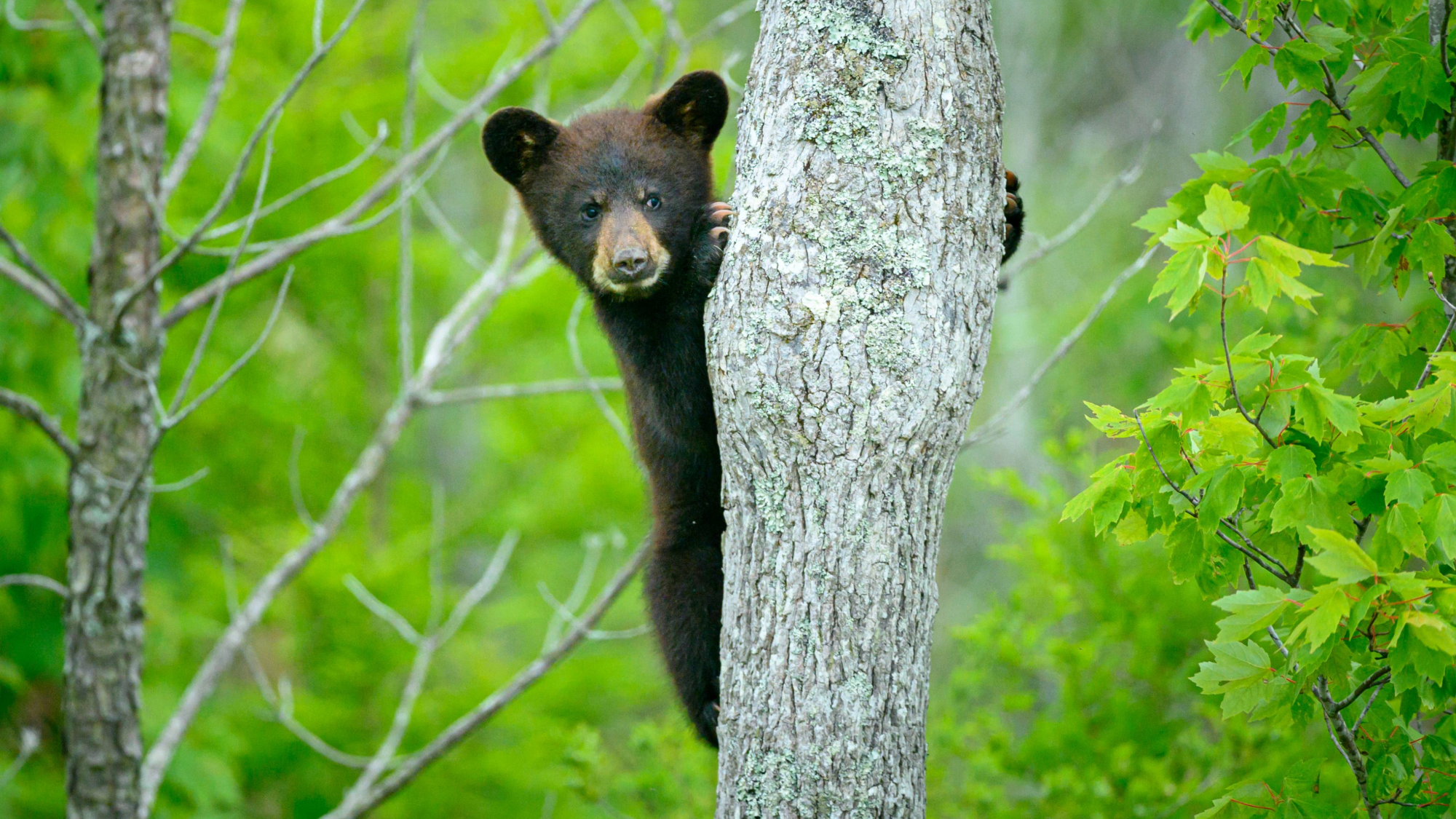
One of the most common mistakes residents make is assuming that a lone cub has been abandoned. Mother bears are known to be highly protective, but they are also strategic. A sow will often leave her cubs at the base of a "refuge tree" while she travels up to a mile away to forage for food. During these periods, which can last for 12 hours or more, the cubs are instructed to stay put or climb the tree if they feel threatened.
"Removing cubs from the wild can unintentionally orphan them if the adult bear cannot locate and reunite with the cubs," DEEP stated in a recent advisory. Even if the cubs are vocalizing—emitting high-pitched squeals or mews—biologists urge the public to keep their distance. Human interference often scares the mother away, preventing a reunion and forcing wildlife officials to intervene in situations that would have otherwise resolved naturally.
Regional Comparisons and Population Density
While the five-cub litter is a record for Connecticut, the state’s bear population remains modest when compared to its northern neighbors. Massachusetts currently hosts an estimated 4,500 black bears, and Maine remains the stronghold for the species in the Eastern United States, with a population estimated at upwards of 35,000 individuals.
However, the "feel" of the bear population in Connecticut is often more intense due to the state’s high human population density. Unlike the vast wilderness of Maine, Connecticut’s forests are interspersed with suburban neighborhoods, school zones, and major highways. This proximity creates a unique set of challenges for wildlife managers.

The data reflects this growing intersection. In 1996, Connecticut recorded only 22 bear sightings for the entire year. By contrast, 2023 saw over 12,000 reported sightings. In the first few months of the current year alone, over 1,000 sightings have already been logged. As bears become more habituated to human environments, the risk of property damage and dangerous encounters increases.
Management Challenges and Future Implications
The record-breaking litter arrives at a time of heated debate regarding bear management in the Connecticut General Assembly. As the population grows, so do instances of bears entering homes, killing livestock, and damaging apiaries. In 2023, the state passed legislation allowing farmers to petition for permits to kill bears that are damaging crops or livestock, and it clarified the right of residents to use deadly force in self-defense against a bear attack.
However, a proposal for a regulated bear hunting season—similar to those in Massachusetts and New Jersey—has faced significant political opposition. Proponents of a hunt argue it is a necessary tool to control population growth and reduce human-wildlife conflict. Opponents argue that non-lethal management, such as better trash secures and the removal of bird feeders, is the more ethical and effective path forward.
The presence of a five-cub litter highlights the biological reality that the population is nowhere near a natural decline. With high cub survival rates and a lack of natural predators like wolves or mountain lions, the black bear is poised to continue its expansion across the Connecticut landscape.
Guidelines for Coexistence
As the record-breaking family of six moves through the Connecticut woods, wildlife experts emphasize that the responsibility for safety lies with humans. DEEP recommends several "Bear Aware" strategies to prevent habituation:
- Remove Bird Feeders: From March through November, birdseed serves as a high-calorie attractant that draws bears into backyards.
- Secure Garbage: Use bear-resistant trash cans or store refuse in a locked garage until the morning of collection.
- Clean Grills: Residual food grease is a powerful lure for a bear’s keen sense of smell.
- Protect Livestock: Use electric fencing to safeguard chickens, beehives, and small livestock.
The historic sighting of five cubs is a testament to the resilience of the natural world and the success of environmental policies that allowed Connecticut’s forests to return. It serves as a reminder that while the state is a hub of human industry and suburban life, it remains a vital, wild ecosystem capable of supporting some of nature’s most impressive reproductive feats. For now, the record-breaking family remains a symbol of a wilder Connecticut, provided that residents afford them the space and respect necessary to remain wild.