
The global education landscape is in a perpetual state of evolution, increasingly shaped by the pervasive influence of digital technologies. As institutions and educators strive to harness the potential of online learning, a critical question emerges: what truly enables learners to succeed in this digital realm? While access to reliable devices and robust internet connectivity are undoubtedly foundational, these elements represent merely the starting point. According to Liz Starbuck Greer, a prominent voice in educational technology, the true determinants of learner success lie in a more nuanced and multifaceted concept: digital capital.
This profound insight was a cornerstone of Greer’s impactful presentation at MoodleMoot Global 2025, an annual international conference that convenes educators, developers, and administrators from across the Moodle ecosystem. The event, held annually to foster collaboration and innovation within the open-source learning management system community, typically attracts thousands of participants eager to share best practices and explore the future of digital education. MoodleMoot Global 2025, following a successful virtual iteration in 2024 and previous hybrid models, continued its tradition of being a pivotal forum for discussions on pedagogical advancements and technological integration in learning. Greer’s session, in particular, resonated deeply with attendees, sparking widespread reflection and critical dialogue, especially concerning the persistent challenge of equity in digital learning environments.
Understanding Digital Capital: Beyond Mere Access
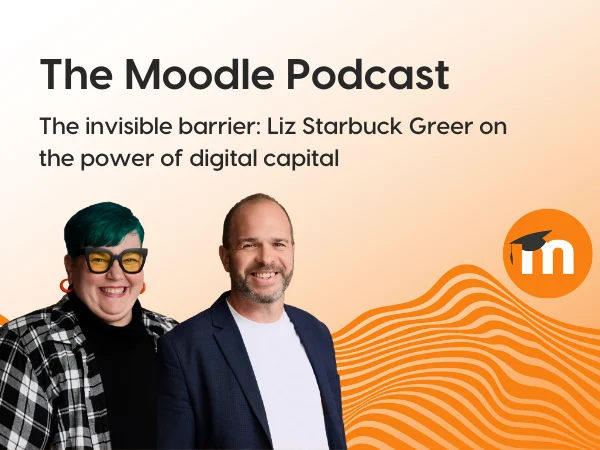
In a recent episode of the Moodle Podcast, hosts Shalimar Anderson and Dan Lehner sat down with Liz Starbuck Greer to delve deeper into the concepts she introduced at MoodleMoot Global 2025. The conversation, titled "The Invisible Barrier: Liz Starbuck Greer on the Power of Digital Capital," served to amplify the key takeaways from her presentation, "What is digital capital and why should you care?", which is also available on YouTube.
Greer introduced the powerful concept of digital capital, defining it as a comprehensive blend of an individual’s skills, confidence, access, and networks that collectively influence their ability to effectively participate and thrive in online learning environments. This framework moves beyond a simplistic view of digital inclusion, which often focuses solely on the provision of hardware and internet access. Greer argued that while these are essential prerequisites, they are insufficient on their own. True digital equity, she posits, requires learners to possess the confidence to engage, the skills to navigate digital tools, and the support systems that empower them to overcome challenges and seize opportunities in the digital space.
Challenging Assumptions: Designing for Intentionality
Throughout their discussion on the Moodle Podcast, Greer urged educators and learning designers to critically examine their existing assumptions about digital learning. She challenged them to move from a reactive approach, where technology is simply introduced, to a proactive and intentional design process that prioritizes learner empowerment and equity. This involves a conscious effort to anticipate potential barriers and build in support mechanisms that address the diverse needs of learners.
The conversation explored several key areas that emerged from Greer’s work and her presentation:
- The Multifaceted Nature of Digital Capital: The podcast episode likely elaborated on the different components of digital capital, detailing how each element contributes to a learner’s success. This could include technical proficiency, digital literacy, critical evaluation of online information, and the ability to communicate effectively in digital spaces. Furthermore, it likely touched upon the social and emotional aspects, such as self-efficacy in online learning and the comfort level with digital interaction.
- Identifying and Addressing the "Invisible Barriers": Greer’s work highlights that the absence of these elements of digital capital can create "invisible barriers" that prevent learners from fully benefiting from digital education, even when they have physical access. These barriers can manifest as a lack of confidence to ask questions, a fear of making mistakes, or an inability to leverage online resources effectively.
- The Role of Educators and Institutions: The discussion likely emphasized the crucial role educators and educational institutions play in cultivating digital capital among their learners. This could involve providing targeted training, offering ongoing technical and pedagogical support, fostering a sense of community in online spaces, and designing learning activities that are both engaging and accessible.
- Practical Strategies for Enhancing Digital Capital: While the original article snippet does not detail specific strategies, it is highly probable that the podcast and presentation offered actionable insights. These might include incorporating digital literacy modules, providing opportunities for peer-to-peer support, offering varied assessment methods that cater to different digital skill levels, and creating a culture where learners feel safe to experiment and learn from their digital experiences.
A Vision for Equitable Digital Classrooms
Greer articulated a compelling vision for the future of digital learning environments: classrooms where learners feel inherently safe to pose questions, possess unwavering confidence in their abilities, and are supported at every stage of their educational journey. This vision extends beyond simply providing access; it aims to cultivate an environment of genuine inclusion and empowerment. It’s not about reaching a final destination for equity, but rather about embedding equity as an ongoing, iterative commitment within the fabric of digital education.
This commitment necessitates a paradigm shift in how we approach digital pedagogy. It means moving beyond the transactional exchange of information to fostering a relational approach where learners feel seen, heard, and valued. In such an environment, the fear of technological failure or the anxiety of not knowing the "right" way to engage online is mitigated by a supportive ecosystem that encourages exploration and learning.
Implications for the Broader Educational Landscape

The implications of Liz Starbuck Greer’s work on digital capital are far-reaching for a diverse audience within the education sector. For educators, it provides a new lens through which to design their courses and interact with students, emphasizing the importance of nurturing not just academic knowledge but also the essential digital competencies required for success. Learning designers can leverage this framework to create more inclusive and effective online learning experiences, ensuring that their materials and activities actively contribute to building learners’ digital capital. Institutional leaders are prompted to re-evaluate their digital infrastructure and support services, moving beyond basic access to comprehensive strategies that foster learner empowerment.
For those passionate about expanding access to education, Greer’s insights offer a crucial reminder that true access is not merely about the presence of technology but about the capacity of individuals to utilize it effectively. This is particularly relevant in regions and communities where digital divides are pronounced, and where the skills and confidence to navigate the digital world may be less prevalent.
Data Supporting the Digital Divide and Skills Gap
The concept of digital capital gains significant weight when considered against existing data on the digital divide and the skills gap. Reports from organizations like the Pew Research Center consistently highlight disparities in internet access and device ownership across different socioeconomic groups, age demographics, and geographic locations. For instance, while broadband adoption has increased, significant gaps remain in rural areas and among lower-income households.
Beyond access, studies on digital literacy reveal a more complex picture. A 2023 report by the National Skills Coalition found that a significant percentage of the U.S. workforce lacks foundational digital skills necessary for many in-demand jobs. This underscores Greer’s point that access alone is insufficient; there is a critical need to cultivate the skills and confidence to leverage digital tools effectively. The Organisation for Economic Co-operation and Development (OECD) has also extensively documented the varying levels of digital literacy among adults globally, emphasizing that proficiency goes beyond basic computer operation to include critical thinking, problem-solving, and responsible digital citizenship.
The COVID-19 pandemic further illuminated these disparities. As educational institutions rapidly transitioned to remote learning, students with limited digital capital faced significant obstacles. A UNESCO report from 2021 indicated that millions of students worldwide were unable to participate effectively in remote learning due to a lack of devices, internet connectivity, or the necessary digital skills and supportive home environments. This real-world crisis underscored the urgency of addressing the multifaceted nature of digital capital.
Moodle’s Role in Fostering Digital Equity
Moodle, as an open-source learning management system, is uniquely positioned to contribute to the cultivation of digital capital. Its flexibility and adaptability allow institutions to tailor learning environments to meet the specific needs of their learners, including the integration of resources and activities designed to enhance digital literacy and confidence. By providing a platform that can be customized and supported by a global community, Moodle facilitates the development of pedagogical approaches that prioritize learner agency and equitable participation.
The Moodle Podcast and MoodleMoot events serve as crucial platforms for disseminating knowledge and fostering dialogue around these critical issues. By featuring voices like Liz Starbuck Greer, Moodle actively promotes discussions that push the boundaries of what is understood about digital learning and its equitable implementation.
Conclusion: A Call to Action for a More Inclusive Future
The episode of the Moodle Podcast, "The invisible barrier: Liz Starbuck Greer on the power of digital capital," and Greer’s presentation at MoodleMoot Global 2025 offer more than just academic discourse; they present a call to action for all stakeholders in education. By understanding and actively working to build digital capital, educators, institutions, and policymakers can move closer to realizing a future where digital learning is not a source of further inequity but a powerful enabler of opportunity for all learners, regardless of their background or circumstances.
The commitment to equity in digital learning requires ongoing reflection, intentional design, and a steadfast dedication to empowering every learner with the skills, confidence, and networks they need to thrive in an increasingly digital world. As Greer suggests, even small, intentional design choices can yield profound and lasting differences in learners’ lives, paving the way for a more just and inclusive educational future.
Those interested in delving deeper into this critical topic are encouraged to listen to the Moodle Podcast episode, "The invisible barrier: Liz Starbuck Greer on the power of digital capital," and to watch Liz Starbuck Greer’s presentation, "What is digital capital and why should you care?" on YouTube. Further information about Moodle and its commitment to open-source learning solutions can be found at Moodle.com. Subscribing to the Moodle Podcast will ensure continued engagement with discussions dedicated to advancing learning, technology, and inclusivity in education worldwide.