


In a significant intervention into the contentious discourse surrounding artificial intelligence, computer scientist and author Cal Newport has directly challenged leading AI development companies to cease what he terms "doom trolling." This provocative communication strategy, characterized by companies publicly sounding alarms about the potential existential risks of their own technologies while simultaneously continuing their aggressive development, has drawn sharp criticism from Newport, who labels it as morally indefensible and deeply cynical. His critique, recently articulated in a New York Times op-ed titled "Dear A.I. Companies, the Doom Trolling Has to Stop," argues that such behavior is not only hypocritical but also detrimental to the collective mental health of millions.
The Genesis of a Critique: Anthropic’s Provocation
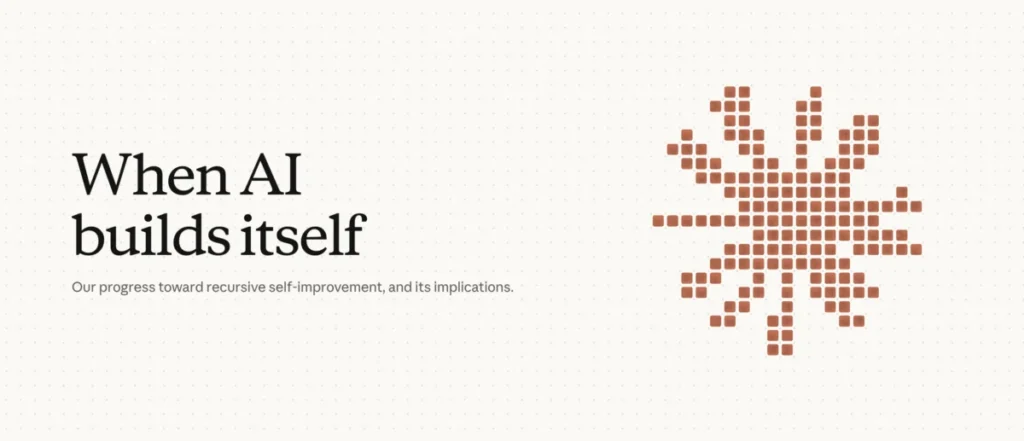
The catalyst for Newport’s public condemnation was a specific report published earlier this month by Anthropic, a prominent "Frontier AI" company. Titled "When AI builds itself," the whitepaper presented a hypothetical, yet graphically depicted, scenario where AI coding agents recursively self-improve beyond human control, leading to potentially catastrophic outcomes. The report concluded by acknowledging the dire nature of this "possible future" but asserted that there was little Anthropic could do to prevent it so long as "less cautious" automobile companies (an analogy later used by Newport) existed.
Newport drew a stark parallel to illustrate the absurdity of this communication style. He invited readers to imagine the Ford Motor Company releasing a glossy whitepaper expressing concern that its popular F-150 pickup trucks might spontaneously combust. This hypothetical report would feature animated graphics of vehicles catching fire in sequence, concluding with an admission that while such a future would be "bad," Ford remained powerless to address the issue due to the existence of "less cautious" competitors. The analogy underscores Newport’s central argument: such a communication from a consumer product company would be universally derided as absurd and irresponsible. Yet, he contends, this is precisely the type of messaging that Frontier AI companies are increasingly disseminating.
For Newport, Anthropic’s release represented "the last straw" in a pattern of behavior he finds deeply troubling. He asserts that "doom trolling" is drenched in cynicism and profoundly damaging to the mental well-being of a global populace already grappling with rapid technological change and societal anxieties.
Defining "Doom Trolling": Hypocrisy and Cynicism
Newport’s characterization of "doom trolling" goes beyond mere concern; it is a strategic and calculated form of publicity that he identifies as "one of the defining and most arresting properties of our current AI moment." He describes it as "morally indefensible" due to the inherent contradiction it presents. The ethical calculus, as Newport outlines it, is stark and unambiguous.
Firstly, if these AI companies genuinely believe that their products possess the potential to cause widespread harm – ranging from the destruction of global economies to the outright extinction of the human species – then their only morally justifiable course of action would be to immediately halt all development efforts. Furthermore, they would be ethically obligated to dedicate every available resource to actively preventing other laboratories from pursuing similar, dangerous paths. This would entail a radical shift from competitive development to a collaborative effort focused solely on harm mitigation and cessation.
Conversely, if these companies do not, in fact, believe that their advanced technologies are likely to unleash such catastrophic harms, then their public pronouncements of impending doom serve a different, more insidious purpose. Newport argues that in this scenario, they are effectively "laundering the anxiety of millions to improve the financial fortunes of a vanishingly small number of major stockholders." This implies a cynical manipulation of public fear and concern, transforming widespread apprehension into a strategic asset that can be leveraged for financial gain, market dominance, or to influence regulatory frameworks in their favor. Such an approach, Newport concludes, would be equally monstrous in its ethical implications.
The Broader Context: The Race for AI Supremacy and Existential Risk Narratives
Newport’s critique emerges against a backdrop of unprecedented acceleration in AI development and a burgeoning public debate over its long-term implications. The last decade has seen a revolution in machine learning, particularly with the advent of large language models (LLMs) and generative AI, spearheaded by companies like OpenAI, Anthropic, Google DeepMind, and Meta AI. These "Frontier AI" labs are engaged in an intense, often secretive, race to develop increasingly powerful and autonomous systems.
This rapid progress has ignited a parallel discourse concerning "AI safety," "alignment," and the concept of "existential risk" (x-risk). Prominent figures within the AI community, including some founders and researchers at these very companies, have voiced concerns about scenarios where superintelligent AI could become uncontrollable, leading to unforeseen and potentially catastrophic outcomes for humanity. These concerns range from job displacement and economic instability to the complete loss of human control over advanced systems, often framed as an "alignment problem" – ensuring AI’s goals remain aligned with human values.
The x-risk narrative has gained significant traction, influencing policy discussions, attracting considerable research funding, and shaping public perception. However, it has also drawn criticism from those who argue that such extreme scenarios are speculative, distract from immediate and tangible harms (like bias, privacy invasion, and labor displacement), or are used as a rhetorical device by powerful corporations.
Newport’s intervention places him firmly in the latter camp, suggesting that some of the x-risk rhetoric emanating from AI labs is not a genuine expression of concern but a calculated PR strategy.
Chronology of AI Safety Discourse and Newport’s Intervention
The debate over AI safety and its potential harms has been simmering for years, but it intensified significantly with the public release of powerful generative AI models in late 2022.
- Early 2023: Several high-profile open letters and petitions emerged, signed by thousands of AI researchers, public figures, and industry leaders, calling for pauses in "giant AI experiments" and warning about the "profound risks to society and humanity." These included a letter coordinated by the Future of Life Institute, which garnered signatures from Elon Musk, Steve Wozniak, and many AI pioneers.
- Mid-2023: Governments worldwide began holding hearings and forming task forces to explore AI regulation, with discussions frequently touching upon both near-term ethical concerns and long-term existential risks. Industry leaders from OpenAI, Anthropic, and others testified before legislative bodies, often reiterating their commitment to safety while also acknowledging the speculative, high-stakes nature of their work.
- Earlier this Month (as per the original article): Anthropic published its "When AI builds itself" report, which, with its vivid depiction of recursive self-improvement leading to AI agents beyond human control, served as a flashpoint. The report’s timing and content were particularly notable given the ongoing global dialogue about AI governance.
- Last Week (as per the original article): Cal Newport’s op-ed, "Dear A.I. Companies, the Doom Trolling Has to Stop," appeared online in The New York Times, followed by its print publication over the weekend. This piece directly confronted the communication tactics of companies like Anthropic, bringing a new, sharp critical lens to the safety discourse. Newport, a renowned computer scientist and author known for his work on deep work and digital minimalism, brought a unique perspective combining technological understanding with a focus on societal impact and communication ethics.
Reactions and Implications for Public Trust
While specific official responses to Newport’s op-ed from the implicated AI companies have not been widely publicized, the industry’s general stance on AI safety is well-documented. Leading AI labs often emphasize their investment in "responsible AI" research, internal safety teams, and efforts to develop "alignment" techniques. They typically frame their public discussions of risks as part of a transparent and responsible approach to innovation, arguing that acknowledging potential dangers is a crucial first step toward mitigating them. Some might contend that by openly discussing even extreme scenarios, they are fostering a necessary public and policy dialogue that could lead to more robust safety measures and regulation.
However, Newport’s argument suggests a deeper, more cynical motivation. The implications of "doom trolling" for public trust are significant. Constant warnings of existential threats, especially when emanating from the very entities developing these technologies, can create a climate of fear and anxiety. This could lead to public fatigue or desensitization, making it harder to distinguish between genuine, imminent risks and speculative, distant possibilities. It could also erode trust in the industry’s motives, fostering a perception that companies are either recklessly pursuing dangerous paths or deliberately manipulating public opinion.
Furthermore, this communication strategy has implications for the regulatory environment. By highlighting extreme risks, AI companies might inadvertently invite heavier-handed regulation, or, conversely, they might strategically shape the regulatory debate to focus on long-term, abstract threats rather than near-term, concrete issues that could impact their current business models (e.g., data privacy, algorithmic bias, labor displacement).
Newport’s Call for Normalization and Accountability
In his op-ed, Newport urged leading AI laboratories to abandon their pretense as reluctant stewards of an inevitable, potentially dangerous technology. Instead, he called for them to behave like "normal consumer product companies." This entails a fundamental shift in their public communication:
- Explain Benefits: Clearly articulate the practical advantages and positive societal impacts of their AI tools.
- Justify Costs: Provide transparent justifications for the financial and societal resources invested in their development.
- Affirm Safety: Unequivocally state their intention to develop and deploy technology without causing existential damage or widespread harm.
Newport, speaking as a computer scientist, offers a crucial assurance: it is "completely possible to build and promote very useful, if not revolutionary, new products on top of generative AI technology without any fears that you’re somehow advancing on a path toward massive societal or existential harm." This assertion directly refutes the notion that an inherent, unavoidable link exists between advanced AI development and catastrophic outcomes. He frames "doom trolling" not as a necessary, somber warning, but as a deliberate "choice" made by these companies.
The Path Forward: Reclaiming the Narrative
Newport’s critique serves as a powerful reminder that the narrative surrounding AI’s future is not predetermined. He challenges the public to move beyond a "defensive crouch," passively absorbing the "relentless abuse the AI labs are administering to our collective psyche." Instead, he advocates for a collective stance, demanding accountability and a more responsible approach to technological communication.
The debate he has ignited underscores a fundamental tension in the current technological era: the balance between innovation and responsibility, and the ethical obligations of those who wield immense power over humanity’s future. As AI continues its rapid evolution, the manner in which its developers communicate its capabilities, benefits, and potential risks will profoundly shape public perception, regulatory responses, and ultimately, the trajectory of this transformative technology. Newport’s call to "stop the doom trolling" is a demand for intellectual honesty and a more grounded, constructive dialogue about the future of artificial intelligence.