
The digital landscape of springtime entertainment has undergone a significant shift, moving away from traditional scripted streaming services toward the unscripted, high-stakes world of avian biology. As millions of viewers tune in to live bird cameras globally, platforms like the Cornell Lab Bird Cams have transformed from niche educational tools into a massive cultural phenomenon. These live streams offer an unfiltered look at the life cycles of birds across the planet, from the lush rainforests of Panama to the windswept cliffs of New Zealand and the suburban backyards of the American Midwest. By providing 24-hour access to nests and feeding stations, these cameras are not only entertaining the public but are also generating vast amounts of data for ornithologists and fostering a new era of global conservation awareness.
The Cornell Lab of Ornithology, based at Cornell University, has been at the forefront of this movement. Their mission—to interpret and conserve the earth’s biological diversity through research, education, and citizen science—finds a unique expression in their bird cam project. According to the organization, viewers frequently describe the experience as "life-changing," viewing the streams as virtual field trips that bring the complexities of field biology into the living room. This engagement is more than just passive observation; it represents a significant bridge between the scientific community and the general public.
The Barred Owl Nest: A Study in Predator-Prey Dynamics
One of the most popular fixtures of the current season is the Wild Birds Unlimited Barred Owl nest located in a backyard in Indiana. This year, the focus has been on two owlets named Artemis and Apollo. On the morning of April 30, 2026, viewers witnessed a striking example of the food chain in action when the mother barred owl delivered a flying squirrel for breakfast. This event provided more than just a dramatic visual; it offered a rare look at the anatomy of the prey. The squirrel’s patagium—the specialized membrane connecting the front and hind legs that allows for gliding—was clearly visible on camera.

The Barred Owl (Strix varia) is a large species known for its soulful brown eyes and barred plumage. While they are opportunistic hunters, their diet typically consists of small mammals, birds, amphibians, and reptiles. The appearance of a flying squirrel highlights the nocturnal overlap between these two species. Furthermore, the camera has captured the owlets engaging in "head bobbing," a behavior technically known as motion parallax. Because an owl’s eyes are fixed in their sockets, they cannot move them independently to scan their environment. By bobbing and weaving their heads, they create different perspectives of the same object, allowing their brains to calculate distance and depth more accurately. For owlets like Artemis and Apollo, this behavior is a critical developmental milestone, helping them coordinate their vision with their acute sense of hearing before they leave the nest.
Conservation on the Edge: The Northern Royal Albatross
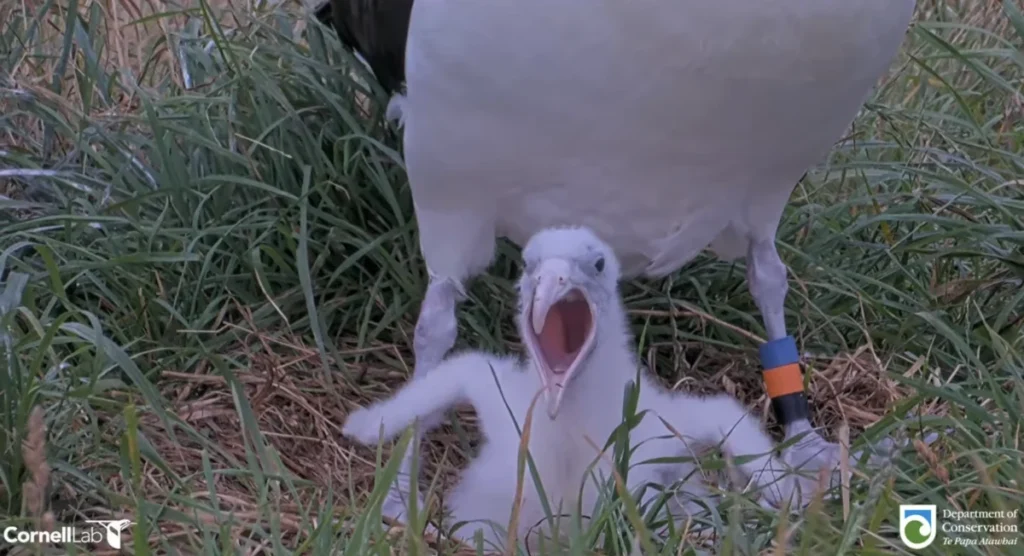
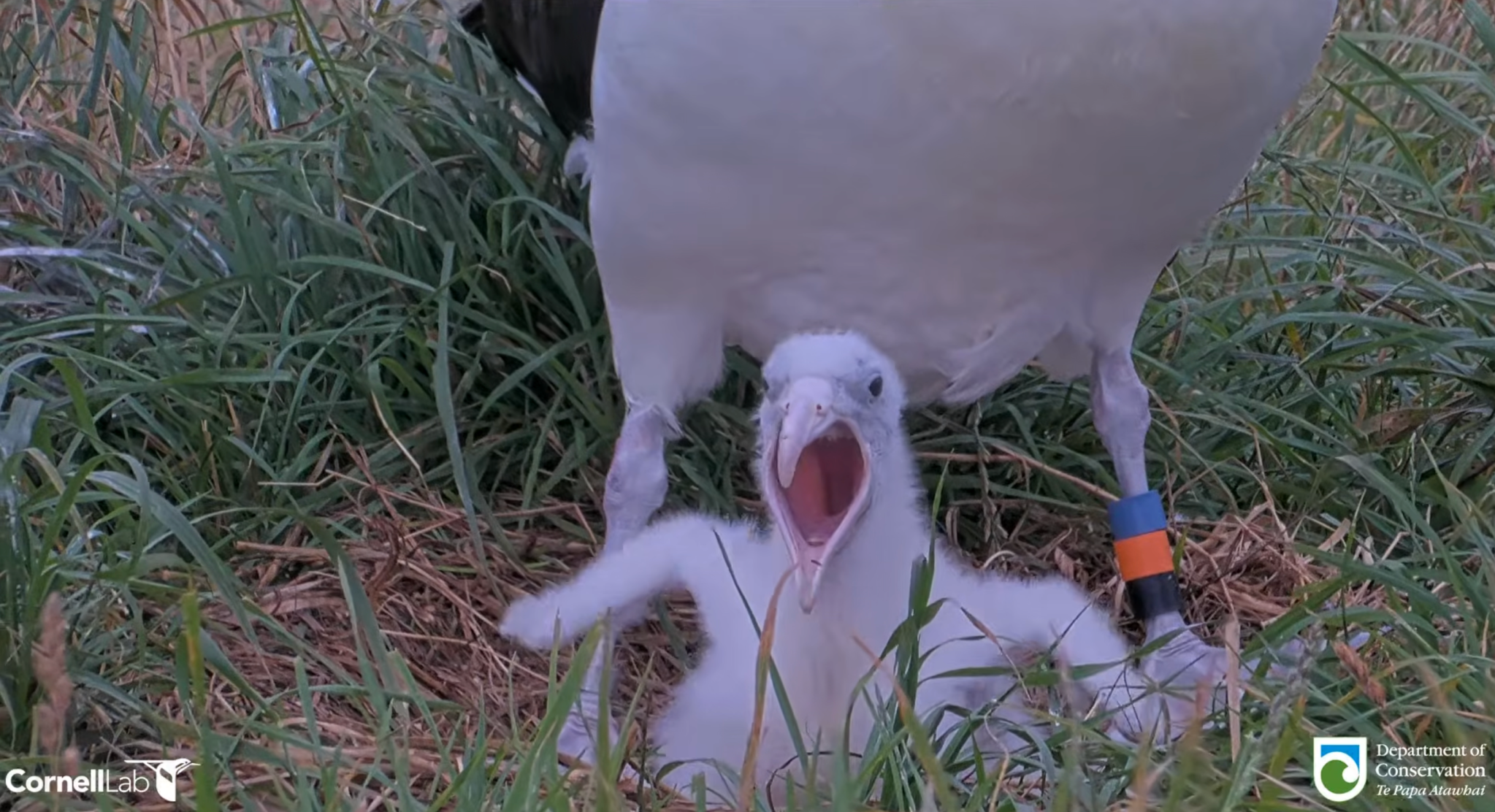
Halfway across the globe, at Pukekura/Taiaroa Head on the southeast tip of New Zealand’s South Island, another high-definition camera monitors a Northern Royal Albatross nest. On February 11, 2026, a 20-day-old chick captivated audiences by yawning and stretching its "wing nubs." This site is the only mainland breeding colony of albatross in the Southern Hemisphere, making the "Royal Cam"—a collaboration between the New Zealand Department of Conservation and the Cornell Lab—a vital tool for public education.

The Northern Royal Albatross (Diomedea sanfordi) is classified as an endangered species. These birds are remarkable for their longevity and their commitment to a single breeding site. They spend the majority of their lives at sea, returning to land only to breed every two years. The chicks require an extensive period of care, remaining at the nest for nearly eight months before they are ready to fledge. The live stream allows researchers and the public to monitor the chick’s growth and the parents’ devotion, providing a window into the challenges these birds face, including climate change and plastic pollution in the oceans. The success of this colony is a testament to intensive management and conservation efforts, and the camera helps build the public support necessary to sustain such programs.
Tropical Biodiversity and the Panama Fruit Feeder
In the tropical rainforests of Panama, specifically within Soberanía National Park on Semaphore Hill, the Panama Fruit Feeder Cam offers a different perspective on avian life. Unlike the nesting cams, this station attracts a rotating cast of colorful species, highlighting the sheer biodiversity of the tropics. Recently, a Keel-billed Toucan (Ramphastos sulfuratus) was filmed enjoying a banana snack. Toucans are essential to their ecosystem as seed dispersers; they consume fruit whole and later regurgitate or excrete the seeds, often far from the parent tree. Their unique feeding method—tossing pieces of fruit into the air and catching them at the back of their throats—is a favorite among viewers.

The Panama feed also frequently features the Rufous-tailed Hummingbird. Known for its iridescent green plumage and bright pink bill, this species is a common sight in Central America. Hummingbirds have some of the highest metabolic rates of any animal, necessitating frequent visits to nectar sources. The camera provides a close-up view of their rapid wingbeats and territorial behavior, which can be surprisingly aggressive for such small creatures.
The unpredictable nature of the rainforest was further demonstrated when an unexpected guest—a gecko—appeared on the hummingbird feeder. The camera captured a tense standoff between the reptile and a moth. While the gecko attempted to snag the insect, the moth managed to escape, illustrating that even on a "bird cam," the broader ecological interactions of the habitat are always at play.

Scientific and Educational Implications
The rise of bird cams represents a significant advancement in how humans interact with the natural world. From a scientific perspective, these cameras provide a "constant observer" that does not disturb the birds’ natural behavior. Traditional field observations are often limited by the presence of human researchers, which can cause stress to the animals or alter their activities. In contrast, remote cameras can capture rare behaviors—such as specific prey choices, sibling rivalry, or nocturnal activities—that might otherwise go unrecorded.
Educationally, the impact is equally profound. Schools around the world use these streams to teach students about life cycles, adaptation, and ecosystems. The "chat" features often accompanying these streams allow viewers to interact with experts from the Cornell Lab, creating a global classroom. This level of engagement fosters "biophilia"—a term coined by biologist E.O. Wilson to describe the innate human tendency to seek connections with nature and other forms of life. Studies have shown that watching nature, even through a screen, can reduce stress and improve mental well-being, a factor that likely contributed to the surge in bird cam popularity during the global pandemic.

Technological Evolution and Future Outlook
The technology behind these streams has evolved rapidly. What began as grainy, low-resolution images has transformed into 4K high-definition video with sophisticated audio equipment capable of picking up subtle vocalizations. Many cameras now feature infrared technology, allowing for 24-hour monitoring without disrupting the birds’ circadian rhythms. In remote locations like Panama or the cliffs of New Zealand, maintaining these streams requires complex solar power setups and high-bandwidth satellite or cellular connections.
Looking forward, the integration of Artificial Intelligence (AI) and machine learning promises to further revolutionize this field. AI can be trained to automatically identify species, count feeding visits, or flag unusual behaviors for researchers to review. This would allow for the processing of thousands of hours of footage into actionable data, providing insights into how climate change is affecting nesting timelines and food availability.

The Cornell Lab’s commitment to "sharing and learning with the community" ensures that these digital windows will remain open for years to come. As urban sprawl continues and natural habitats face increasing pressure, the ability to connect with the wild through a digital interface becomes more than just a pastime—it becomes a vital link in the chain of global conservation. By turning the world of birds into a shared experience, these cameras are building a global constituency for the protection of the natural world, one yawn, wing stretch, and banana snack at a time.