



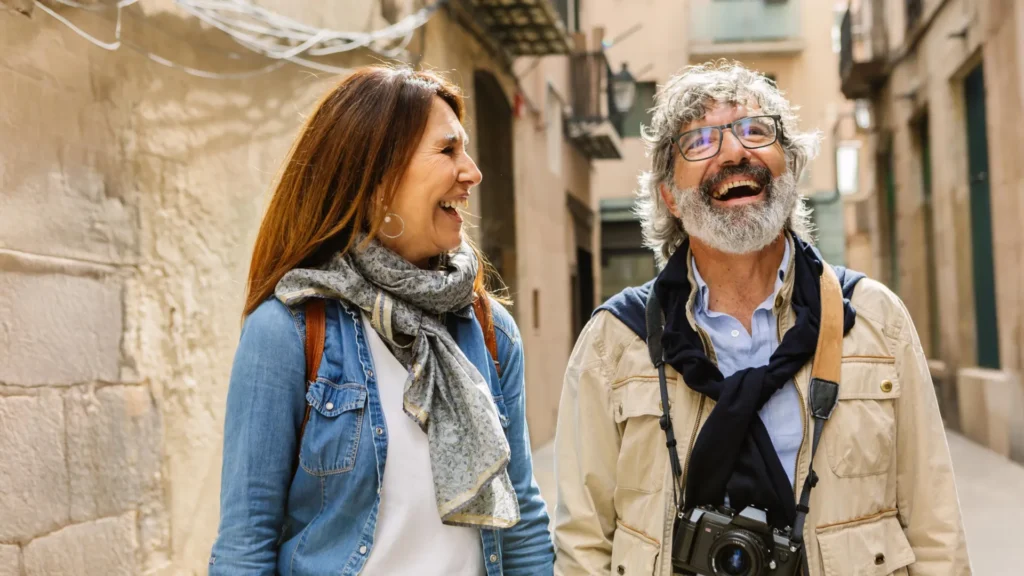
Retinol creams may get most of the attention in the fight against visible aging, but researchers at Edith Cowan University (ECU) have pointed to a much bigger and more adventurous possibility: travel. This intriguing proposition, rooted in the complex science of entropy, suggests that carefully curated travel experiences could offer more than just a break from routine; they might actively support the body’s intricate systems in maintaining health and resilience, thereby potentially slowing the cellular and systemic drift toward disorder that characterizes aging.
The initial findings, published in the esteemed Journal of Travel Research in 2024, emerged from an innovative interdisciplinary study conducted by ECU researchers. This seminal work applied the often-abstract theory of entropy to the concrete realm of tourism, postulating that positive travel experiences could significantly contribute to both physical and mental well-being in ways that might mitigate some signs of aging. It is crucial to note that the research does not claim travel can halt the irreversible process of aging. Instead, it reframes tourism as a powerful, yet underexplored, tool to help the human body maintain its delicate balance, bolster its inherent resilience, and enhance its capacity for repair. This perspective shifts the narrative from mere leisure to a potentially meaningful health intervention, aligning with a growing global interest in holistic wellness and preventive health strategies.
Understanding Entropy in the Context of Biological Aging
To fully grasp the ECU researchers’ hypothesis, an understanding of entropy is essential. In thermodynamics, entropy is fundamentally described as the universe’s inherent movement toward disorder and randomness. Everything, left to its own devices, tends to degrade, decay, and lose structure. Applied to the intricate biological systems of the human body, this principle suggests that aging is, in essence, an accumulation of disorder. Over time, cellular processes become less efficient, tissues lose their integrity, and the body’s overall organization begins to falter. This entropic drift manifests in various "hallmarks of aging," including genomic instability, telomere attrition, epigenetic alterations, loss of proteostasis, mitochondrial dysfunction, cellular senescence, stem cell exhaustion, altered intercellular communication, and chronic inflammation. Each of these hallmarks represents a form of increasing disorder at a molecular or cellular level.
The ECU study posits that experiences can either support or disrupt the body’s continuous, energy-intensive effort to stay organized and function optimally. Positive travel experiences, according to this theory, may help reduce the inevitable drift toward disorder, actively assisting the body in maintaining a state of lower entropy. Conversely, stressful, unsafe, or poorly planned travel could potentially accelerate this drift, pushing the body further into a state of disorganization and accelerating aspects of aging. "Aging, as a process, is irreversible. While it can’t be stopped, it can be slowed down," stated Ms. Fangli Hu, an ECU PhD candidate and lead researcher on the study. Her remarks underscore the nuanced understanding of aging that underpins this research, emphasizing management and mitigation rather than outright reversal.
The Multifaceted Influence of Travel on Well-being
Ms. Hu and her team propose that travel improves well-being through several interconnected mechanisms. By placing individuals in novel environments, travel encourages physical movement, fosters increased social interaction, and consistently generates positive emotions. These very concepts are already foundational to established areas such as wellness tourism, health tourism, and even specialized practices like yoga tourism, demonstrating a clear synergy between existing health-focused travel trends and this new scientific framework. "Tourism isn’t just about leisure and recreation. It could also contribute to people’s physical and mental health," Ms. Hu added, signaling a paradigm shift in how we perceive the role of vacations in overall health management.
Viewed through this entropy lens, travel therapy emerges as a compelling and potentially significant health intervention. The core idea is that positive travel experiences, by becoming an integral part of a person’s environmental input, may actively help the body sustain a healthier, low-entropy state. This influence is theorized to operate across four major physiological systems, creating a holistic impact on the body’s ability to resist the entropic forces of aging.
Stimulating Self-Organization and Bolstering Immune Defense
Travel frequently combines the stimulation of unfamiliar surroundings with opportunities for relaxation and rejuvenation. Exposure to new settings can trigger a cascade of beneficial physiological responses. It can subtly stimulate the body, elevating metabolic activity and activating the self-organizing processes critical for keeping biological systems working smoothly. This constant, yet gentle, challenge helps maintain the body’s adaptive capabilities.
Crucially, these novel experiences may also engage and prompt the adaptive immune system. This sophisticated defense mechanism is responsible for recognizing and effectively responding to external threats, learning from each encounter to build robust immunity. Ms. Hu elaborated on this connection, explaining that this reaction enhances the body’s capacity to perceive and defend itself against a spectrum of external threats, from pathogens to environmental stressors. "Put simply, the self-defense system becomes more resilient. Hormones conducive to tissue repair and regeneration may be released and promote the self-healing system’s functioning," she noted, highlighting a direct link between travel and the body’s intrinsic repair mechanisms. These hormones, such as human growth hormone or certain cytokines, play vital roles in cellular repair, regeneration, and maintaining tissue integrity – all critical aspects of slowing the aging process.
Stress Reduction, Physical Activity, and Systemic Resilience
Beyond immune modulation, relaxing travel activities are potent tools for mitigating chronic stress. The persistent elevation of stress hormones like cortisol is known to contribute to systemic inflammation, suppress immune function, and accelerate cellular aging. By offering opportunities for recreation and detachment from daily stressors, travel can significantly reduce this physiological burden, calming an overactive immune response and promoting a state of metabolic balance. The easing of tension and fatigue in muscles and joints, often a direct result of relaxed movement and reduced mental load, further supports the body’s metabolic equilibrium and strengthens its innate ability to resist wear and tear.
This aspect is particularly vital because travel is rarely a sedentary endeavor. Trips inherently encourage physical activity, often involving walking through vibrant cities, hiking scenic trails, engaging in climbing or cycling adventures, or simply spending more time on one’s feet than typical daily routines allow. This increased physical activity is a cornerstone of healthy aging. It significantly boosts metabolism, enhances energy utilization, and improves nutrient movement throughout the body. All these physiological advantages collectively support the intricate systems responsible for continuous repair and maintaining overall resilience.
"Participating in these activities could enhance the body’s immune function and self-defense capabilities, bolstering its hardiness to external risks," Ms. Hu explained. "Physical exercise may also improve blood circulation, expedite nutrient transport, and aid waste elimination to collectively maintain an active self-healing system. Moderate exercise is beneficial to the bones, muscles, and joints in addition to supporting the body’s anti-wear-and-tear system." These benefits are well-documented in general health literature, with studies consistently showing that regular physical activity reduces the risk of cardiovascular disease, type 2 diabetes, certain cancers, and improves cognitive function – all factors that contribute to a longer, healthier lifespan. The novelty of exercising in new environments can also increase engagement and adherence, making it a more enjoyable and sustainable practice.
A Nascent Field: Chronology of Emerging Research
The 2024 ECU study serves as a foundational pillar for an exciting and rapidly evolving area of research. Since its publication, related work has continued to explore travel therapy as a viable health and wellness approach, demonstrating a burgeoning academic interest.
A subsequent 2025 research note, also by Hu and her colleagues, delved deeper into the conceptualization of "travel therapy." This note further described it as an emerging approach where positive travel experiences actively promote well-being. Crucially, it also emphasized the vital need to meticulously weigh the potential benefits against inherent risks, acknowledging that not all travel is inherently positive or beneficial. This highlights a responsible scientific approach, ensuring that enthusiasm for the concept is tempered with practical considerations for safety and efficacy.
Another significant development in 2025 was a paper that explicitly called for closer collaboration between the fields of travel medicine and tourism. This reflects a growing, urgent interest in understanding the complex interplay between vacations, health risks, preventive care, and overall traveler well-being. As global travel continues to expand, the intersection of these disciplines becomes increasingly critical for developing comprehensive guidelines and support systems for travelers.
Further solidifying the legitimacy of this new field, a 2025 systematic review found that "tourism and healthy aging" is indeed becoming an important interdisciplinary research area. However, the review also underscored that it remains largely underexplored, suffering from a lack of strong methodological approaches and a need for clearer, more focused future research directions. This critical assessment points to both the promise and the challenges facing this new line of inquiry.
Collectively, these newer findings strongly support a careful, balanced interpretation: travel demonstrably offers real health-related benefits, particularly when it encompasses elements of physical movement, social connection, cognitive novelty, and genuine restoration. However, researchers are still actively working to quantify the strength of these effects, identify the specific populations who benefit most, and establish rigorous evidence-based recommendations.
The Inherent Risks and the Imperative for Responsible Travel
While the potential benefits of travel for healthy aging are compelling, the research concurrently issues a stern caution: travel is not automatically a panacea for health. The very act of traveling can expose tourists to a range of potential hazards. These include infectious diseases, which can spread rapidly across borders, accidents and injuries in unfamiliar environments, risks of violence, and exposure to unsafe food or water. These negative experiences are often linked to poor planning, unsuitable travel choices, or simply unforeseen circumstances.
"Conversely, tourism can involve negative experiences that potentially lead to health problems, paralleling the process of promoting entropy increase," the research highlights. "A prominent example is the public health crisis of COVID-19." The global pandemic served as a stark, undeniable reminder of how interconnected our world is, and how unchecked travel, especially in the face of a novel pathogen, can rapidly escalate disorder (entropy) on a societal scale, leading to widespread illness, economic disruption, and loss of life. This real-world example profoundly underscores the need for discerning travel choices and robust public health measures.
The central message distilled from this body of research is not a blanket endorsement that any trip will invariably slow aging. Rather, it emphasizes that positive travel experiences hold the potential to help the body and mind function more effectively. This positive impact is achieved through a synergistic combination of novelty that stimulates cognitive functions, relaxation that reduces stress, physical activity that enhances physiological systems, and social connection that nurtures mental and emotional well-being. When travel is undertaken safely, when it is restorative in nature, and when it actively encourages physical engagement, it may transcend its traditional role of creating mere memories. Instead, it could become a powerful, proactive tool, helping to support healthier aging from the inside out, fostering resilience, and actively contributing to the body’s ongoing fight against the entropic forces that drive the aging process. As the world continues to explore new frontiers in health and longevity, the idea of packing a suitcase for a healthier, more vibrant future becomes an increasingly appealing and scientifically supported proposition.