




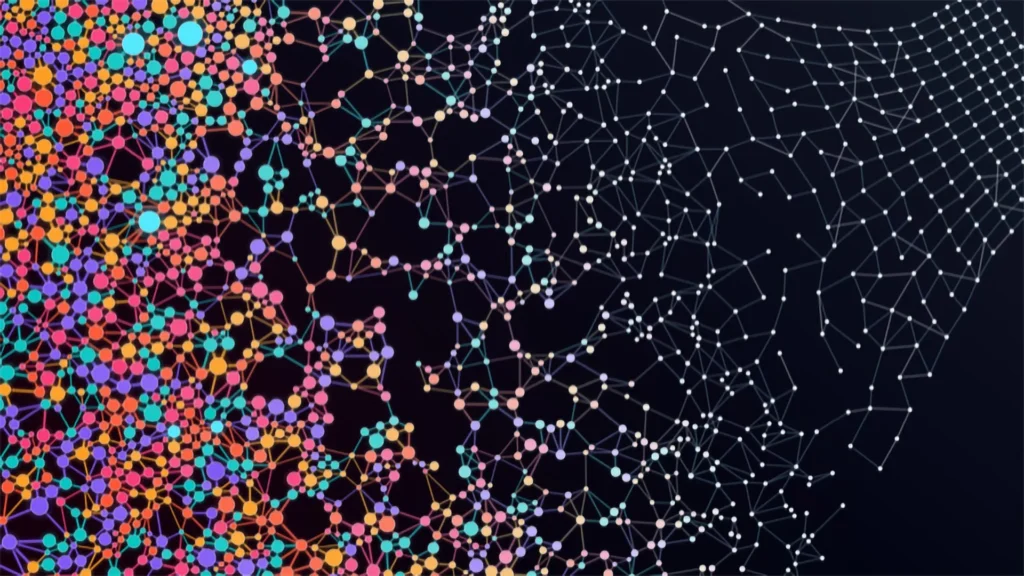
For decades, the engineering mantra of "perfection through uniformity" has governed the construction of everything from electrical power grids to advanced materials. The underlying logic was intuitive: if every component in a system is identical and performs exactly as expected, the system should operate with maximum efficiency and predictability. However, a groundbreaking study published September 17 in the journal Science suggests that this pursuit of uniformity may be fundamentally misguided. Physicists at Northwestern University have demonstrated that, in many complex systems, intentional disorder—or heterogeneity—is not a defect to be eliminated, but rather a vital ingredient for stability.
The research, led by Adilson Motter, the Charles E. and Emma H. Morrison Professor of Physics and Astronomy at Northwestern’s Weinberg College of Arts and Sciences, establishes a new mathematical framework to identify exactly when and why variation enhances the resilience of interconnected networks. By moving away from the simplified, uniform models that have dominated physics for nearly half a century, the team has uncovered a counterintuitive truth: diversity among individual components often prevents the cascading failures that plague perfectly symmetrical designs.
A Departure from Traditional Modeling
To understand the magnitude of this shift, one must look at the history of network theory. Since the mid-20th century, scientists have relied heavily on simplified mathematical frameworks, most notably the Kuramoto model, to describe how oscillators—such as generators in a power grid or neurons in the brain—synchronize. These models generally represent each node in a network with a single, simplified variable. While these tools have provided essential insights into collective behavior, they essentially strip away the "richness" of real-world components.
In reality, no two generators are perfectly identical, and no two neurons possess the same morphology. "Real systems are rarely uniform," notes Arthur Montanari, a postdoctoral researcher at Northwestern and co-first author of the study. "Birds differ in personalities, neurons vary in shape, and even our social relationships can be asymmetric. These differences might appear random, but they can profoundly affect how the whole system behaves."
By forcing these complex, varied components into a rigid, uniform model, researchers have historically overlooked the stabilizing effects of asymmetry. The Northwestern team’s study, which includes contributions from graduate student Pietro Zanin, bridges this gap by accounting for the multifaceted nature of individual components within a network. Their findings indicate that when node dynamics are sufficiently complex, heterogeneity acts as a buffer against disturbances, preventing small ripples of instability from evolving into systemic collapse.
Chronology of a Paradigm Shift
The journey toward this discovery has been marked by a gradual accumulation of evidence that disorder—once considered a nuisance—might be a secret weapon.
The timeline of this shift in perspective can be traced back several years:
- 2020: Motter’s team published a landmark study in Nature Physics demonstrating that electrical generators within a grid achieve more robust synchronization when they operate with slight, intentional variations in their parameters, rather than attempting to perform in perfect lockstep.
- 2025: A follow-up study led by Montanari and published in Nature Communications explored this phenomenon in biological and mechanical systems, specifically looking at the flocking behavior of birds and the coordination of drone swarms. These findings provided further evidence that asymmetry is a feature, not a bug, of successful collective motion.
- 2024–2025: The current study in Science serves as the culmination of these findings, transitioning from isolated case studies to a unified mathematical framework that explains the universal properties of disorder-promoted stability.
This progression reflects a broader trend in physics: the move from investigating "simple" systems toward embracing the inherent messiness of the natural world.
The Mechanics of Stability: How Variation Works
The Northwestern framework identifies two primary channels through which disorder bolsters a system: variation among the nodes themselves and variation in the links connecting those nodes.
According to the study, the stability provided by disorder follows a "Goldilocks" principle. If a system is too homogeneous, it lacks the flexibility to absorb shocks. If it is too disordered, the system loses its internal cohesion and drifts toward instability. The key, according to Motter, is pinpointing the "optimal level of disorder" that allows for both coordination and resilience.
One of the most striking revelations of the research is that this beneficial variation does not always require high-level, meticulous engineering. In several models tested by the team, simply allowing for random, natural variation resulted in a more stable system than the best-designed uniform configuration. This suggests that nature may have arrived at this "imperfect" solution through evolutionary pressures, favoring systems that can tolerate the inevitable fluctuations of the environment.
Implications for Ecology and Engineering
The implications of this research are vast, offering a potential solution to long-standing paradoxes in several disparate fields. One of the most famous problems in theoretical ecology, known as the "May stability paradox," has puzzled scientists since the 1970s. Mathematical models of the time predicted that large, highly diverse ecosystems should be inherently unstable and prone to total collapse. Yet, reality contradicts this; the world is full of massive, complex ecosystems that have remained persistent for eons.
"Our findings suggest that variation among mutually beneficial interactions, such as those between pollinators and flowers, could help explain this paradox," Montanari explains. By accounting for the heterogeneity in how species interact, the new framework reconciles the math with the observable resilience of the natural world.
Beyond biology, the engineering sector stands to gain the most immediate practical benefits. In the design of "architected materials"—materials engineered with internal microstructures to achieve specific mechanical properties—the traditional approach is to use repeating, uniform units. The Northwestern study suggests that engineers could drastically improve the performance and durability of these materials by intentionally introducing subtle variations in the size, shape, and physical properties of these constituent units.
Official Reactions and Scientific Context
While the study is still being integrated into the broader physics community, initial reactions from peers have highlighted the rigor of the mathematical framework. Independent experts in network dynamics suggest that this work provides a necessary foundation for the next generation of smart infrastructure.
"The transition from uniform design to ‘designed heterogeneity’ is the next frontier for power grid management," notes a policy advisor involved in smart-grid infrastructure, who requested anonymity as they are not an author on the paper. "As we integrate more intermittent renewable energy sources into our grids, the system is becoming inherently more heterogeneous. This research provides the analytical tools to view that transition not as a threat to stability, but as an opportunity to build a more resilient, self-correcting grid."
The project, which received support from the Army Research Office and the National Science Foundation, underscores a significant shift in federal funding priorities toward the study of complex, non-linear systems. By providing a website that allows users to visualize these interactions, the Northwestern team is also ensuring that these abstract concepts are accessible to engineers and designers across disciplines.
Future Horizons: The Design Challenge
Despite the clarity of the new framework, the researchers acknowledge that the transition from theory to practice remains a significant challenge. As Motter points out, "When disorder enhances stability, the next challenge is figuring out how best to design it."
Designing for disorder is fundamentally different from designing for uniformity. It requires moving away from "top-down" command-and-control architectures toward "bottom-up" systems that can self-organize. In the coming years, we can expect to see computational design tools that treat heterogeneity as a design parameter, allowing engineers to "tune" the amount of disorder in a system to achieve specific thresholds of resilience.
Whether in the design of next-generation power grids, the optimization of neural network computing, or the development of synthetic biological systems, the message from Northwestern is clear: the quest for perfection is a dead end. To survive in a volatile world, we must learn to embrace the strength found in difference. By leveraging the stabilizing power of disorder, we may finally be able to build systems that are not just strong, but truly resilient.







