


Organizations across the global corporate landscape are currently facing a critical inflection point in human capital management. While succession planning has long been a staple of corporate governance, recent data indicates a significant disconnect between the identification of high-potential talent and the actual preparedness of those individuals to assume executive responsibilities. According to the DDI Global Leadership Forecast 2025, 80 percent of organizations report a persistent lack of confidence in their internal leadership pipelines. This widespread skepticism suggests that despite multi-billion-dollar investments in leadership development programs, the traditional methodology of succession planning is failing to meet the complex demands of the current business environment.
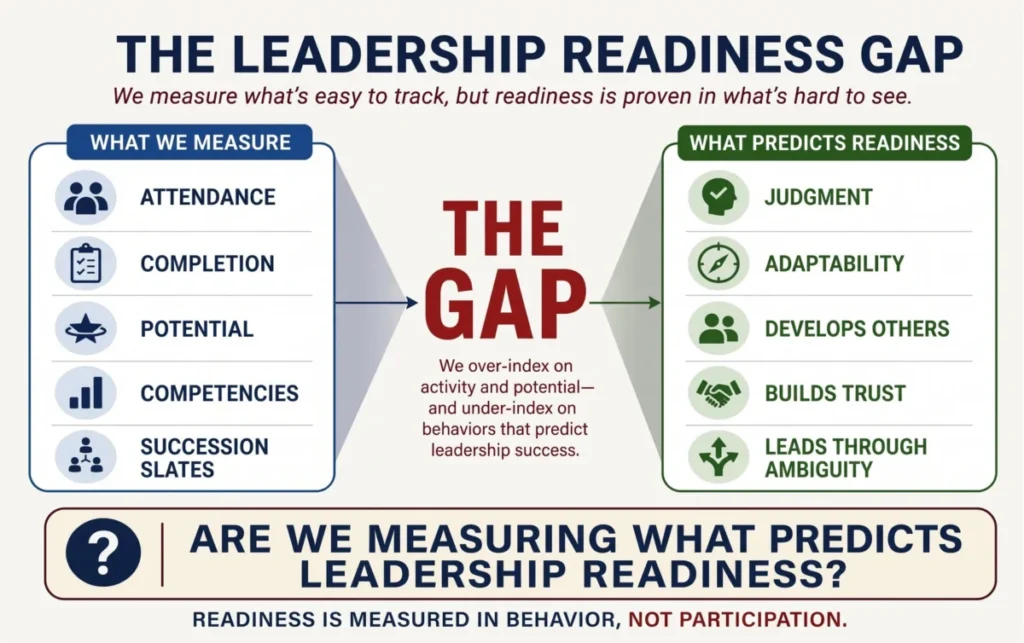
The fundamental issue, according to talent development experts, is a conflation of potential with readiness. While succession planning identifies candidates who possess the ambition and aptitude for future growth, it often fails to bridge the gap between abstract promise and the pragmatic, day-to-day execution required by senior roles. This phenomenon has prompted a shift in focus among HR leaders, moving from static talent mapping toward the creation of dynamic, evidence-based leadership systems.
The Evolution of Succession Planning
The history of corporate succession planning has evolved from a reactive, C-suite-driven activity to a more structured, data-informed process. In the mid-20th century, succession was often an informal, opaque affair conducted by boards of directors. By the 1990s and early 2000s, the emergence of Talent Management software and formal High-Potential (HiPo) programs brought rigor to the process. Companies began tracking competencies, behavioral assessments, and 360-degree feedback to categorize employees.
However, this systemic rigor often prioritized the "who" over the "how." The current crisis in leadership readiness can be traced to the post-pandemic era, where rapid digitalization, geopolitical volatility, and hybrid work models have rendered legacy leadership profiles obsolete. A leader who excelled in a stable, hierarchical environment may lack the agility or digital fluency required for modern, decentralized operations. The current data from DDI reinforces this, noting that while firms have become adept at identifying "who" is next, they are increasingly uncertain about "who" is ready for the specific, shifting challenges of the next fiscal cycle.
Defining the Readiness Gap
Leadership readiness is inherently contextual. It is not a static quality inherent to an individual, but a functional alignment between a leader’s current capabilities and the specific demands of a future role. Research suggests that a candidate may be fully capable of leading a stable, established department but fail catastrophically when tasked with a major business transformation or a financial turnaround.
The "readiness gap" manifests when an organization promotes a high-potential individual who has not been given the opportunity to practice the skills required for the next level. For instance, a high-performing middle manager often succeeds through individual technical expertise and direct problem-solving. When promoted to a leadership role that requires influence, delegation, and strategic abstraction, the lack of previous exposure to these specific demands creates a performance deficit. The result is often a decline in the leader’s own confidence and a degradation of team performance, which can have ripple effects on the organization’s overall output.
Three Pillars of Structural Reform
To mitigate these risks, industry analysts and HR practitioners are advocating for a fundamental restructuring of how organizations cultivate and assess future leaders. This transition involves three key shifts in operational philosophy:

1. Prioritizing Demonstrated Capability Over Theoretical Potential
The first shift requires a departure from traditional "HiPo" labels that rely on potential—a measure of what someone might become—in favor of evidence-based readiness. This involves creating "stretch assignments" where the employee is tested in the specific context of the role they are intended to occupy. By treating promotion as the final step of a proven track record rather than an act of faith in potential, organizations can better predict performance.
2. Moving from Disconnected Programs to Integrated Systems
Leadership development is frequently criticized for being episodic. Organizations invest heavily in training seminars, executive coaching, and retreats, yet these interventions often exist in silos. An integrated leadership system, by contrast, creates a closed-loop cycle:
- Identification: Succession decisions trigger the identification of specific readiness gaps.
- Targeted Development: Experiences are curated specifically to fill those gaps.
- Observation: The organization monitors performance in the new, high-stakes context.
- Feedback and Reassessment: The loop continues, ensuring development is an iterative process rather than a one-time event.
3. Shifting Metrics from Activity to Impact
For decades, Human Resources departments have measured success through activity-based metrics: the number of hours spent in training, the number of employees who completed a program, or the volume of participants in a talent pipeline. These metrics are inherently flawed because they track participation rather than behavioral change.
Forward-thinking organizations are now pivoting to outcome-based measurement. This involves asking whether the development has resulted in tangible improvements in leadership behavior. Can the leader handle difficult conversations more effectively? Does the team report higher engagement? Is the leader successfully managing ambiguity? By measuring impact rather than attendance, companies can ensure that their development investment is actually building the required bench strength.
The Strategic Imperative for Future-Proofing
The implications of failing to address the readiness gap are severe. In an era where executive turnover is increasing and the "war for talent" remains a top-three priority for CEOs, the cost of a failed promotion extends far beyond the salary of the individual. It impacts organizational morale, customer relationships, and long-term strategic execution.
Industry stakeholders are increasingly calling for a "readiness-first" culture. This does not mean abandoning succession planning; rather, it means enriching it with the necessary data points and experiential testing. Organizations that treat readiness as a continuous, daily observation—rather than a biennial spreadsheet review—are better positioned to navigate market disruptions.
Analytical Outlook
The current data reflects a broader shift in the corporate narrative. The 80 percent of organizations reporting low confidence in their pipelines are, in essence, admitting that their current assessment tools are lagging behind the speed of business. As artificial intelligence and automation change the nature of work, the specific skills required for leadership—empathy, strategic synthesis, and cross-functional influence—are becoming more difficult to quantify.
Ultimately, the transition from "potential" to "readiness" represents a move toward professional accountability. It requires organizations to acknowledge that if a promoted leader struggles, the failure often lies within the system that failed to test that leader’s readiness before the transition. By aligning development with real-world, context-specific performance, firms can transform their succession plans from static documents into living, breathing strategies for long-term growth. The challenge for the next decade will not be identifying who is next in line, but ensuring that when the door opens, the successor is not just waiting, but fully equipped for the complexities ahead.