


The intersection of extreme weather, aging electrical infrastructure, and surging household power demands has accelerated the residential demand for robust home backup energy systems. Historically, homeowners faced a difficult compromise: invest in massive, costly, whole-home energy storage ecosystems that demand extensive professional overhauls, or settle for modular portable power stations that struggle to run high-draw appliances like central air conditioning systems. EcoFlow, a prominent global leader in portable power and renewable energy solutions, aims to bridge this gap with the official market launch of its new TITAN Series. Anchored by the flagship TITAN 5000 Plus, the lineup introduces advanced high-discharge lithium iron phosphate technology, streamlined pre-wired transfer panels, and modular scalability of up to 30 kilowatt-hours (kWh) per unit, directly challenging incumbent residential energy storage providers.
Main Facts and Product Architecture
The newly launched TITAN Series consists of three distinct models—the TITAN 5000 Plus, the standard TITAN 5000, and the entry-level TITAN 5000 Classic. All standalone inverter units are slated to retail within the $2,000 to $3,000 price bracket, with exact retail configurations and comprehensive accessory pricing officially posting on November 3. Complete bundled systems featuring the Smart Home Panel 10 and professional installation services are expected to land in the $5,000 to $7,000 range depending on the chosen tier.
The technological cornerstone of the TITAN 5000 and TITAN 5000 Plus is their capacity to decouple energy storage from power output. Traditional home batteries tie power output strictly to storage capacity, meaning homeowners who require heavy startup surges—such as those demanded by a well pump or a 3-ton central air conditioning compressor—are frequently forced to purchase expensive, oversized battery banks. The TITAN 5000 models utilize large cylindrical 40160 lithium iron phosphate (LiFePO4) cells rated at 2C. This high discharge rate allows each cell to expend its total capacity in a mere 30 minutes, generating the necessary electrical headroom to absorb the intense startup spike of a compatible 3-ton central AC unit without requiring an auxiliary soft starter.
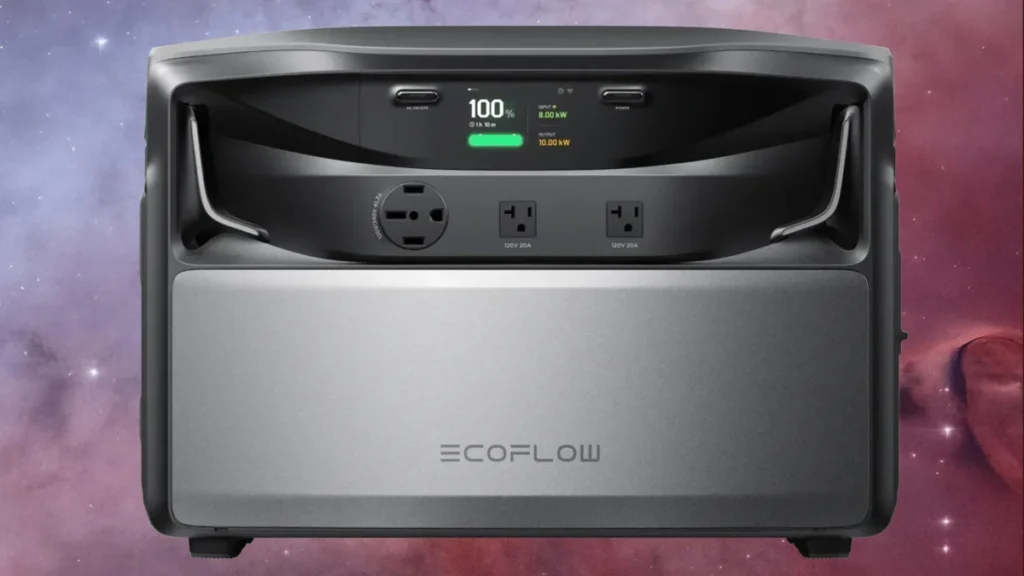
Both the standard and Plus variants deliver 7,200 watts of continuous 120/240V output from a baseline 5kWh battery pack. However, the TITAN 5000 Plus introduces several performance enhancements tailored specifically for rooftop solar owners. Its dual charge controllers accept up to 8 kilowatts (kW) of solar panel input—double the 4kW limit of the standard model—and feature "PV Boost," a proprietary software function that elevates total power output from 7.2kW to 10kW while solar panels are actively generating electricity. Furthermore, the Plus model is equipped with a 50-amp L14-50 outlet, making it uniquely versatile for heavy-duty emergency appliances or heavy shop equipment.
Chronology and Market Context
The debut of the TITAN Series represents a deliberate strategic evolution for EcoFlow. Over the preceding years, the company established a formidable market presence with its popular portable power station lines, such as the DELTA series. While systems like the DELTA 3 Max Plus and the higher-end DELTA Pro Ultra successfully targeted high-capacity mobile and stationary backup needs, they often required complex integration setups or carried premium price points that limited mainstream residential adoption.
Development of the TITAN ecosystem began in response to installer feedback and consumer demand for streamlined, wall-mounted permanent backup solutions that could rival traditional whole-home systems from established competitors like Tesla, Generac, and Enphase. By moving away from purely portable formats toward a dedicated stationary architecture, EcoFlow targeted the friction points of traditional home battery installations: labor costs, installation times, and hardware compatibility.
Official launch reservations opened globally via EcoFlow’s digital channels, accompanied by promotional incentives including a $50 reservation coupon that deducts 5 percent off eligible TITAN hardware and bundles two complimentary 220W portable solar panels during the introductory sales window. Full deployment of shipping logistics is currently underway, with free freight shipping extended to the contiguous United States.
Supporting Data and Technical Specifications
A detailed examination of the technical profiles reveals clear differentiators across the three-tier TITAN lineup:
TITAN 5000 Plus: Engineered for maximum photovoltaic integration and heavy-load survivalism. It supports 8kW of solar input, 7.2kW continuous output (scaling to 10kW via PV Boost), a 50-amp L14-50 output, and direct pairing with the Smart Home Panel 10 for 240V circuits.
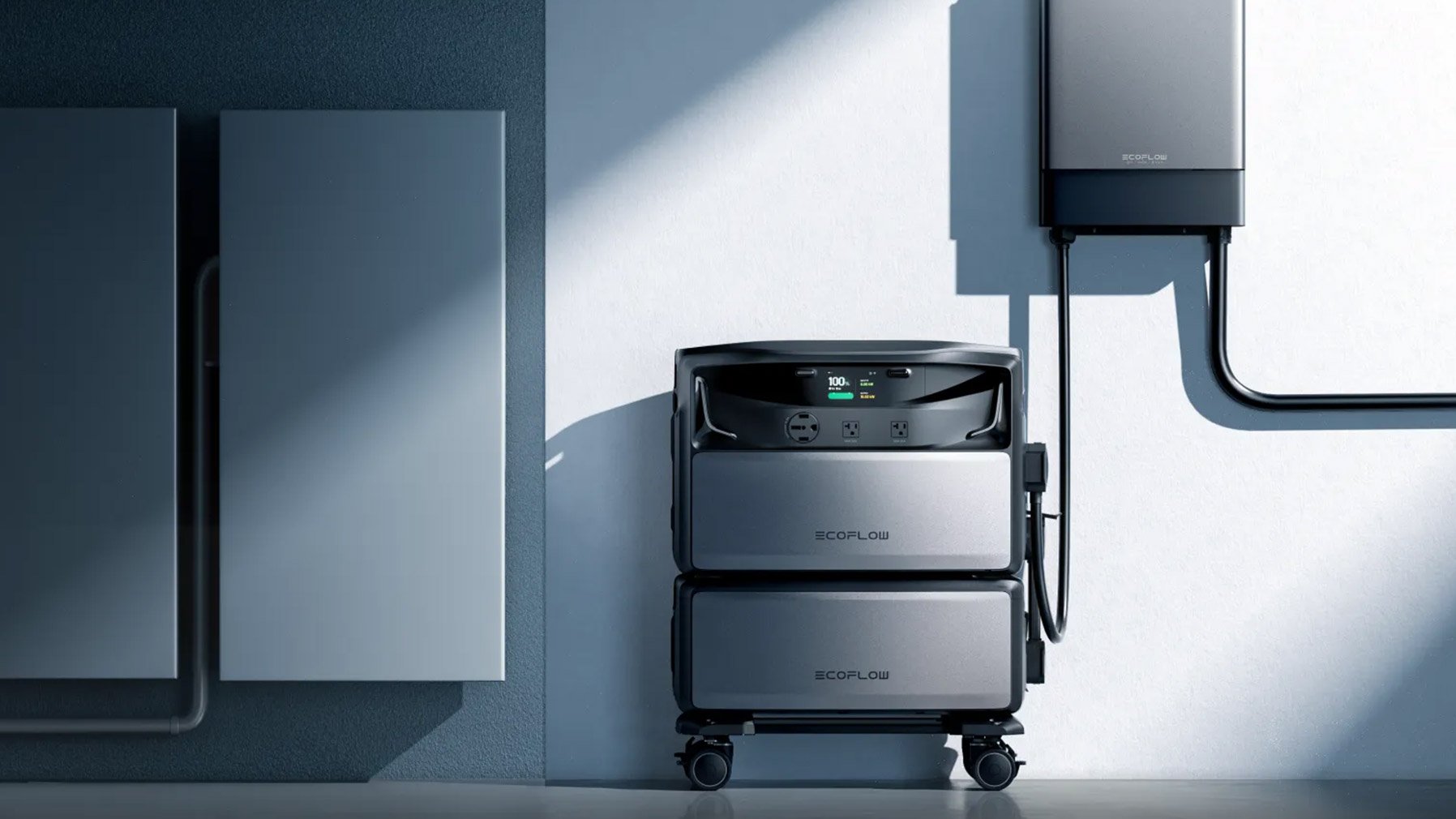
TITAN 5000 (Standard): Shares the core 7.2kW output and 5kWh modular capacity of the Plus model but scales back solar intake to 4kW through a single charge controller. It includes standard USB-C and USB-A connectivity ports omitted on the Plus model and carries an IP20 environmental rating, designating it strictly for indoor or garage installations.
TITAN 5000 Classic: Positioned as the budget-friendly alternative for households prioritizing essential loads such as refrigeration, lighting, internet routers, and gas furnace blowers. The Classic delivers 4kW of output limited to 120V, accepts up to 3.2kW of solar input, and pairs with a 120V-specific variant of the Smart Home Panel 10. Heavy 240V appliances—including electric clothes dryers, central air systems, and certain deep-well water pumps—remain unsupported by this entry model.
Across all variants, energy capacity is modular and expandable. Homeowners can stack additional 5kWh TITAN batteries—each weighing approximately 83 pounds—up to a maximum ceiling of 30kWh per unit. This 30kWh upper limit closely mirrors the average daily electricity consumption of a typical single-family household in the United States as reported by the U.S. Energy Information Administration (EIA).
Installation Innovation: The Smart Home Panel 10
One of the most friction-heavy aspects of adopting residential energy storage has historically been the electrical panel retrofit. Traditional whole-home backup installations often require replacing the main electrical breaker panel or executing complex, time-consuming rewiring operations that can span multiple days and incur substantial labor expenses.
EcoFlow addresses this industry bottleneck by pairing the TITAN units with the Smart Home Panel 10. This wall-mounted transfer switch operates alongside existing main breaker panels and legacy rooftop solar setups, isolating up to 10 critical home circuits at a maximum rating of 50 amps. According to the manufacturer, the system achieves a transfer time of 20 milliseconds during grid failures, ensuring uninterrupted power for sensitive electronics—though users running critical medical hardware are advised to verify independent battery requirements.
Crucially, EcoFlow has attempted to slash labor overhead by pre-wiring the Smart Home Panel 10 and factory-installing the internal circuit breakers prior to shipment. The company asserts this factory-integrated approach reduces on-site installation labor by up to 80 percent, condensing the physical electrical work into approximately two hours. While promotional materials advertise rapid installation timelines, final execution remains contingent upon local municipal permit approvals and regional electrician availability within designated ZIP codes.
Economic Implications and Smart Energy Management
Beyond emergency backup functionality, the TITAN Series is heavily optimized for daily economic savings through time-of-use (TOU) electricity rate optimization. Managed via EcoFlow’s proprietary OASIS 3.0 software ecosystem, the system intelligently monitors local utility pricing tariffs, automatically charging the 5kWh to 30kWh battery banks during off-peak hours when electricity rates are lowest, and seamlessly discharging stored energy during high-cost peak pricing windows.
Financial modeling provided by EcoFlow—though calibrated against specific regional parameters such as a San Diego utility rate plan utilizing a 15kWh storage configuration paired with 4kW of solar—demonstrates potential household savings on monthly utility expenditures. However, the system architecture currently utilizes a grid-connection profile classified as "no-export." Consequently, the TITAN units do not feed surplus stored solar energy back into the municipal grid for net-metering credits; all financial returns are derived entirely through self-consumption optimization and peak-rate avoidance.
Broader Impact and Market Implications
The launch of the EcoFlow TITAN Series signals a maturation of the residential energy storage market, moving away from closed, proprietary ecosystems toward modular, highly accessible consumer power infrastructure. By undercutting the entry costs of established premium competitors while matching critical power output thresholds like 7.2kW and central AC compatibility, EcoFlow is democratizing access to heavy-duty home resiliency.
As municipal grids face compounding stresses from extreme weather events, rising electricity rates, and accelerating electrification, the demand for user-installable, scalable home power solutions will only intensify. The TITAN platform demonstrates that consumers no longer need to choose between portability and industrial-grade home backup power. As full commercial availability unfolds following the November pricing finalization, the system’s ability to deliver seamless installation and reliable high-surge performance will serve as a bellwether for the future of decentralized residential energy management.