


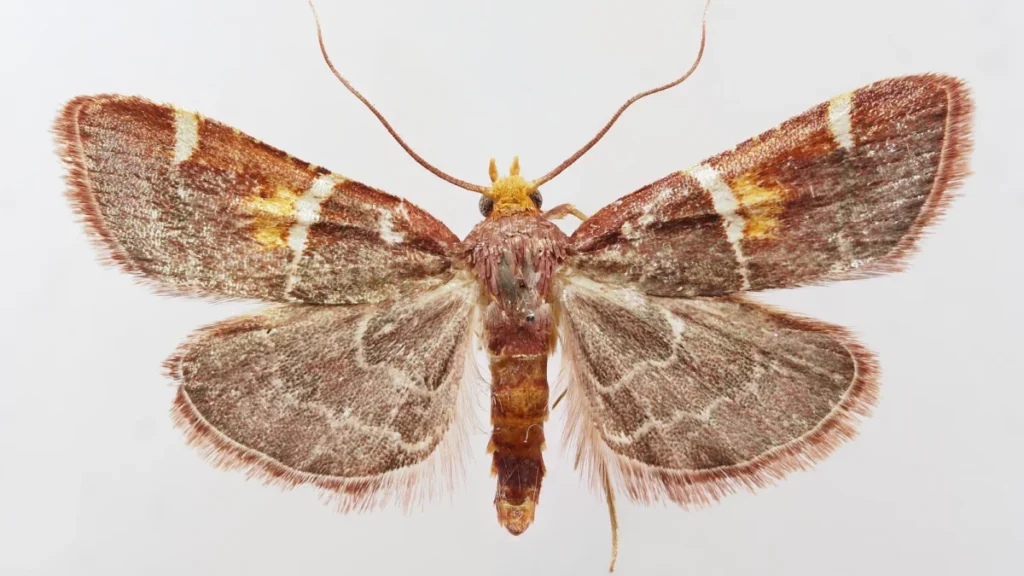
A collaborative team of European entomologists has officially documented a new species of moth, distinguished by its vibrant coloration and unique genetic profile, discovered in the rugged terrain of the island of Crete. Formally described in the scientific journal Nota Lepidopterologica, the insect has been named Pyralis papaleonei, or the Pope Leo moth. The naming choice serves as a tribute to Pope Leo XIV, acknowledging the Pontiff’s ongoing international advocacy for environmental conservation and the protection of global biodiversity. The discovery highlights the hidden biological riches still tucked away within the Mediterranean’s well-trodden landscapes and underscores the critical role of taxonomy in modern conservation efforts.
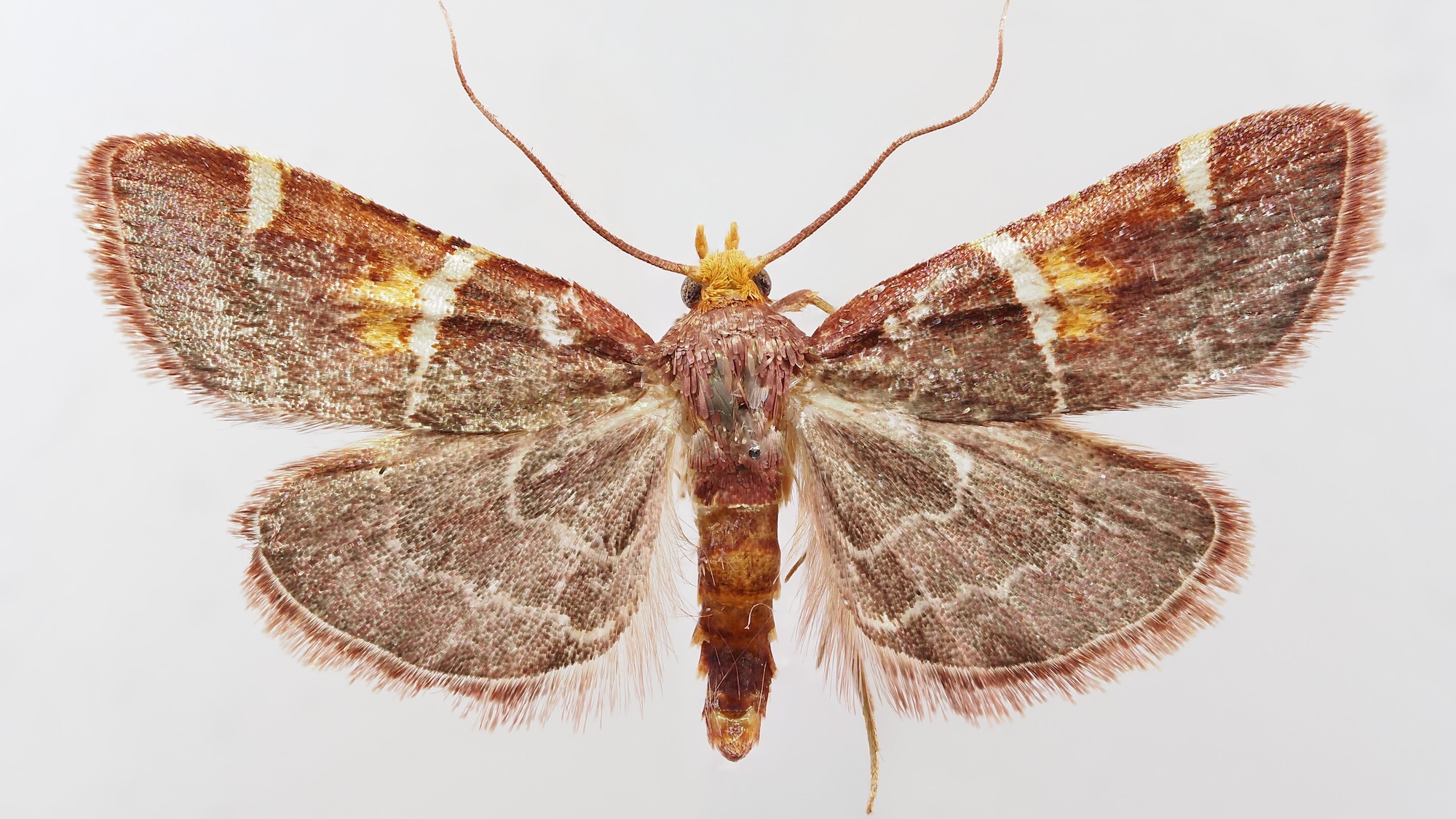
The identification of Pyralis papaleonei is the result of an extensive multi-institutional effort involving researchers from the Tyrolean State Museum in Austria, the Finnish Museum of Natural History, and the Bavarian State Collection of Zoology in Germany. By combining traditional morphological examination with advanced molecular analysis, the team was able to distinguish this new species from its close relatives within the Pyralis regalis species group. While many moths in this family are often dismissed as nondescript, the Pope Leo moth stands out for its "ecclesiastical" palette of deep purples and bright oranges, a visual complexity that mirrors its distinct evolutionary lineage.
Taxonomic Background and the Pyralis regalis Group
The discovery of P. papaleonei is part of a broader, ongoing re-evaluation of the Pyralis regalis species group. Historically, many populations of these moths across Europe and the Mediterranean were grouped under a single, broadly defined species. However, as genomic sequencing technology has become more accessible and refined, entomologists have begun to realize that what was once considered a single widespread species is actually a complex of several distinct, localized species and subspecies.
The research team focused their efforts on the White Mountains (Lefka Ori) of western Crete, a region known for its high degree of endemism—where species are found nowhere else on Earth. After collecting and examining numerous specimens, the scientists noted consistent differences in the wing patterns and genital structures compared to the standard Pyralis regalis found on mainland Europe. To confirm these observations, they performed a molecular analysis of the "barcode" region of the mitochondrial DNA.
The results were definitive: P. papaleonei exhibited a genetic divergence of approximately six percent from its nearest known relative. In the field of lepidopterology (the study of moths and butterflies), a genetic gap of this magnitude is a clear indicator of a separate species. This divergence suggests that the Pope Leo moth has been evolutionarily isolated on the island of Crete for a significant period, likely adapting to the specific climatic and botanical conditions of the Mediterranean island’s high-altitude rocky environments.
Morphological Characteristics and Habitat
The Pope Leo moth is a moderately sized member of the Pyralidae family, possessing a wingspan of approximately 0.75 inches (19 millimeters). Its aesthetic appeal is one of its most striking features. The forewings are dominated by a rich purple-brown hue, which is punctuated by a series of distinct white bands and bright, deep orange spots. This "royal" color scheme not only provided the inspiration for its name but also serves as a diagnostic tool for field researchers.
The species appears to be endemic to Crete, with the majority of sightings occurring in the White Mountains. This mountain range, characterized by its limestone peaks and deep gorges, provides a unique microclimate that supports a variety of rare flora and fauna. The researchers noted that P. papaleonei seems to be most active during the month of June, which aligns with the flowering periods of many Cretan mountain plants. However, the discovery of a single specimen in October has led to hypotheses regarding its lifecycle. Scientists believe the moth may either have an unusually long flight season or, more likely, it may be multivoltine, meaning it produces multiple generations within a single calendar year.
Despite these physical descriptions, much remains unknown about the moth’s early life stages. The specific host plants that the larvae (caterpillars) feed upon have yet to be identified. In many Pyralis species, larvae feed on dried plant matter or detritus, but the specialized environment of the Cretan mountains suggests that P. papaleonei may have a more specific ecological niche.
The Intersection of Science and Papal Advocacy
The decision to name the species after Pope Leo XIV was a deliberate move by the study’s authors to bridge the gap between scientific discovery and global environmental ethics. In their published paper, the researchers noted that the Pontiff’s consistent messaging on climate change and the "care for our common home" has resonated deeply within the scientific community. By dedicating the species to the Pope, the authors expressed hope that his moral authority might inspire greater public and political will to protect the natural world.
The naming follows a tradition of "taxonomic tribute," where newly discovered species are named after individuals who have made significant contributions to society or the environment. In the case of Pope Leo XIV, the tribute references his recent address at a global church summit on climate change. During that event, the Pope called for an "ecological conversion," urging a shift from mere data collection to active stewardship. He emphasized that the global community must move beyond environmental discourse and toward actions that transform both personal and communal lifestyles to ensure the survival of the planet’s ecosystems.
This sentiment was echoed by Peter Huemer, a study co-author and the former head of the natural science collections at the Tyrolean State Museums. Huemer pointed out that while the discovery of a new moth might seem like a minor event in the context of global news, it is a vital part of the larger effort to document the Earth’s declining biodiversity. He argued that society cannot protect what it has not yet identified.
Crete as a Biodiversity Hotspot
The discovery of P. papaleonei reinforces Crete’s reputation as a critical biodiversity hotspot in the Mediterranean. The island’s geological history—having been separated from the mainland for millions of years—has allowed for the development of a high number of endemic species. Of the approximately 700 new moth species described worldwide each year, the vast majority are found in tropical rainforests. Finding a new, distinct species in a relatively well-studied region like the Mediterranean is a testament to the complexity of the local environment.
The White Mountains of Crete, where the moth was found, are particularly significant. The range contains over 50 peaks that exceed 2,000 meters in height. This verticality creates a variety of habitats, from Mediterranean scrubland at lower elevations to alpine-like conditions at the summits. These "islands within an island" act as refuges for ancient lineages of insects and plants. The identification of the Pope Leo moth suggests that there may be other "cryptic" species—those that look similar to known species but are genetically distinct—waiting to be discovered in these high-altitude zones.
Implications for Conservation and Taxonomy
The global biodiversity crisis provides a somber backdrop to this discovery. Scientific estimates suggest that the world is currently experiencing a "sixth mass extinction," with species disappearing at rates hundreds of times higher than the natural background rate. Many species are likely going extinct before they are even documented by science.
"Effective conservation of biodiversity requires that species are first recognized, described, and named," Peter Huemer stated following the publication. This process, known as taxonomy, is the foundation upon which all other biological sciences are built. Without an accurate "inventory" of life, it is impossible to create effective management plans for protected areas or to understand the impact of climate change on specific ecosystems.
The discovery of P. papaleonei highlights two major challenges in modern taxonomy:
- The Shortage of Taxonomists: There is a growing "taxonomic impediment," where the number of experts capable of identifying and describing new species is declining even as the need for their expertise increases.
- The Need for Integrated Research: The identification of the Pope Leo moth required a combination of field work, museum archive research, and high-tech genetic sequencing. This integrated approach is essential for modern biology but requires significant funding and international cooperation.
Future Research Directions
The formal naming of Pyralis papaleonei is only the first step in understanding this new inhabitant of Crete. The research team has called for further field studies to map the moth’s full geographical range across the island and to identify its larval host plants. Understanding the moth’s diet and reproductive cycle is crucial for assessing its conservation status. If the moth is restricted to a very small area or depends on a single rare plant species, it may be highly vulnerable to habitat loss or the shifting weather patterns caused by climate change.
Furthermore, the discovery has prompted entomologists to take a closer look at other Mediterranean islands. If Crete holds such unique lepidopteran diversity, it is highly probable that islands like Corsica, Sardinia, and Cyprus also harbor undocumented species within the Pyralis group and beyond.
In the broader context, the Pope Leo moth serves as a symbol of the intricate beauty of the natural world and the urgent need for its protection. As the scientific community continues to uncover the secrets of the Earth’s biodiversity, the hope is that these discoveries will fuel the "ecological conversion" envisioned by the moth’s namesake, leading to a future where both humanity and the myriad species of the insect world can thrive.