


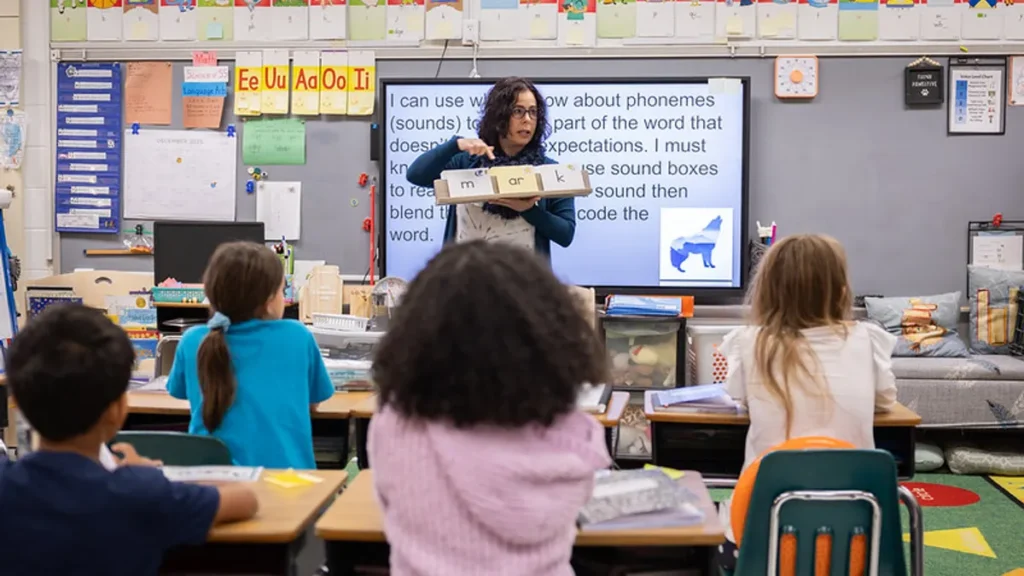
The departments of Health and Human Services and Justice will receive core special education and civil rights responsibilities under the agreements.
Published June 16, 2026
By Kara Arundel and Naaz Modan
The U.S. Department of Education is undertaking a significant restructuring of its special education and civil rights functions, a move announced Tuesday that aims to streamline operations, reduce bureaucratic hurdles, and ultimately enhance the delivery of critical services to students with disabilities and ensure equitable access to education. This realignment will see key responsibilities transferred to the U.S. Department of Health and Human Services (HHS) and the U.S. Department of Justice (DOJ).
Specifically, the Office of Special Education and Rehabilitative Services (OSERS) will be integrated into HHS. Simultaneously, certain investigation and enforcement activities previously handled by the Department of Education’s Office for Civil Rights (OCR) will transition to the DOJ. This strategic reorganization is poised to impact how federal oversight and support are administered for millions of students nationwide.
A Strategic Shift: Rationale and Objectives
The core objective behind this departmental realignment is to foster greater efficiency and synergy. Officials at the Department of Education have indicated that by consolidating certain functions within agencies that possess specialized expertise and existing infrastructure, the government can achieve a more cohesive and effective approach to supporting individuals with disabilities. The move is also intended to alleviate administrative burdens, allowing the Department of Education to focus on its primary mission of setting educational policy and promoting academic excellence across the nation.
For special education, the transfer of OSERS to HHS is expected to leverage HHS’s extensive experience in administering programs for individuals with disabilities across their lifespan. HHS already oversees a wide array of health and human services, including programs related to developmental disabilities, rehabilitation, and long-term care. Integrating OSERS into this framework could create opportunities for more comprehensive and integrated support systems, potentially bridging gaps in services from early intervention through adulthood.
In the realm of civil rights, the shift of certain investigative and enforcement powers to the DOJ is designed to bolster the government’s capacity to address systemic discrimination and ensure compliance with civil rights laws. The DOJ, with its broad legal authority and extensive litigation experience, is well-equipped to handle complex enforcement actions and to pursue a more robust approach to protecting the civil rights of all Americans, including students. This move suggests a renewed commitment to vigorous enforcement of anti-discrimination laws in educational settings.
Background: A Long History of Federal Involvement
The federal government’s role in special education and civil rights in education has evolved significantly over decades, driven by landmark legislation and court decisions aimed at ensuring equitable opportunities for all students.
The foundation for modern special education policy in the U.S. was laid by the Education for All Handicapped Children Act of 1975, now known as the Individuals with Disabilities Education Act (IDEA). This transformative law mandated that public schools provide free appropriate public education (FAPE) to all eligible children with disabilities. It established a framework for individualized education programs (IEPs), parental rights, and the provision of specialized services. The 50th anniversary of IDEA was recently marked, underscoring its enduring impact on the American educational landscape.
Similarly, the struggle for civil rights in education has been a protracted and vital endeavor. The Civil Rights Act of 1964 prohibited discrimination on the basis of race, color, or national origin, and subsequent legislation, including the Americans with Disabilities Act (ADA) of 1990, has expanded protections to individuals with disabilities. The Department of Education’s Office for Civil Rights was established to enforce these anti-discrimination laws, investigating complaints and taking action to remedy violations.

This current realignment can be viewed as a continuation of this ongoing effort to refine and strengthen federal oversight. The genesis of this particular shift likely stems from a comprehensive review of federal agency operations, identifying areas where collaboration and specialization could yield better outcomes. Discussions and planning for such a significant reorganization would have spanned a considerable period, involving interagency working groups, stakeholder consultations, and legislative considerations.
Chronology of the Reorganization
While specific details of the planning process are not fully public, a general timeline can be inferred for such a substantial undertaking:
- Early 2025: Initial conceptualization and identification of potential areas for consolidation and transfer within the federal government, likely driven by a mandate for government efficiency and improved service delivery.
- Mid-2025 to Late 2025: Formation of interagency task forces comprising representatives from the Department of Education, HHS, DOJ, and potentially the Office of Management and Budget (OMB). These groups would have begun detailed analyses of program functions, legal authorities, and operational requirements for the proposed transfers.
- Late 2025 to Early 2026: Consultation with stakeholders, including disability advocacy groups, civil rights organizations, state education agencies, school districts, and parents. Feedback from these consultations would have informed the final structure and operational plans for the transferred functions.
- Spring 2026: Formalization of interagency agreements outlining the specific responsibilities, funding mechanisms, and personnel transitions. This would have involved significant legal and administrative work.
- June 16, 2026: Public announcement of the reorganization by the Department of Education, accompanied by detailed explanations of the changes and their expected impact.
Supporting Data and Potential Impacts
The scale of the operations being transferred underscores the significance of this reorganization.
Special Education: OSERS oversees critical programs funded by federal grants, including the Individuals with Disabilities Education Act (IDEA). In the 2022-2023 school year, approximately 7.3 million students in the U.S. received special education and related services under IDEA. These services include specialized instruction, speech therapy, occupational therapy, physical therapy, counseling, and assistive technology. The federal government’s role involves setting standards, providing financial assistance to states, and ensuring compliance with federal mandates. Integrating OSERS into HHS could lead to:
- Enhanced Early Intervention Services: HHS’s existing infrastructure for early childhood programs and maternal and child health could facilitate a more seamless transition for infants and toddlers with disabilities into the school system.
- Improved Transition Services: The move could strengthen support for individuals with disabilities as they transition from K-12 education to post-secondary education, vocational training, or employment, aligning with HHS’s focus on long-term care and support.
- Consolidated Data Collection and Analysis: Potential for more integrated data systems that track the health and educational needs of individuals with disabilities, leading to more informed policy and program development.
Civil Rights Enforcement: The Department of Education’s Office for Civil Rights (OCR) handles thousands of complaints annually. In Fiscal Year 2023, OCR received over 10,000 complaints alleging discrimination based on race, sex, disability, national origin, and age. These investigations can lead to negotiated resolutions that require schools to change policies, implement new programs, or provide remedies to affected students. Transferring some of these functions to the DOJ could result in:

- Increased Litigation Capacity: The DOJ’s Civil Rights Division has a well-established track record of litigating complex civil rights cases, potentially leading to more impactful enforcement actions against systemic discrimination.
- Broader Scope of Enforcement: The DOJ’s mandate extends across all sectors, and its involvement in educational civil rights could bring a wider range of legal tools and expertise to bear on ensuring equal access and opportunity.
- Potential for More Consistent Application of Law: Consolidating certain enforcement powers within a single agency with a primary civil rights mission could lead to more uniform application of legal standards across different educational institutions.
Official Responses and Stakeholder Reactions
While the official announcement emanated from the Department of Education, it is anticipated that leaders from HHS and DOJ will also be vocal proponents of this realignment.
U.S. Secretary of Education (as of June 16, 2026) is expected to emphasize the strategic benefits of the move, stating, "This reorganization represents a forward-thinking approach to federal service delivery. By aligning specialized functions with agencies best positioned to execute them, we are enhancing our ability to serve students with disabilities and uphold civil rights protections. This is about reducing redundancy and maximizing impact for the millions of Americans who rely on these vital programs."
The Secretary of Health and Human Services is likely to highlight the synergies with existing HHS programs. "HHS is committed to ensuring that every individual, regardless of ability, has access to the support and services they need to thrive," the Secretary might state. "The integration of OSERS will allow us to build upon our existing strengths in serving vulnerable populations and create a more holistic and effective system of care and support."
The Attorney General is expected to underscore the importance of robust civil rights enforcement. "Protecting the civil rights of all Americans, including students, is a cornerstone of our justice system," the Attorney General would likely affirm. "By assuming certain investigative and enforcement responsibilities from the Department of Education, the Department of Justice will bring its full legal power and expertise to bear in combating discrimination and ensuring equal opportunity in education."
Disability advocacy groups are likely to express cautious optimism, emphasizing the need for seamless transitions and continued strong advocacy. "Our primary concern is that this reorganization does not disrupt services for students and families," stated a representative from a national disability rights organization. "We will be closely monitoring the implementation to ensure that the intended benefits of greater efficiency and effectiveness are realized, and that the voices of individuals with disabilities and their families remain central to policy and practice."
Civil rights organizations are also expected to welcome the enhanced enforcement potential but will likely call for transparency and accountability. "We are encouraged by the prospect of stronger enforcement of civil rights in education," commented a spokesperson for a prominent civil rights group. "However, it is crucial that this transition is managed transparently and that clear lines of accountability are established to ensure that all students are protected from discrimination."

Broader Impact and Implications
This federal reorganization carries significant implications for the landscape of education policy and civil rights enforcement.
For state and local education agencies, the changes may necessitate adjustments in how they interact with federal agencies. They will need to understand which agency is responsible for which aspect of special education funding, oversight, and civil rights compliance. Clear communication and guidance from the federal government will be paramount to ensuring a smooth transition.
For parents and students, the ultimate goal is improved service delivery. If the reorganization is successful, parents may find it easier to access a comprehensive range of services for their children with disabilities, and students may experience stronger protections against discrimination. However, during the transition period, there could be a risk of confusion or delays in service provision if not managed meticulously.
From a policy perspective, this move could signal a broader trend towards interagency collaboration and specialization in federal program administration. It reflects an acknowledgment that complex societal challenges often require integrated solutions that transcend traditional departmental boundaries. The success of this reorganization could serve as a model for future efforts to improve government efficiency and effectiveness.
The long-term impact will depend on the effective implementation of the new structures, the commitment of the involved agencies to their new responsibilities, and the continued engagement of stakeholders. As the nation continues to strive for equitable educational opportunities for all, these structural adjustments are a critical component in that ongoing endeavor. The coming months will be crucial in observing how these changes unfold and whether they deliver on the promise of enhanced services and protections for millions of students.