




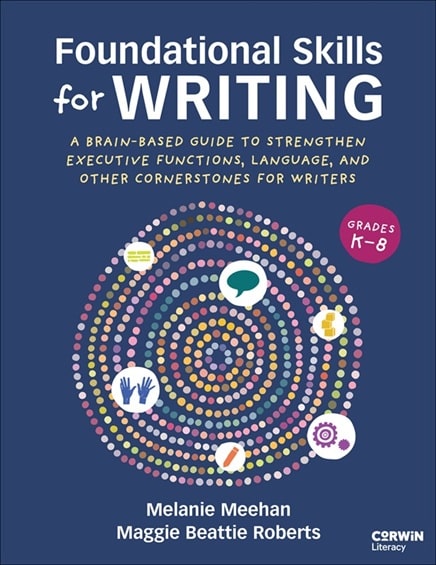
Literacy education in the United States has undergone a significant paradigm shift over the past decade, characterized primarily by the "Science of Reading" movement. While this pedagogical evolution has successfully brought national attention to the mechanics of phonics, decoding, and reading fluency, writing instruction has frequently been relegated to the periphery of these debates. However, a new publication by educators Melanie Meehan and Maggie Roberts, titled Foundational Skills for Writing: A Brain-Based Guide to Strengthen Executive Functions, Language, and Other Cornerstones for Writers, seeks to bridge this gap by highlighting the cognitive neuroscience behind the writing process.

The release of this text comes at a critical juncture for American schools. According to the National Assessment of Educational Progress (NAEP), commonly referred to as the Nation’s Report Card, student proficiency in writing has stagnated for years. Recent data indicates that fewer than one-quarter of eighth and twelfth-grade students perform at or above the "proficient" level in writing. Educational experts argue that this deficit stems from a long-standing tendency to treat writing as an intuitive art form rather than a complex cognitive task requiring explicit, foundational skill-building.
The Neuroscience of Composition
Meehan, a former curriculum coordinator who recently founded a specialized writing center, and Roberts, a veteran middle school educator and literacy consultant, argue that the act of writing is one of the most cognitively demanding tasks a human brain can perform. It requires the simultaneous activation of multiple systems: transcription, which involves the physical act of handwriting or keyboarding; oral language, which encompasses vocabulary and sentence construction; and executive functioning, which manages working memory, cognitive flexibility, and impulse control.
When these underlying skills are not fully "automatized," students experience cognitive overload. The brain becomes so consumed with the mechanics of spelling or sentence structure that it lacks the necessary bandwidth to focus on higher-order concerns like voice, organization, and argument. By shifting the focus toward these "cornerstones," the authors propose that educators can reduce the friction students encounter during the drafting phase.
Implementing Minute Moves: A Chronology of Strategy
The methodology proposed in the book centers on what the authors term "Minute Moves"—short, high-frequency activities designed to be integrated into daily routines without disrupting core instructional time. These strategies are structured to build neurological pathways through repetition and deliberate practice.

The progression of these moves typically follows a three-stage development cycle:
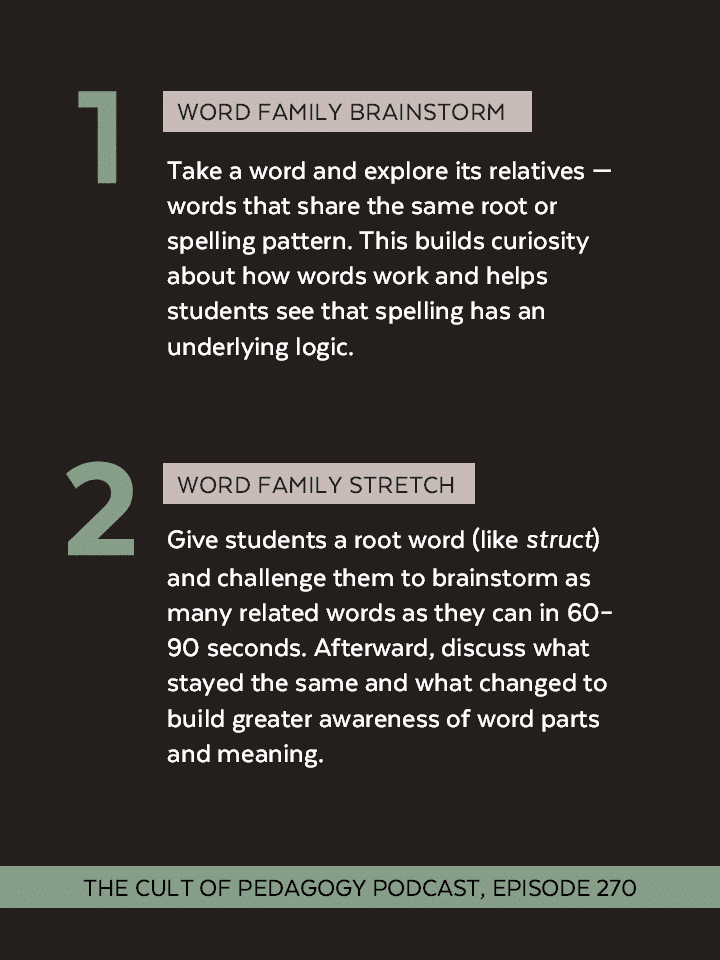
- Spelling and Morphological Awareness: The curriculum begins by teaching students to view words as patterns rather than isolated entities. By utilizing "Word Family Brainstorms" and "Prefix Swaps," students learn to trace roots, such as the Latin struct (to build), to understand why words like construction, destruction, and instruction share common orthographic features. This morphological approach has been supported by recent studies in cognitive linguistics, which suggest that students who understand word roots demonstrate higher retention rates than those relying solely on rote memorization.
- Sentence Construction and Syntax: Once students achieve a baseline comfort with word parts, the focus shifts to syntax. The "Sentence Scramble" and "Sentence Expander" exercises require students to physically manipulate sentence components—often using index cards or digital interfaces—to understand how clauses and modifiers interact. By labeling sentence elements as "doers" and "doing" rather than abstract grammatical terms, teachers can help younger learners grasp complex sentence structures without the barrier of jargon.
- Executive Functioning and Flexibility: The final tier focuses on cognitive flexibility. The "What’s Another Way?" activity forces students to rewrite sentences using varying structures, such as fronting dependent clauses or adjusting sentence length for rhetorical effect. This practice is specifically designed to improve executive functioning, enabling students to switch between different modes of expression based on the intent of their writing.
Implications for Modern Classroom Practice
The pedagogical implications of this approach extend beyond the writing classroom. By emphasizing perspective-taking through activities like the "New Angle" exercise—in which students retell stories from the viewpoints of different characters—the authors align writing instruction with broader social-emotional learning (SEL) goals. This specific exercise has garnered interest from school administrators looking to integrate critical thinking and empathy into traditional language arts curricula.

However, the transition from theory to practice remains a challenge for many school districts. Many teachers report that they lack the time to incorporate specialized writing instruction into already crowded schedules. Meehan and Roberts address this by advocating for "instructional layering," where these strategies are used as warm-ups or during transitional periods, such as the time between lessons or while moving between classrooms.
Expert Analysis and Industry Response
The release of this guide has been met with interest from literacy specialists who observe that the "Science of Writing" is the natural successor to the "Science of Reading." Dr. Elena Rodriguez, a consultant specializing in literacy development, notes that the current educational environment is ripe for this shift. "We have spent years teaching kids how to crack the code of reading," Rodriguez stated in a recent symposium. "Now we must teach them how to encode their own thoughts with that same level of rigor and scientific understanding."
From a data perspective, the emphasis on executive function is particularly relevant for students with learning disabilities or those labeled as English Language Learners (ELLs). The ability to decode prefixes and suffixes, for example, provides a vital bridge for multilingual students, allowing them to leverage cognates from their primary languages to accelerate their English vocabulary acquisition.
Future Trajectories in Writing Pedagogy
As school districts continue to analyze student performance metrics in the wake of the pandemic, the focus on foundational writing skills is expected to grow. The integration of technology, particularly the use of assistive tools and digital writing environments, will likely necessitate a parallel evolution in how these "Minute Moves" are delivered.
The authors contend that the long-term goal is not merely better writing scores, but the development of student confidence. By deconstructing the "mystery" of writing into manageable, brain-based tasks, students who previously viewed themselves as "poor writers" can gain a sense of agency. This transformation is central to the authors’ broader mission: to ensure that writing is treated as an accessible, logical, and ultimately empowering skill.
As the educational community continues to debate the efficacy of various instructional models, the focus on the intersection of neuroscience and literacy marks a significant step forward. By providing a structured, evidence-based approach to the mechanics of composition, Meehan and Roberts offer a roadmap for educators to move beyond the traditional "write and hope for the best" method, replacing it with a strategic, deliberate, and highly effective framework for student success. The success of this approach will ultimately depend on the willingness of school systems to prioritize writing with the same urgency as they have prioritized reading, ensuring that students possess the foundational tools required to communicate effectively in a complex, information-driven world.