



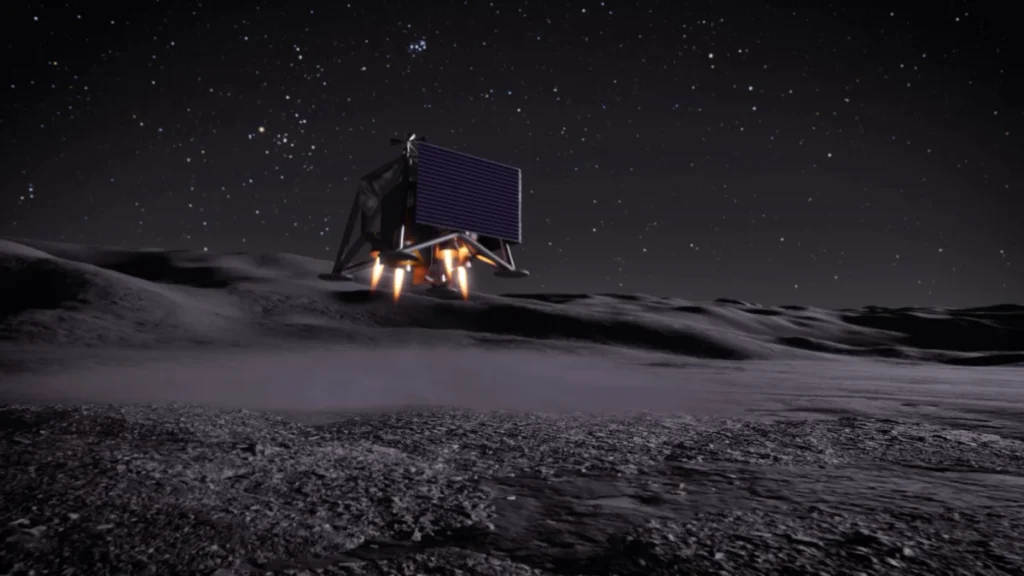
As NASA intensifies its preparations for the Artemis III mission, currently targeted for mid-2027, the agency has disclosed comprehensive details regarding its subsequent lunar infrastructure projects. Central to these efforts is MoonFall, a sophisticated drone-based scouting mission designed to map the lunar South Pole and identify viable landing zones for future human exploration. This mission represents a critical step in NASA’s long-term strategy to establish a permanent human presence on the Moon, transitioning from short-duration visits to sustainable habitation. The MoonFall mission, scheduled for launch in 2028, will deploy a fleet of four autonomous drones to survey one of the most challenging and scientifically significant environments in the solar system.
The Strategic Objectives of the MoonFall Mission
The MoonFall mission is orchestrated by the Jet Propulsion Laboratory (JPL) in Southern California, an institution renowned for its successful management of Mars rovers and orbital probes. The primary objective of MoonFall is to provide high-resolution, multi-spectral data of the lunar South Pole, a region characterized by rugged terrain and extreme lighting conditions. Unlike the equatorial regions visited during the Apollo era, the South Pole contains "permanently shadowed regions" (PSRs) where temperatures remain consistently low enough to trap volatile compounds, most notably water ice.
The identification of water ice is the "holy grail" of modern lunar science. If accessible, this ice could be processed into liquid oxygen for breathing and liquid hydrogen for rocket fuel, effectively turning the Moon into a "gas station" for deep-space missions to Mars and beyond. The MoonFall drones are specifically equipped to navigate these treacherous zones, providing a level of mobility and perspective that traditional wheeled rovers cannot match. By flying over craters and rocky outcrops, the drones can scout landing sites for the Artemis lunar landers and identify the most promising locations for the proposed Artemis Base Camp.
Engineering and Technical Specifications
The design of the MoonFall drones reflects the unique challenges of the lunar environment. Each of the four drones is a substantial piece of hardware, weighing approximately 550 pounds (250 kilograms). In terms of physical dimensions, the drones stand four feet tall with a diameter of seven feet. This size allows for a robust suite of scientific instruments while maintaining the agility required for low-altitude flight in the Moon’s one-sixth gravity.
The drones are equipped with a "Lunar Dashcam" imaging system, a high-definition array designed to produce three-dimensional topographical maps. These maps will be essential for mission controllers to understand the slope gradients and boulder distributions of potential landing sites. To ensure precise navigation and positioning, each drone carries a laser retroflector array. This technology allows Earth-based stations and orbiting satellites to bounce lasers off the drones to determine their exact coordinates within centimeters.
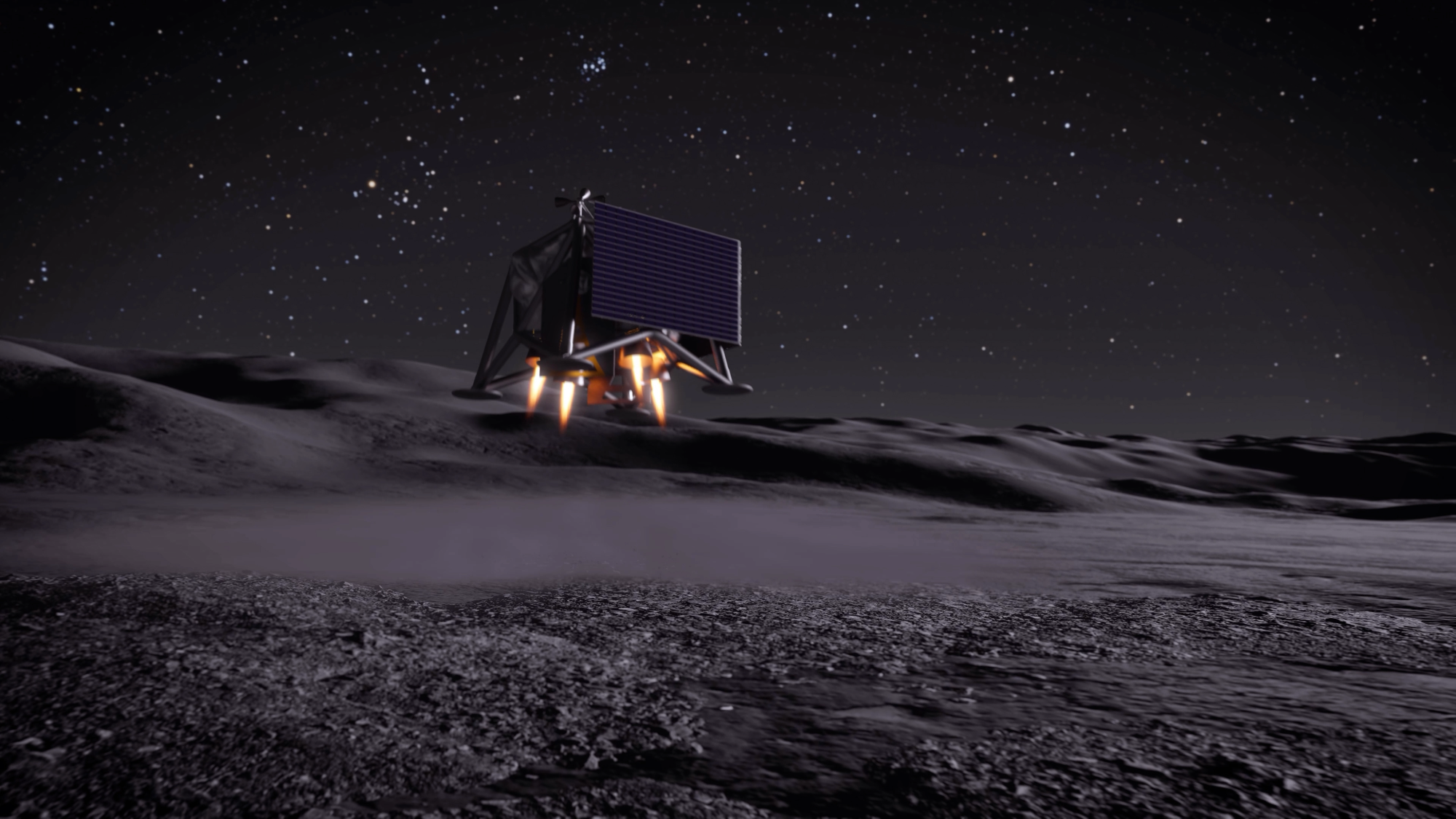
Furthermore, the drones are outfitted with a neutron spectrometer system. This instrument is vital for subsurface exploration; it detects the energy of neutrons leaking from the lunar soil, which changes when they interact with hydrogen atoms. This allows the drones to "see" water ice buried beneath the regolith without the need for physical drilling. Additionally, a radiation spectrometer will continuously monitor the lunar environment, providing data on the cosmic rays and solar particle events that future astronauts will face.
Delivery and Deployment: The Firefly Aerospace Partnership
The logistical execution of the MoonFall mission relies on a burgeoning partnership between NASA and the commercial space sector. Texas-based Firefly Aerospace has been awarded a $75 million subcontract to provide the transportation and deployment systems for the drones. This partnership is part of NASA’s Commercial Lunar Payload Services (CLPS) initiative, which leverages private industry to reduce costs and increase the frequency of lunar missions.
The drones will be transported to the Moon via Firefly’s Elytra spacecraft. The mission profile involves a 45-day transit from Earth to lunar orbit. Once the Elytra reaches a stable orbit, it will perform a complex deorbiting sequence. At an altitude of approximately 31 miles (50 kilometers) above the lunar South Pole, the spacecraft will execute a braking maneuver and release the four drones. Each drone will then utilize its own propulsion system to navigate to its designated survey area.
This mission follows the success of Firefly Aerospace’s Blue Ghost lander, which successfully reached the lunar surface in March 2025. The Blue Ghost mission served as a proof-of-concept for Firefly’s landing technology, delivering 10 NASA instruments and capturing historic imagery of a solar eclipse from the lunar perspective. The expertise gained from Blue Ghost is being directly applied to the more complex deployment requirements of MoonFall.
Survival in the Lunar Night
One of the most significant engineering hurdles for any lunar mission is the lunar night, which lasts approximately 14 Earth days. During this period, temperatures at the South Pole can plummet to -208 degrees Fahrenheit (-133 degrees Celsius). Most electronic components and batteries cannot survive such extreme cold without constant heating, which requires a significant power source.
The MoonFall drones are designed for a primary mission duration of one lunar day (14 Earth days). During this window, they will conduct their flight operations and data gathering. However, the mission includes "survive-the-night" payloads. These specific components are engineered with advanced thermal insulation and radioisotope heater units (or similar low-power heating solutions) to remain operational through the freezing darkness. While the drones may cease flying after the first lunar day, these survive-the-night payloads are expected to continue transmitting environmental and radiation data for several months, providing a long-term record of conditions at the South Pole.

A Chronology of Lunar Exploration Milestones
The MoonFall mission is a key component of a broader timeline intended to return humans to the Moon and establish a permanent presence.
- March 2025: Firefly Aerospace’s Blue Ghost lander successfully touches down, delivering the first wave of CLPS instruments.
- Late 2025 – 2026: Artemis II, a crewed mission, will fly around the Moon, testing the Orion spacecraft’s life-support systems with astronauts on board.
- Mid-2027: Artemis III is scheduled to land the first woman and the next man on the lunar surface, specifically targeting the South Pole region.
- 2028: The MoonFall mission launches, deploying four drones to conduct wide-area scouting and resource mapping to support the expansion of the Artemis Base Camp.
- 2030 and Beyond: Construction begins on the permanent lunar base, utilizing data from MoonFall to select the most resource-rich and safest locations.
Geopolitical Competition and the Artemis Accords
The race to the lunar South Pole is not merely a scientific endeavor but a geopolitical one. NASA’s Artemis program is governed by the Artemis Accords, a set of non-binding principles designed to guide civil space exploration and ensure the peaceful use of lunar resources. As of late 2024, 66 nations have signed the accords, signaling a commitment to transparency, the release of scientific data, and the provision of emergency assistance to astronauts in distress.
However, the Artemis program faces direct competition from the International Lunar Research Station (ILRS), an initiative led by China and Russia. China has also expressed intense interest in the lunar South Pole, with its Chang’e series of missions successfully returning samples and testing landing technologies. The competition centers on "strategic sites"—areas with high concentrations of water ice or "peaks of eternal light" where solar power is almost constantly available. The data gathered by the MoonFall drones will be instrumental in helping the United States and its partners secure their interests in these high-value regions.
Ethical Concerns and Environmental Stewardship
As the prospect of lunar mining and permanent habitation becomes more realistic, it has sparked a debate over the ethics of lunar exploitation. Some members of the scientific community have expressed concern that the extraction of water ice and other minerals could destroy unique geological records that have been preserved for billions of years. There are fears that "thoughtless exploitation" could contaminate the very resources scientists wish to study.
Furthermore, cultural and religious concerns have been raised by Indigenous nations. For the Navajo Nation and other groups, the Moon is considered a sacred entity. In early 2024, the Navajo Nation protested the inclusion of human remains on a commercial lunar lander, arguing that it constituted a desecration. These perspectives are increasingly being integrated into the dialogue surrounding lunar law and the Artemis Accords, as policymakers grapple with how to balance industrial progress with cultural and environmental preservation.
Conclusion: The Path Forward
The MoonFall mission represents the cutting edge of autonomous exploration. By deploying drones to the lunar South Pole, NASA is moving beyond the limitations of stationary landers and slow-moving rovers. The data harvested by these four drones will provide the foundational knowledge required to build the first extraterrestrial colony. As 2028 approaches, the collaboration between JPL, Firefly Aerospace, and NASA’s international partners will be under intense scrutiny, as the world watches the next phase of humanity’s journey into the cosmos. The success of MoonFall will not only determine the location of the next lunar landing but will also define the technical and legal frameworks for how humanity interacts with other worlds.