


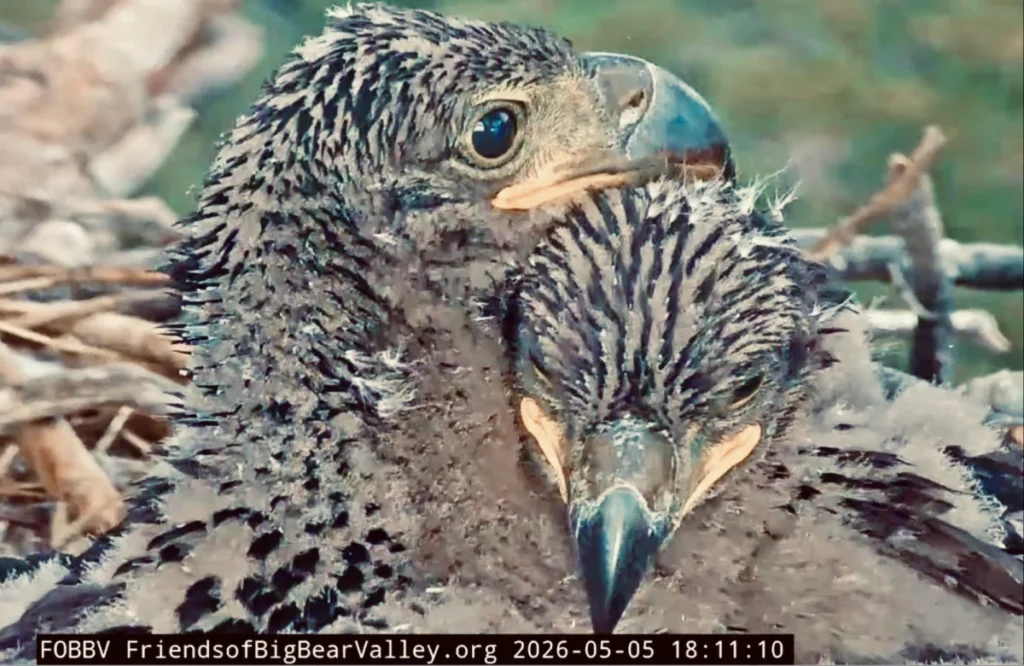
In the high-altitude ecosystem of the San Bernardino National Forest, the 2026 nesting season of the world-renowned bald eagles, Jackie and Shadow, has reached a significant biological turning point. Their two latest offspring, named Sandy and Luna, have officially entered a stage of rapid maturation characterized by the sharpening of their predatory senses and the structural hardening of their skeletal systems. According to observations from the Friends of Big Bear Valley (FOBBV), the non-profit organization that maintains a 24/7 high-definition surveillance of the nest, the eaglets are now demonstrating vision capabilities that rival those of adult raptors, marking a successful transition through one of the most vulnerable periods of their early development.
Located nearly 150 feet above the ground overlooking Big Bear Lake, the nest has become a focal point for avian researchers and millions of digital spectators alike. As the chicks reach approximately five weeks of age, their physiological progress offers a rare glimpse into the complex developmental timeline of the Haliaeetus leucocephalus. The current phase is defined not just by size—though the chicks have grown exponentially since hatching in early April—but by the refinement of the neurological and physical tools required for survival in the wild.
The Science of Avian Vision and the Head-Bobbing Phenomenon
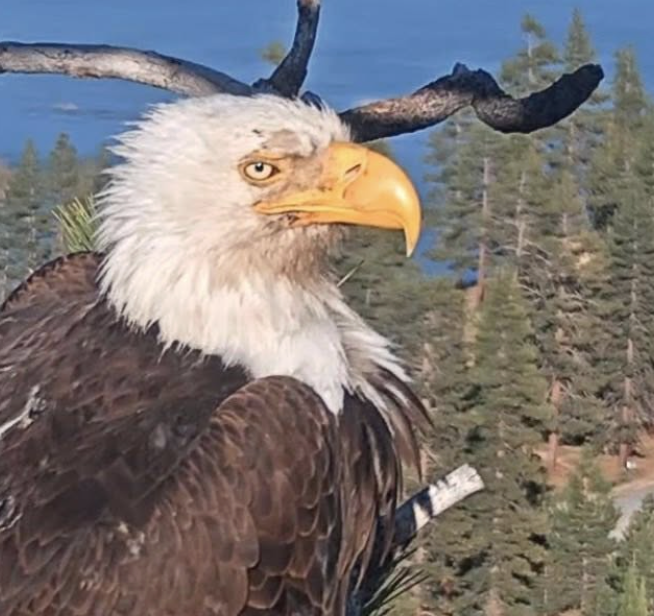
One of the most striking developments observed in Sandy and Luna is the maturation of their ocular systems. At approximately 35 days old, a bald eagle’s eyesight becomes nearly as sharp as that of an adult. Bald eagles are famous for having vision that is four to eight times stronger than that of a human with 20/20 sight. For Sandy and Luna, this means the ability to track small movements, such as a squirrel darting through the underbrush or a plane crossing the distant horizon, has become a primary activity.
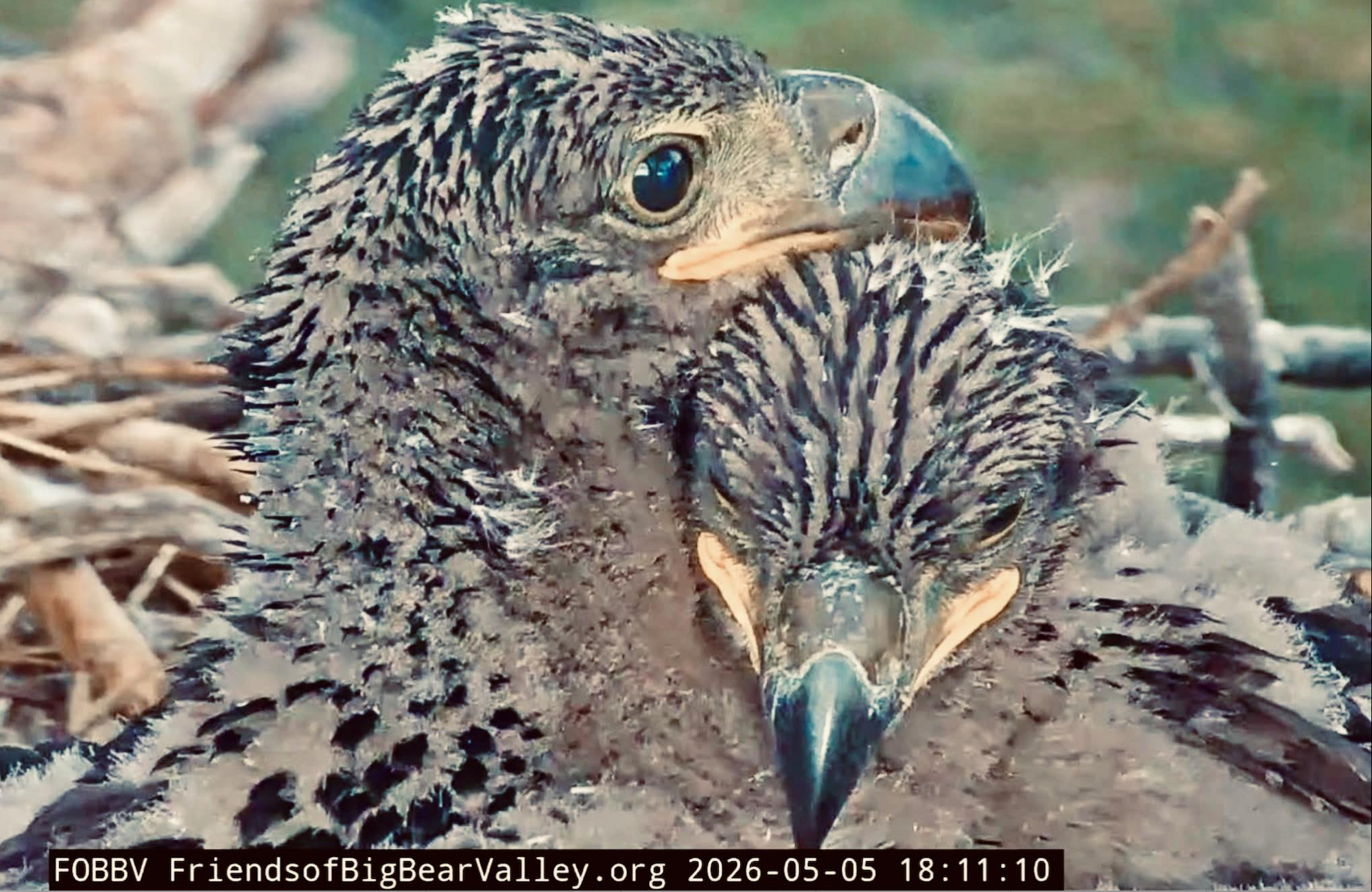
FOBBV researchers have noted a specific behavior known as "head bobbing" or "mantling" movements as the chicks observe their surroundings. This rhythmic bobbing is a sophisticated biological mechanism used to calculate distance, depth, and speed. Because an eagle’s eyes are fixed in its sockets, it cannot move its eyeballs like a human can. Instead, it must move its entire head to shift its perspective. By bobbing their heads, Sandy and Luna are utilizing parallax—the difference in the apparent position of an object viewed along two different lines of sight—to triangulate the exact coordinates of moving objects. This skill is a prerequisite for the hunting maneuvers they will need to master once they leave the nest.
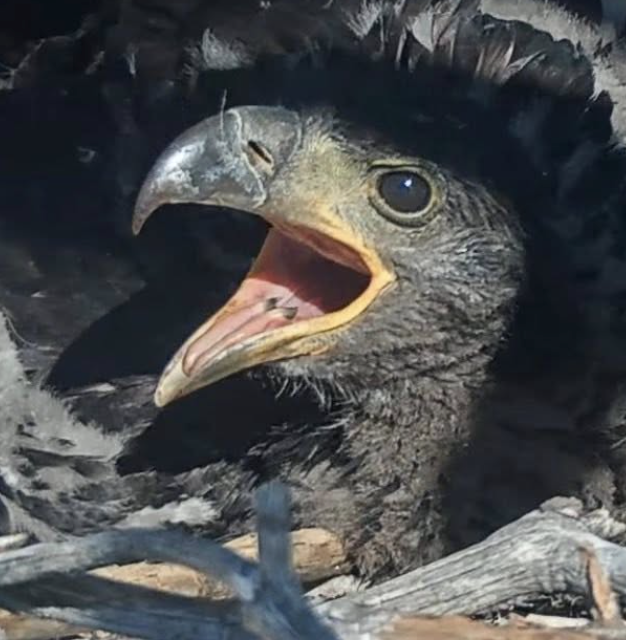
While their visual acuity is reaching its peak, the aesthetic appearance of their eyes remains in a juvenile state. Currently, Sandy and Luna possess dark, almost black irises. This is a stark contrast to the piercing, creamy yellow eyes of their parents, Jackie and Shadow. Ornithological data indicates that this transformation is a slow process; the irises will gradually lighten from dark brown to light brown, then to a pale beige, before finally settling into the iconic raptor yellow at approximately five years of age. This color change often coincides with the development of the white head and tail feathers that signify sexual maturity.
Skeletal Maturation and the Hardening of Leg Bones
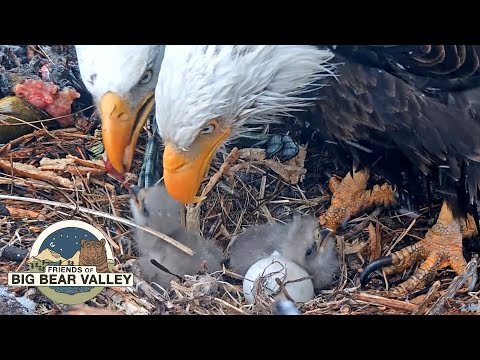
Parallel to their sensory development is a critical shift in the eaglets’ physical structure. By the five-week mark, the leg bones of a bald eagle chick have typically reached their full length and have begun the process of ossification, or hardening. This is a vital milestone, as it allows the chicks to transition from a clumsy "crawl" to a more stable, confident walk within the confines of the nest.
Early in their lives, eaglets possess disproportionately large feet—a biological trait that ensures they have the "platform" necessary to support their weight as they grow. However, until the leg bones harden, they lack the leverage and strength to stand for long periods. Viewers of the Big Bear live cam have recently noted Sandy and Luna standing more frequently, testing their grip on the sticks and soft nesting material. This increased mobility is the precursor to "wing-cising" and "branching," the next stages of development where the birds will begin flapping their wings to build muscle and eventually hop onto nearby branches of the Jeffrey pine tree that houses their home.
A Chronology of the 2026 Nesting Season
The success of Sandy and Luna is particularly poignant given the tumultuous start to the 2026 season. Jackie and Shadow, a pair that has been together since 2018, faced significant adversity in the early winter months.
- January 2026: Jackie laid her first clutch of the year. However, in a stark reminder of the brutality of nature, the nest was raided by ravens while the parents were briefly away. Both eggs were destroyed, leaving the community of followers in mourning.
- February 2026: In a display of resilience common in experienced eagle pairs, Jackie laid a second clutch of two eggs.
- April 4, 2026: Following a standard 35-day incubation period, the first chick (Chick 1, later named Sandy) hatched at 9:33 p.m. PDT.
- April 5, 2026: The second chick (Chick 2, later named Luna) followed shortly after, hatching at 8:30 a.m. PDT.
- May 1, 2026: After a public naming process that saw thousands of entries, FOBBV officially announced the names Sandy and Luna, reflecting the natural elements of the Big Bear Valley.
Historical Context: The Legacy of Jackie and Shadow
Jackie and Shadow have become perhaps the most famous bald eagles in North America, largely due to the high-quality livestream provided by FOBBV and the dramatic nature of their nesting attempts. Since they began nesting together in 2018, they have successfully fledged chicks in 2019 and 2022. However, the intervening years have been marked by "ghost clutches"—eggs that fail to hatch despite diligent incubation—and environmental tragedies.
In 2025, the pair successfully hatched three chicks in early March. However, a catastrophic late-season snowstorm struck the San Bernardino Mountains, dumping two feet of snow and bringing sub-zero wind chills. Despite Jackie’s best efforts to shield the brood, one chick perished due to exposure. The two survivors, named Sunny and Gizmo, eventually fledged, but the loss underscored the razor-thin margin for survival in high-altitude nests.
Statistically, only about 50 percent of bald eagle eggs successfully hatch in the wild, and of those that do, a significant portion do not survive the first year. Jackie and Shadow’s ability to successfully hatch a second clutch in 2026 after losing their first is a testament to their experience as a bonded pair and the relative abundance of prey in the Big Bear Lake area.
Broader Impact and Environmental Implications
The ongoing monitoring of Sandy and Luna provides more than just entertainment for nature enthusiasts; it offers vital data for conservationists. The Big Bear nest is a "sentinel" for the health of the local ecosystem. The types of prey brought to the nest—predominantly fish from the lake and occasionally small mammals or waterfowl—allow researchers to track the availability of local resources and the potential presence of environmental toxins like lead or mercury.
Furthermore, the popularity of the livestream has fostered a massive "citizen science" community. Thousands of viewers keep detailed logs of feeding times, prey types, and developmental milestones, providing a dataset that would be impossible for a small team of professional biologists to compile on their own.
As Sandy and Luna continue to grow, the next major hurdle is "fledging"—the first flight. This typically occurs between 10 and 14 weeks of age. During this period, the survival rate for eaglets is approximately 70 percent. The primary threats shift from nest-bound predators like owls and ravens to ground-based hazards. In Southern California, one of the leading causes of mortality for fledgling eagles is collisions with vehicles, as young birds often scavenge roadkill while they are still perfecting their hunting skills.
Looking Ahead: The Journey to Independence
If Sandy and Luna follow the patterns of their predecessors, they will remain in the Big Bear vicinity for several weeks after their first flight, honing their skills under the watchful eyes of Jackie and Shadow. Once they gain full independence, they may travel vast distances. Previous fledglings from this region have been tracked as far north as British Columbia and as far south as the Baja Peninsula.
Because FOBBV maintains a policy of non-intervention and does not tag the birds with GPS transmitters, the exact fate of Sandy and Luna after they leave the valley will remain a mystery. However, for now, the sight of two healthy eaglets bobbing their heads and finding their footing in the San Bernardino National Forest remains a powerful symbol of avian resilience and the success of local conservation efforts. The 2026 season, which began with loss, has transformed into a masterclass in biological growth, providing a rare and intimate look at the maturation of America’s national symbol.