


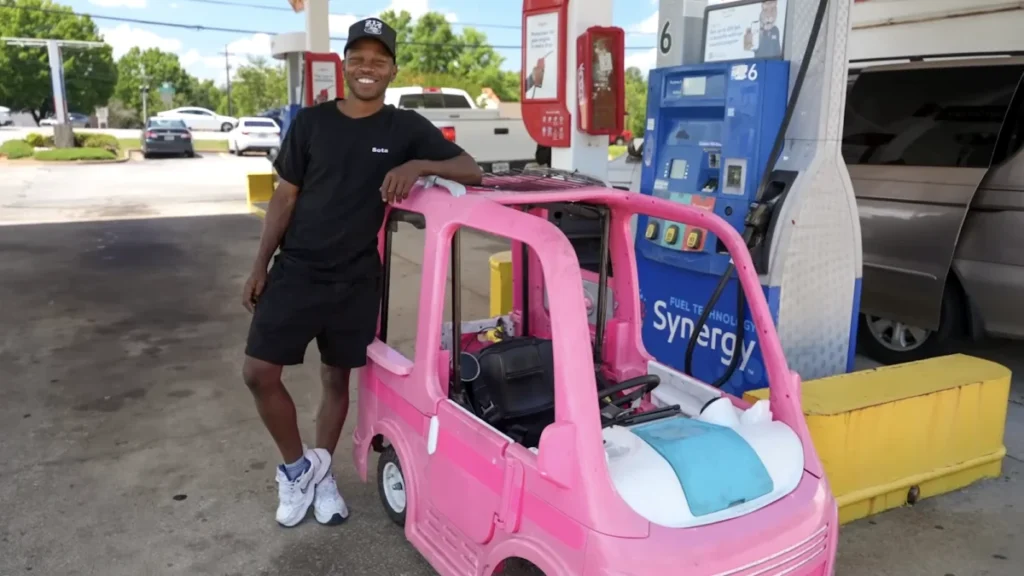
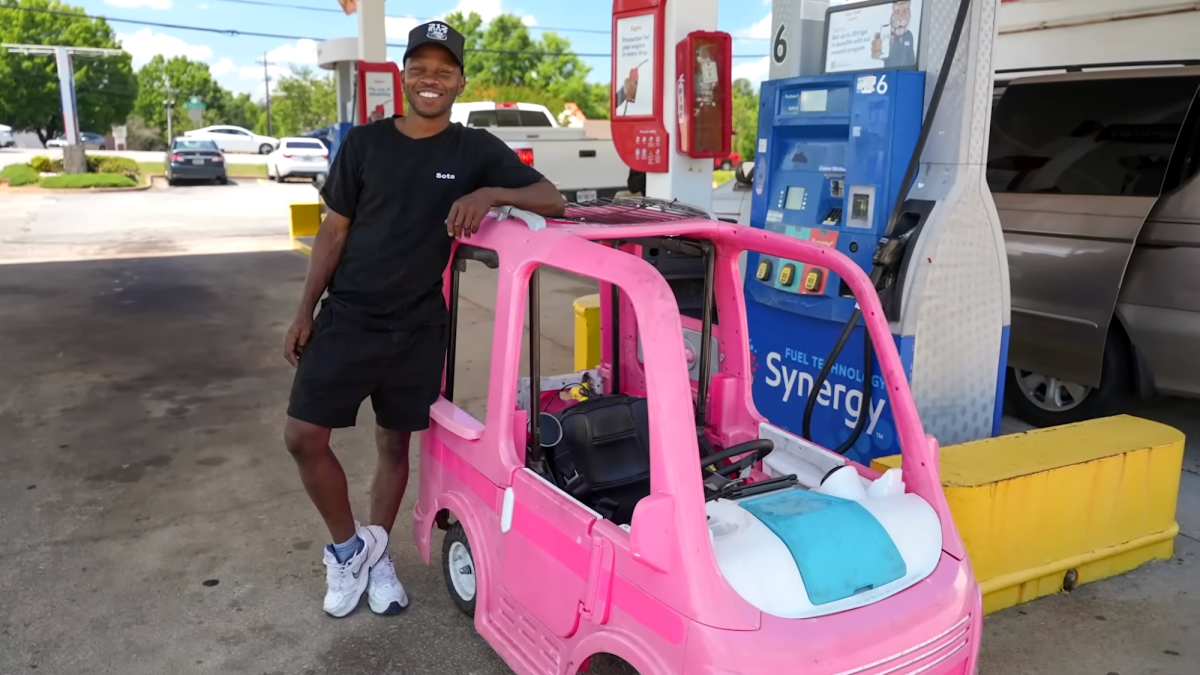
In an era defined by volatile energy markets and a shifting geopolitical landscape, the American commuter is increasingly finding themselves at a crossroads between economic necessity and creative improvisation. The ongoing conflict in Iran, which has destabilized global oil supplies throughout the first half of 2026, has sent shockwaves through the domestic economy, pushing fuel prices to historic highs. While many citizens have responded by reducing travel or seeking out public transit, Mali Hightower, a 30-year-old handyman based in Georgia, has garnered national attention for a more unconventional solution. By retrofitting a discarded Barbie Power Wheels Dream Camper with a functional gasoline engine, Hightower has transformed a children’s toy into a viable, albeit diminutive, alternative for short-range errands and local commuting.
The sight of a bright pink, plastic miniature vehicle pulling up to a standard gas pump has become a viral symbol of the current fuel crisis. However, beneath the whimsical exterior lies a pragmatic response to a 33 percent surge in average gasoline prices—a spike that shows no signs of abating as the summer travel season approaches. For Hightower, the project was born of both technical curiosity and financial pressure. As the owner of a 1996 Mercedes-Benz convertible, he faced a reality where a single fill-up could cost upwards of $90. The modified Dream Camper, by contrast, offers a significantly lower barrier to mobility for essential tasks such as grocery runs and hardware store visits.
Engineering the Dream Camper: A Technical Overview
The conversion of the Barbie Dream Camper from a battery-operated toy to a combustion-engine vehicle required significant mechanical modification. The original electric motor and battery system, designed for low-speed backyard play, were removed to make room for a more robust power source. Hightower utilized a one-piston engine salvaged from a discarded power washer—a choice that highlights the "repair and reuse" ethos currently gaining traction in the DIY community.
The engine is paired with a custom-mounted two-gallon gas tank, which provides the vehicle with a range that far exceeds its original design parameters. To start the vehicle, the operator must use a manual rip cord, similar to those found on lawnmowers or chainsaws. While the vehicle stands less than four feet tall, making it a tight fit for a full-grown adult, the mechanical simplicity of the build ensures high fuel efficiency and low maintenance costs. The transition from a 12-volt battery system to a gasoline-powered drivetrain allows the vehicle to navigate public roads with more consistency, though its top speed remains modest compared to traditional automobiles.
The Geopolitical Catalyst: Energy Markets in 2026
The necessity of such creative adaptations is rooted in the broader instability of the global energy sector. In May 2026, the international community continues to grapple with the fallout of the war in Iran, which has severely restricted the flow of crude oil from the Persian Gulf. This supply contraction has hit the United States particularly hard, given that over 90 percent of the 283 million cars currently on American roads remain dependent on internal combustion engines.
Data from the Department of Energy indicates that the average price per gallon of gasoline has risen by a third since the onset of the conflict. This sudden increase has placed an immense strain on middle- and lower-income households, particularly in states like Georgia where urban sprawl makes car ownership almost mandatory. The economic pressure has led to a noticeable shift in consumer behavior. While the Barbie Dream Camper is an extreme example, it underscores a growing trend of "micro-mobility" where individuals seek out the smallest, most efficient means of transport possible for short-distance travel.
The Economic Reality for the American Driver
For the average American driver, the current crisis is not merely a matter of high prices at the pump; it is a challenge to the established lifestyle of the 21st century. The United States possesses one of the highest rates of car ownership in the world, with a heavy reliance on larger vehicles that lack the fuel economy found in European or Asian markets. When gas prices rise, the cost of living increases proportionally across almost every sector, from grocery delivery to home services.
Mali Hightower’s situation is emblematic of this struggle. "I drive this when I can," he noted during a recent interview, referring to the pink camper. The trade-off between the luxury of his Mercedes-Benz and the utility of the toy car is a calculation millions are making in different ways. Some are opting for e-bikes, while others are returning to carpooling. However, for those with mechanical skills, the "rat rod" approach—building functional vehicles from spare parts—has become a way to reclaim control over personal transportation costs.
Infrastructure Gaps and the Slow Adoption of Electric Vehicles
The emergence of DIY solutions like the gas-powered Barbie car also highlights the systemic failures in the American transportation infrastructure. Despite federal initiatives to increase the availability of electric vehicles (EVs), the transition remains slow. For many, the high upfront cost of a new electric car is prohibitive, and the used EV market is still in its infancy. Furthermore, the charging infrastructure in many parts of the South remains sparse, making EVs an impractical choice for those living outside major metropolitan hubs.
Public transportation also faces significant hurdles. Many American cities were designed for the automobile, leaving bus and rail networks underfunded and inefficient. In the absence of reliable public transit, citizens are forced to remain dependent on fossil fuels. This creates a "transportation trap" where individuals must pay high prices for gas just to commute to the jobs that allow them to afford that gas. Hightower’s Dream Camper is a physical manifestation of the gap between the need for affordable transport and the lack of accessible, modern alternatives.
Legal and Safety Considerations for Micro-Mobility
While the Barbie Dream Camper is a feat of backyard engineering, it raises important questions regarding road safety and vehicle regulation. Most states have specific classifications for Low-Speed Vehicles (LSVs) or Neighborhood Electric Vehicles (NEVs), which are permitted on roads with speed limits of 35 mph or less. However, a modified toy car often falls into a legal gray area.

Safety experts have expressed concern regarding the crashworthiness of plastic-bodied vehicles on public roads. Unlike standard automobiles, Power Wheels lack roll cages, airbags, or crumple zones. Furthermore, the low profile of the vehicle makes it difficult for drivers of larger SUVs and trucks to see, particularly at intersections. While law enforcement in some jurisdictions may turn a blind eye to such vehicles in the spirit of local ingenuity, the widespread adoption of DIY micro-vehicles would likely necessitate a new framework of safety standards and registration requirements.
The Psychological and Cultural Shift Toward DIY Solutions
There is also a cultural dimension to the Barbie camper phenomenon. In times of economic hardship, there is a historical precedent for a return to "make-do and mend" philosophies. The 1970s oil crisis saw a similar surge in the popularity of mopeds and small economy cars. In 2026, this trend is being amplified by social media, where creators like Hightower can share their innovations with a global audience.
The choice of a Barbie-themed vehicle, specifically, adds a layer of irony to the situation. The bright pink aesthetic, typically associated with childhood play and consumerist fantasy, is being repurposed for the gritty reality of a fuel-starved economy. It serves as a visual reminder that the "American Dream" of limitless consumption is being forced to adapt to a world of finite resources. The viral nature of the Dream Camper suggests that the public finds a certain catharsis in seeing a toy used to bypass the traditional expenses of adulthood.
Looking Ahead: The Future of Urban Transportation
As the crisis in Iran continues, the trend toward unconventional transportation is likely to expand. Urban planners are already looking at ways to integrate smaller vehicles into the existing road network more safely. This may include the creation of dedicated lanes for micro-mobility devices, similar to bike lanes, which would allow vehicles like Hightower’s to operate without the constant threat of heavy traffic.
Ultimately, the story of the gas-powered Barbie Dream Camper is more than just a quirky news item. It is a data point in a larger narrative about American resilience and the urgent need for a more diversified transportation ecosystem. Whether through the mass adoption of EVs, the expansion of high-speed rail, or the continued ingenuity of local handymen, the way Americans move is undergoing a fundamental transformation. For now, Mali Hightower will continue to pull the rip cord on his pink camper, proving that sometimes, the best way to move forward is to think small.