


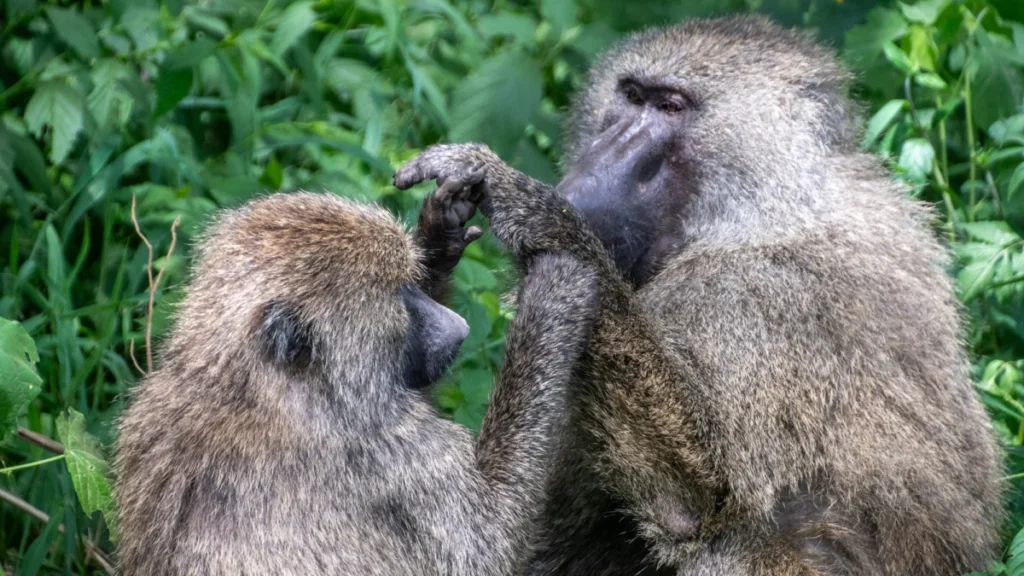
The long-held scientific assumption that geometric reasoning is a uniquely human trait, or at least one restricted to a very small number of highly specialized species, has been significantly challenged by a landmark study involving non-human primates. Published in the Proceedings of the National Academy of Sciences (PNAS), the research indicates that olive baboons and rhesus macaques possess an innate understanding of geometric relationships that mirrors the cognitive processes found in both human children and adults. This discovery suggests that the foundations of Euclidean geometry—the study of shapes, sizes, and the properties of space—are not merely products of formal education or human culture but are instead deeply embedded in the evolutionary architecture of the primate brain.
For decades, the ability to conceptualize abstract shapes and spatial logic was considered a "high-level" cognitive function that required the complex linguistic and symbolic systems unique to Homo sapiens. While some animals, such as dolphins or certain avian species, have shown rudimentary spatial awareness, the specific way humans process geometric symmetry, parallel lines, and angular relationships was thought to be a late-stage evolutionary development. However, the new findings from cognitive neuroscientists at Carnegie Mellon University (CMU) and their collaborators suggest that the "intuitions of geometry" are part of a shared biological heritage that predates the emergence of modern humans.
A Shared Cognitive Framework Across Species
The study was led by Jessica Cantlon, a professor of cognitive neuroscience at Carnegie Mellon University, and Jialin Li, a researcher at the same institution. Their primary goal was to determine whether the human "feel" for geometry is a learned skill or an evolutionary byproduct. To test this, the team designed an experiment that removed the variables of language and formal schooling. By comparing the performance of non-human primates, human children, and adults from diverse cultural backgrounds, the researchers sought to identify a common thread in how different minds perceive the physical world.
The results were striking. The data revealed that monkeys did not just solve the tasks through trial and error; they approached geometric problems using the same logic as human subjects. Jessica Cantlon noted that the surprise was not merely the monkeys’ success, but the fundamental similarity in how all groups—monkeys, children, and adults—conceptualized geometric relationships. This suggests that the primate mind possesses a "basic architecture" for spatial reasoning that has remained relatively consistent across millions of years of evolution.
The Primate Portal: A Voluntary Approach to Science
The experimental phase of the study took place at the Seneca Park Zoo in Rochester, New York, within a facility known as the Primate Portal. This unique research environment allows olive baboons (Papio anubis) and rhesus macaques (Macaca mulatta) to participate in cognitive tasks voluntarily. The primates are not coerced; instead, they approach outdoor touchscreen kiosks at their own discretion. These kiosks offer a variety of "games" that test mathematical and logic skills, with successful completion resulting in small food rewards, such as fruit.
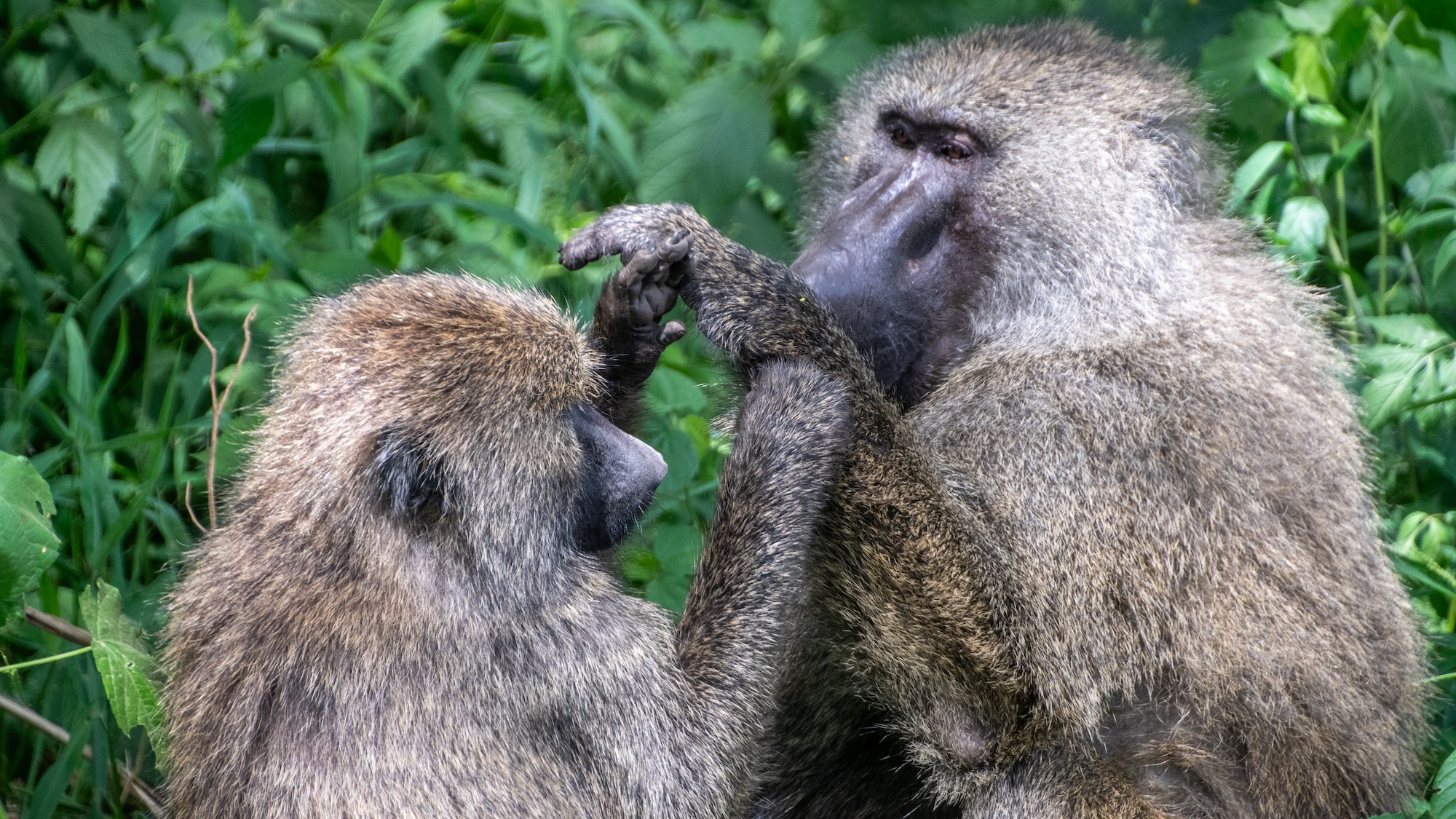
One of the standout participants in the study was an olive baboon named Kalamata. According to Jialin Li, Kalamata demonstrated an extraordinary work ethic, often waiting for researchers to activate the computer system and then engaging with mathematical tasks for several hours at a time. This level of engagement provided the researchers with a robust dataset, as the monkeys completed thousands of trials. The tasks involved matching two-dimensional geometric shapes based on their properties. While the concept of shape matching might appear simple, the researchers designed the stimuli to be deceptively complex, ensuring that the subjects could not rely on color or size alone to find the correct answer.
Methodology: From the Zoo to the Amazon
To validate the theory that geometric intuition is innate rather than learned, the research team expanded their study to include three distinct human groups. The first group consisted of American preschoolers, who represent humans at an early developmental stage before the onset of formal geometry instruction. The second group was comprised of 21 American adults who had undergone standard Western education.
The third and most crucial group involved nearly 80 adults from the Tsimane’ people, an Indigenous group living in the tropical lowlands of the Bolivian Amazon. The Tsimane’ are primarily subsistence farmers and foragers who do not traditionally receive formal schooling in mathematics or geometry. By including the Tsimane’, the researchers could control for the influence of modern culture and education. If the Tsimane’ and the monkeys processed geometry in the same way as the Western adults, it would provide powerful evidence that these cognitive traits are biological.
The cross-cultural comparison showed a clear spectrum of understanding. While the complexity of reasoning increased with age and education, the underlying principles of shape and space remained consistent across all groups. This suggests that while formal education allows humans to refine and label geometric concepts, the "raw" ability to recognize these patterns is a pre-existing condition of the primate mind.
Historical and Archaeological Context of Geometric Thought
The findings of the CMU study align with archaeological evidence suggesting that early humans and their relatives had a deep-seated interest in geometric patterns long before the development of written language. In the Blombos Cave of South Africa, researchers previously discovered a piece of ochre engraved with cross-hatched, parallel lines dating back 70,000 years. Similarly, a mammoth tusk found in Germany, estimated to be 40,000 years old, features rows of notches that suggest an early understanding of spacing and repetition.
These artifacts indicate that humans have felt a "need" to externalize geometric concepts for tens of thousands of years. Jessica Cantlon pointed out that geometry was one of the first things humans felt the urge to record. The fact that these intuitions feel automatic to us today is likely because they have been encoded into our neural pathways over millions of years of primate evolution, rather than just thousands of years of human history.
Statistical Insights and Behavioral Analysis
In the touchscreen tasks, the monkeys were required to identify "odd-one-out" shapes or match shapes based on geometric properties such as symmetry or parallel sides. The researchers found that the monkeys’ error patterns were not random. When the monkeys failed a task, they tended to make the same types of errors as human children. For example, if a child struggled to distinguish between two shapes with subtle angular differences, the monkeys showed the same difficulty.
This "concordance of errors" is a critical metric in cognitive science. It suggests that the subjects are using the same internal mental models to solve problems. If the monkeys were using a different cognitive strategy, their mistakes would likely look very different from those of a human child. The data from the Primate Portal showed that the "geometric signature" of the primate mind is remarkably stable across species.
Implications for Human Development and Education
The discovery that geometric intuition is innate has significant implications for how we understand human development and education. Traditionally, mathematics has been taught as an abstract system of rules that children must learn from scratch. However, this study suggests that children enter the classroom already equipped with a sophisticated, albeit non-verbal, understanding of space and shape.
Educational theorists may use this data to advocate for "intuitive-based" learning, where formal lessons are designed to build upon the existing evolutionary foundations of the mind. By recognizing that the brain is already "wired" for Euclidean geometry, educators can develop more effective strategies for teaching complex mathematical concepts by relating them back to the innate spatial logic that humans share with other primates.
Furthermore, the study sheds light on the evolution of the "symbolic mind." While monkeys can process geometric relationships, they do not naturally create symbols or names for these shapes. The leap from "intuitive geometry" (shared with monkeys) to "symbolic geometry" (unique to humans) appears to be where our species diverged. Understanding this transition is a key goal for future research in evolutionary biology and neuroscience.
The Future of Comparative Cognition Research
The success of the Primate Portal at Seneca Park Zoo serves as a model for future comparative cognition studies. By allowing animals to participate voluntarily and making the resulting data open-access, researchers can gather high-quality information while maintaining ethical standards for animal welfare. The CMU team plans to continue their work at the zoo, potentially expanding the scope of their research to include other mathematical concepts, such as numerical estimation and probability.
As science continues to peel back the layers of animal intelligence, the "gap" between humans and our non-human relatives appears to be narrowing. While humans remain unique in our ability to build skyscrapers, write symphonies, and calculate the trajectory of spacecraft, the basic tools we use to understand the physical world—the points, lines, and planes of geometry—appear to be a gift from our deep evolutionary past.
The study concludes that the human capacity for geometry is a "biological universal." Whether in the urban centers of the United States, the remote forests of the Amazon, or the primate enclosures of a New York zoo, the primate brain looks at the world and sees a structured, geometric reality. This shared vision is a testament to the enduring power of evolution in shaping the way all primates navigate the complexities of space.