


The mastery of a language extends beyond mere vocabulary; it requires an acute understanding of social cues, regional variations, and the cultural underpinnings of interpersonal communication. Wishing someone a happy birthday in French is a prime example of this complexity. While the standard phrases are well-documented, the application of these greetings depends heavily on geography, social setting, and the level of formality between participants. Whether navigating the distinct linguistic landscape of Quebec or observing the subtle etiquette of a dinner party in Paris, speakers must adapt their language to avoid common social pitfalls.
Linguistic Foundations: The Standard Greetings
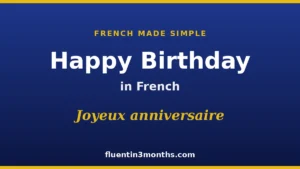
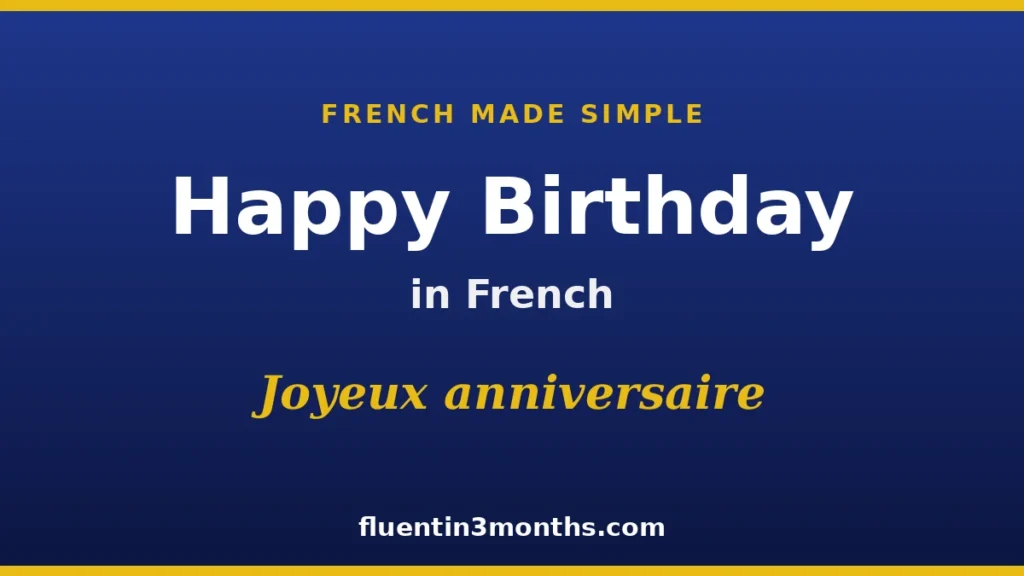
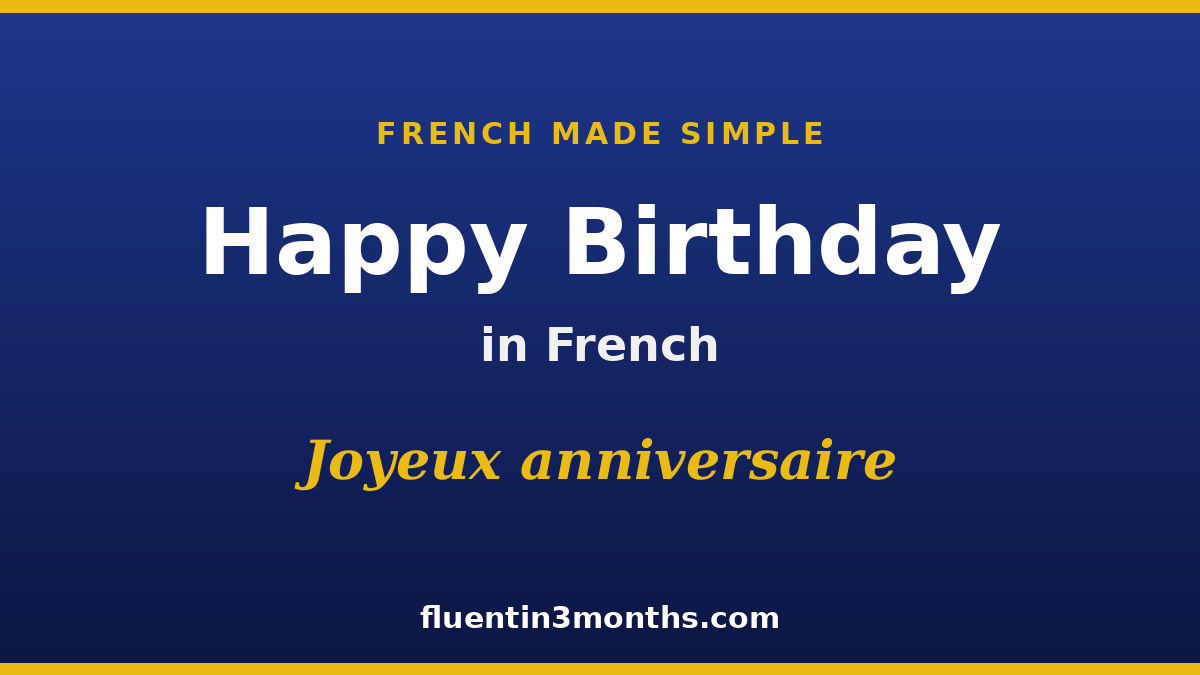
The two primary ways to express "Happy Birthday" in French are "Joyeux anniversaire" and "Bon anniversaire." Both phrases are widely accepted in professional, casual, and written contexts. There is no hierarchical distinction between the two; they are interchangeable in most social scenarios.
"Joyeux anniversaire" translates literally to "joyful anniversary," with "joyeux" acting as the adjective for "joyful" and "anniversaire" covering both birthdays and anniversaries of events. "Bon anniversaire," meanwhile, functions as a direct "good birthday" sentiment. From a linguistic perspective, the choice between them is a matter of personal preference or regional habit. However, for those looking to adopt a more colloquial, abbreviated style—similar to the English "b-day"—the term "anniv" is frequently used among friends and in informal digital messaging. While acceptable in a text thread, "anniv" should generally be avoided in formal correspondence or professional settings where the full, traditional phrasing is expected.
Regional Divergence: The Quebecois Context
A significant point of friction for learners of French is the regional usage of "Bonne fête." In Quebec and across various Canadian-French-speaking communities, "Bonne fête" is the standard, primary way to wish someone a happy birthday. It is both grammatically and culturally correct in that region.
However, in France and several other Francophone nations, the usage of "Bonne fête" takes on an entirely different meaning. In these regions, it is historically and culturally associated with "name days"—the tradition of celebrating a person’s birthday on the feast day of the saint after whom they were named. While the practice of celebrating name days has waned in secular urban centers, the phrase "Bonne fête" remains linked to that tradition. Consequently, using "Bonne fête" to wish a Parisian a happy birthday may cause confusion, as the recipient might interpret the sentiment as a reference to their namesake saint rather than their actual date of birth. For clarity, those communicating with individuals from France should exclusively utilize "Joyeux anniversaire" or "Bon anniversaire."
Phonetic Precision and the Role of Liaisons
Correct pronunciation is paramount in French, where the rhythmic flow of words—or "liaison"—can change the sound of a phrase entirely. In the case of "Joyeux anniversaire," the final "x" in "Joyeux," which is typically silent, becomes audible as a /z/ sound when it links to the following vowel. This creates a smooth bridge: "Joyeux-z-anniversaire." Similarly, in "Bon anniversaire," the final consonant of "Bon" links with the subsequent vowel, altering the nasal quality of the "n."
These liaisons are not merely optional flourishes; they are foundational to the natural cadence of the language. Learners are advised to avoid applying English-style stress patterns, which often emphasize individual syllables. French is a syllable-timed language, and the stress typically falls at the end of a rhythmic group. Listening to native audio recordings and practicing these phrases as a single, fluid unit is more effective than attempting to master the individual word components in isolation.
Socio-Cultural Customs: Etiquette and Expectations
Beyond the words themselves, the delivery of birthday wishes in France is governed by a set of unwritten social protocols. Understanding these customs is essential for expatriates and travelers.
1. The "Cake-Bearer" Responsibility: In many French corporate and academic environments, there exists a unique custom where the individual celebrating their birthday is expected to provide the refreshments. Unlike in some cultures where coworkers might surprise the birthday person with a cake, it is not uncommon for the celebrant to bring in pastries or a cake to share with their colleagues. Assuming that a group will automatically provide the treats can lead to awkward misunderstandings; it is best to gauge the specific office culture before making assumptions.
2. Physical Salutations: When greeting someone, the "bise" (the practice of kissing on the cheek) is a standard social gesture in France. However, the number of kisses and the side on which to begin varies by department and region. In professional or unfamiliar social settings, a handshake remains the safer, more neutral option. One should wait for the host or the birthday celebrant to initiate physical contact rather than assuming it is required.
3. The Superstition of Early Wishes: In some French social circles, there is a lingering superstition that wishing someone a happy birthday before the actual day is a harbinger of bad luck. While this belief is not universal, it is prevalent enough that many French speakers prefer to receive greetings only on the day of the event. If the specific preference of the individual is unknown, sending wishes on the day of the birthday is the most prudent course of action.
The Evolution of the Birthday Song
While the melody of "Happy Birthday to You" is recognized globally, the lyrics used in France are a direct translation. However, there is also a distinct French song titled "Bon Anniversaire," composed by Louiguy with lyrics by Jacques Larue and popularized by André Claveau in the 1950s. This song possesses its own copyright-protected melody and lyrics. In a social gathering, it is common to hear the familiar English-style melody, but if a host introduces the older, traditional French song, guests are generally expected to listen rather than join in until they have become familiar with the refrain.
Data and Trends in Modern Communication
Recent linguistic surveys indicate that while traditional face-to-face greetings remain the gold standard, the medium of delivery is shifting. Data from social media platforms suggests that over 70% of birthday greetings in Francophone regions are now delivered via instant messaging or social media notifications. This has led to a rise in the use of emojis and truncated text-speak, such as "Joyeux anniv" or "Bon anniv."
Despite this, the demand for formal, written messages in cards remains high during milestones such as 18th, 30th, or 50th birthdays. In these instances, the language shifts toward more sentimental and elaborate phrasing. Phrases like "Je te souhaite une excellente journée remplie de bonheur" (I wish you an excellent day filled with happiness) or "Que cette nouvelle année t’apporte joie et réussite" (May this new year bring you joy and success) are standard in formal card writing. The choice of "tu" (informal) versus "vous" (formal) remains the primary indicator of the relationship’s depth.
Implications for the Learner
For the non-native speaker, the primary takeaway is the necessity of context. There is no single "correct" way to celebrate, as the experience is a composite of regional history, familial tradition, and the evolving nature of digital etiquette.
The successful navigation of these social interactions requires a balance of linguistic preparation and cultural observation. By mastering the pronunciation of the standard greetings, acknowledging the specific requirements of Canadian French versus French, and remaining observant of the host’s customs, one can participate in these celebrations with confidence. Ultimately, the intention behind the greeting—warmth, respect, and consideration—transcends the specific vocabulary chosen, but a nuanced delivery ensures that the message is received with the appropriate level of cultural appreciation. As one continues to build proficiency, tools such as professional language courses and immersion practice remain the most effective methods for transitioning from a rote understanding of vocabulary to a sophisticated, context-aware command of French.