


Three years after the public release of ChatGPT ignited a global conversation, the higher education sector finds itself at a critical juncture regarding generative artificial intelligence. Despite initial widespread apprehension and a chorus of concerns about AI potentially destroying writing, disrupting classrooms, and even heralding the collapse of traditional teaching and learning, the adoption of this technology within academic institutions has not merely continued but surged. This rapid integration, however, has outpaced the development of coherent institutional strategies and policies, creating a pressing need for a more deliberate and comprehensive approach to AI governance in higher education.
The initial public unveiling of generative AI tools in late 2022 marked a seismic shift, particularly for educational institutions. The ease with which these AI models could generate text, code, and even images sparked immediate alarm among educators worldwide. Fears ranged from the erosion of academic integrity, with students potentially using AI to complete assignments, to the fundamental questioning of pedagogical methods designed to foster critical thinking and original expression. Publications pondered "the end of the English paper," and discussions around "rising use of AI in schools" often focused on its "big downsides for students," leading some to predict an "impending collapse" of established educational paradigms. Yet, beneath this initial wave of concern, a powerful undercurrent of experimentation and integration began to flow, driven by the accessibility and perceived utility of these tools.
The Unprecedented Surge: Data and Trends in AI Adoption
Far from being deterred by the early warnings, the education sector has embraced generative AI with remarkable enthusiasm. A recent Microsoft report, surveying global AI usage across industries, revealed that education boasts the highest AI usage rate of any sector. This comprehensive study found that nearly nine in 10 education institutions globally reported active engagement with generative AI by students, instructors, and campus leaders. This statistic underscores a profound, grassroots adoption that has permeated nearly every facet of academic life, from lecture halls to research labs and administrative offices.
On college campuses in the United States, this adoption trend is particularly pronounced. However, the enthusiasm for AI tools stands in stark contrast to the institutional preparedness to manage their implications. The latest Educause survey, a leading indicator of technology trends in higher education, painted a revealing picture of this disparity. While AI usage is ubiquitous, fewer than 60% of institutions currently consider AI to be a strategic priority. More alarmingly, less than 40% of these institutions have implemented clear, actionable policies governing acceptable AI use. This gap highlights a significant disconnect: while the technology is being widely utilized, the guiding frameworks necessary for its responsible, equitable, and effective integration remain largely absent.

This widespread, unguided adoption poses a unique set of challenges. Without clear institutional directives, individual faculty members, departments, and even students are left to define their own parameters for AI use, leading to fragmented approaches, inconsistencies in academic standards, and potential inequities. The absence of a cohesive strategy risks undermining academic integrity, exacerbating digital divides, and failing to fully harness AI’s transformative potential for learning and administration.
AI’s Multifaceted Impact: Reshaping Campus Operations and Learning
The rapid assimilation of generative AI into higher education is not merely a matter of students using tools for assignments; it represents a fundamental shift impacting various stakeholder groups and operational areas across campuses.
For Students: AI has become an increasingly popular aid for academic tasks. Beyond basic grammar and spell-checking, students are leveraging generative AI for brainstorming essay topics, outlining research papers, summarizing complex texts, and even generating initial drafts. In STEM fields, AI assists with coding, debugging, and solving complex mathematical problems. Some students utilize AI for personalized study guides or to rephrase difficult concepts, effectively creating a supplementary learning resource that offers instant feedback and tailored explanations.
For Faculty: Educators are also exploring AI’s potential to enhance their teaching and research. Generative AI can assist in developing lesson plans, creating diverse quiz questions, and generating rubrics. It can synthesize large volumes of research literature, offering summaries and identifying key themes, thereby streamlining the research process. For administrative tasks, AI tools can help draft emails, schedule meetings, and even assist in analyzing student feedback data. The promise of AI to automate tedious, time-consuming tasks offers faculty more time to focus on direct student engagement, mentorship, and deeper pedagogical innovation.
For Administration: University administrators are beginning to recognize AI’s potential to optimize institutional operations. AI-powered chatbots can handle routine student inquiries, improving efficiency in admissions, financial aid, and registrar offices. Predictive analytics, driven by AI, can help forecast enrollment trends, identify students at risk of attrition, and optimize resource allocation for academic programs and support services. In cybersecurity, AI plays an increasingly vital role in detecting and mitigating threats to sensitive institutional data. The vision is to create more agile, responsive, and data-driven institutions that can better serve their diverse communities.
For Research: The impact of AI extends profoundly into academic research. AI algorithms are capable of processing and analyzing vast datasets far more rapidly and accurately than human researchers, accelerating discovery in fields from genomics to social sciences. Generative AI can assist in hypothesis generation, experimental design, and even the initial drafting of research proposals and papers, allowing researchers to focus on critical analysis and interpretation.
The Policy Paradox: Navigating the Uncharted Waters
While the embrace of AI on campuses is undeniable, the slow pace of policy development creates a significant void, leading to a host of unresolved challenges and potential pitfalls.
Academic Integrity: This remains one of the most prominent concerns. The ease with which generative AI can produce human-like text complicates the assessment of original thought and authorship. Institutions grapple with how to define and detect AI-assisted plagiarism, how to educate students on ethical AI use, and how to adapt assessment methods to foster critical thinking in an AI-permeated environment. Without clear guidelines, faculty are left to implement ad-hoc solutions, leading to inconsistent standards and potential unfairness.
Equity and Access: The digital divide, a long-standing challenge in education, risks being exacerbated by AI. Access to premium AI tools often comes with a cost, potentially creating a two-tiered system where students from wealthier backgrounds have an advantage. Furthermore, AI models can inherit and perpetuate biases present in their training data, leading to inequitable outcomes or biased information for certain student demographics. Ensuring equitable access and mitigating algorithmic bias must be central to any institutional AI strategy.
Data Privacy and Security: The use of AI in education involves the processing of vast amounts of sensitive student and institutional data. Questions arise concerning how this data is collected, stored, and utilized by AI systems, especially those developed by third-party vendors. Institutions must establish robust data governance frameworks to protect privacy, comply with regulations like FERPA (Family Educational Rights and Privacy Act), and prevent data breaches, particularly when integrating AI tools into learning management systems.
Faculty Training and Development: Many educators feel unprepared to effectively integrate AI into their teaching or to address its implications. There is an urgent need for comprehensive professional development programs that equip faculty with the knowledge and skills to understand AI’s capabilities and limitations, design AI-aware assignments, and develop strategies for fostering critical thinking and responsible AI use among students. Without this support, faculty may either resist AI or implement it in ways that are ineffective or even detrimental to learning outcomes.
Ethical Considerations: Beyond bias and privacy, the broader ethical implications of AI in education demand careful consideration. How might over-reliance on AI diminish students’ capacity for original thought or problem-solving? What are the implications for human agency and the unique value of human intellect? Institutions have a responsibility to foster a critical understanding of AI’s ethical dimensions, preparing students not just to use AI, but to engage with it thoughtfully and responsibly.
Voices from the Academy: Stakeholder Reactions
The varied responses from different segments of the academic community underscore the complexity of the AI integration challenge.
University Administrators and Leaders: Many university presidents and provosts acknowledge the "transformative potential" of AI, often emphasizing a commitment to "responsible innovation." They recognize that ignoring AI is not an option and that institutions must adapt to remain relevant and competitive. However, they also articulate the significant challenge of balancing opportunity with risk, particularly concerning budget allocations for new technologies, cybersecurity, and the need for widespread faculty and staff retraining. A common refrain is the need for "agile governance models" that can evolve with the technology.
Faculty Members: The faculty response is diverse. Early adopters view AI as a powerful assistant, capable of freeing up time for deeper engagement with students and research. They advocate for teaching students how to use AI ethically and effectively, viewing it as a crucial skill for the modern workforce. Conversely, many express profound concerns about academic rigor, the potential for diminished critical thinking skills among students, and the workload associated with redesigning courses and assessments. There is a consistent call for "clear guidelines from the top" and "robust professional development" to navigate this new landscape.
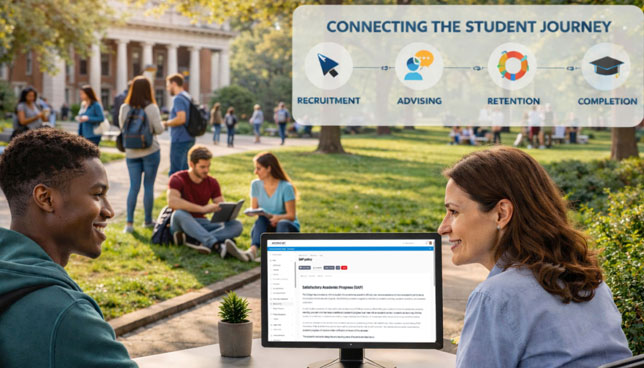
Students: Students generally view AI as a valuable productivity tool. They report using it to overcome writer’s block, clarify complex concepts, and save time on routine tasks. Many see AI literacy as an essential skill for their future careers. However, some also voice concerns about potential over-reliance on AI, the fairness of its use in assessments, and the need for clear institutional policies to ensure equitable access and avoid penalizing students who use it responsibly.
Educational Technology Experts: Specialists in educational technology often frame AI as an "opportunity to redefine pedagogy." They argue that AI is not just another tool but a paradigm shift that demands systemic change in how we teach, learn, and administer education. They emphasize the importance of pilot programs, inter-institutional collaboration, and ongoing research to understand AI’s true impact and best practices. "This is not merely an IT challenge," one expert noted, "it’s a fundamental reimagining of the educational experience."
Charting a Course: Elements of a Robust AI Strategy
The current state of affairs necessitates a proactive and comprehensive approach to AI strategy in higher education. Moving beyond reactive measures, institutions must develop integrated frameworks that address both the opportunities and the challenges presented by generative AI. Such a strategy should encompass several key elements:
- Vision and Leadership: A clear, institution-wide vision for AI, articulated by senior leadership, is paramount. This vision should define the desired role of AI in teaching, learning, research, and administration, emphasizing ethical principles and student-centric outcomes.
- Ethical Frameworks and Governance: Developing robust ethical guidelines for AI use, focusing on fairness, transparency, accountability, and human oversight, is critical. This includes establishing clear policies on academic integrity, data privacy, intellectual property, and responsible AI development.
- Policy Development and Adaptation: Institutions must move swiftly to develop clear, adaptable policies on acceptable AI use for students, faculty, and staff. These policies should be iterative, allowing for updates as the technology evolves and as best practices emerge.
- Infrastructure and Investment: Adequate investment in technological infrastructure, including secure AI platforms, data management systems, and computational resources, is essential. This also involves ensuring equitable access to necessary tools and technologies across the campus community.
- Training and Professional Development: Comprehensive training programs for faculty, staff, and students are crucial. Faculty need support to integrate AI effectively into their pedagogy, design AI-aware assignments, and understand ethical considerations. Students require guidance on responsible and effective AI use, fostering AI literacy as a core competency.
- Curriculum Integration and Redesign: AI should not merely be an add-on but integrated into the curriculum where appropriate. This includes teaching students about AI (its principles, applications, and ethical implications) and teaching with AI, leveraging it as a tool for learning and creativity across disciplines.
- Research and Innovation: Universities are centers of knowledge creation. They must actively engage in research on AI in education, exploring its pedagogical effectiveness, societal impacts, and future potential. Fostering innovation through pilot programs and interdisciplinary collaboration can drive new models of learning.
- Inter-institutional Collaboration: Given the rapid pace of AI development and its universal impact on education, institutions can benefit immensely from sharing best practices, policy frameworks, and research findings with peers. Collaborative efforts can accelerate learning and prevent duplication of effort.
The Future of Learning: Long-Term Implications
The integration of AI in higher education is not a fleeting trend but a fundamental transformation with long-term implications for the nature of learning, the role of educators, and the skills required for future workforces. As AI continues to evolve, higher education institutions must consider how they will:

- Redefine Core Competencies: Emphasize skills that complement AI, such as critical thinking, creativity, complex problem-solving, emotional intelligence, and human-AI collaboration, rather than rote memorization or basic information recall.
- Personalize Learning at Scale: Leverage AI to create highly personalized learning experiences, adapting content, pace, and feedback to individual student needs and learning styles, thereby enhancing engagement and outcomes.
- Evolve the Role of the Educator: Shift the educator’s role from a dispenser of information to a facilitator, mentor, and guide, helping students navigate complex information, develop critical judgment, and master human-AI collaboration.
- Prepare for an AI-Driven Workforce: Equip graduates not just with technical AI skills, but with the adaptability, ethical understanding, and critical perspective needed to thrive in an increasingly automated and AI-infused professional landscape.
In conclusion, the current trajectory of AI adoption in higher education—widespread use coupled with lagging strategic oversight—presents both immense opportunity and significant risk. The window for proactive, comprehensive strategic planning is rapidly closing. Institutions that fail to move beyond reactive responses to embrace a holistic, ethical, and forward-looking AI strategy risk not only undermining their academic mission but also falling behind in an increasingly AI-centric world. The time for higher education to get serious about its AI strategy is unequivocally now.